Tether and Georgia plan to launch GEL₮, a Lari-backed stablecoin designed for faster payments, lower costs, and cross-border settlements.

Author: Akshat Thakur
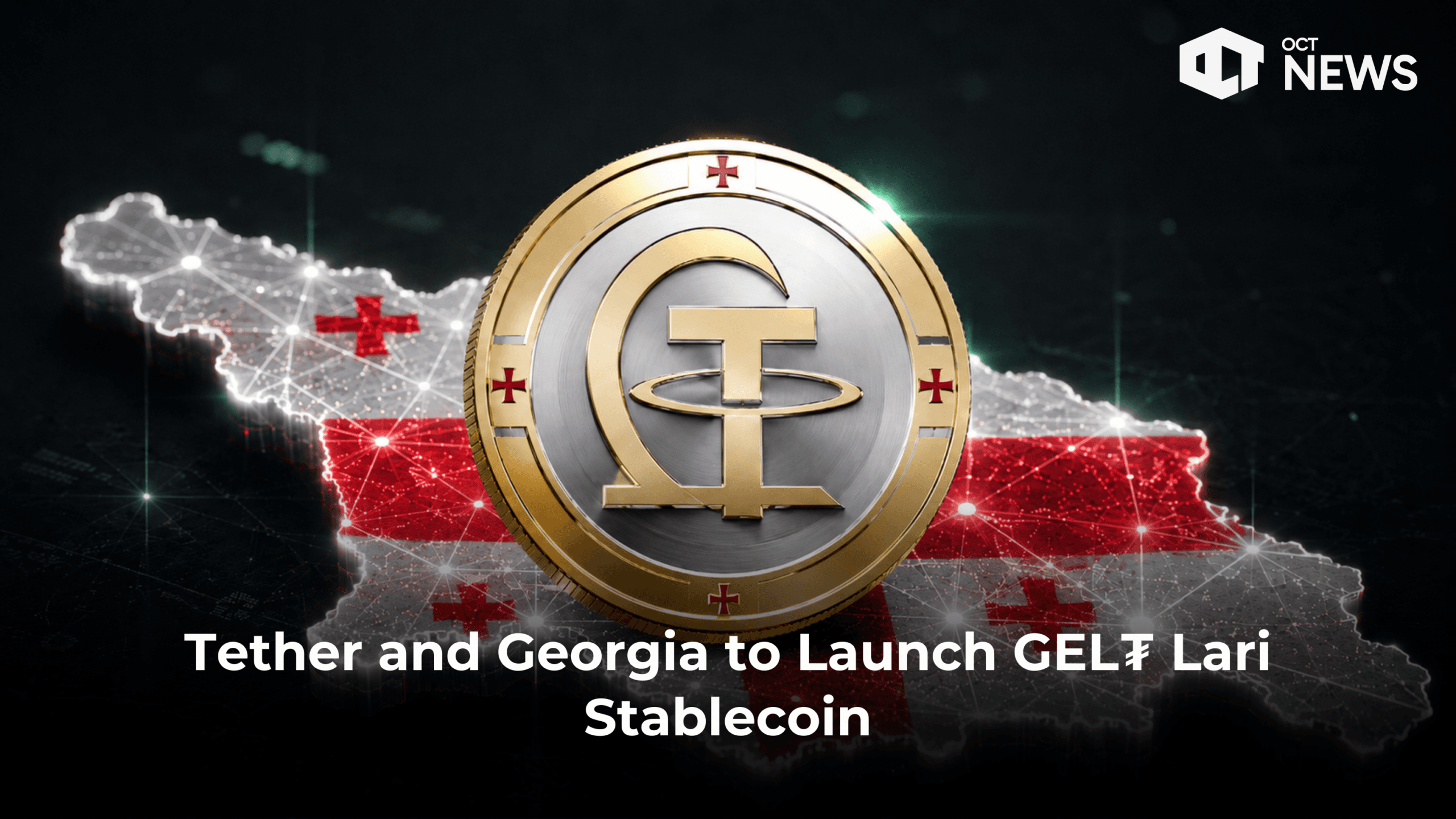
25th May 2026 – Tether and the Government of Georgia announced plans to launch GEL₮, an official stablecoin pegged 1:1 to the Georgian Lari.
High Signal Summary For A Quick Glance

Eco Nomad ( beware scammers )
@KEmmra

@tether is this an open collaborative agreement any government of a country can reach out to for this partnership?
Tether and the Government of Georgia to Launch GEL₮, the Official Stablecoin of Georgia https://t.co/ueSLlJzot1
08:12 AM·May 25, 2026

Dimitri Khetaguri 🇬🇪
@xetaguridimitri
@tether Where are Larcoin 😅 ₾
Tether and the Government of Georgia to Launch GEL₮, the Official Stablecoin of Georgia https://t.co/ueSLlJzot1
07:37 AM·May 25, 2026
Steady attention without excessive speculation.
The announcement came through a joint press release on Tether’s blog on May 25, 2026. Georgian Prime Minister Irakli Kobakhidze, National Bank of Georgia (NBG) President Natia Turnava, and MP Vakhtang Turnava all endorsed the project.
The GEL₮ stablecoin targets lower transaction costs, near-instant settlement, and programmable payments. It also aims to improve cross-border transfers for Georgia’s trade and fintech sectors.
GEL₮ is a fiat-backed token that digitally represents the Georgian Lari. Tether will issue it, but it is not a central bank digital currency. Instead, it operates under a private-public model with NBG oversight.
Georgia’s March 2026 stablecoin rules require 100% reserve backing. NBG Order No. 52/04 mandates full backing, prior central bank consent, and minimum capital of GEL 500,000 for issuers.
Neither Tether nor the Georgian government disclosed specific blockchains, reserve composition, or audit schedules. According to the announcement, “further details regarding the structure, rollout, and regulatory implementation will be announced at a later stage.”
Three senior Georgian officials publicly supported the GEL₮ stablecoin launch. Their quotes signal strong political alignment behind the initiative.
Prime Minister Kobakhidze said, “Together with visionary partners like Tether, Georgia is laying the foundations for a more connected, transparent, and digitally empowered financial world.”
NBG President Natia Turnava echoed the sentiment. She said the central bank “welcomes collaboration with global innovators like Tether as part of its broader strategy to advance secure, modern, and internationally aligned digital financial infrastructure.”
Tether CEO Paolo Ardoino framed the move in broader terms. “Stablecoins are no longer a niche financial instrument. They are becoming part of the infrastructure layer for global finance,” he said.
Ardoino also pointed to Georgia’s regulatory clarity as a key factor. “Georgia has moved early to create serious regulatory architecture for digital assets and stablecoins, and that clarity creates the foundation for real innovation and adoption,” he added.
Georgia’s regulatory framework for stablecoins preceded the GEL₮ announcement. In March 2026, the NBG issued Order No. 52/04, which authorized licensed VASPs to issue Lari-pegged stablecoins.
The rules require 100% reserve backing, prior NBG consent, and full redemption rights for holders. Georgia’s framework aligns with global standards, including compatibility with the U.S. GENIUS Act.
That regulation-first approach sets Georgia apart. Many stablecoin projects launch before regulatory clarity exists, then face enforcement later. Georgia built the framework first, then invited the issuer.
Timeline of Georgia’s stablecoin framework and the proposed launch of GEL₮
Tether and the Georgian government establish cooperation around blockchain education, Bitcoin initiatives, startup support, and broader digital infrastructure development.
Georgia implements VASP registration requirements, introducing AML/KYC obligations and formal oversight for crypto-related businesses.
The National Bank of Georgia approves a framework allowing licensed VASPs to issue fiat-backed stablecoins under reserve, capital, and regulatory requirements.
Rules mandate full backing of issued stablecoins, prior regulatory approval, minimum capital thresholds, and transition periods for existing operators.
Authorities and Tether reveal intentions to launch GEL₮, a Georgian lari-pegged stablecoin. The announcement confirms plans but omits rollout mechanics, pilot phases, or launch dates.
No public information is released regarding issuance structure, custody model, redemption mechanics, pilot testing, or timeline for availability.
Observers view GEL₮ as an early sovereign-aligned local-currency stablecoin initiative, but launch timing and deployment stages remain unknown.
Georgia sits at a strategic crossroads in the Caucasus. The country handles significant trade and remittance flows, with approximately $2.5 billion in annual remittances.
A digital Lari could reduce costs for cross-border transfers. Currently, traditional remittance corridors to Georgia charge fees that eat into smaller transactions.
The country already supports crypto-friendly policies. Georgia permits tax payments through instant crypto-to-GEL conversion and maintains a progressive VASP licensing regime.
GEL₮ could extend that infrastructure to programmable payments, merchant settlement, and real-time trade finance across the region.
This partnership builds on a relationship that began in 2023. Tether signed an MOU with the Government of Georgia that year, covering blockchain, Bitcoin, and P2P infrastructure development.
Since then, Tether has pursued sovereign partnerships in multiple jurisdictions. The company’s shift from pure USD stablecoin issuer to multi-currency, government-aligned infrastructure provider marks a strategic pivot.
With USDT commanding over $140 billion in market cap, Tether brings deep liquidity expertise. Georgia offers a willing government partner with a ready-made regulatory sandbox.
Tether has faced scrutiny in the past over the transparency of its reserves. The NBG’s 100% backing mandate and consent requirement could address those concerns for GEL₮ specifically, though independent audit details remain pending.
Several critical details about the GEL₮ stablecoin remain undisclosed.
Neither party confirmed a launch date, pilot phase, or rollout timeline. They did not name specific blockchains for deployment. Reserve composition and audit arrangements remain pending as well.
It is also unclear whether Georgian citizens or businesses will face any mandate to accept GEL₮ for payments. The announcement did not detail the full legal entity structure for the issuer.
No GEL₮ smart contract exists on any blockchain yet. Searches across block explorers returned zero results as of announcement day.
The announcement triggered positive early reactions on X, with crypto accounts highlighting Georgia’s fintech ambitions. No major outlets like CoinDesk or Bloomberg had published coverage as of the first hour.
Tether and Georgia’s government said more details about structure, rollout, and regulatory implementation will follow. The GEL₮ stablecoin now enters a waiting period where execution will determine whether the partnership delivers.
For now, Georgia has signaled clearly that stablecoins are part of its national financial strategy. The next milestone will be the first technical details about where and how GEL₮ actually launches.
Our Crypto Talk is committed to unbiased, transparent, and true reporting to the best of our knowledge. This news article aims to provide accurate information in a timely manner. However, we advise the readers to verify facts independently and consult a professional before making any decisions based on the content since our sources could be wrong too. Check our Terms and conditions for more info.