Stablecoin payments are reshaping business finance, but transparent blockchains create major privacy risks for companies.

Author: Chirag Sharma
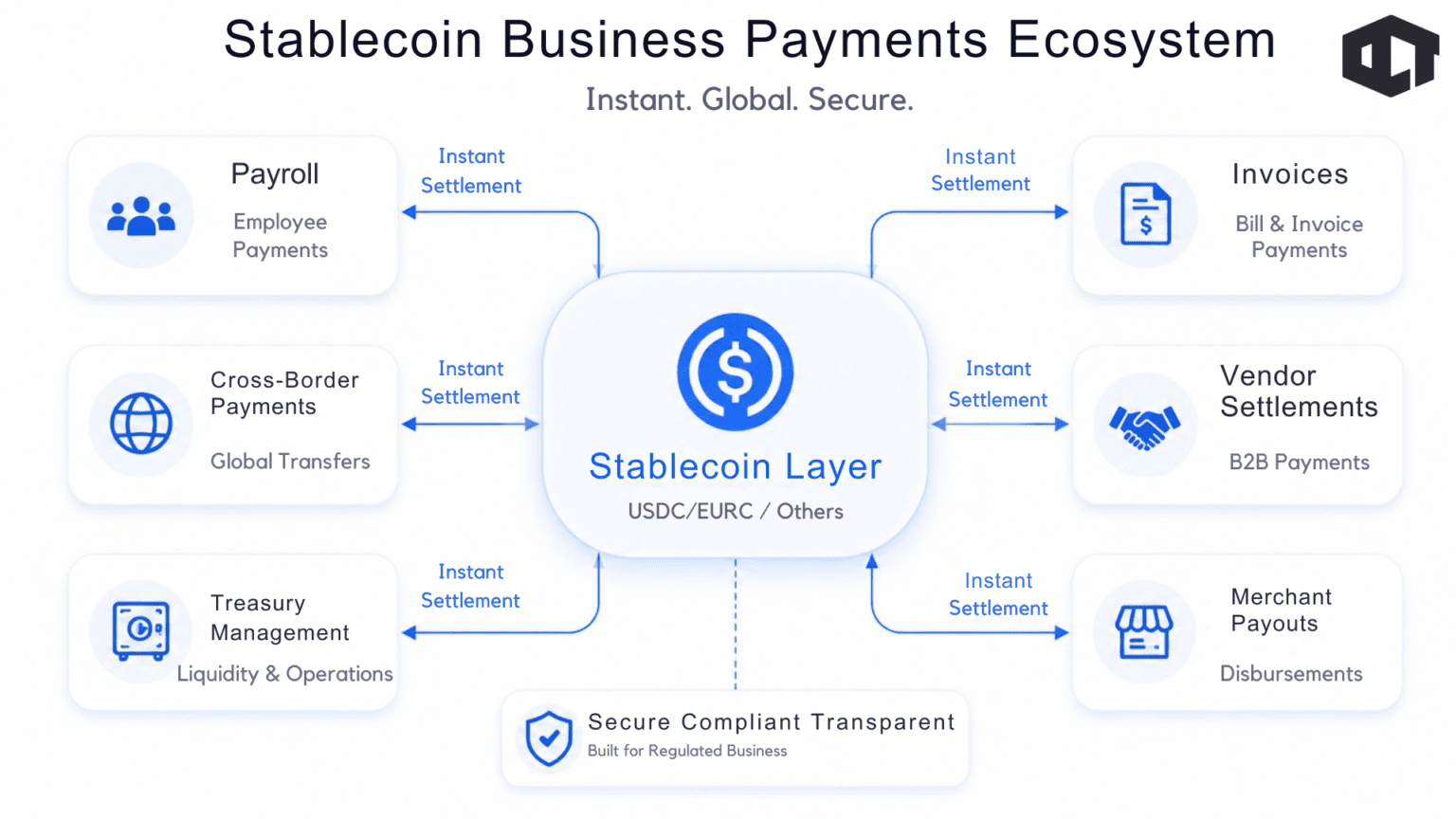
Stablecoin Payments have moved far beyond crypto trading. Today, companies use stablecoins to settle invoices, run payroll systems, move treasury capital, and handle cross-border transactions at a speed traditional financial rails struggle to match. What started as a niche blockchain use case is quickly becoming part of real-world payment infrastructure.
The reasons behind this shift are straightforward. Stablecoins settle transactions almost instantly, operate 24/7, reduce dependency on correspondent banking systems, and significantly lower friction for global transfers. Businesses no longer need to wait multiple business days for international settlements or pay excessive intermediary fees just to move capital between markets.
The growth numbers reflect this momentum clearly. Industry projections estimate stablecoin supply could reach between $2 trillion and $4 trillion by 2030, while B2B stablecoin payments have already grown more than 700% year over year. In 2025 alone, enterprise-related transfers accounted for nearly 60% of all global stablecoin payment volume.
However, as stablecoins move deeper into enterprise finance, a major issue is becoming impossible to ignore which is Privacy.
Not consumer anonymity or underground DeFi privacy, but business-grade operational privacy. And right now, most companies moving stablecoins on-chain are exposing far more information than they realize.
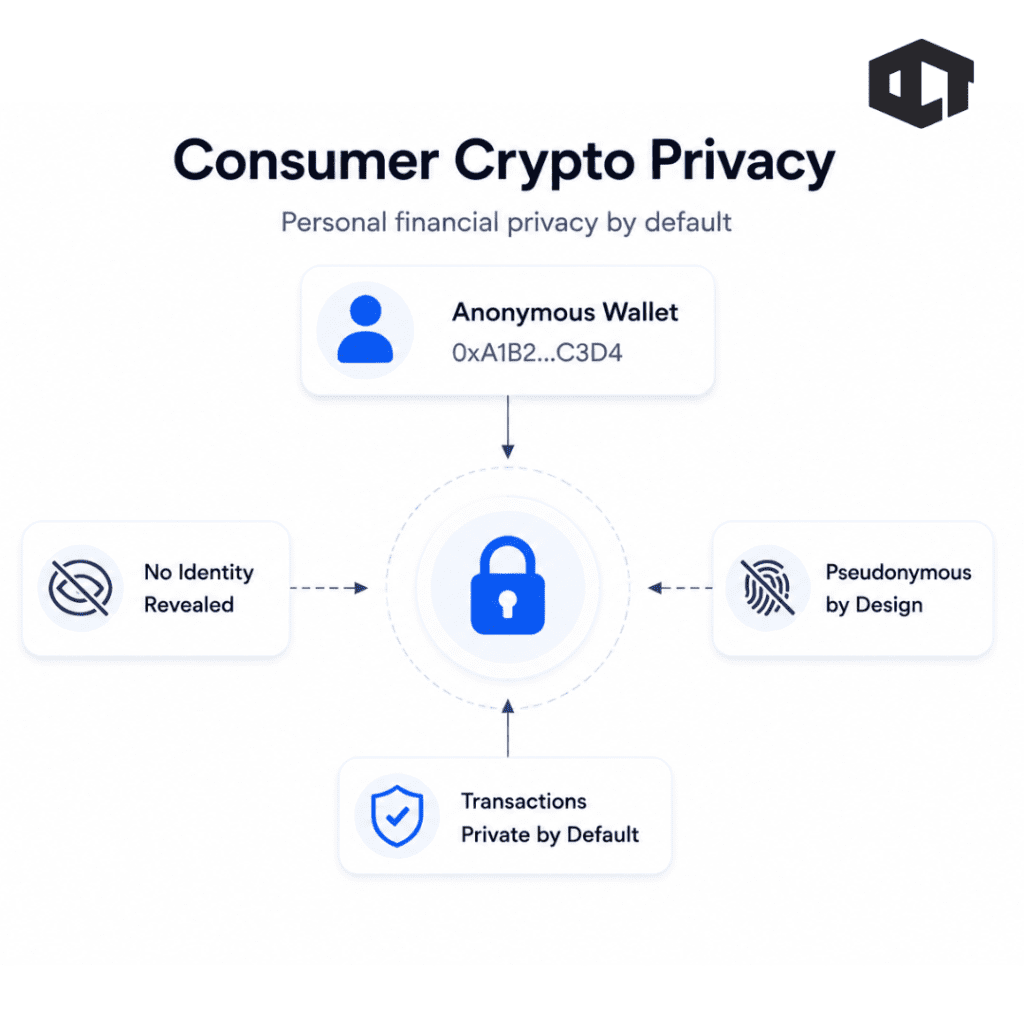
Every stablecoin transaction does more than transfer value. It also creates a permanent public record of activity.
On transparent blockchains, anyone can analyze wallet behavior, transaction timing, counterparties, and payment frequency. While this level of transparency aligns with crypto’s open nature, it creates serious operational risks for businesses.
A single payment might not reveal much. But repeated transactions over time create patterns. These patterns eventually form a readable map of a company’s operations, relationships, and financial activity.
For example, a payments provider settling merchants on-chain could unintentionally expose:
Similarly, payroll companies processing stablecoin salaries may leak employee compensation structures or internal staffing growth trends. Treasury teams moving funds between wallets can expose liquidity positions, vendor relationships, and internal capital management strategies.
This becomes even more dangerous when advanced blockchain intelligence tools enter the picture.
Platforms like Arkham and Nansen already monetize on-chain intelligence by tracking wallet flows and identifying behavioral patterns. Institutional wallet monitoring has become common practice across crypto markets, with traders constantly attempting to identify accumulation patterns from major firms.
In practice, this means businesses using stablecoins may unintentionally broadcast sensitive operational intelligence to competitors, traders, and external observers.
One of the biggest misconceptions in crypto is treating all privacy discussions as identical.
When most people hear the term “crypto privacy,” they immediately think about anonymous transactions, hidden wallets, or privacy coins. But enterprise stablecoin payments involve a completely different set of requirements.
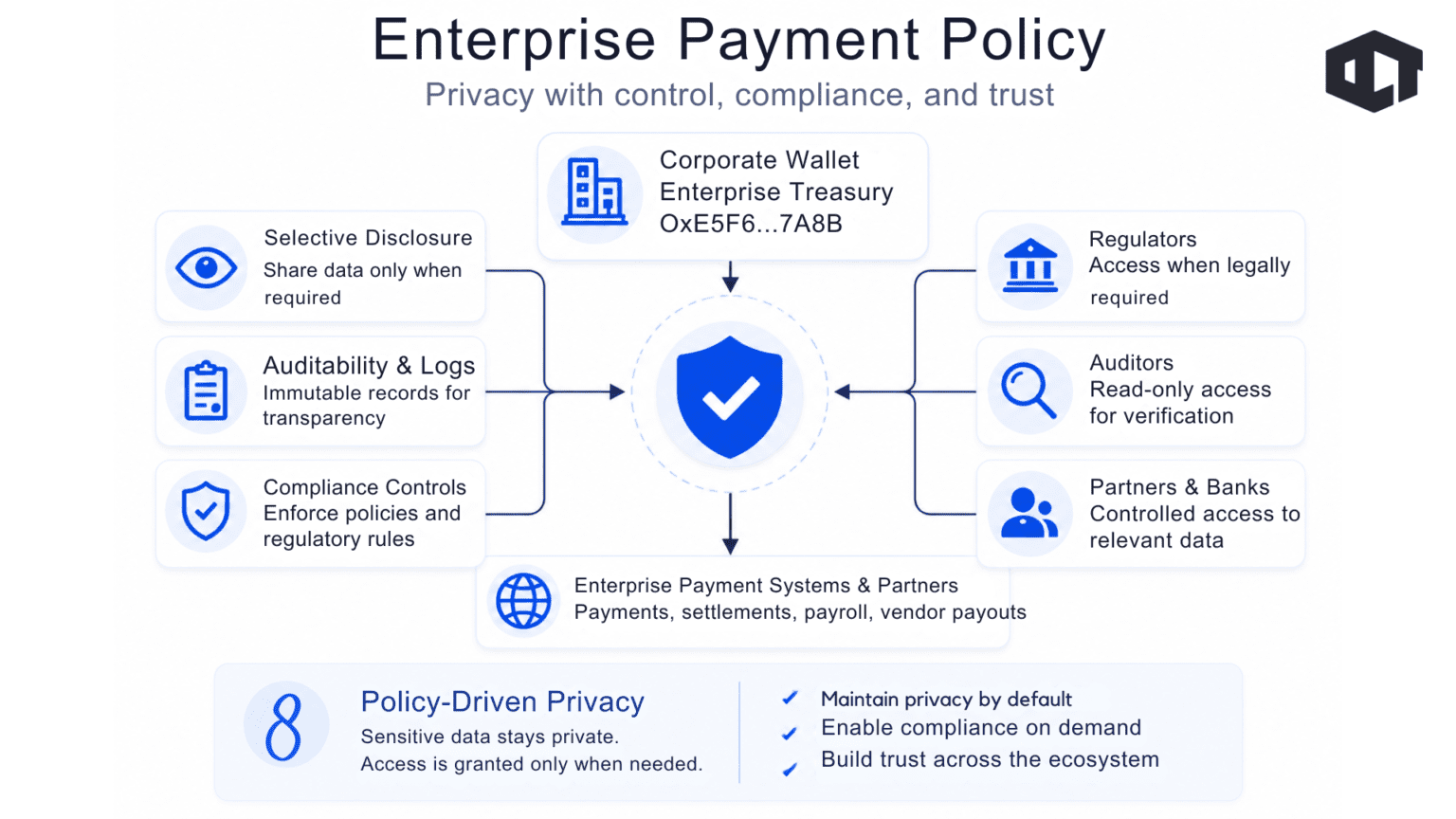
Businesses do not necessarily need invisibility. They need selective privacy.
A corporate treasury team still requires auditability. Regulators still need access pathways under certain conditions. Compliance teams must verify transaction legitimacy. Counterparties need operational trust.
The objective is not to disappear from the blockchain entirely. The objective is to prevent competitors and random observers from extracting sensitive operational intelligence from public transaction data.
This distinction fundamentally changes how enterprise privacy solutions must function.
A privacy framework suitable for business stablecoin payments must achieve several goals simultaneously:
That balance is much harder to achieve than many crypto-native privacy systems assume.
The crypto industry already offers multiple privacy technologies, but most were not designed specifically for enterprise stablecoin operations.
Some solutions prioritize maximum cryptographic privacy but sacrifice usability. Others support institutional compliance but require permissioned environments that limit flexibility. A few focus on transaction obfuscation while leaving wallet relationships fully visible.
As a result, no single approach currently dominates the market.
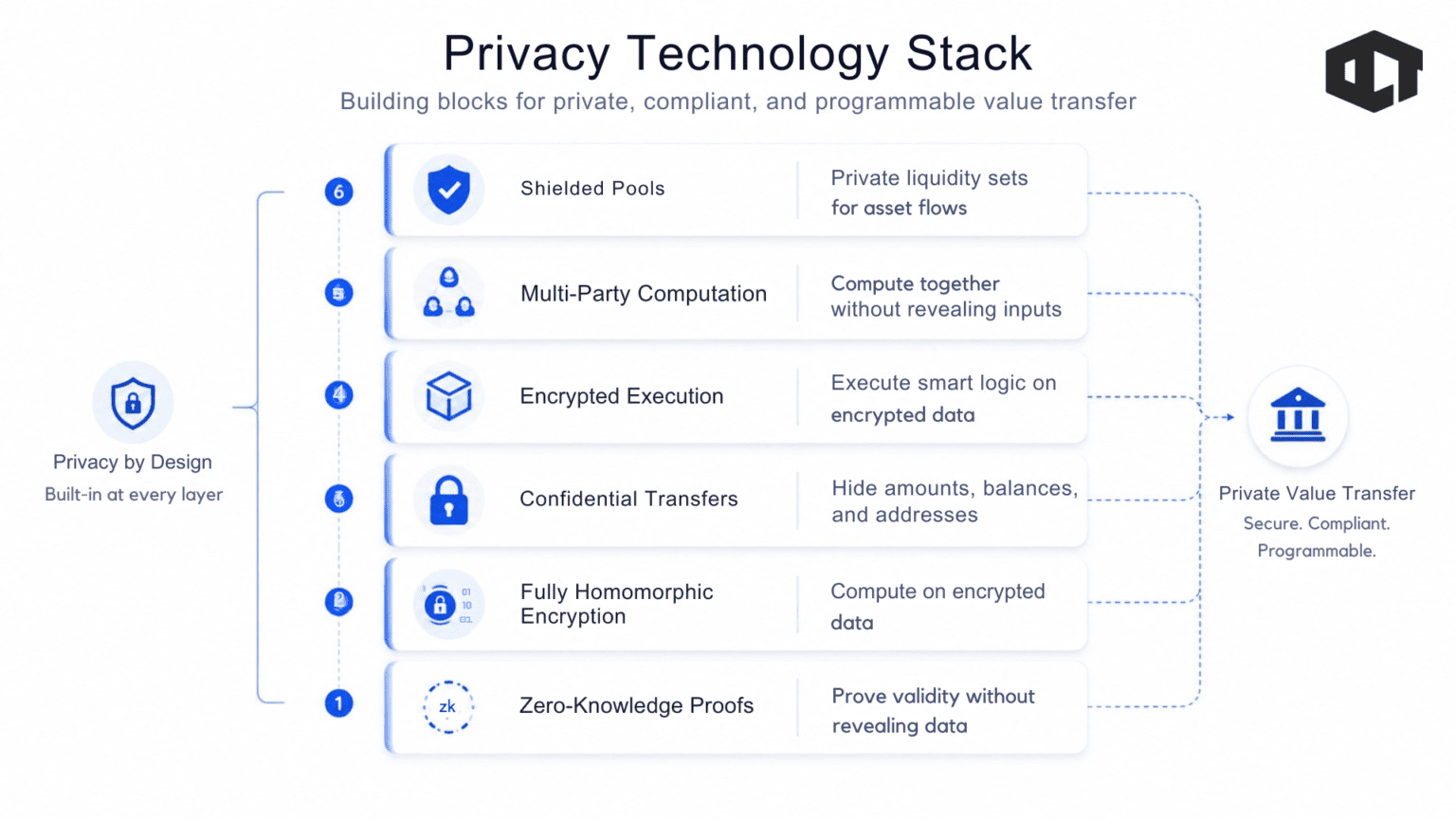
The ecosystem now includes several emerging categories:
Zero-knowledge technology allows users to verify information without revealing the underlying data itself. This approach powers many modern privacy systems because it balances confidentiality with verifiability.
Projects using ZK-based approaches aim to hide transaction details while preserving compliance compatibility.
FHE enables computations on encrypted data without decrypting it first. This technology represents one of the most advanced approaches to blockchain privacy, although scalability and operational complexity remain challenges.
Some blockchain systems focus specifically on hiding transaction amounts while maintaining network transparency elsewhere. This method can reduce information leakage without fundamentally changing how payments operate.
Other projects attempt to create private smart contract execution layers where application logic and transaction states remain confidential during processing.
Each model solves different problems, but none fully solves enterprise stablecoin privacy on its own.
Technology alone is not enough.
The strongest privacy system in theory becomes useless if businesses cannot realistically integrate it into existing operations.
This is where many blockchain privacy projects struggle.
Most enterprises will not rebuild their treasury systems from scratch just to gain privacy benefits. They also will not migrate entirely into isolated blockchain ecosystems that disconnect them from broader liquidity networks.
Instead, businesses need solutions that fit naturally into current payment infrastructure.
That means privacy layers must support:
Operational compatibility matters just as much as cryptographic sophistication.
For example, a multinational company settling vendor payments does not care whether a privacy solution uses advanced ZK architecture if integration complexity creates operational friction. Likewise, a payroll processor cannot adopt a system that limits interoperability with mainstream financial infrastructure.
The best privacy framework is the one businesses can realistically deploy without disrupting core operations.
There will not be one universal privacy solution for stablecoin payments. Different projects solve different layers of the problem, and businesses care about very different types of privacy depending on their operations. Some need confidential settlement. Others need protected treasury flows, selective disclosure, or encrypted smart contract execution.
Here’s a breakdown of the major privacy-focused infrastructure projects shaping this emerging landscape.
Canton Network focuses heavily on regulated institutional finance rather than retail crypto activity. Built by Digital Asset using the Daml smart contract language, the system uses sub-transaction privacy where participants only see contracts they are directly involved in. Instead of relying on zero-knowledge proofs or homomorphic encryption, privacy comes from architectural separation between institutional ledgers and shared synchronization layers.
The network already supports large-scale financial operations, including U.S. Treasury repo transactions through Broadridge. Institutions like Goldman Sachs, BNP Paribas, Deloitte, and Microsoft back the ecosystem, while Visa joined as a Super Validator in 2026. Canton fits best for regulated finance, tokenized assets, repo settlement, and institutional treasury coordination rather than public-chain stablecoin payments. Canton still requires users to migrate on Canton chain.
Hinkal is a privacy infrastructure for businesses operating directly on public blockchains. It combines zkSNARKs, stealth addresses, and shielded liquidity pools across Ethereum, Arbitrum, Base, Polygon, Solana, Tron, and other ecosystems. Businesses can utilise Hinkal for private payment, settlements, and payout infrastructure.
The protocol focuses on real business payment operations such as stablecoin settlements, payroll, treasury management, payouts, and enterprise transfers. For compliance and auditability, the system supports selective disclosure through viewing keys and transaction history access. This structure allows businesses to preserve operational privacy while still maintaining verification paths for regulators, auditors, or compliance teams when required. The protocol already processed more than $400m+ in volume and integrated with Polygon wallet infrastructure for private stablecoin payment flows.
Zama focuses on Fully Homomorphic Encryption, one of the most advanced forms of encrypted computation in blockchain infrastructure today. Its main product, fhEVM, allows developers to build confidential smart contracts directly in Solidity while computations happen on encrypted data without revealing underlying information.
Rather than functioning as a standalone blockchain, Zama operates as a modular confidentiality layer that integrates with existing L1 and L2 ecosystems. Projects like Fhenix and Inco already use Zama’s cryptographic libraries. The platform fits developer teams building confidential DeFi systems, compliant stablecoins, tokenized asset infrastructure, and encrypted financial applications.
Railgun approaches privacy through smart contracts deployed directly on Ethereum-compatible chains. Using zk-SNARKs through the Groth16 protocol, the system hides sender addresses, recipient addresses, token types, and transaction amounts while remaining compatible with existing DeFi applications.
Users access the protocol through Railway Wallet and can privately interact with swaps, lending markets, and other DeFi systems without moving into separate ecosystems. Railgun gained visibility after Vitalik Buterin used it publicly multiple times. The protocol primarily targets crypto-native privacy users rather than enterprise treasury or stablecoin payment workflows.
Privacy Pools takes a compliance-aware approach to privacy by combining zero-knowledge proofs with Association Set Providers that screen deposits for suspicious activity. Instead of identifying users directly, the system attempts to prove funds are not connected to illicit actors while preserving privacy.
The architecture emerged from research co-authored by Vitalik Buterin and launched on Ethereum mainnet in 2025. Coinbase Ventures and Ethereum Foundation contributors backed the project early. Privacy Pools fits best for individual Ethereum users seeking compliant transaction privacy rather than enterprise-scale stablecoin settlement infrastructure.
Inco operates as a modular confidential computing layer secured by Ethereum and connected through cross-chain messaging systems like Hyperlane. Developers build encrypted applications using Solidity and Zama’s fhEVM framework while leveraging Confidentiality-as-a-Service infrastructure.
The project currently focuses more on encrypted application development than enterprise payments. Use cases include gaming systems, decentralized identity, private governance, and dark pool infrastructure. While enterprise payment adoption remains early, Inco represents a broader push toward encrypted state management across transparent blockchain ecosystems.
Arcium, previously known as Elusiv, focuses on decentralized confidential computing using Multi-Party Computation, homomorphic encryption, and zero-knowledge systems together. Node clusters process fragmented encrypted information so no single node gains complete visibility into the underlying data.
Originally launched within the Solana ecosystem, Arcium now aims to become chain-agnostic infrastructure. The platform supports encrypted prediction markets, sealed-bid auctions, AI coordination, and confidential data collaboration. Its architecture suits advanced encrypted computation rather than direct stablecoin settlement infrastructure.
Solana’s Confidential Transfers framework integrates privacy directly into the Token-2022 standard. Using ElGamal encryption and zero-knowledge proofs, the system hides token balances and transfer amounts while keeping wallet addresses publicly visible.
Issuers can configure privacy permissions and auditor access depending on compliance requirements. This approach works well for stablecoin issuers that want amount confidentiality while preserving operational oversight. However, it does not hide transaction relationships completely and remains limited to the Solana ecosystem.
Fairblock focuses primarily on pre-execution privacy rather than post-settlement confidentiality. The system uses identity-based encryption, witness encryption, and programmable decryption logic to keep transaction details encrypted until predefined on-chain conditions are met.
Its strongest use cases involve MEV protection, encrypted order flow, private governance voting, and sealed-bid auctions. Instead of functioning as a general stablecoin privacy layer, Fairblock aims to prevent transaction information leakage before execution occurs on-chain.
Houdini Swap works differently from cryptographic privacy protocols. Rather than encrypting blockchain data directly, it breaks wallet traceability by routing assets through randomized intermediary tokens across multiple non-custodial exchanges.
The platform supports more than 4,000 tokens across over 100 chains and processes swaps without requiring wallet connections. While this structure helps users obscure transaction paths, it functions more as a routing and obfuscation service than true encrypted privacy infrastructure. It fits individual cross-chain users better than recurring enterprise payment operations.
These projects show how fragmented the stablecoin privacy landscape remains today. Some systems prioritize institutional compliance. Others focus on encrypted computation, transaction shielding, or pre-trade privacy. The right solution ultimately depends on what type of operational information businesses actually need to protect.
That is why evaluating these protocols requires more than simply comparing technical complexity. Workflow compatibility, compliance support, integration flexibility, operational maturity, and ecosystem fit matter just as much as cryptographic sophistication.
One of the biggest risks facing the industry today is timing.
Stablecoin payments adoption is accelerating rapidly, while privacy infrastructure remains immature. Businesses are already moving billions of dollars on transparent rails before robust privacy standards become widely available.
This creates a dangerous gap.
Every month companies operate without proper privacy protections, they generate more permanent on-chain data that competitors and analytics firms can study indefinitely.
Unlike traditional financial leaks, blockchain records are immutable. Once operational patterns become visible, they remain visible permanently unless privacy measures exist from the beginning.
This creates long-term strategic disadvantages.
Companies that solve this problem early could gain meaningful operational advantages, while slower adopters may continue leaking sensitive information unintentionally.
One of the biggest risks facing the industry today is timing.
Stablecoin adoption is accelerating rapidly, while privacy infrastructure remains immature. Businesses are already moving billions of dollars on transparent rails before robust privacy standards become widely available.
This creates a dangerous gap.
Every month companies operate without proper privacy protections, they generate more permanent on-chain data that competitors and analytics firms can study indefinitely.
Unlike traditional financial leaks, blockchain records are immutable. Once operational patterns become visible, they remain visible permanently unless privacy measures exist from the beginning.
This creates long-term strategic disadvantages.
Companies that solve this problem early could gain meaningful operational advantages, while slower adopters may continue leaking sensitive information unintentionally.
The stablecoin narrative has evolved dramatically over the past few years. The conversation no longer revolves around speculative trading or crypto-native experimentation. Stablecoins are becoming real financial infrastructure.
Businesses increasingly view them as tools for faster settlement, lower costs, and global capital movement. Governments and institutions now actively explore stablecoin frameworks as part of broader payment modernization strategies. However, payment infrastructure without operational privacy creates serious limitations.
Enterprise adoption cannot scale indefinitely if every transaction publicly exposes strategic information. Businesses need systems that preserve transparency where necessary while protecting commercially sensitive activity from public visibility. This does not require abandoning blockchain transparency entirely. Instead, it requires more sophisticated approaches to selective disclosure, encrypted computation, and privacy-preserving settlement.
The next phase of stablecoin payments growth will likely depend on which projects successfully balance these competing requirements. The companies building effective business privacy layers today may ultimately become critical infrastructure providers for the future of global payments.
All the opinions in this article are that of the author and in no way are financial advice. Our Crypto Talk and the author always suggest you do your own research in crypto and to never take anything as financial advice that you read on the internet. Check our Terms and conditions for more info.


Tokenization of RWA yields onchain might be the biggest opportunity that no one has noticed
Cold Wallet Safety 2026: Are Hardware Wallets Still Safe?
One Token, Multiple Products. Can Zylo Deliver?
The Rise of NEAR Protocol 2026: Inside the 530% Rally and the ETF
Tokenization of RWA yields onchain might be the biggest opportunity that no one has noticed
Cold Wallet Safety 2026: Are Hardware Wallets Still Safe?
One Token, Multiple Products. Can Zylo Deliver?
The Rise of NEAR Protocol 2026: Inside the 530% Rally and the ETF