Rug Pull: Dark Side Of Crypto
Understanding rug pulls is essential for investing in crypto. This article explores the mechanics behind rug pull and recent scams


Author: Chirag Sharma
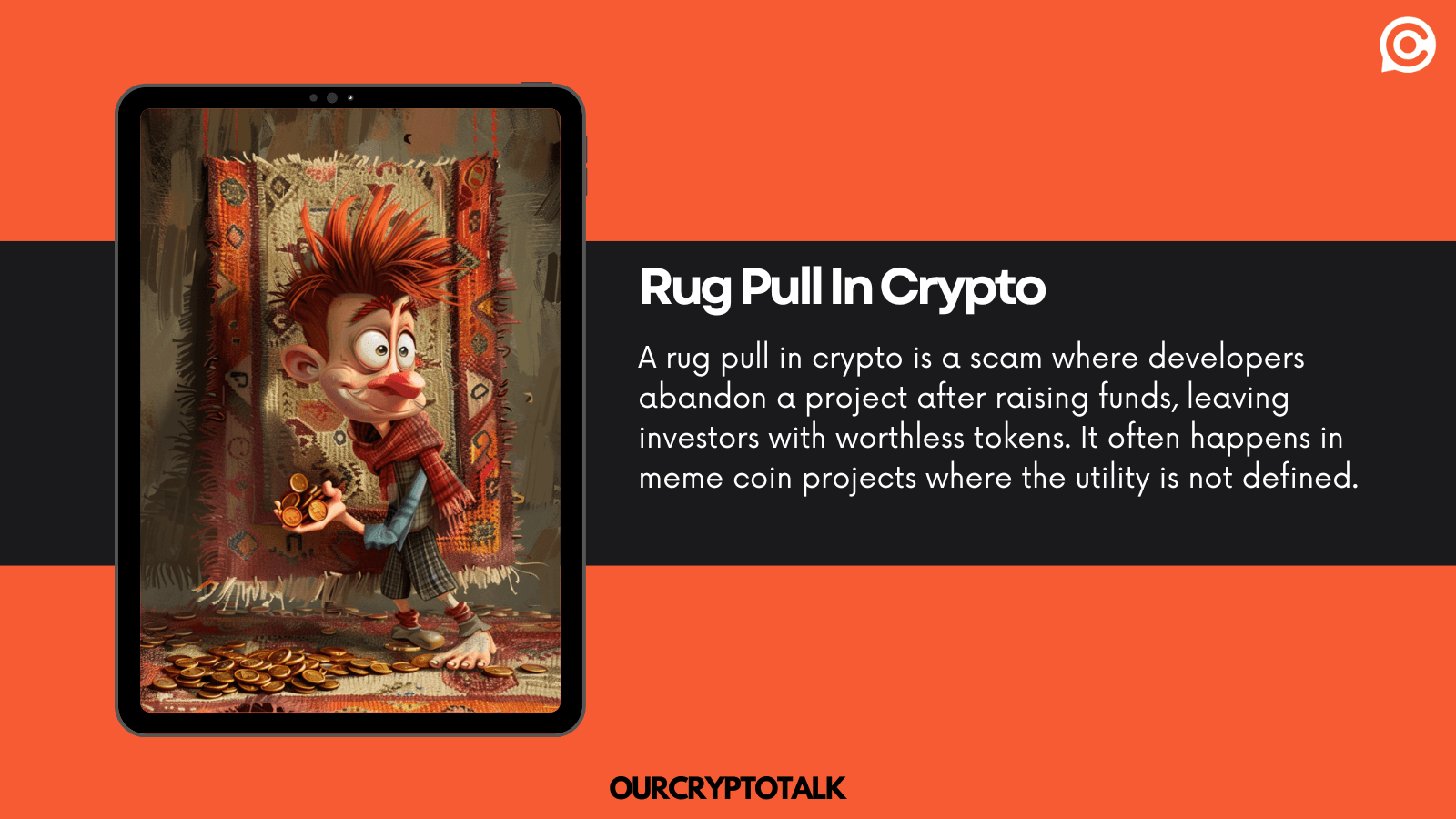
The crypto market has created life-changing opportunities, but it has also bred some of the most devastating financial scams. Among them, rug pulls stand out as one of the most infamous and destructive. A rug pull occurs when a crypto project’s developers hype up a new token, attract investor funds, and then suddenly withdraw all liquidity, leaving investors with worthless assets.
Unlike traditional financial scams, rug pulls exploit the decentralized nature of blockchain, making them difficult to track and even harder to recover from. This form of exit scam has cost investors billions of dollars, wiping out portfolios overnight. The worst part? Many of these projects look legitimate at first glance.
Understanding how rug pulls operate is essential for anyone investing in crypto. This article explores the mechanics behind rug pulls, past examples, warning signs to watch for, and how investors can protect themselves from falling victim to these fraudulent schemes.

The Anatomy of a Rug Pull
At its core, a rug pull is a deceptive exit scam where developers create a new token, promote it aggressively, and then vanish with investors’ funds once enough liquidity is accumulated. While every rug pull has its variations, most follow a similar pattern.
Step-by-Step Breakdown of a Rug Pull
- Token Creation & Liquidity Pool Setup – Developers launch a new cryptocurrency and pair it with a stablecoin (USDT, USDC) or a major asset like ETH.
- Marketing & Hype – The project is promoted heavily, often through social media, influencers, and even fake endorsements. Investors are drawn in by promises of high returns and limited-time opportunities.
- Liquidity Growth – As investors buy the token, its price skyrockets, and the liquidity pool expands.
- The Exit (Pulling Liquidity) – At a critical moment, the developers remove liquidity from the pool, making it impossible for investors to sell their tokens.
- Project Disappearance – The official website, social media accounts, and developers disappear, leaving behind a dead project.
Types of Rug Pulls
- Liquidity Theft – The most common type, where developers remove the liquidity pool entirely.
- Minting Exploits – Developers print an excessive number of tokens, crashing the price.
- Sell-Limit Rug Pulls – Investors can buy but are blocked from selling, preventing them from exiting before the developers do.
Rug pulls cripple investor confidence and reinforce negative perceptions about the crypto industry. Identifying their warning signs early is the only way to stay ahead.
Historical Rug Pulls: Lessons from the Past
History is full of rug pulls that wiped out millions in investor funds. By studying these cases, we can recognize common warning signs and avoid falling into similar traps.
The Squid Game Token Rug Pull (2021)
The Squid Game token ($SQUID) rode the hype of Netflix’s hit series, attracting thousands of investors. However, the token’s smart contract was programmed to prevent investors from selling, creating an artificial demand. As the hype grew, developers drained all liquidity and disappeared, leaving investors with a worthless token.
Lesson: If a token has selling restrictions, it’s a red flag. Always verify smart contract functionality before investing.
OneCoin: The Multi-Billion Dollar Ponzi Scheme
OneCoin marketed itself as a “Bitcoin killer” and attracted over $4 billion in investments. However, it was later revealed to be a Ponzi scheme with no real blockchain or infrastructure. The founders disappeared, and investors lost everything.
Lesson: A crypto project without a verifiable blockchain or transparency is a scam.
Meerkat Finance: The $31M Binance Smart Chain Heist
Launched on Binance Smart Chain (BSC), Meerkat Finance promised high DeFi yields. Just one day after launching, the developers drained $31 million from investor wallets, claiming they had been hacked. Later, blockchain traces indicated it was an inside job.
Lesson: A project disappearing overnight is never a coincidence. Always assess project longevity before investing.
These rug pulls serve as harsh reminders of the risks in crypto. Investors must stay vigilant, perform due diligence, and question everything before committing funds.
Recent Trends in Rug Pull
The rug pull landscape has evolved, with scams becoming more sophisticated and high-profile. Unlike early rug pulls, which were often executed by anonymous developers, recent cases involve celebrity endorsements, political ties, and mainstream media attention. This shift has made rug pulls even more deceptive, as investors trust recognizable figures, only to be left holding worthless tokens.

1. LIBRA: The Political Crypto Disaster
On February 14, 2025, $LIBRA launched with alleged backing from Argentine President Javier Milei. The token surged to a staggering $4.56 billion market cap, fueled by speculation that it would play a role in Argentina’s financial system. However, insiders secretly cashed out $107 million, triggering a 95% crash overnight. Investors collectively lost $286 million, and the fallout led to political scandal, investigations, and fraud allegations.
2. FROGGY: The Meme Token Exit Scam
Launched in early 2024, FROGGY was marketed as the next big meme token. The developers built hype through social media and influencer promotions, leading to massive retail investment. However, once the liquidity pool was filled, the team drained all funds, crashing the token’s price from $0.00001577 to $0.0000000073964—a 99.95% collapse. Thousands of investors were left with worthless holdings.
3. HAWK: The Influencer Pump-and-Dump
December 5, 2024, saw the launch of HAWK, a token linked to influencer Hailey Welch. It quickly soared to a $500 million market cap, only for insiders to sell off their tokens within minutes, causing an instant price drop. Welch distanced herself from the project, but allegations of an orchestrated rug pull persisted. Many retail investors lost their entire investment.
4. GUNIT: The Celebrity Pump Scheme
GUNIT, a 2024 crypto token tied to a well-known streamer, saw its price spike to $0.05085 before the creator secretly dumped all holdings. The token plummeted to $0.00002133, wiping out investors. The streamer had hyped the token live, concealing his personal stake, only to end the stream as prices collapsed.
5. JENNER: The Failed Celebrity Coin
Caitlyn Jenner’s $JENNER token launched in 2024 and crashed immediately after its release. Investors filed a class-action lawsuit, accusing her of promoting an unregistered security. The project became a symbol of celebrity-endorsed rug pulls, proving that even high-profile names can’t guarantee legitimacy.
These examples show that rug pulls are no longer confined to obscure DeFi projects—they now involve influencers, politicians, and celebrities.
The Impact of Rug Pull on the Crypto Market
Rug pulls don’t just hurt individual investors—they damage trust in the entire crypto ecosystem. Each high-profile scam leads to market volatility, regulatory crackdowns, and fear among new investors.
1. Erosion of Trust
Every rug pull shakes confidence in the industry. Investors become skeptical of new projects, making it harder for legitimate teams to raise funds. This lack of trust slows innovation and growth in the crypto space.
2. Market Volatility
Large-scale rug pulls can trigger panic selling, leading to widespread price drops across the market. When investors lose money, they often exit the market entirely, reducing liquidity and dampening momentum for new projects.
3. Increased Regulation
Governments and regulatory bodies crack down harder on crypto every time a major rug pull occurs. This leads to stricter KYC (Know Your Customer) requirements, exchange delistings, and even outright bans on privacy-focused crypto tools.
4. Discouraging New Investors
Newcomers who hear about rug pulls are often too afraid to enter the market, limiting crypto adoption. While decentralized finance (DeFi) holds promise, these scams make it harder for people to trust blockchain technology.
To move forward, the crypto industry must self-regulate, educate investors, and demand transparency to minimize the impact of rug pulls.
Identifying a Potential Rug Pull: Red Flags to Watch
Spotting a rug pull before it happens is the key to avoiding financial disaster. While scams can be deceptively well-packaged, there are clear warning signs investors should always watch for.

1. Anonymous Developers
Legitimate crypto projects are often backed by known teams with public track records. If a project refuses to disclose its developers, it’s a major red flag. Many scam projects use fake names or stock photos to appear legitimate.
2. No Liquidity Lock
A genuine project locks liquidity for a set period to ensure developers can’t remove funds suddenly. If there’s no liquidity lock on a new token, it increases the risk of a rug pull.
3. Unrealistic Returns
If a project promises 1000% APY, guaranteed profits, or instant mooning, it’s likely a scam. No investment is risk-free, and such claims are almost always bait to lure in investors.
4. No Smart Contract Audit
Projects with audited smart contracts from reputable firms like CertiK or OpenZeppelin are safer. If a project has no audit or a vague, low-quality review, it’s a serious warning sign.
5. Limited Token Sellability
Some scams restrict investors from selling while allowing insiders to dump tokens. Always check if a token’s sell function is unrestricted before buying in.
By staying vigilant and conducting thorough research, investors can reduce their risk and avoid falling for these fraudulent schemes.
Protecting Your Investments from Rug Pull
Staying safe from rug pulls requires critical thinking and skepticism. While flashy projects and hyped-up tokens can seem like golden opportunities, they often hide serious risks.
1. Avoid Altcoins Without Real Utility
Many rug pulls involve worthless tokens with no real-world use case. If a project only focuses on price speculation without offering a functional product, it’s a red flag. A strong project should solve a problem or provide a service beyond just existing as a tradable asset.
2. Watch for Sudden Celebrity Promotions
When a celebrity or influencer suddenly starts talking about crypto, chances are they might launch their own token soon. Scammers often use well-known figures to generate hype and pump a coin’s value before exiting. Many celebrity-backed tokens have ended in disaster, leaving investors with worthless assets.

Read more about these pump and dump schemes from celebrities
3. Verify Coin Names and Tickers
Some scammers launch tokens with similar names or tickers to established projects, hoping to mislead investors. For example, a rug pull might mimic the ticker of a popular token but with a minor change. Always double-check the contract address before investing.
By staying cautious and questioning hype-driven investments, you can significantly reduce your exposure to rug pulls.
Regulatory Responses to Rug Pulls
Governments and regulatory bodies are actively addressing rug pulls and crypto scams, aiming to bring more security and accountability to the market. While regulations vary across regions, several key measures are being implemented worldwide.
1. Stricter KYC and AML Requirements
Regulators are enforcing Know Your Customer (KYC) and Anti-Money Laundering (AML) laws on crypto exchanges to prevent fraudulent projects from launching and operating anonymously.
2. Legal Actions Against Scammers
Authorities have started prosecuting rug pull developers for fraud and market manipulation. For example, the U.S. Department of Justice has charged several DeFi developers for exit scams, setting legal precedents.
3. Smart Contract Audits as a Standard
Some countries are pushing for mandatory smart contract audits before a token can be publicly listed, reducing the likelihood of scams going undetected.
4. Exchange Delistings and Bans
Regulatory pressure has forced major crypto exchanges to delist suspicious tokens and enhance due diligence before listing new projects.
While regulation helps protect investors, it also poses challenges for decentralized finance (DeFi), where the goal is to operate without centralized control. Striking a balance between security and innovation will be crucial for the future of crypto.
The Role of Blockchain Transparency in Preventing a Rug Pull
One of crypto’s greatest strengths is transparency, and it plays a crucial role in preventing rug pulls. Since all transactions occur on a public ledger, investors can track token movements and identify red flags before scams unfold.
1. Using Blockchain Explorers to Track Funds
Tools like Etherscan, BscScan, and Solscan allow investors to check liquidity pools, developer wallets, and transaction flows. If a project’s founders control a large percentage of tokens, or if funds are being funneled to unknown wallets, it’s a warning sign.

2. Community-Led Blockchain Analysis
Crypto communities are increasingly analyzing blockchain data to flag suspicious projects. Groups on Twitter, Discord, and Telegram actively investigate new tokens, exposing fraudulent schemes before they fully unfold.
3. The Future of Blockchain Security
As blockchain security evolves, real-time monitoring tools and AI-driven analysis will make it easier to detect rug pulls before they happen. Platforms are developing automatic alerts for suspicious liquidity withdrawals, making it harder for scammers to operate undetected.
By leveraging blockchain’s transparency, investors can arm themselves with data-driven insights to spot and avoid rug pulls. In a space filled with risk, knowledge remains the best defense.
The Future of Rug Pulls: What Lies Ahead?
Rug pulls will continue to evolve as scammers adapt to new market trends and investor behavior. However, advancements in blockchain transparency, regulation, and investor awareness may reduce their prevalence.
1. AI-Driven Fraud Detection
Blockchain analytics firms are developing AI-powered tools to detect suspicious token behaviors, liquidity movements, and insider activity before rug pulls happen. These tools will become essential for investors.

2. Community-Led Protection
Crypto communities are forming watchdog groups that analyze new projects and flag potential scams. These groups help expose fraudulent projects early, increasing transparency.
3. Stricter Exchange Listings
Major exchanges are introducing more rigorous vetting processes before listing new tokens, making it harder for rug pull projects to gain legitimacy.
4. Evolution of Smart Contracts
Future smart contracts may include built-in investor protections, such as automatic liquidity locks and anti-rug mechanisms that prevent developers from draining funds instantly.
While rug pulls won’t disappear entirely, the combination of technological advancements, regulatory oversight, and investor education will make it increasingly difficult for scammers to operate. Staying informed and cautious remains the best defense against these deceptive schemes.
Conclusion
Rug pulls remain one of the biggest threats in the crypto space, draining billions from unsuspecting investors. As the industry evolves, so do the tactics of scammers, making it essential for traders to stay informed, skeptical, and proactive.
The rise of celebrity-backed coins, copycat tickers, and hype-driven projects has made it easier than ever for scammers to manipulate market sentiment. However, due diligence is your strongest weapon. Avoiding altcoins with no clear utility, verifying token contracts, and watching for insider activity can help protect against financial losses.
Regulatory measures are tightening, but fraudsters continue to find loopholes. A responsible investor must rely on research rather than hype. If a project lacks transparency, a strong use case, or a long-term roadmap, it is best to steer clear.
As rug pulls become more sophisticated, staying cautious and informed is the only way to navigate the crypto market safely.
TL;DR
- A rug pull is a scam where developers create a token, attract investors, and disappear with funds.
- Developers lure investors in with hype, then remove liquidity, leaving worthless tokens.
- Past rug pulls like Libra, Froggy, and Jenner Coin highlight the risks.
- Recent trends show scams tied to influencers, celebrities, and meme tokens.
- Rug pulls shake investor confidence and create instability in the crypto market.
- Red flags include anonymous teams, vague roadmaps, excessive hype, and limited liquidity.
- Avoid altcoins without clear utility and stay cautious of sudden celebrity promotions.
- Verify tokens carefully, as scammers often create copycat coins with similar names.
- Conduct research, diversify holdings, and avoid investing based purely on hype.
- Regulatory efforts are increasing, but investor awareness remains the best defense.
Frequently Asked Questions About Rug Pulls
What is a rug pull in crypto?
How do rug pulls usually work?
What are some famous rug pull examples?
What red flags signal a potential rug pull?
How can investors protect themselves from rug pulls?
How are regulators responding to rug pulls?
What role does blockchain transparency play in prevention?
Will rug pulls continue in the future?
In this article
The Anatomy of a Rug Pull Historical Rug Pulls: Lessons from the Past Recent Trends in Rug PullThe Impact of Rug Pull on the Crypto Market Identifying a Potential Rug Pull: Red Flags to WatchProtecting Your Investments from Rug PullRegulatory Responses to Rug Pulls The Role of Blockchain Transparency in Preventing a Rug Pull The Future of Rug Pulls: What Lies Ahead? TL;DR