Made in USA Crypto: Why It Matters in 2026
Made in USA crypto explained: which projects qualify, how Trump-era policy favorsUS-built chains, and what it means for regulation and listings


Author: Chirag Sharma
In the global race for digital money, the phrase “Made in USA Crypto” has started carrying real weight. It’s no longer just about Bitcoin’s origin story or Wall Street’s late arrival to the blockchain era. It’s about America reclaiming its financial frontier through crypto assets built, regulated, and innovated on home soil.
As of late October 2025, U.S.-born cryptocurrencies represent over $500 billion in market capitalization, a stunning share of the digital asset economy. Behind this figure lies a deeper truth: these coins and protocols are symbols of economic sovereignty, technological dominance, and national resilience in a rapidly decentralizing world.
From Silicon Valley labs to New York trading floors, American blockchain teams are not only creating next-gen financial infrastructure but also reshaping global trade, payments, and tokenized value systems. Backed by a mix of institutional capital, political will, and regulatory clarity, this movement is defining the next phase of crypto growth.
In this guide, we’ll explore what exactly qualifies as “Made in USA Crypto,” how the narrative began, who’s driving it, and why it matters more than ever for investors, builders, and policymakers alike.
What Defines “Made in USA” Crypto
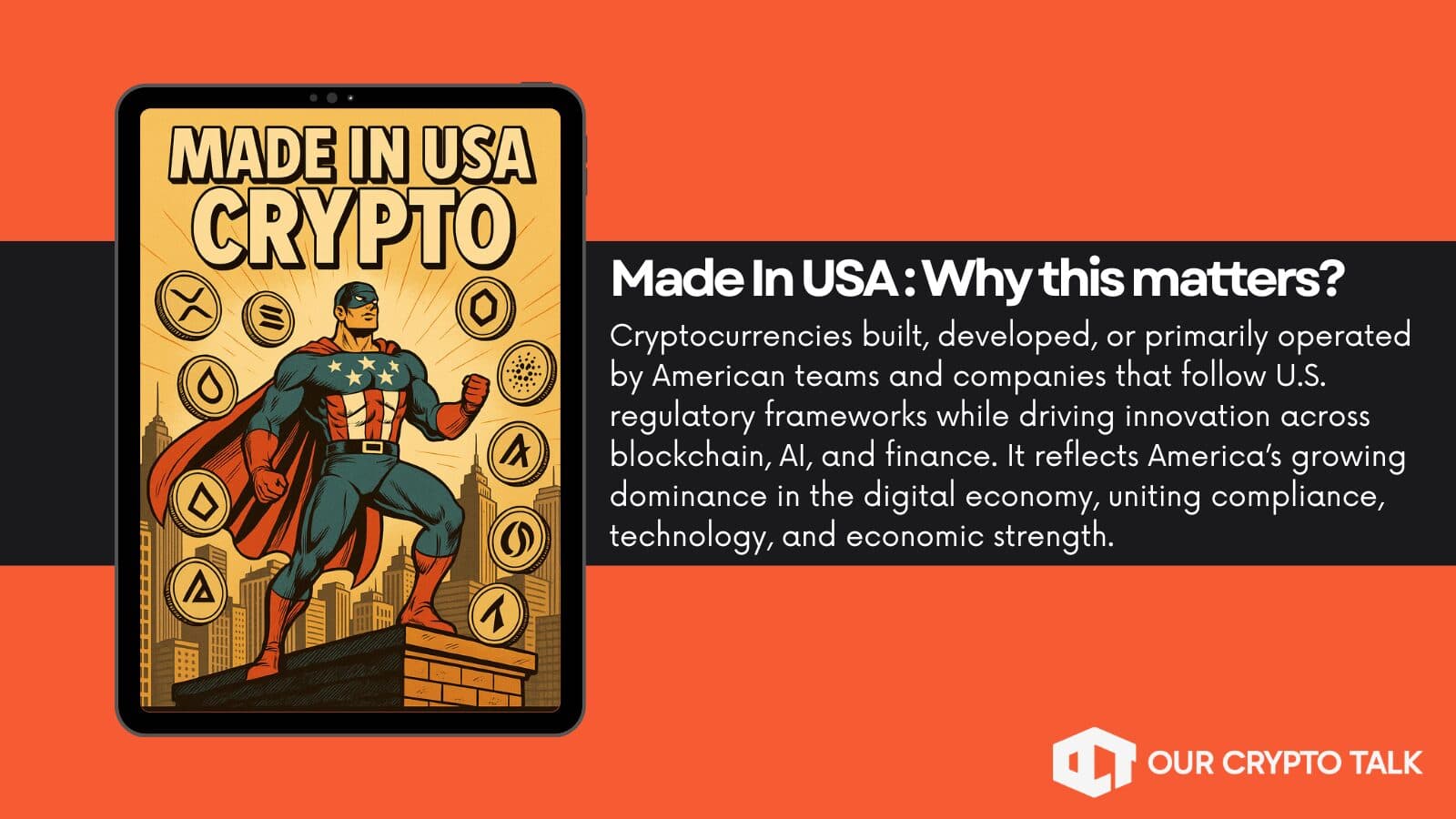
The “Made in USA Crypto” label isn’t a marketing gimmick. It’s a measurable category that highlights cryptocurrencies developed, issued, or primarily operated by U.S.-based entities.
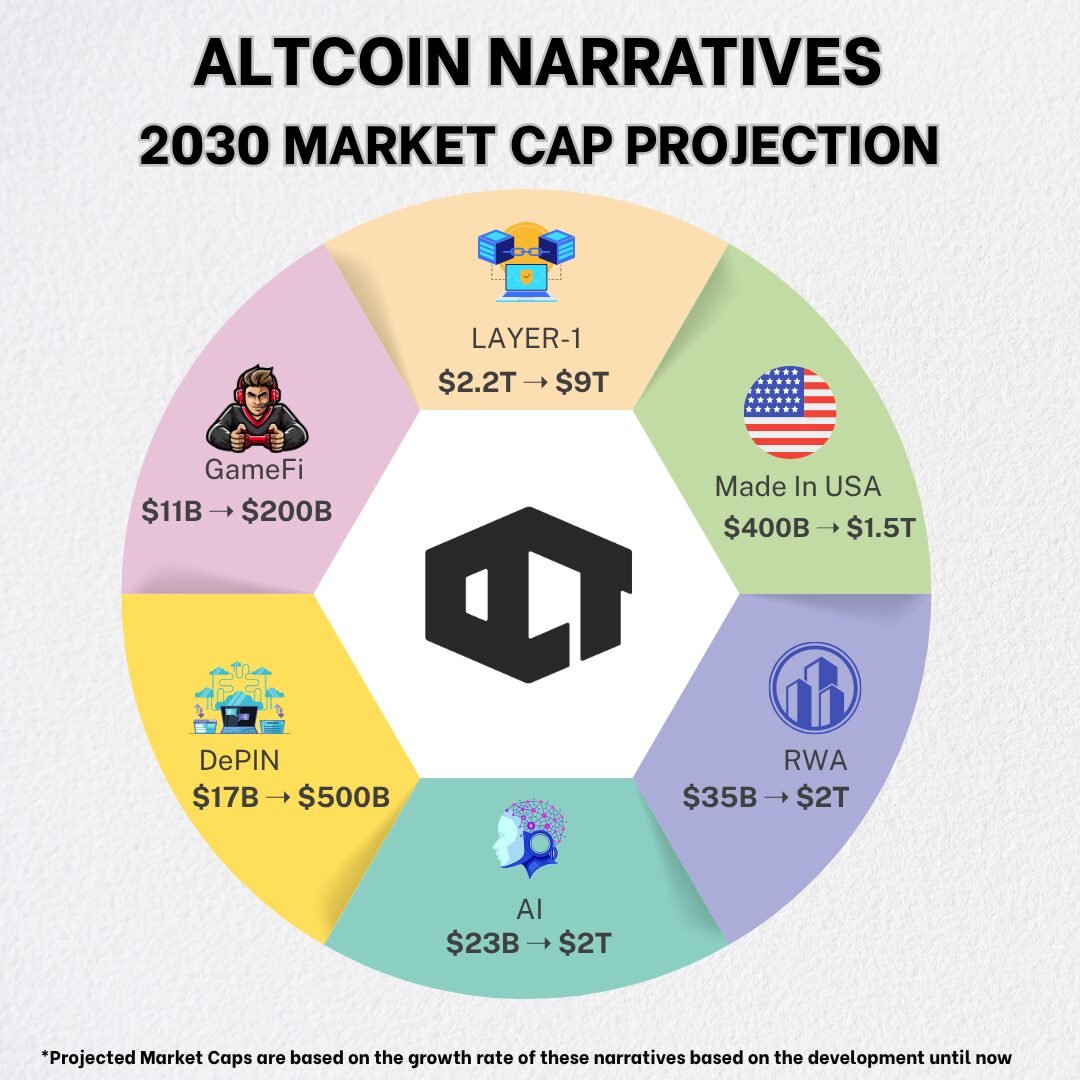
Data aggregators like CoinMarketCap, CoinGecko, and CryptoSlate now track over 66 such projects, with a collective sector valuation between $494 billion and $503 billion. These are not random altcoins. They’re projects grounded in American innovation, compliance, and scalable design. The Market Cap potential for this narrative is estimated to hit 4X in the upcoming years.
Key criteria that define the “Made in USA Crypto” tag include:
- U.S. Headquarters or Founders: Companies or development teams registered or founded in the United States.
- Regulatory Compliance: Projects aligning with SEC, FDIC, or Treasury frameworks while maintaining decentralization.
- Technological Leadership: Focus on scalability, interoperability, and use cases such as tokenized assets or real-world data integration.
- Economic Contribution: Creation of blockchain jobs, infrastructure, and capital within the U.S. economy.
Examples range from blockchain platforms like Ripple (San Francisco) and Solana Labs (San Francisco) to infrastructure players powering payments, real-world asset tokenization, and AI-driven networks.
This classification also reflects how America intends to lead in the digital economy — not just through adoption, but by designing the rails others will use.
How the Narrative Emerged: From Election Hype to Market Surge
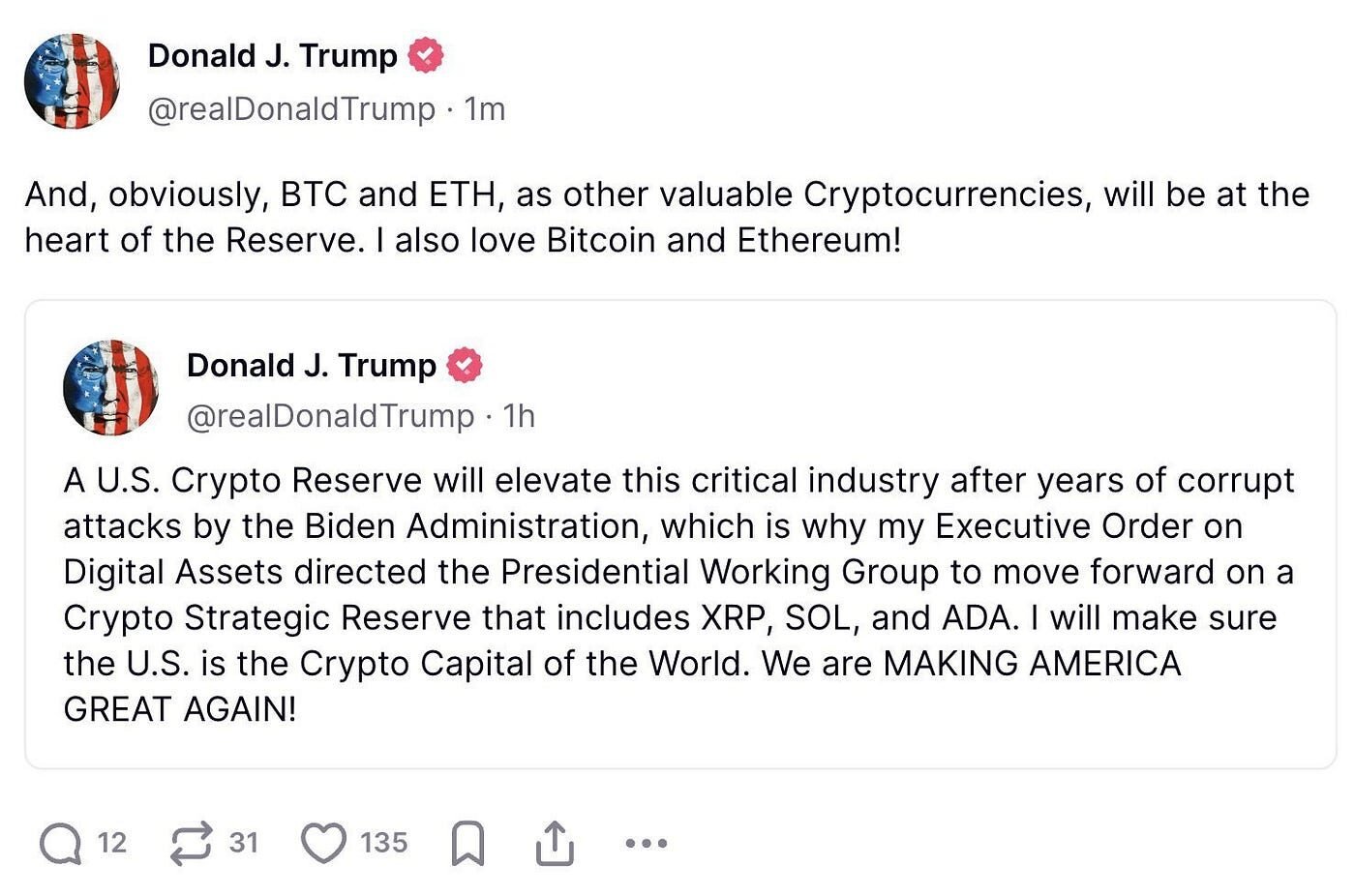
The “Made in USA Crypto” momentum exploded after the 2024 U.S. Presidential Election, which set the stage for a more crypto-friendly political environment. When Donald Trump returned to office, the market interpreted it as a green light for blockchain innovation and capital inflows. President Trump mentioned the importance of Made in USA Altcoins in his Truth Social post after taking the office
Here’s how the narrative evolved:
- January 2025: CoinMarketCap launched its “Made in America” tracker, featuring XRP, Solana, and Cardano among the top entries. XRP led the list as America’s most adopted blockchain for cross-border payments.
- Summer 2025: Influencers on YouTube and X (formerly Twitter) predicted a “summer surge” for U.S.-born cryptos, citing new ETF approvals and legislative clarity.
- October 2025: The category saw a 6.5% market-wide jump after Congress passed three major crypto bills and the White House signed stablecoin regulations.
The movement wasn’t just political. It became cultural. On social media, users began calling Litecoin the “American Bitcoin” and XRP the pride of Silicon Valley. Meanwhile, Real World Asset projects like Carnomaly ($CARR) went viral as symbols of U.S.-driven utility — cars, homes, and data all being tokenized within American legal frameworks.
Headlines like “Made in USA coins surge after new tariffs on China” reinforced this idea: crypto had officially become part of the national economic story.
The Forces Backing This Movement: Politics, Regulations, and Institutions
The strength of the “Made in USA Crypto” trend lies in its alignment between politics, regulation, and capital — three forces that historically define financial revolutions.
Political Muscle:
Trump’s administration introduced a “Crypto Capital” vision, promoting Bitcoin as part of the national reserve and pledging to make the U.S. a global stablecoin hub. This policy framework inspired confidence among investors and founders alike.
Regulatory Clarity:
Congress passed FIT21, stablecoin guidelines, and authorized spot ETFs for assets like Solana and Hedera. These moves not only legitimized homegrown tokens but also redirected billions from offshore markets back into U.S.-regulated exchanges.
Institutional Firepower:
Wall Street responded fast. Grayscale launched new “American innovation” funds, Rex Shares rolled out the first “Made in America ETF”, and major players like 21Shares listed products tracking U.S.-origin crypto ecosystems.
Cultural Amplifiers:
Platforms such as CoinGecko and CMC boosted visibility by creating dedicated categories, while the X community championed these coins as symbols of national strength. Posts like “Liberty minted in code” and “Texas RWA revolution begins” turned into viral slogans.
In short, this wasn’t just a market movement. It became a policy-backed identity shift, redefining how America views financial innovation in the digital age.
Key Catalysts For Made in USA
5. Why “Made in USA” Crypto Matters for the Future
The rise of Made in USA Crypto isn’t just a marketing narrative. It’s a structural shift in how the world perceives digital finance. These projects combine regulatory clarity, innovation, and national interest, positioning the United States as the anchor of the global blockchain economy.
Here’s why this category carries massive long-term importance:
1. Economic Sovereignty
For decades, the U.S. dollar has been the backbone of global trade. Now, the same principle extends into the digital era through U.S.-born cryptocurrencies. By building compliant, scalable blockchains domestically, America reduces dependence on offshore entities and foreign mining hubs — especially China’s influence on Bitcoin’s early mining dominance.
2. National Security and Compliance
“Made in USA Crypto” assets are built with transparency, audits, and compliance baked into their design. Projects like ONDO and Ripple align with federal standards, allowing real-world assets and cross-border payments to flow securely under U.S. jurisdiction. This creates trust not just for investors but also for financial institutions onboarding blockchain rails.
3. Innovation Edge
Over 65% of the world’s top Layer-1 blockchains trace their origins to American teams. These projects power everything from AI computation (TAO, RENDER) to RWA tokenization (ONDO, ALGO) and DeFi scaling (SUI, SEI). The U.S. is effectively exporting its technology DNA across every layer of the crypto stack.
4. Global Leadership in Finance
Stablecoins like USDC, developed by U.S. entities, now account for over 30% of all stablecoin transaction volume worldwide. Add to that the explosion of spot and thematic ETFs, and the U.S. stands at the center of institutional liquidity entering crypto markets.
As one analyst put it on X: “XRPL is doing for banks what SWIFT couldn’t do in 40 years.” The sentiment captures the essence of America’s advantage — fast, compliant, and scalable digital infrastructure that the world can plug into.
Top Projects Spotlight: Giants and Hidden Gems
When people talk about Made in USA Crypto, a few names instantly come up — the heavyweights that have carried the narrative since day one. Solana ($SOL) remains the technical heartbeat of the movement, showing the world that high-speed blockchains can actually run at internet scale. Ripple ($XRP) keeps doing the quiet work of linking banks and payment networks under strict compliance, proving that regulation and innovation can go hand in hand. Chainlink ($LINK) continues to power nearly every major DeFi protocol through its oracle data feeds, while Cardano ($ADA) has become the academic backbone of smart-contract development, known for its measured, research-driven approach.
Beyond these giants, a second wave of builders is pushing the boundaries even further. Sui ($SUI) and Sei ($SEI) are redefining transaction speed and on-chain trading efficiency. Ondo ($ONDO) leads the real-world asset boom with tokenized Treasuries. Algorand ($ALGO) and Injective ($INJ) represent the compliant DeFi layer America always wanted, and Bittensor ($TAO) is bridging AI and crypto like no one else. Together, these projects show that U.S. innovation doesn’t follow trends — it builds the rails for the next decade of digital finance.
Top “Made in USA” Crypto Projects by Sector
Explosive Potential: The Road to a $1 Trillion Sector
If history repeats itself, “Made in USA Crypto” could become the next trillion-dollar narrative.
Market projections suggest that this category could double its collective market cap by 2026, driven by a combination of ETF inflows, institutional adoption, and favorable tax reforms.
Key Catalysts to Watch:
- Zero Capital Gains Incentives: Proposed tax relief for U.S.-registered crypto assets could fuel retail and corporate inflows.
- ETF Expansion: With XRP, SOL, and HBAR already live, funds for LINK, ADA, and ALGO are rumored to be next.
- RWA Boom: Tokenized assets like Treasuries, real estate, and auto financing ($CARR, $ONDO) are pulling traditional capital into blockchain rails.
- Layer-1 Activity: Base L2 now processes 13M+ daily transactions, proving on-chain scalability isn’t just a dream.
- Memes to Utility: Dogecoin payments, BONK’s U.S. user adoption, and AI-linked tokens like TAO are bridging fun with function.
Bull Case Forecast:
If the momentum holds, SOL could touch $1,000, XRP’s ETF variants could drive record inflows, and mid-caps like ONDO and TAO might deliver outsized returns as niche narratives mature.
In short, this isn’t speculation. It’s the convergence of policy, innovation, and liquidity — and America is leading the charge.
Challenges, Risks, and the Road Ahead
Every movement that reshapes finance comes with friction. “Made in USA Crypto” is no exception. While momentum is clearly in America’s favor, several challenges could test this narrative before it reaches full maturity.
1. Regulatory Overhang
Despite major progress, the SEC and CFTC continue to send mixed signals. New frameworks like FIT21 help, but enforcement actions and uncertain interpretations still discourage startups from launching on U.S. soil. The irony? Too much regulation can push innovation offshore again — exactly what the “Made in USA” movement aims to prevent.
2. Market Volatility and Macro Pressures
Crypto remains tied to broader economic trends. Fed rate cuts, inflation data, and global trade tensions can all influence investor sentiment. Tariffs or dollar strength may temporarily mute the inflows that fuel this narrative.
3. Competition from Global Hubs
Regions like Dubai, Singapore, and Hong Kong are some crypto-friendly countries with light taxation and flexible policies. To stay competitive, the U.S. must balance compliance with creativity. Overregulation could cost America its innovation edge.
Cryptocurrency Tax Regimes by Country
| Country | Crypto Tax Regime | Regulatory Body | Key Appeal |
|---|---|---|---|
 Switzerland
| Asset, wealth/income tax vary | FINMA | Legal clarity and banking integration |
 Singapore
| No capital gains tax | MAS | Tax-free investing, sandbox innovation |
 Portugal
| Zero tax for personal gains | Fisco (finance authority) | Crypto nomad lifestyle, tax advantage |
 Germany
| Tax-free >1 year holds | BaFin | Institutional access and long-term relief |
 UAE
UAE
| Zero tax zones | VARA / DMCC | Licensing clarity and investor visas |
 USA
USA
| Capital gains tax (15–37%) | IRS / SEC / CFTC | Market scale, institutional adoption, clear frameworks |
 Canada
| Capital gains tax (commodity) | CSA / FINTRAC | ETF availability and strong compliance |
 Estonia
| No VAT, minimal income tax | FIU Estonia | E-Residency and digital ecosystem |
 El Salvador
| No capital gains on Bitcoin | CNAD / Bitcoin Office | Legal tender status, Bitcoin-focused infrastructure |
 Malta
Malta
| No long-term capital gains tax | MFSA / FIAU | Blockchain Island reputation, favorable tax for HODLing |
4. Public Perception
Many retail investors still view crypto as speculative or inaccessible. Educating the public that “Made in USA Crypto” projects are compliant, utility-driven, and value-generating will be key for mass adoption.
Mitigation and Outlook:
The Trump administration’s focus on domestic blockchain incentives, ETF growth, and institutional clarity is accelerating recovery. By 2030, analysts expect over 50% of the global crypto market to be U.S.-dominated, backed by secure regulation and open innovation.
For investors, the strategy is simple: hold a core portfolio of established U.S. cryptos like SOL, XRP, and LINK, and complement it with emerging innovators like ONDO, INJ, and TAO for higher alpha potential.
As one popular quote on X put it, “Peace through strength — buy Made in USA.”
TL;DR
- “Made in USA Crypto” represents U.S.-founded, compliant, and innovation-driven blockchain projects with over $500B market cap.
- The narrative gained traction post-2024 elections, supported by Trump’s pro-crypto policies and new legislation.
- Institutional inflows, ETF approvals, and RWA tokenization are driving explosive sector growth.
- Leading players include XRP, SOL, ADA, LINK, SUI, SEI, ONDO, ALGO, INJ, and TAO.
- Risks include regulatory overreach and global competition, but long-term dominance remains in favor of the U.S. crypto ecosystem.
Conclusion: America’s Digital Destiny
The Made in USA Crypto narrative is bigger than price charts or political cycles. It’s about reclaiming leadership in the next era of finance. When you combine Wall Street’s capital, Silicon Valley’s innovation, and Washington’s evolving regulatory stance, you get a digital ecosystem that can compete with any global financial power.
From compliant stablecoins to decentralized AI networks, America’s blockchain builders are proving that innovation and oversight can coexist. Each project in this ecosystem — whether it’s Ripple modernizing payments, Solana scaling transactions, or Ondo tokenizing real assets — tells a story of progress through policy.
The world is watching. And as nations race to define their digital standards, America’s answer is simple: build it here, regulate it right, and scale it globally.
That’s what “Made in USA Crypto” truly means — financial strength, technological sovereignty, and a blueprint for the world’s decentralized future.
FAQs: Made in USA Crypto
What does “Made in USA Crypto” mean?
Why is “Made in USA Crypto” gaining attention in 2025?
Which are the top “Made in USA Crypto” coins?
How is regulation helping U.S. crypto projects?
What is the market outlook for “Made in USA Crypto”?
Are these projects safer than offshore cryptocurrencies?
How can investors identify authentic “Made in USA” crypto assets?
In this article
What Defines “Made in USA” CryptoHow the Narrative Emerged: From Election Hype to Market SurgeThe Forces Backing This Movement: Politics, Regulations, and InstitutionsKey Catalysts For Made in USA5. Why “Made in USA” Crypto Matters for the FutureTop Projects Spotlight: Giants and Hidden GemsTop “Made in USA” Crypto Projects by SectorExplosive Potential: The Road to a $1 Trillion SectorChallenges, Risks, and the Road AheadTL;DRConclusion: America’s Digital DestinyFAQs: Made in USA Crypto