10 Ways to Earn Passive Crypto Income in 2026
Explore 10 proven ways to earn passive income with crypto through staking, lending, RWAs, NFTs, and DeFi strategies in 2025.


Author: Chirag Sharma
In the world of digital assets, there’s a growing shift from speculation to sustainability. Investors are no longer just chasing 10x tokens or overnight pumps, they’re looking for consistent income, stability, and long-term growth. That’s where Passive Income with Crypto steps in.
The idea is simple yet powerful: your crypto works for you, not the other way around. Whether it’s through staking, lending, or providing liquidity, passive income allows you to earn rewards while holding assets you already believe in.
Imagine logging into your wallet and seeing your holdings quietly grow every week with no charts to stare at, no panic trades to make. This concept has gained massive traction as more users seek financial freedom without constant trading. According to DeFi analytics, the total value locked in decentralized finance has surpassed $200 billion, with billions flowing into protocols designed specifically for yield generation.
But what exactly does it mean to earn passive income with crypto? In essence, it’s about generating returns from your holdings through mechanisms that require minimal ongoing effort after setup. You stake, lend, or provide liquidity and the system rewards you in return.
Traditional assets like bonds or rental properties have always offered recurring income. Crypto takes that same principle and amplifies it with automation, transparency, and global access. Yields can range from 3% to over 20% depending on the strategy, risk, and asset type.
The best part? You don’t need to be a professional trader to benefit. Whether you’re holding Bitcoin, stablecoins, or altcoins, there’s now a way to earn yield passively.
In this guide, we’ll explore the top 10 ways to make passive income with crypto, covering how each method works, its pros and cons, and real-world examples from 2025.

Why Passive Income in Crypto Matters Now
Crypto has matured. The days of endless hype cycles and meme tokens dominating headlines are fading. What we’re seeing in 2025 is a more stable, utility-driven phase and passive income sits right at its core.
There are three major reasons why Passive Income Crypto has become such a strong narrative this year:
1. Institutional Adoption and Regulation
From Bitcoin ETFs to tokenized Treasury markets, U.S. and global regulators are giving crypto clearer frameworks. That means safer platforms and more trustworthy returns.
2. Technological Upgrades
Ethereum’s latest Dencun upgrade, Solana’s performance boost, and the rise of modular blockchains have made staking and DeFi smoother than ever. Gas fees are lower, rewards are higher, and access is easier.
3. Investor Behavior Shift
People are tired of constant trading. They want consistent, predictable returns. Passive income offers exactly that a way to stay in the market without stress.
At the same time, it’s crucial to understand the risks. While crypto yields can exceed 10% or even 20%, they also come with volatility, smart contract vulnerabilities, and liquidity traps. The key to success lies in diversification and research.
So before diving in, remember: the smartest investors today don’t just chase coins. They build portfolios that earn in both bull and bear markets. Let’s look at how they do it.
1. Staking Cryptocurrencies: The Foundation of Passive Rewards
If there’s one method that defines Passive Income in Crypto, it’s staking. This is the foundation of modern crypto rewards as simple, accessible, and proven.

When you stake a cryptocurrency, you lock your tokens into a proof-of-stake (PoS) network to help validate transactions and keep it secure. In return, you receive a portion of the block rewards. Think of it as earning interest for helping run the network.
Ethereum, Cardano, and Solana are among the biggest staking ecosystems, each offering average yields between 3% and 6% annually. Newer chains can go even higher.
For example, if you stake 32 ETH through a validator or use a platform like Lido or Coinbase, you’ll earn regular ETH rewards that automatically compound. Once set up, it’s hands-off.
Pros:
- Low technical barrier; easy to start on major platforms
- Strengthens network security
- Consistent, predictable rewards
Cons:
- Lock-up periods or slashing risks if validators fail
- Opportunity cost during volatile markets
As of 2025, Ethereum’s upgrades have made staking more efficient and accessible, bringing millions of new participants into the ecosystem. If you plan to hold your coins long term, staking turns idle assets into compounding machines.
Pro tip: diversify across chains using stake SOL for speed, ADA for eco-sustainability, and ETH for long-term credibility.
2. Liquid Staking and Restaking: Earning Without Lockups
Traditional staking is great, but it locks your tokens. What if you could earn staking rewards and still use your assets elsewhere? That’s where liquid staking and restaking come in, two of the hottest trends in Passive Income Crypto right now.
With liquid staking, when you stake ETH or SOL through a provider like Lido or Marinade, you receive a derivative token in return (like stETH or mSOL). This token represents your staked asset and it can be used freely across DeFi.
In other words, you’re earning staking rewards and using your staked assets to generate more yield elsewhere. It’s like staking twice.
Restaking pushes this idea further. Using platforms like EigenLayer, you can “re-stake” your liquid tokens to secure multiple networks simultaneously, earning layered rewards that can reach 10–15% annually.

Example: You stake ETH on Lido, receive stETH, and deposit it into Pendle Finance or Aave for additional interest. Your base ETH earns staking yield while the derivative token earns DeFi returns.
Pros:
- No liquidity lockups
- Compounded returns across multiple protocols
Cons:
- Higher smart contract risk
- Requires more active monitoring
In 2025, restaking is becoming a go-to method for power users seeking maximum efficiency. If you’re comfortable with DeFi navigation, liquid staking and restaking can multiply your passive rewards without ever selling your holdings.
3. Yield Farming in DeFi: Harvesting High-Yield Rewards
If staking is like earning interest on savings, yield farming is more like running a mini business in DeFi. You provide liquidity to decentralized finance platforms and earn rewards and sometimes in the form of fees, sometimes in native tokens, and sometimes both.
Yield farming remains one of the most popular ways to earn passive income in crypto, especially for users who are comfortable experimenting with decentralized exchanges and liquidity pools.
Here’s how it works: you supply a pair of tokens, such as USDC and ETH, into a liquidity pool on platforms like Uniswap, Aave, or Curve. As traders swap between those tokens, they pay fees that get distributed to liquidity providers like you.
Many platforms also reward you with their native governance tokens, adding a bonus layer of yield. Depending on the pool, returns can range from 8% to 25% APY or even higher during high-volume periods.
Pros:
- High earning potential in active markets
- Supports decentralized trading ecosystems
- Flexible — you can enter or exit pools anytime
Cons:
- Impermanent loss if token prices diverge
- Smart contract vulnerabilities and potential rug pulls
By 2025, AI-powered yield aggregators like Yearn Finance and Beefy have made farming easier for everyone. These tools automatically move your assets between pools to capture the best returns. For beginners, starting with stablecoin pairs (like USDC/USDT) offers safety and decent yields without major price volatility.
Yield farming can be complex, but once you understand it, it’s one of the most rewarding strategies in the DeFi world.
4. Crypto Lending: Earn Interest Like a Digital Bank
If you prefer simplicity, lending your crypto is perhaps the most familiar and low-maintenance way to generate passive income in crypto.
In this model, you lend your digital assets to borrowers through decentralized platforms such as Aave, Compound, or Maple Finance. In return, you earn a steady interest rate, similar to a savings account, also only it’s often much higher, typically 5–10% APY.

Here’s how it works: borrowers deposit collateral that exceeds the loan amount (often 120–150%), ensuring lenders are protected against defaults. This system of overcollateralization keeps lending protocols stable, even in volatile markets.
For example, lending USDC on Aave can generate around 7% yearly returns. Some centralized platforms like Nexo or Binance Earn offer similar opportunities with added convenience.
Pros:
- Predictable income stream
- Minimal active management
- Safer when lending stablecoins
Cons:
- Platform hacks or liquidity freezes
- Smart contract vulnerabilities
In 2025, lending has matured with institutional-grade audits, insurance options like Nexus Mutual, and integration with wallets like MetaMask Earn, making it easier than ever.
For risk-averse investors, lending is the most accessible entry point into the passive income universe as you’re essentially acting as a digital banker, earning from your idle capital while others borrow it to build or trade.
5. Providing Liquidity on DEXs: Earn Trading Fees from Every Swap
Liquidity is the lifeblood of decentralized exchanges (DEXs). Without liquidity providers, traders wouldn’t be able to swap tokens seamlessly. By supplying pairs of tokens into liquidity pools, you become part of the backbone that powers decentralized markets and you get paid for it.
On DEXs like Uniswap, PancakeSwap, or SushiSwap, every time a user makes a trade, a small fee (typically 0.3%) is collected. That fee is then shared proportionally among all liquidity providers.
For instance, if you contribute ETH and USDT worth $1,000 each into a pool, you’ll receive a share of the trading fees based on your contribution. Some pools also offer additional token rewards on top, amplifying your earnings.
Typical yields range between 4% and 12% annually, but can spike higher depending on the trading volume and token volatility.
Pros:
- Real yield from trading activity
- Continuous earnings without active monitoring
- Enhances decentralized market efficiency
Cons:
- Impermanent loss when token prices diverge
- Gas fees during entry and exit
The latest innovation in 2025 is concentrated liquidity (popularized by Uniswap V3), allowing you to focus liquidity within a price range, maximizing capital efficiency. This makes liquidity provision more profitable for those who fine-tune their positions.
If you enjoy seeing consistent returns generated directly from trading volume, DEX liquidity provision is a reliable path to steady passive income.
6. Cloud Mining: Mining Rewards Without the Hardware
Mining used to be for the tech-savvy with racks of machines, humming fans, and massive electricity bills. But cloud mining changed everything. It lets anyone earn mining rewards like Bitcoin or Ethereum without owning hardware.
Here’s how it works: companies such as ION Mining or ECOS rent out their computing power. You buy a contract, and in return, you receive a share of the mining rewards based on the hash rate you’ve purchased.
Think of it as outsourcing the heavy lifting. You pay a setup fee and then sit back while your digital miners work for you in the background. Yields typically range from 5% to 10% annually, depending on Bitcoin prices and network difficulty.
Pros:
- No need to buy or maintain expensive rigs
- Easy entry for beginners
- Hands-off income once setup is complete
Cons:
- Risk of scams or fake providers
- Lower profitability in bear markets
In 2025, AI optimization has improved contract performance, and vetted companies provide transparent dashboards showing real-time earnings. Cloud mining has become a legitimate segment of the Passive Income Crypto market, particularly attractive after Bitcoin’s 2024 halving event reduced block rewards.
The key is to choose credible providers with verifiable operations. Avoid platforms promising unrealistic returns, and look for long-term contracts with clear performance data.
Cloud mining isn’t as flashy as yield farming, but it’s a great “set and forget” method that aligns perfectly with the true spirit of passive income.
7. Earning from Airdrops and Forks: Free Crypto for Being Early
One of the most exciting (and often overlooked) ways to earn passive income in crypto is through airdrops and network forks. These events reward users who hold specific tokens or interact with protocols early.
When projects launch upgrades, testnets, or governance tokens, they often distribute free coins to loyal users. Airdrops are basically thank-you bonuses from developers and in 2025, they’ve evolved into a serious income stream.
For example, users who staked or used Layer-2 networks like Arbitrum or ZkSync received thousands of dollars worth of free tokens in past drops. Similarly, blockchain forks such as Ethereum Classic and Bitcoin Cash created duplicate assets for holders of the original coins.
Pros:
- Zero capital required
- Reward for early participation
- Great way to diversify portfolios
Cons:
- Not guaranteed or predictable
- Some airdrops can be spam or low value
Pro tip: Track upcoming airdrops on Airdrop.io or DeFiLlama and engage with testnets or early DeFi platforms. Airdrops may not be monthly income, but one major event can pay off big and all for simply being early and active.
8. Dividend-Paying Tokens: The Crypto Version of Stocks
If you love the idea of dividends in traditional finance, you’ll appreciate this next method. Certain blockchain projects distribute profits to token holders and it is similar to how companies pay dividends to shareholders.
These dividend-paying tokens reward investors directly from the protocol’s revenue or transaction fees. Projects like RealT (tokenized real estate) and ThorFi share earnings periodically, creating a predictable stream of passive income.
For example, owning a small fraction of a tokenized property on RealT might earn you weekly rent payments in stablecoins. Or holding a DeFi governance token could entitle you to a cut of trading fees.
Yields typically range between 4% and 8%, depending on the project’s revenue.
Pros:
- Regular, predictable income
- Tied to real utility or business performance
- Ideal for long-term holders
Cons:
- Requires strong due diligence
- Dependent on platform success
In 2025, tokenized equity and profit-sharing models are blending traditional finance with blockchain — giving investors the best of both worlds.
9. NFT Royalties: Creative Streams That Never Stop Paying
NFTs are no longer just about art. They’re evolving into utility assets that pay recurring royalties to creators and collectors. When you mint or own an NFT that includes royalty terms, you receive a percentage of every future resale automatically.

For example, if you mint an NFT with a 5–10% royalty rate, every time that NFT changes hands, you earn a portion of the sale price.
Artists, musicians, and game developers are using this model to generate steady, decentralized income. Platforms like OpenSea and Blur handle royalties seamlessly, while 2025’s emerging trend is utility NFTs which extends this to gaming and metaverse projects.
Pros:
- Perpetual income potential
- Great for creative users
- Transparent blockchain tracking
Cons:
- Royalties depend on resale activity
- Market saturation and fake collections
NFT royalties capture the true essence of earning while you sleep especially if your content or collectibles gain popularity over time.
10. Tokenized Real-World Assets: Passive Income Meets Stability
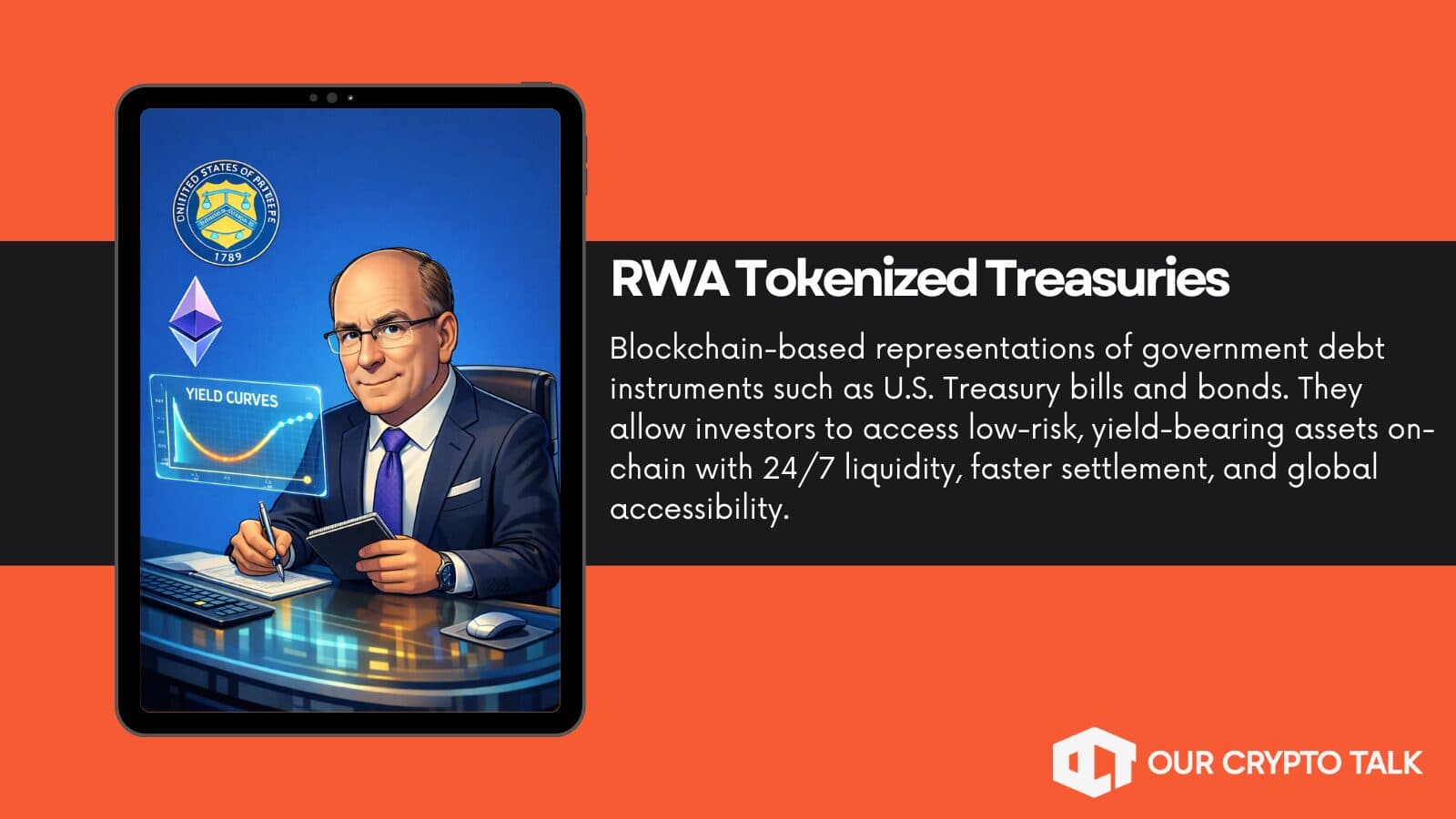
Finally, the bridge between traditional finance and blockchain tokenized real-world assets (RWAs). This sector is exploding in 2025 as billions in bonds, real estate, and funds move on-chain.
Listen to Chainlink founder Sergey as he shares light on why RWAs are the next big thing.
Platforms like Ondo Finance and Matrixdock tokenize Treasury bills or real estate projects, letting investors earn 6–12% APY from stable, off-chain income sources. These tokens are fully backed by verifiable assets and audited regularly.
Imagine owning a piece of tokenized U.S. Treasury debt that pays you weekly yield that’s real yield, not speculation.
Pros:
- Stable returns, low volatility
- Regulatory clarity and transparency
- Bridge between TradFi and DeFi
Cons:
- Limited liquidity on smaller platforms
- Geographical restrictions for retail investors
For investors seeking long-term consistency, RWAs represent the future of passive income with crypto merging blockchain efficiency with real-world reliability.
Tips to Maximize Your Passive Income with Crypto
- Diversify: Don’t rely on one method, mix staking, lending, and RWAs.
- Reinvest Earnings: Compounding is key to exponential growth.
- Track Everything: Use tools like DeBank or Zapper to monitor rewards.
- Security First: Always verify audits, use hardware wallets, and enable insurance if available.
- Stay Updated: DeFi evolves fast and keep learning and adapting.
TLDR
- Passive Income Crypto lets you earn while holding, not trading.
- The top 10 methods include staking, yield farming, lending, and tokenized RWAs.
- Average yields range from 4% to 20%, depending on risk and strategy.
- Diversify across stable and dynamic sources for consistent growth.
- 2025’s trends are restaking, RWAs, and DeFi automation which make earning easier than ever.
Conclusion: Building Your Long-Term Crypto Income Stream
Passive income isn’t a buzzword anymore — it’s becoming the foundation of modern crypto investing. From staking and lending to real-world asset tokenization, Passive Income Crypto offers both financial independence and flexibility.
The beauty lies in its simplicity. You don’t need to time markets or chase trends. Once set up, your portfolio quietly works in the background, generating consistent returns.
The smart approach is to start small, spread across multiple streams, and focus on reliability over hype. As the industry matures, these income models will only become more integrated into everyday finance.
In the end, crypto isn’t just about speculation anymore — it’s about participation. And those who learn to earn passively today are setting themselves up for a financially free tomorrow.
In this article
Why Passive Income in Crypto Matters Now1. Staking Cryptocurrencies: The Foundation of Passive Rewards2. Liquid Staking and Restaking: Earning Without Lockups3. Yield Farming in DeFi: Harvesting High-Yield Rewards4. Crypto Lending: Earn Interest Like a Digital Bank5. Providing Liquidity on DEXs: Earn Trading Fees from Every Swap6. Cloud Mining: Mining Rewards Without the Hardware7. Earning from Airdrops and Forks: Free Crypto for Being Early8. Dividend-Paying Tokens: The Crypto Version of Stocks9. NFT Royalties: Creative Streams That Never Stop Paying10. Tokenized Real-World Assets: Passive Income Meets StabilityTips to Maximize Your Passive Income with CryptoTLDRConclusion: Building Your Long-Term Crypto Income Stream