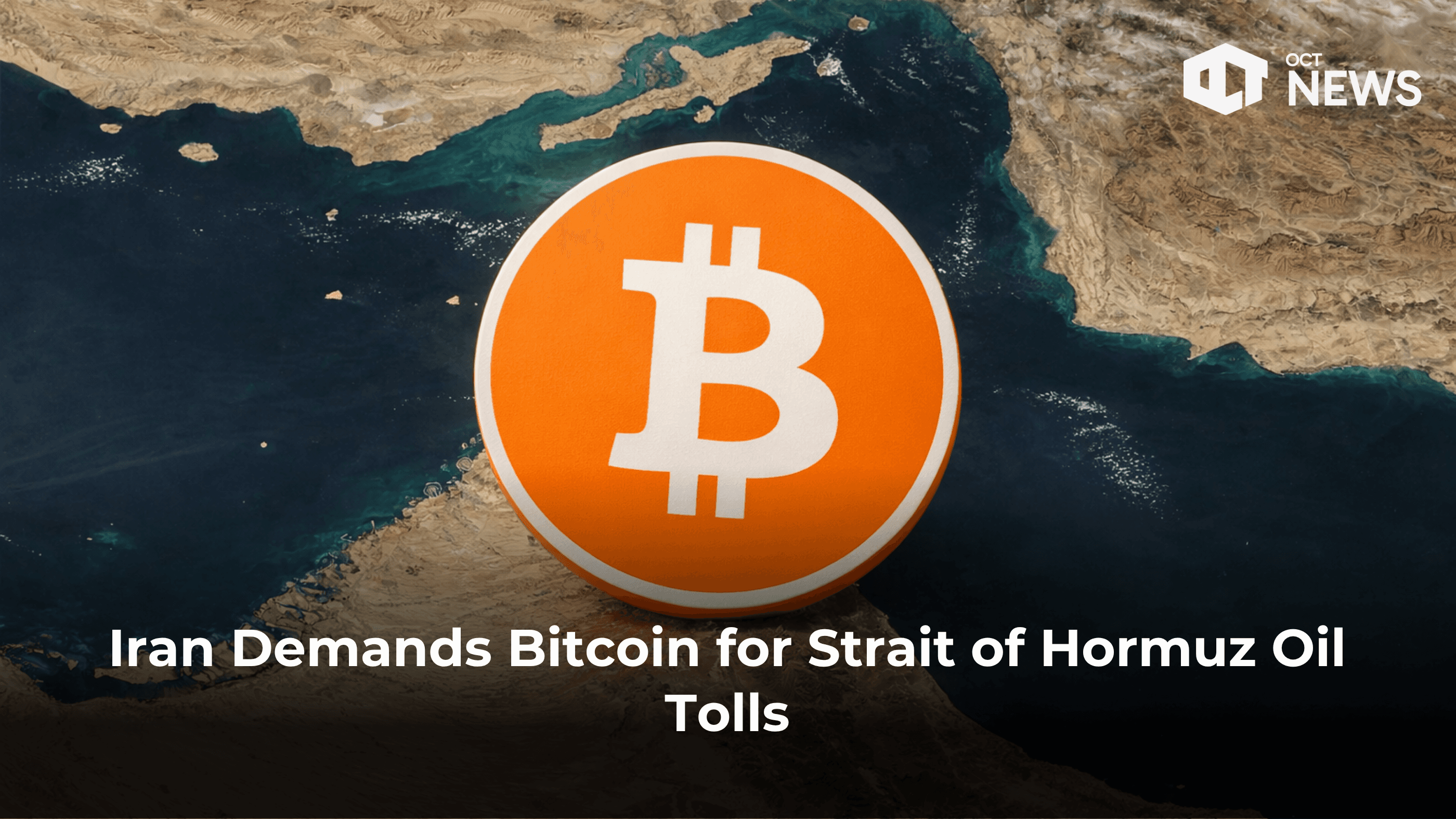
Iran now reportedly demands Bitcoin payments from oil tankers transiting the Strait of Hormuz with the rate set for $1 per barrel.

Author: Sahil Thakur
9th April 2026 – Iran now reportedly demands Bitcoin payments from oil tankers transiting the Strait of Hormuz. The $1-per-barrel toll represents the first time a nation-state has tied Bitcoin directly to global energy trade at this scale.
High Signal Summary For A Quick Glance

Wise Advice
@wiseadvicesumit

🇮🇷 Iran is charging $2M per ship to cross the Strait of Hormuz and they want it in Bitcoin. 😳 At $72,000 per $BTC, each ship = 27.7 BTC. Pre-crisis, 130 ships crossed daily. • Daily: 3,611 BTC • Monthly: 108,333 BTC • Yearly: 1.3 million BTC The entire Bitcoin network only https://t.co/pl3vtPiMtY

01:54 PM·Apr 8, 2026

Watcher.Guru
@WatcherGuru
JUST IN: 🇮🇷 Iran to require ships passing through the Strait of Hormuz to pay tolls in Bitcoin, FT reports. https://t.co/6yoIEys139

01:15 PM·Apr 8, 2026

Bitcoin Magazine
@BitcoinMagazine
BREAKING: 🇮🇷 Iran is accepting bitcoin for transit toll payments — Financial Times https://t.co/zhgbqI3wVu
01:14 PM·Apr 8, 2026
Steady attention without excessive speculation.
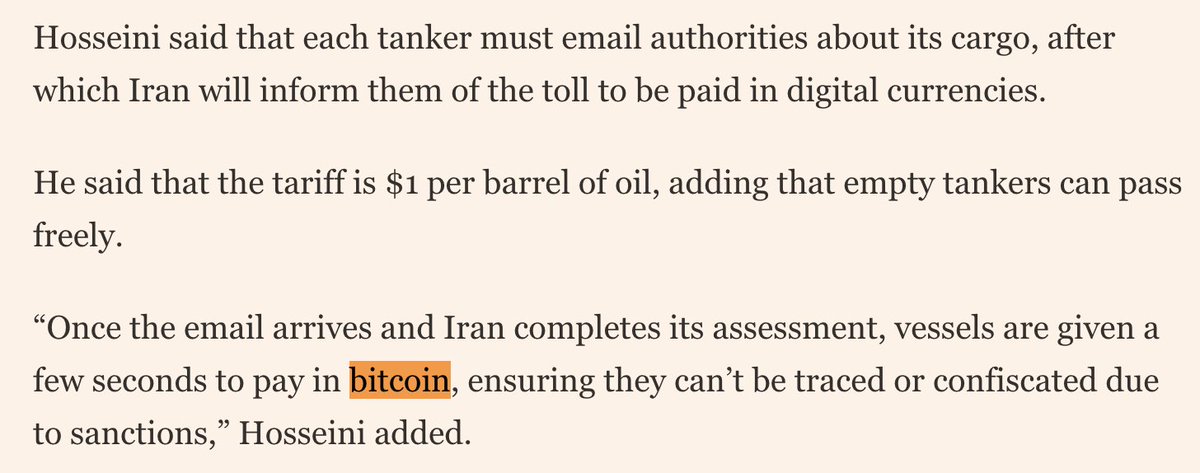
The Financial Times reported on April 8 that Hamid Hosseini, spokesperson for Iran’s Oil, Gas and Petrochemical Products Exporters’ Union, confirmed the new toll framework. Tankers must email Iranian authorities with cargo details. Once assessed, they receive instructions to pay in Bitcoin or equivalent digital assets. Empty tankers pass freely.
The toll went into effect during a two-week ceasefire between Iran and the United States. It replaces an earlier IRGC system that accepted Chinese yuan or dollar-pegged stablecoins at tiered rates.
The process is straightforward. Tanker operators submit cargo manifests to Iranian authorities via email. Assessors then calculate the toll based on barrels carried. Payment instructions follow, and on-chain settlement reportedly happens within seconds.
A fully loaded VLCC supertanker carrying 2 million barrels would owe roughly $2 million, or about 28 BTC at current prices. According to Hosseini, the rapid settlement is designed to prevent interception or freezing of funds under U.S. sanctions.
Iran has warned that unauthorized transit could trigger military action. That threat carries weight given the IRGC’s control of naval assets around the strait.
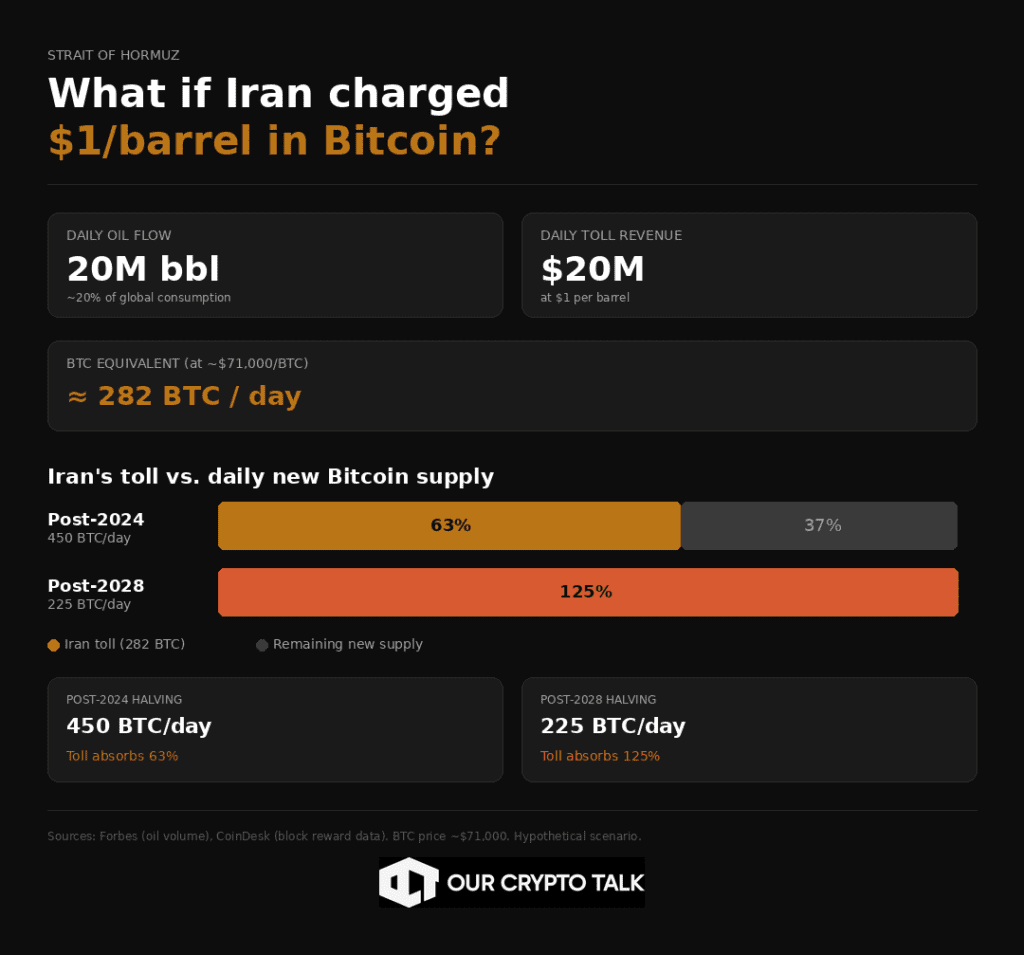
The Strait of Hormuz handles roughly 20 million barrels of oil per day under normal conditions. That accounts for about 20% of global oil consumption, according to Forbes.
At $1 per barrel, full-volume toll collection would generate $20 million in daily revenue. At Bitcoin’s current price of approximately $71,000, that translates to about 282 BTC per day flowing into Iranian wallets.
For context, Bitcoin miners produce roughly 450 new BTC per day after the 2024 halving. So Iran’s toll alone could absorb around 63% of all newly mined Bitcoin daily, according to CoinDesk block reward data. That ratio will grow even more extreme after the next halving, expected around 2028, when daily new supply drops to roughly 225 BTC.
The earlier IRGC toll system, reported by Yahoo Finance around April 1, used yuan and USD stablecoins. It also featured a tiered pricing structure based on a “friendliness” ranking of nations. Allies paid $0.50 per barrel, while adversary nations paid $1.50.
The new framework standardizes the rate at $1 and shifts to Bitcoin specifically. The logic is clear. Dollar-pegged stablecoins like USDT and USDC still depend on centralized issuers that can freeze tokens under U.S. pressure. Bitcoin operates on a decentralized network with no single point of control.
That said, Bitcoin transactions are traceable on the public blockchain. Iran likely values Bitcoin’s resistance to seizure more than true anonymity. No government or institution can reverse or block a confirmed Bitcoin transaction.
This is not Iran’s first use of cryptocurrency to bypass sanctions. The country has operated state-sponsored Bitcoin mining facilities powered by subsidized electricity for years, as Bitcoin Magazine has documented.
Reports have also linked Iran to crypto-settled oil sales with China and other trading partners. The Hormuz toll, if sustained, would dwarf those earlier efforts. Iran’s own oil production sits at roughly 3 to 4 million barrels per day. Toll revenue from 20 million barrels of transit traffic would far exceed its direct export income.
Bitcoin surged roughly 5% intraday following the Financial Times report, briefly topping $72,000, according to TipRanks. The price settled around the $71,000 range by April 9.
The market reaction reflects a structural reality. If sustained, roughly 282 BTC in daily toll demand would compete against just 450 BTC in daily new supply. That creates persistent buying pressure on an asset with a hard-capped supply of 21 million coins.
This is not speculative retail buying. It is recurring, state-backed demand tied to the physical flow of global energy. Analysts may compare it to the effect of spot Bitcoin ETF inflows, but the Hormuz toll adds a geopolitical dimension that ETFs do not carry.
The toll represents a direct challenge to the petrodollar system. For decades, global oil trade has been denominated in U.S. dollars. Iran’s move ties Bitcoin to the most critical energy chokepoint on the planet.
Other sanctioned or de-dollarizing nations could take note. Russia, Venezuela, and others facing financial restrictions may explore similar crypto-denominated mechanisms for trade settlements.
For Bitcoin, the signal is significant. A major oil-producing power now integrates the asset into sovereign revenue collection. This elevates Bitcoin from speculative instrument to geopolitical tool.
Several caveats apply. The ceasefire between Iran and the U.S. lasts only two weeks. If it collapses, the toll framework could change or dissolve entirely.
Full transit volume may not resume immediately. Shipping disruptions, rerouted tankers, and ongoing tensions could reduce actual toll collection well below the theoretical $20 million daily maximum.
Enforcement also remains uncertain. Whether all tanker operators comply voluntarily, and whether Iran can actually enforce the toll militarily, are open questions.
Finally, large-scale Bitcoin accumulation by a sanctioned state raises its own complications. Converting or spending hundreds of BTC daily without moving markets or attracting blockchain surveillance is not trivial.
The two-week ceasefire window will test whether the toll system operates as announced. If tankers pay and transit resumes smoothly, other nations and market participants will need to reckon with a new reality.
Bitcoin now has a role in global energy infrastructure. Whether that role expands depends on the ceasefire, enforcement, and how the broader market absorbs the implications.
This is not financial advice. Geopolitical developments can shift rapidly, and the toll framework could evolve or collapse with the ceasefire.
Our Crypto Talk is committed to unbiased, transparent, and true reporting to the best of our knowledge. This news article aims to provide accurate information in a timely manner. However, we advise the readers to verify facts independently and consult a professional before making any decisions based on the content since our sources could be wrong too. Check our Terms and conditions for more info.