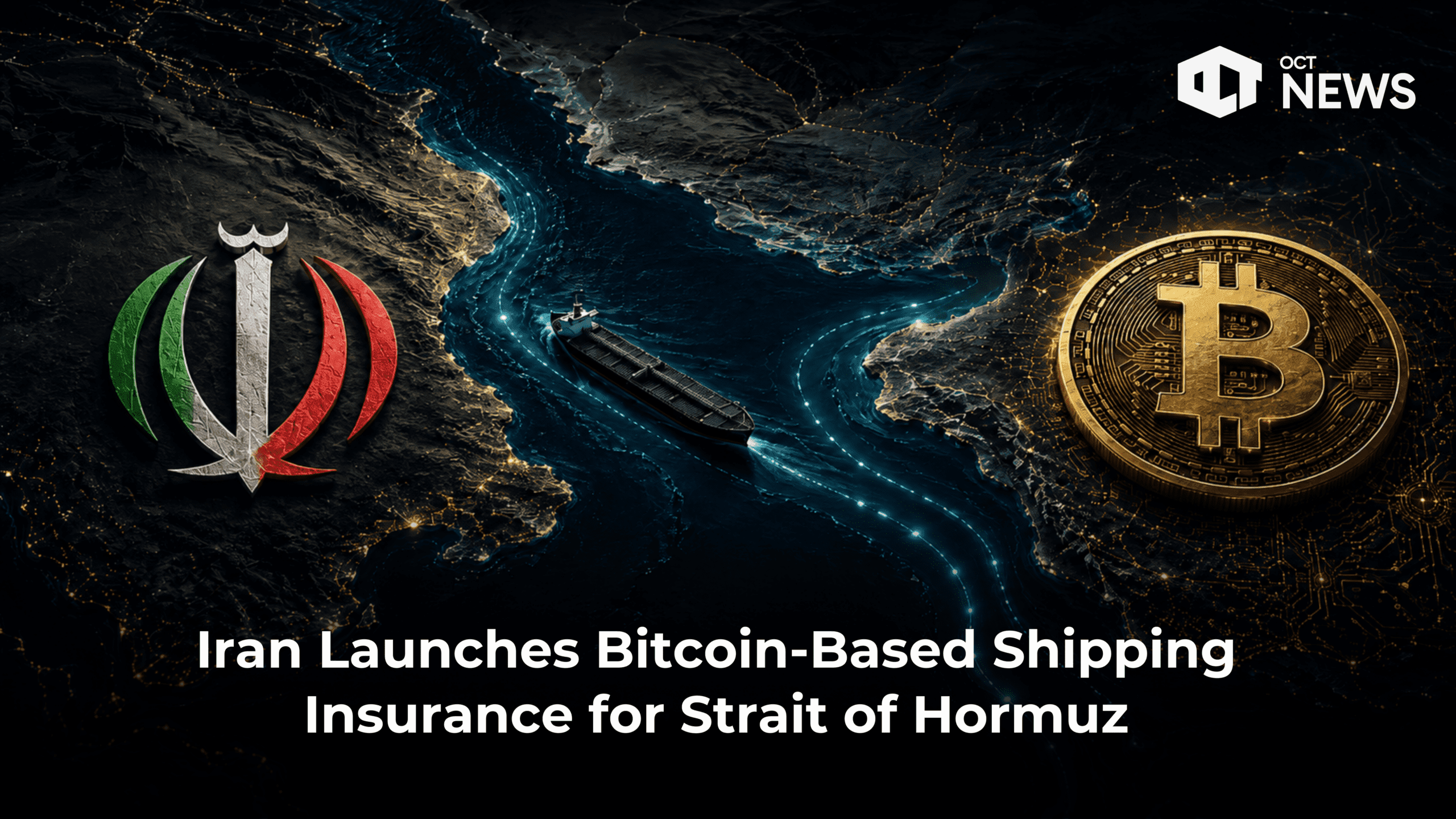
Iran launched Hormuz Safe, a Bitcoin-based maritime insurance platform for Strait of Hormuz shipping, expanding crypto use in global trade.

Author: Akshat Thakur
May 18, 2026- Iran has reportedly launched Hormuz Safe, a state-backed maritime insurance platform allowing ships and cargo operators to purchase insurance coverage using Bitcoin and other cryptocurrencies.
The platform was introduced through documents cited by Fars News Agency and is designed for vessels operating across the Persian Gulf and Strait of Hormuz.
High Signal Summary For A Quick Glance

Catie Romero-Finger
@catieromero

@WatcherGuru Backing insurance for Strait of Hormuz transit with Bitcoin would give them a sanctions-resistant payment and insurance layer. This is sovereign-level adoption that proves Bitcoin’s utility beyond speculation.
JUST IN: 🇮🇷 Iran launches Bitcoin-backed insurance service for shipping companies wanting to transit the Strait of Hormuz. https://t.co/kFHz14ZJfB
01:30 PM·May 18, 2026

Justus
@TheWeb3Patriot
@WatcherGuru Bullish on bitcoin:native https://t.co/Z4SmmO9Ec1

JUST IN: 🇮🇷 Iran launches Bitcoin-backed insurance service for shipping companies wanting to transit the Strait of Hormuz. https://t.co/kFHz14ZJfB
12:57 PM·May 18, 2026

Luca
@0xlucaeth
@WatcherGuru So children That's how $BTC crossed $1M 🗿 https://t.co/AvMmc7jx0g

JUST IN: 🇮🇷 Iran launches Bitcoin-backed insurance service for shipping companies wanting to transit the Strait of Hormuz. https://t.co/kFHz14ZJfB
12:46 PM·May 18, 2026
Hormuz Safe is a digital insurance platform reportedly backed by Iran’s Ministry of Economy and Finance.
The service offers maritime insurance products for ships and cargo traveling through the Strait of Hormuz and nearby waterways.
According to reports, users can purchase insurance using Bitcoin and certain cryptocurrencies instead of traditional banking systems.
Policies activate once blockchain payments receive confirmation.
The system also generates cryptographically signed receipts proving policy issuance and payment settlement.
Coverage reportedly includes risks tied to inspection, detention, and seizure.
However, damage caused by weapons or strikes is excluded from protection.
The Strait of Hormuz remains one of the world’s most important maritime corridors.
Roughly one-fifth of global oil trade passes through the route connecting the Persian Gulf to international markets.
Regional tensions and sanctions have increased insurance costs for vessels operating in the area.
Some traditional insurers have reduced coverage or imposed higher premiums due to geopolitical risks.
Hormuz Safe appears designed to address those gaps through faster digital issuance and alternative payment rails.
Key milestones in Iran’s evolving crypto policy leading to the launch of Hormuz Safe
Iran imposes a broad ban on cryptocurrency trading and ownership by banks and financial institutions, citing anti-money laundering and sanctions concerns.
Iran formally legalizes cryptocurrency mining, becoming one of the first countries to recognize mining as a regulated economic sector.
The Central Bank permits licensed institutions to use officially mined crypto for import settlements while continuing to adjust mining restrictions around energy demand.
Iran completes its first publicly acknowledged import order paid with cryptocurrency, reportedly worth around $10 million.
The Central Bank begins testing the digital rial on Kish Island, expanding experimentation into sovereign digital currency infrastructure.
Iran launches Hormuz Safe, a Bitcoin-backed maritime insurance platform targeting shipping activity around the Strait of Hormuz and expanding state-backed crypto infrastructure.
According to available descriptions, shipping companies request coverage through the platform and receive a Bitcoin or stablecoin payment invoice.
Once payment is confirmed onchain, insurance coverage activates automatically.
The platform then issues a digital certificate and signed receipt.
Unlike traditional marine insurance systems that may require weeks of processing, the crypto-based approach promises near-instant activation.
The service reportedly supports Bitcoin alongside stablecoins including USDT and USDC.
Bitcoin functions primarily as a settlement rail rather than an investment asset inside the system.
The launch is attracting attention because it represents another example of sovereign or state-linked infrastructure using Bitcoin for payments.
Supporters argue the development highlights Bitcoin’s growing role as an alternative settlement network outside traditional financial rails.
Critics, however, question whether the platform will see meaningful adoption or face sanctions-related complications.
Some analysts also raised concerns about potential exposure to restrictions enforced by entities such as OFAC.
The story has fueled broader discussions around crypto’s use in sanctioned economies and cross-border financial systems.
Several important details remain unclear.
There is no public information on premium pricing, coverage limits, payout structures, or total reserves backing policies.
It is also unknown how Bitcoin volatility is managed after premiums are paid.
No public blockchain analytics currently show significant transaction activity tied directly to Hormuz Safe.
The website reportedly displays payment examples, but real-world usage remains difficult to verify.
Questions also remain around regulatory approval and adoption by international shipping firms.
The next phase depends largely on adoption.
If shipping firms begin using the platform, Hormuz Safe could become an early example of crypto-based maritime insurance operating at a state level.
However, sanctions risks, regulatory uncertainty, and geopolitical tensions could limit participation.
The platform will also face scrutiny over transparency, reserves, and claims processing if usage expands.
For Bitcoin supporters, the bigger narrative centers on utility.
The story adds to a growing list of cases where Bitcoin is being used as settlement infrastructure rather than purely as a speculative asset.
Whether Hormuz Safe becomes a meaningful insurance network or remains a niche experiment will likely become clearer in the coming months.
This article is for informational purposes only and does not constitute financial advice. Always do your own research before making investment decisions.
Our Crypto Talk is committed to unbiased, transparent, and true reporting to the best of our knowledge. This news article aims to provide accurate information in a timely manner. However, we advise the readers to verify facts independently and consult a professional before making any decisions based on the content since our sources could be wrong too. Check our Terms and conditions for more info.