CLARITY Act Senate Banking Committee vote advances a major U.S. crypto bill, setting clearer SEC and CFTC oversight rules.

Author: Sahil Thakur
15th May 2026 – The Senate Banking Committee advanced the CLARITY Act in a 15-9 bipartisan vote on Wednesday. The result pushes the most comprehensive crypto market structure bill in U.S. history closer to law. All 13 Republican members voted yes. Democratic Sens. Ruben Gallego of Arizona and Angela Alsobrooks of Maryland also crossed the aisle to support it. Nine Democrats, led by Ranking Member Elizabeth Warren, voted no. This marks the first time a crypto market structure bill has cleared a Senate committee.
High Signal Summary For A Quick Glance

MATK!NG`$™ 👑 ♣️
@MATHEW_KINZY

For some the CLARITY Act is just another crypto regulation bill. It’s much bigger than that. The CLARITY Act is basically the US finally trying to answer one major question: When is a digital asset a security… and when is it not? And honestly, this has been one of the biggest https://t.co/pTgagPCzT4 https://t.co/qaxmnrqjhQ

Washington just moved tokenized markets one step closer to regulatory legitimacy. The CLARITY Act has cleared the Senate Banking Committee in a 15–9 vote, advancing one of the most consequential digital asset market structure bills in the United States to date. The bill now https://t.co/VJcS35U5lN
09:18 AM·May 15, 2026

Credible
@crediblefin
The U.S. Senate Banking Committee has voted to advance the CLARITY Act to the Senate floor, marking another important step for stablecoin regulation in the U.S. Clearer regulatory frameworks have the potential to accelerate institutional participation and expand the role of https://t.co/tH50vkBN0V
08:50 AM·May 15, 2026

Adam
@AdamP_341
Washington is finally starting to define what regulated onchain finance could look like. And $INJ is set to be one of the biggest beneficiaries. As the CLARITY Act moves through the Senate Banking Committee, the framework being discussed around DeFi, tokenized assets, staking, https://t.co/1se3XPCUbv https://t.co/pbMwHd2Zuz
The Senate Banking Committee marks up the 309-page CLARITY Act draft Thursday. Injective is set to be Clarity Act Compliant from day one in the US. Four sections to watch, and four reasons they matter for Injective: 1️⃣ Sec. 105 codifies that tokens deriving value from the https://t.co/MEKEztkpuf
11:07 AM·May 14, 2026
Steady attention without excessive speculation.
The bill draws a clear jurisdictional line. The CFTC would oversee spot markets for digital commodities. The SEC keeps authority over securities-like tokens and ancillary assets.
Exchanges, brokers, and dealers trading digital commodities would register with the CFTC. They would also follow Bank Secrecy Act anti-money laundering rules. In turn, issuers of ancillary assets must file disclosures with the SEC. Once a project reaches sufficient decentralization, those SEC requirements drop off.
Truly decentralized DeFi protocols receive safe harbors under the bill. If no single entity controls the protocol, it faces no intermediary liability. Self-custody and non-custodial wallets also remain protected.
One notable provision targets stablecoins. Payment stablecoin issuers cannot pay yield or interest to U.S. customers. This measure aims to prevent deposit flight from traditional banks. Transaction-based rewards, on the other hand, are still allowed.
Chairman Tim Scott led the markup and celebrated the outcome. “Today, the Banking Committee showed the American people that Washington can still work together,” Scott said in a press release.
He added that the legislation “brings digital assets into the sunlight with clear rules, stronger safeguards, and better tools to stop bad actors.”
Sen. Alsobrooks spent over nine months negotiating the bill. “I’ve been working toward regulating digital assets in a way that protects consumers and reduces the risk of deposit flight,” she said in her press release.
Sen. Warren pushed back sharply against the bill. “Our job is not to advance a pro-industry crypto bill that will put our entire financial system at risk,” she said during her opening remarks.
CLARITY Act vs. previous U.S. crypto market structure proposals
Coinbase CEO Brian Armstrong called the bill a “true compromise.” He said it is now “closer than ever” to becoming law.
On social media, the reaction skewed overwhelmingly positive. Crypto founders and community members celebrated the bipartisan result as historic progress. Threads on X and Reddit framed the vote as a turning point.
Markets reflected the optimism as well. Bitcoin traded above $81,000 around the vote period. The broader crypto market gained roughly 2.5%. XRP rose about 4.3%, according to market data from CoinDesk and Bitcoin Magazine.
The CLARITY Act builds on the FIT21 Act of 2024. That bill passed the House but then stalled in the Senate. Before that, the Lummis-Gillibrand Act of 2022 also failed to advance past committee.
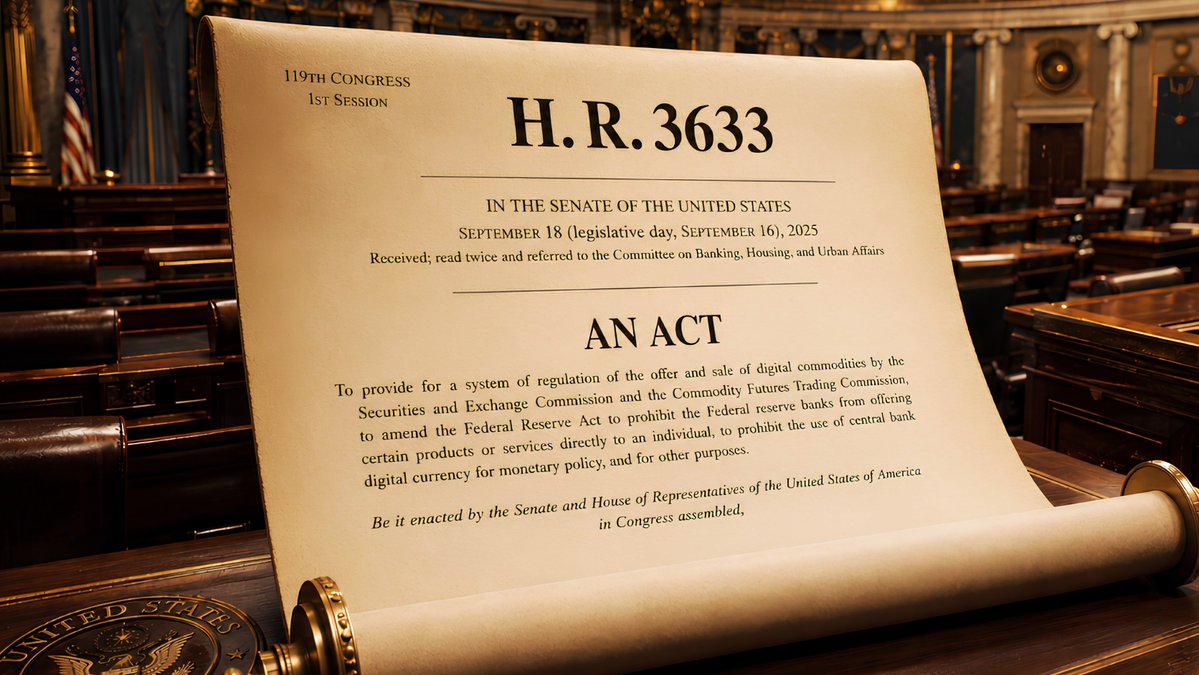
Rep. J. French Hill of Arkansas introduced the current version on May 29, 2025. The House passed it in June 2025 with a strong 294-134 vote. The Senate received it on September 18, 2025.
The GENIUS Act, a separate stablecoin-focused bill, was also enacted in 2025. Together, these two bills form the foundation of U.S. crypto legislation.
Key milestones related to this development
The Financial Innovation and Technology for the 21st Century Act is introduced as an earlier attempt to define SEC and CFTC oversight of digital assets.
The House approves FIT21 by a 279 to 136 vote, but the bill does not clear the Senate before the end of that Congress.
Rep. French Hill introduces the Digital Asset Market Clarity Act of 2025 to create a federal market structure framework for digital assets.
The House Financial Services Committee and House Agriculture Committee vote to advance the CLARITY Act, giving it bipartisan momentum before a full House vote.
The House passes H.R. 3633 by a 294 to 134 vote, making it the main House companion for the Senate market structure push.
A planned Senate Banking Committee markup is delayed as lawmakers debate stablecoin rewards, AML obligations, DeFi treatment, and consumer safeguards.
The Senate Banking Committee releases revised CLARITY Act text ahead of markup, reflecting compromises on stablecoins, tokenized securities, and DeFi criteria.
The committee votes 15 to 9 to advance the CLARITY Act, moving the market structure bill closer to full Senate consideration.
The bill must next receive full Senate consideration, where further negotiations may focus on AML rules, ethics provisions, stablecoin rewards, and investor protections.
The House has already passed its version, but any Senate changes could require both chambers to reconcile the final text before sending it to the president.
Supporters are aiming for passage before the 2026 midterm elections, though the timeline depends on the Senate vote, reconciliation, and final presidential approval.
The bill now moves to the full Senate floor. Committee leaders have referenced action before the August 2026 recess. No fixed date has been confirmed yet.
The House already passed its version in 2025. As a result, Senate passage could send the bill directly to the President. If the Senate adds amendments, a conference committee would reconcile the differences first.
Implementation timelines remain open as well. The bill sets a 60-day effective date after enactment. SEC and CFTC rulemakings would be due within one year. The full Senate vote and presidential signature are the two remaining steps between the CLARITY Act and law.
This article is for informational purposes only and does not constitute financial advice. Always do your own research before making investment decisions.
Our Crypto Talk is committed to unbiased, transparent, and true reporting to the best of our knowledge. This news article aims to provide accurate information in a timely manner. However, we advise the readers to verify facts independently and consult a professional before making any decisions based on the content since our sources could be wrong too. Check our Terms and conditions for more info.