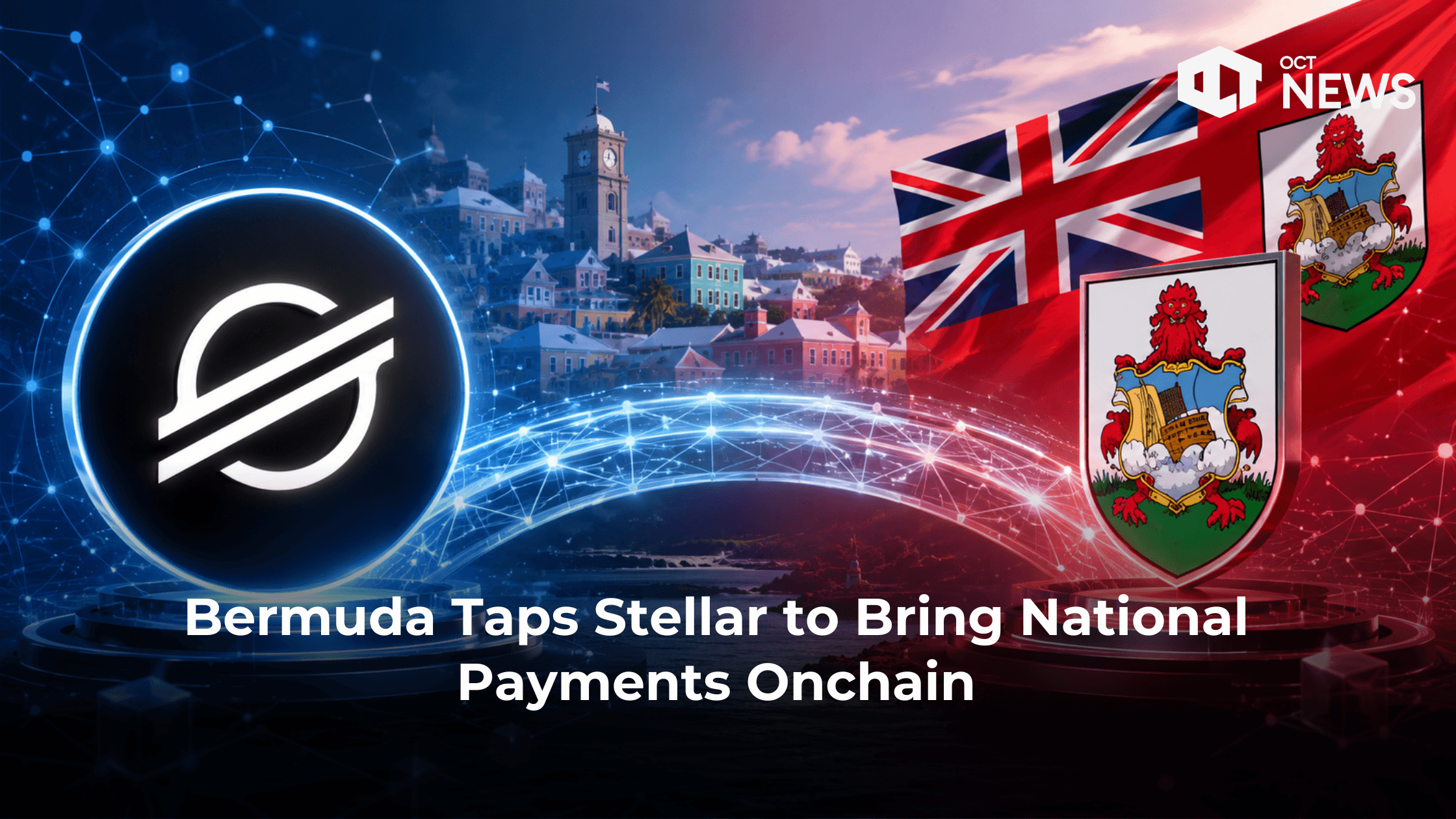
Bermuda Stellar partnership moves key payments onchain, expanding stablecoin use, tokenization, and regulated digital finance infrastructure.

Author: Kritika Gupta
12th May 2026- The Bermuda Stellar partnership marks a major step in the island’s plan to move key payments. The Stellar Development Foundation and the Government of Bermuda announced that Bermuda will begin shifting parts of its payments ecosystem onto the Stellar network, giving residents and businesses a path to use digital wallets for salaries, merchant payments, government fees, and digital asset holdings. This move also supports Bermuda’s broader goal of becoming a fully onchain national economy.
High Signal Summary For A Quick Glance

🇬🇧 ChartNerd 📊
@ChartNerdTA

Securitize 🤝🏻 Ripple 🤝🏻 BlackRock Ripple & Securitize: enable $RLUSD Smart Contract functionality for BlackRocks 1st BUIDL fund 🎯 Securitize: native deployment of tokenized assets on the $XRP Ledger, removing the need to "wrap" or "bridge" when issued directly on XRPL 🎯 https://t.co/H7qkxdaFqU https://t.co/HSMMPO7HnP
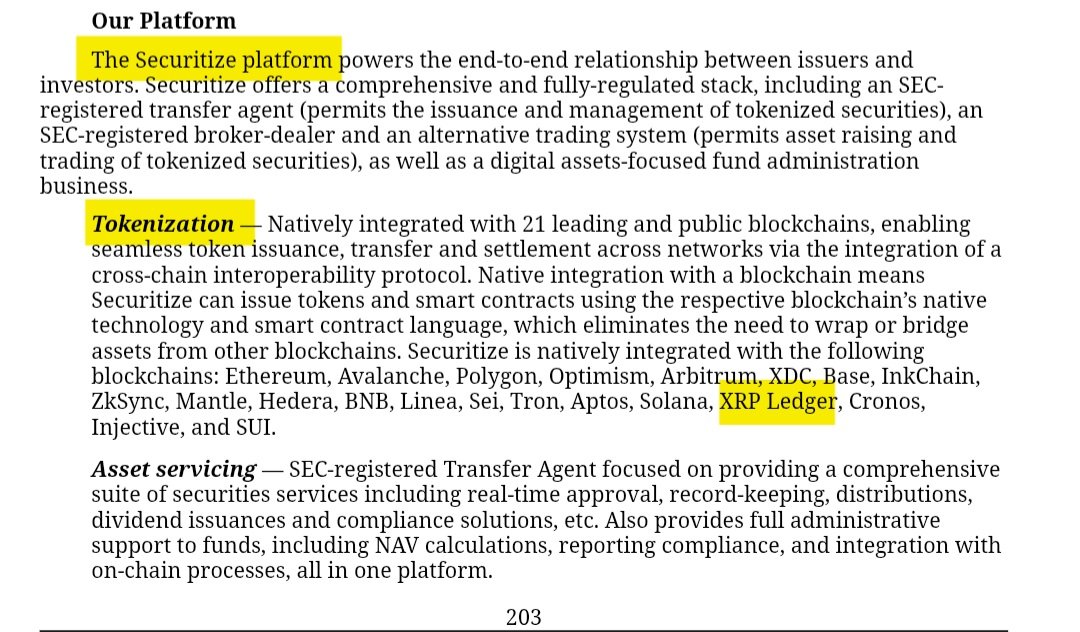
BlackRock has filed for a new tokenized fund structure with the SEC, and once again selected Securitize infrastructure to power it. The filing outlines a model where blockchain-based ownership records integrate with regulated transfer agency and investor onboarding systems. https://t.co/lR7cn2nFoC
03:06 PM·May 12, 2026

ALLINCRYPTO
@RealAllinCrypto
🚨OFFICIAL: WORLD'S 1ST FULLY ONCHAIN ECONOMY ON $XLM Huge news as the Government of Bermuda plans to become the world’s FIRST fully onchain economy using @StellarOrg. Payments, wages, government fees, and tokenised assets are all set to run on the Stellar network!!!!! https://t.co/N4KHdio4bw

03:00 PM·May 12, 2026

Marco Salzmann 🇩🇪🇻🇪
@MarcoSalzmann80
Bermuda is preparing to become the world’s first fully on-chain national economy. And @StellarOrg is set to play a central role in that transformation. The Government of Bermuda and the Stellar Development Foundation announced that key payment and financial-services activity https://t.co/DMwfEB4k6l https://t.co/TquXvZvCnS
Today, the Stellar Development Foundation and the Government of Bermuda announced that Bermuda will begin moving key payment and financial-services activity onchain onto the Stellar network. Learn more 👇 https://t.co/Fh0uaKg3FL
01:22 PM·May 12, 2026
Steady attention without excessive speculation.
Bermuda has spent years positioning itself as a serious digital asset jurisdiction. In 2018, the country enacted the Digital Asset Business Act, or DABA, which created one of the earliest comprehensive licensing regimes for crypto-related businesses. That framework helped Bermuda attract major digital asset firms and gave the government a legal base for future blockchain initiatives.
The latest Stellar announcement builds on a January 2026 commitment made at the World Economic Forum in Davos. At that stage, the government worked with Circle and Coinbase to explore digital payments, tokenization, and regulated crypto financial infrastructure. In addition, Bermuda’s Fintech Strategy 2026–2028 pushed the same direction by emphasizing progressive regulation, innovation, local capacity-building, and international collaboration.
Therefore, the Bermuda Stellar partnership fits into a longer policy arc rather than appearing as a standalone crypto announcement. Bermuda has already signaled that blockchain-based payments will become part of its national financial infrastructure.
Bermuda has tested digital asset systems before, but it has not moved core national payment and financial-services activity onto Stellar at this scale. Previous efforts included stablecoin-related pilots, merchant adoption programs, USDC-related initiatives, and early onchain economy planning.
Stellar also brings relevant history to the table. The network has supported real-world payment and settlement use cases, including humanitarian aid disbursements. Its design focuses on fast, low-cost transfers, fiat on-ramps, tokenized assets, and cross-border settlement.
The January 2026 onchain economy announcement involving Circle and Coinbase generated strong positive sentiment across the crypto sector. Market participants viewed Bermuda’s plan as a practical example of how a regulated jurisdiction could bring stablecoins into real economic use.
However, the reaction did not produce a major isolated short-term price spike for Stellar’s XLM token. That matters for crypto readers because government often supports long-term network credibility more than immediate token volatility.
Bermuda could gain several practical benefits if it executes this migration well. First, blockchain-based payments may reduce costs for local merchants. Traditional payment rails can charge merchants 3% to 5% or more, which creates a real burden for small businesses, tourism operators, and service providers. Stellar’s low-cost settlement model could lower some of that friction if merchants and wallets achieve meaningful adoption.
Second, residents could gain faster and cheaper access to payments through digital wallets. That would matter for salaries, remittances, public benefits, merchant purchases, and government fees. In an island economy with strong links to tourism, faster settlement can improve cash flow and reduce dependence on slower legacy systems.
Third, the government can use onchain rails to modernize public services. For example, it could streamline fee collections, social services, payroll, and regulated stablecoin transactions. Meanwhile, banks and insurers could test tokenization tools for financial products, reserves, settlement, and compliance-driven asset management.
Key milestones related to this development
Bermuda established one of the world’s earlier dedicated regulatory frameworks for digital asset businesses, creating licensing and supervision rules for crypto companies operating in or from the jurisdiction.
Bermuda continued testing blockchain-based financial infrastructure, including digital identity, payments, insurance, and regulated digital asset services, while positioning itself as a compliant offshore crypto hub.
Bermuda advanced its blockchain strategy through a Stellar-related onchain initiative, signaling a move from regulatory groundwork and pilot programs toward more practical digital asset infrastructure.
The next stage will depend on confirmed rollout details, including technical implementation, institutional participation, regulatory approvals, and whether the initiative expands into payments, government services, tokenized assets, or broader public-sector blockchain use.
For Stellar, Bermuda’s move delivers a strong institutional validation signal. The network has long focused on payments, fiat connectivity, tokenized assets, and low-cost cross-border settlement. A government-backed financial-services rollout directly matches that thesis.
In practical terms, the partnership could increase Stellar network activity if Bermuda’s wallets, merchants, government agencies, and financial institutions use the chain at scale. More transactions, deeper stablecoin usage, and stronger institutional integrations would support Stellar’s utility narrative. In turn, that could strengthen long-term interest in XLM, although the token’s price still depends on market structure.
Our Crypto Talk is committed to unbiased, transparent, and true reporting to the best of our knowledge. This news article aims to provide accurate information in a timely manner. However, we advise the readers to verify facts independently and consult a professional before making any decisions based on the content since our sources could be wrong too. Check our Terms and conditions for more info.



Stellar