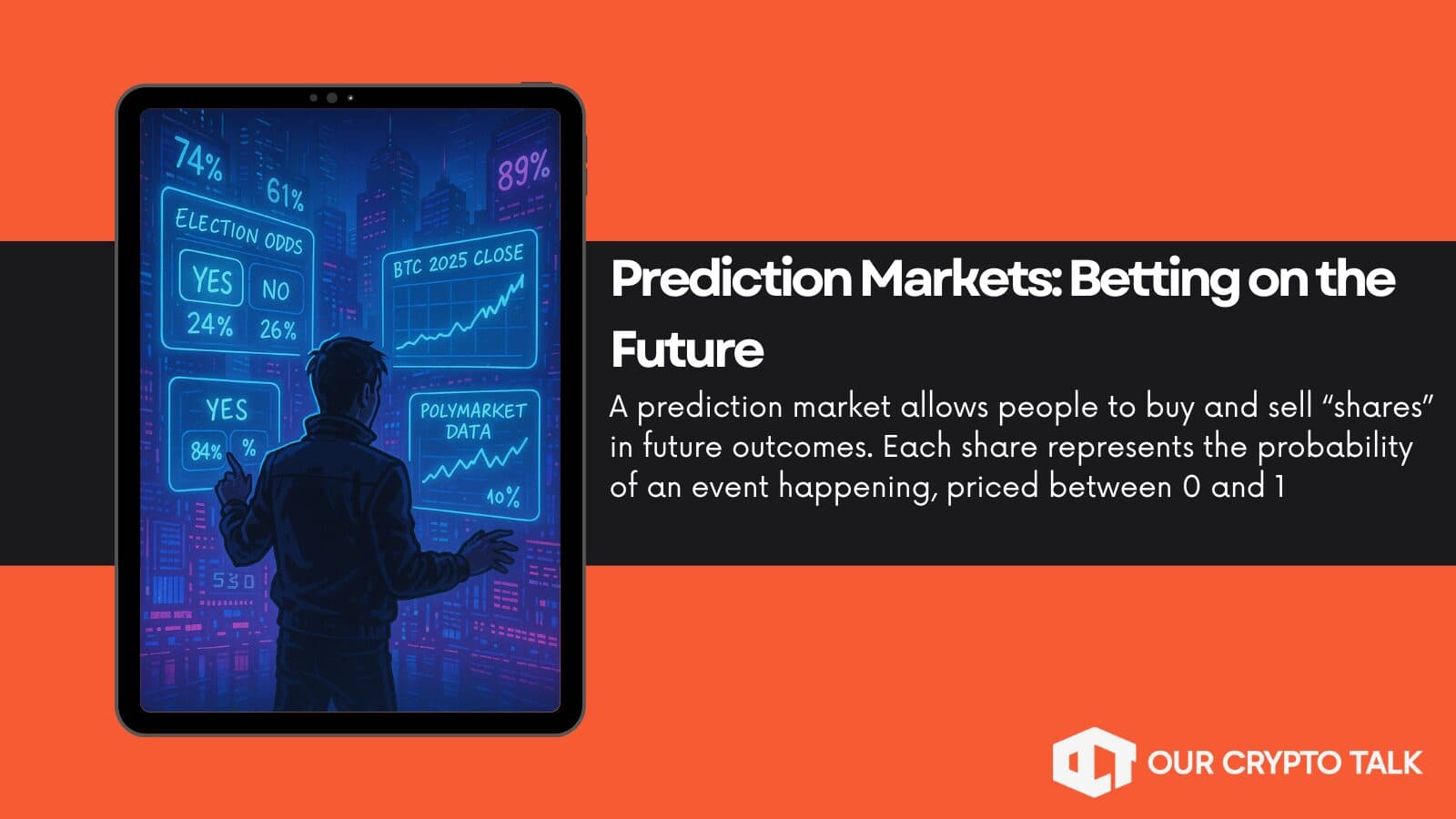
Prediction Markets: Betting on the Future
Explore how prediction markets use crowd intelligence, blockchain, and financial incentives to forecast events in booming DeFi economy.


Author: Chirag Sharma
In 2025, prediction markets have become the newest obsession of the financial world. They are reshaping how people forecast elections, stock movements, sports outcomes, and even geopolitical events. The idea is simple but powerful: instead of relying on experts or polls and let markets decide.
A prediction market allows people to buy and sell “shares” in future outcomes. Each share represents the probability of an event happening, priced between 0 and 1 (or 0% and 100%). If an event occurs, holders of “yes” shares get paid. If not, they lose their stake. The result is a living, breathing system that constantly updates the crowd’s collective expectations.
The appeal lies in accuracy and incentives. Also when money is on the line people think carefully. Markets aggregate millions of small opinions into one number — a real-time forecast of the future. That’s why these systems often outperform traditional polls, expert surveys, and even AI-driven models.
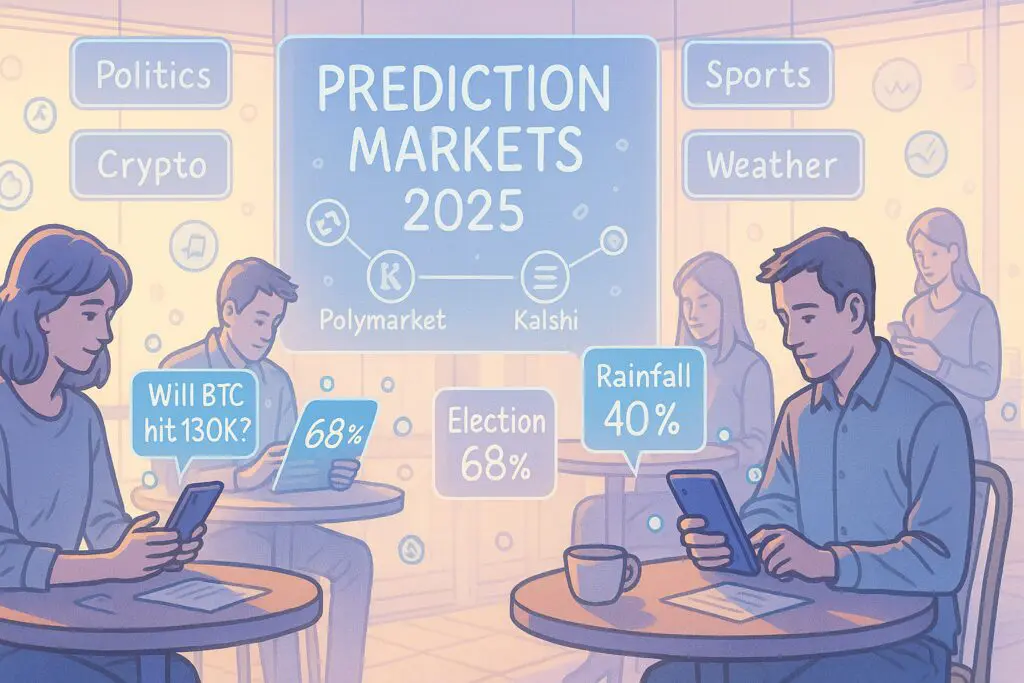
By Q3 2025, the prediction market industry has grown into a $6 billion ecosystem, fueled by crypto adoption, CFTC approvals, and retail excitement. Platforms like Polymarket and Kalshi now process billions in monthly trading volume, covering everything from U.S. elections to Bitcoin’s year-end price.
Their rise represents something bigger than speculation. Prediction markets have become the next layer of decentralized intelligence, where financial incentives drive truth-seeking behavior. Whether you call it crowd forecasting or financialized data, one thing is clear — this is how the world is learning to bet on the future.
The Origins of Prediction Markets
Prediction markets may feel like a modern crypto innovation, but their roots go back centuries. Humans have always tried to profit from predicting the future. The difference today is the technology behind it.
Early Beginnings:
- The first known prediction-style markets appeared in 16th-century Italy, where citizens placed bets on papal elections.
- These wagers became so widespread that in 1591, Pope Gregory XIV issued a papal bull threatening excommunication for anyone betting on the outcome of the next pope.
- In ancient China, similar bets surrounded imperial exams and royal appointments.
- Across Europe, gamblers speculated on the outcomes of military battles and royal marriages.
These early systems were crude yet effective. They revealed one timeless truth — people are naturally drawn to betting on uncertainty.
The Birth of Modern Prediction Markets
The first structured and academically studied version emerged in the United States. During the 1800s, election betting on Wall Street was common. Newspapers even printed odds for presidential candidates, turning politics into a public market long before polling existed.
The real transformation came in 1988, when the University of Iowa launched the Iowa Electronic Markets (IEM). This platform allowed small-scale trading on the outcome of U.S. elections. What shocked academics was the accuracy — IEM consistently beat major polls. It proved that when people have financial incentives, they process information faster and more efficiently than any survey could.
Theoretical Foundations
Economists like Friedrich Hayek and Ludwig von Mises laid the philosophical groundwork decades earlier. They argued that markets are superior information processors. In Hayek’s words, markets coordinate “dispersed knowledge” better than any central planner. Prediction markets became the proof of that theory in action.
The Digital Era
By the early 2000s, online platforms like Intrade and PredictIt took the concept global. Traders could bet on elections, policy decisions, or economic data. In 2004, Intrade’s market predictions outperformed most professional forecasters during the U.S. election.
However, regulation soon caught up. U.S. gambling laws treated prediction markets as betting rather than research. Platforms like PredictIt faced limits on volume and user participation. Despite this, their success proved one thing — crowds, when financially motivated, are astonishingly good at forecasting outcomes.
The Blockchain Revolution
The next leap came with decentralized technology. Blockchain solved two key problems: transparency and trust. With smart contracts, event outcomes could be settled automatically, without middlemen. Oracles like Chainlink and UMA could verify real-world data and feed it on-chain.
Platforms such as Polymarket and Drift’s B.E.T. now run markets on crypto rails, settling trades instantly and globally. This has brought prediction markets full circle — from papal elections to decentralized, permissionless forecasting.
Why It Matters Today
The history of prediction markets is more than a story about gambling or speculation. It’s about information efficiency. Each evolution — from handwritten odds to on-chain contracts — improved how humanity quantifies belief.
In 2025, these markets are more than financial playgrounds. They are becoming decision-making tools for businesses, governments, and everyday users. Instead of asking experts, people now ask markets. And the answers, backed by billions in incentives, are proving hard to ignore.
The Hype Around Prediction Markets in 2025
Prediction markets have exploded in 2025. What was once a niche curiosity is now one of the fastest-growing frontiers in decentralized finance. The numbers speak for themselves. Global activity has crossed $19 billion since 2020, fueled by elections, policy debates, and macro events that dominate headlines.
The turning point came in late 2024 when regulators began opening the gates. The CFTC approved Kalshi and Polymarket for limited U.S. operations. This changed everything. For the first time, American traders could legally participate in real-money forecasting markets. By September 2025, Kalshi controlled over 66 percent of global market share, with Polymarket following close behind.
The hype isn’t just retail-driven. Institutions are buying in. The Intercontinental Exchange (ICE), the parent company of the New York Stock Exchange, invested $2 billion in Polymarket earlier this year, valuing the platform at $9 billion. That kind of backing signals one thing: prediction markets are being treated as legitimate financial infrastructure, not online casinos.
So what’s driving the excitement?
1. Unprecedented Political Uncertainty
With major global elections, shifting alliances, and debates on AI regulation, 2025 is packed with high-stakes events. Traders can now speculate on outcomes like:
- Will the U.S. government shut down again this year?
- Which party will win the European Parliament?
- Will the Fed cut rates by 50 basis points?
Every global event becomes a potential market.
2. Regulatory Breakthroughs
The U.S. market was long constrained by gambling laws. CFTC-approved venues have now provided a legal and transparent framework for trading event contracts. This legitimacy invites institutions, hedge funds, and universities to use prediction markets as analytical tools.
3. Mainstream Partnerships
Polymarket integrated Chainlink oracles for crypto data and partnered with MetaMask for direct wallet access. These moves streamlined participation, making it as easy as a few clicks to open a market position.
4. Cultural Relevance
Prediction markets now move alongside social media. During major events like the Nobel Peace Prize or U.S. primaries, trading volumes spike within minutes of viral posts. Platforms such as Polymarket and Kalshi have become real-time sentiment indicators.
5. Corporate and Financial Utility
Beyond speculation, companies are starting to use prediction markets to hedge risk. Airlines can hedge oil price movements. Farmers can hedge weather risks. Even media companies are using these forecasts to anticipate audience behavior.
This surge in use cases explains why major accounting firms like KPMG are calling prediction markets “the next generation of risk management tools.” They aggregate information, guide decisions, and provide probabilities rooted in market behavior — not opinion.
In short, the hype is justified. Prediction markets combine entertainment, analysis, and financial opportunity into one self-regulating ecosystem. They are fast, global, data-rich, and increasingly credible.
The Potential of Prediction Markets as a Narrative
Every bull cycle in finance births a new narrative. In 2021, it was NFTs. 2023, it was AI tokens. In 2025, it’s prediction markets — the gamification of global intelligence.
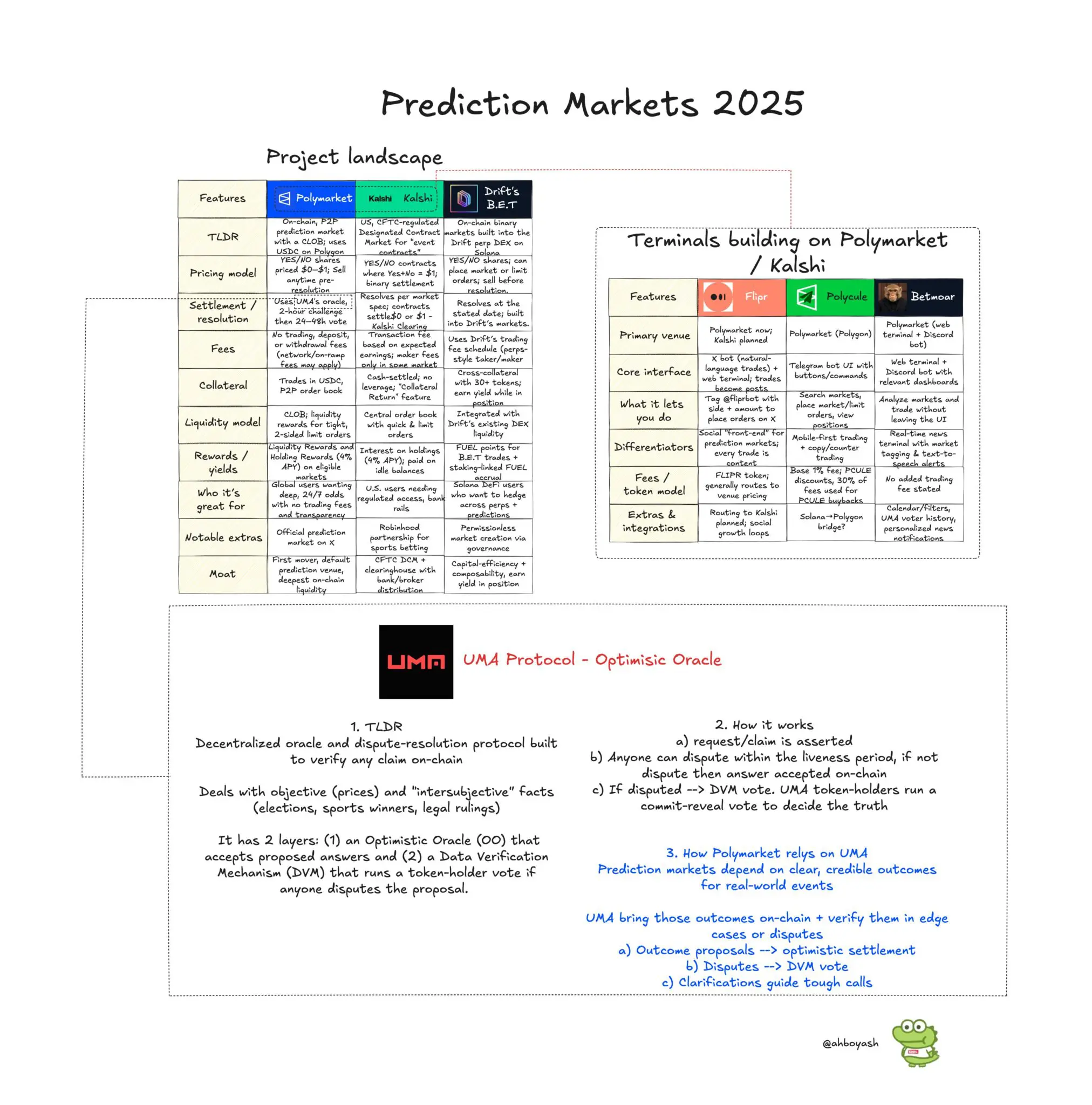
At their core, prediction markets turn collective curiosity into measurable probabilities. When thousands of traders bet on an event, their combined knowledge forms a single number: the market’s prediction. This number often outperforms traditional forecasts because it rewards truth over opinion.
Why the Narrative Works
Prediction markets fit perfectly in the modern attention economy. Everyone has an opinion, and now those opinions can be monetized. The result is a new class of financial product — one that merges speculation, data, and participation.
- Crowd Intelligence: Markets aggregate real-time information better than centralized models.
- Financial Incentive: Traders have “skin in the game,” which filters out noise and emotion.
- Transparency: Blockchain ensures visible, verifiable settlement.
- Accessibility: Anyone with a wallet can bet, hedge, or forecast.
Growing Market Size
According to recent estimates, the global prediction market value jumped from $4.43 billion in 2024 to $6.11 billion in 2025, with projections pointing toward continuous double-digit growth. Analysts expect the sector to generate $8 billion in annual revenue by the end of the decade.
Top Use Cases of Prediction Markets
Election Forecasting
Prediction markets have consistently outperformed traditional polling when it comes to political outcomes. Platforms such as Polymarket and Kalshi translate public opinion into real-money probabilities, which makes the forecasts sharper and more honest. During the 2024 U.S. election, Polymarket priced Trump above a 90 percent chance on election night while polls were still calling it close. The crowd had already priced in the outcome before the media admitted it.
Reading Crypto Sentiment Through Bets
In crypto, prediction markets reveal what traders genuinely believe, not what they tweet. Platforms like Polymarket, Azuro, and SX Network host markets on Bitcoin ETF approvals, BTC price levels, Fed decisions, regulatory shifts, and even specific token events. When millions flow into a contract like “BTC above 150k in 2025,” it becomes a real-time sentiment gauge that is far more reliable than surveys or CT opinions.
Macroeconomic and Policy Forecasts
Prediction markets also excel at aggregating global information around macro events. Traders speculate on interest rate moves, inflation prints, GDP trends, and recession odds. On Kalshi, markets like “Will the Fed cut 50 bps?” often beat economist surveys because traders continuously update positions based on new data.
Sports and Entertainment Outcomes
From NFL champions to Oscar winners to the next Taylor Swift album date, prediction markets generate some of the cleanest odds in entertainment. Decentralized platforms like Azuro or Overtime and regulated venues like PredictIt price outcomes with lower margins and higher information efficiency compared to traditional sportsbooks.
Corporate and Legal Events
Prediction markets also track high-impact corporate or legal outcomes. Traders bet on earnings beats, FDA approvals, merger deadlines, and landmark court decisions. Markets such as “Will Microsoft–Activision close by this date?” frequently move faster than analysts and often price news more accurately than the headlines themselves.
Narrative Power in DeFi and Beyond
Prediction markets also bridge the gap between decentralized finance and the real world. They allow crypto users to interact with real events — from elections to tech milestones — using blockchain-based tools. This is what some call “DeFi with meaning.”
Their structure fits the ongoing theme of “hyper-gamblification” in finance. Users are not just trading coins or NFTs; they are betting on life itself — weather patterns, sports finals, presidential debates, and economic reports.
Practical Use Cases Are Expanding
Prediction markets are no longer just about politics or sports. They are evolving into risk management systems. Examples include:
- Insurance Hedging: Homeowners can hedge hurricane risks using contracts tied to wind speed or rainfall levels.
- Corporate Forecasting: Businesses can use internal markets to predict product launches or quarterly sales.
- Investment Strategy: Traders can hedge portfolios by buying event contracts linked to rate decisions or policy shifts.
Challenges Remain
No narrative comes without growing pains. The biggest concerns in prediction markets are liquidity fragmentation and manipulation. Some markets remain shallow, and whales can distort prices in smaller pools. There are also questions about how to prevent insider trading on markets tied to public events.
Still, the advantages outweigh the risks. Transparency from blockchain oracles and KYC measures on regulated venues make manipulation harder each year.
Endorsements and Cultural Validation
Prediction markets have gained visibility through endorsements from public figures like Elon Musk, who frequently references Polymarket polls on X. Their growing integration into media reporting — often cited alongside traditional polls — cements their credibility.
This combination of entertainment, accuracy, and transparency is exactly why the prediction markets narrative has captivated both retail traders and institutions. It’s not just another trading trend; it’s the evolution of financialized information — where truth itself becomes an asset class.
Polymarket: The Crypto-Native Leader
If prediction markets have a flagship name in 2025, it’s Polymarket. Built on Polygon and powered by UMA’s optimistic oracle, Polymarket has become the world’s most recognized crypto-native platform for event-based trading.
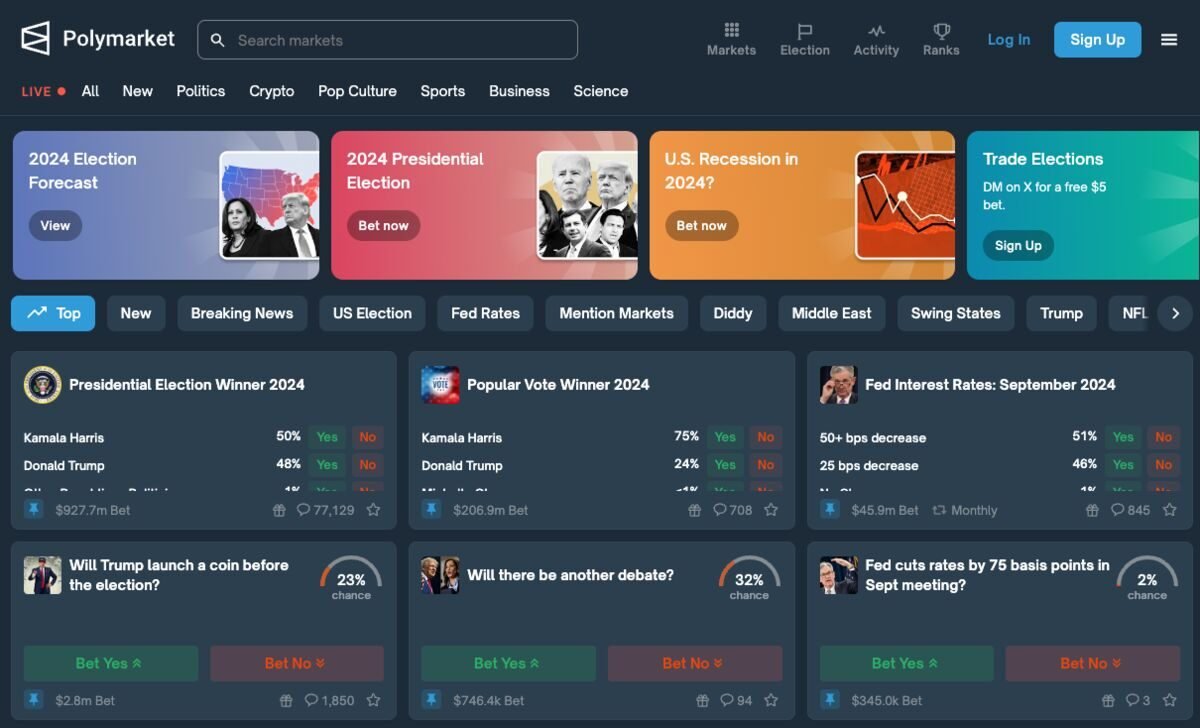
At its core, Polymarket allows users to buy and sell shares representing the probability of real-world events. Each market reflects a simple yes-or-no question — such as “Will Bitcoin close above $130,000 by December 31?” or “Will Donald Trump win the U.S. presidency?” Share prices range from $0 to $1, translating directly into percentage probabilities.
This simplicity hides a powerful mechanism. When thousands of traders interact, the resulting price reflects the crowd’s collective forecast. It’s not just speculation; it’s live, crowd-driven intelligence.
By 2025, Polymarket has crossed $19 billion in total trading volume, processing over $1 billion monthly. Its valuation now sits near $9 to $10 billion after a major $2 billion investment from the Intercontinental Exchange (ICE), the owner of the New York Stock Exchange.
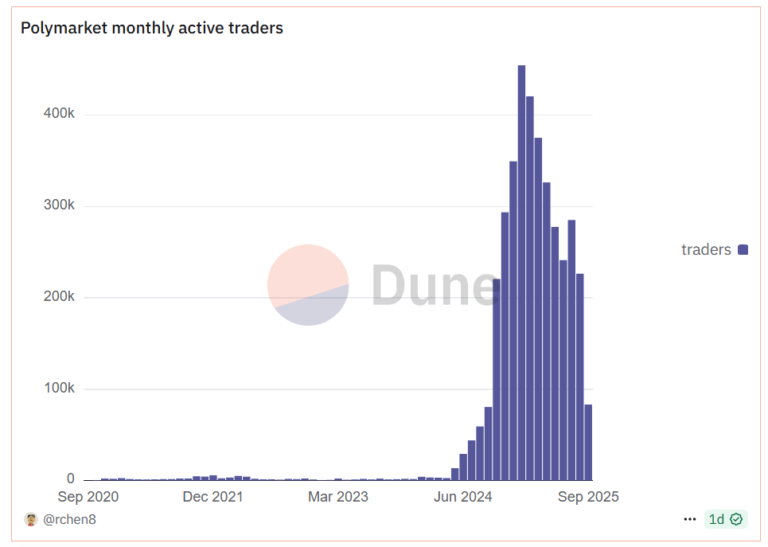
Key Features Powering Polymarket’s Rise:
- Oracle Integration: UMA verifies outcomes through transparent, decentralized data feeds.
- Partnerships: Integrations with Chainlink and MetaMask make trading secure and seamless.
- Cross-Platform Deposits: Users can deposit directly from platforms like Hyperliquid, boosting liquidity.
- Market Range: From politics and sports to crypto price predictions and company earnings.
CEO Shayne Coplan has hinted at launching a native $POLY token in 2026. This token is expected to serve governance roles, unlock staking rewards, and possibly enable airdrops tied to trading activity.
Emerging Players: Kalshi and Drift’s B.E.T.
While Polymarket dominates crypto-native markets, Kalshi and Drift’s B.E.T. showcase the sector’s diversity — one operating under U.S. regulation, the other redefining DeFi prediction trading.
Kalshi: The Regulated Pioneer
Founded in 2021, Kalshi is the first CFTC-regulated prediction market in the United States. It operates as a Designated Contract Market (DCM), enabling traders to buy binary event contracts that pay out $1 if true and $0 if false.
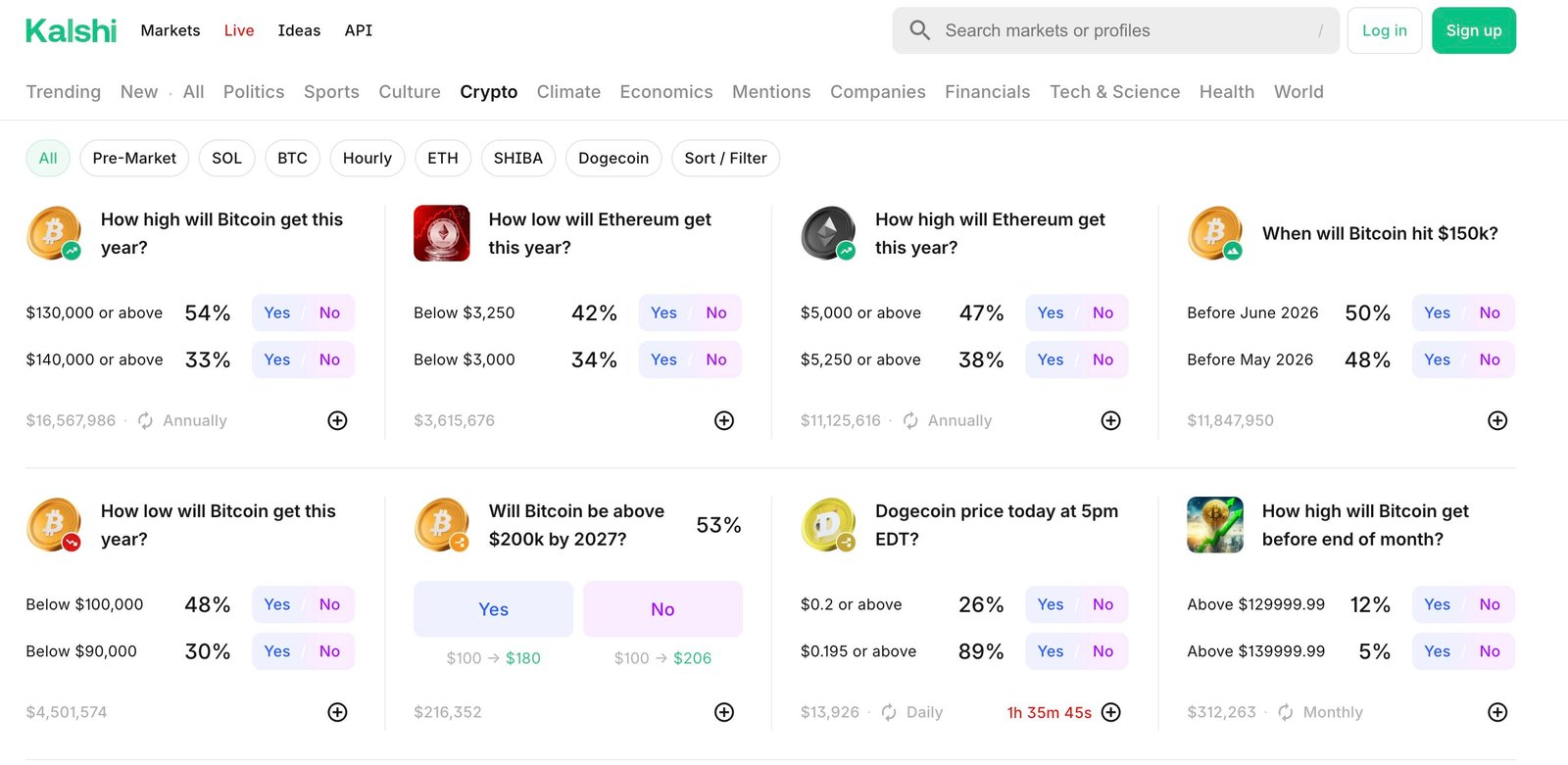
Kalshi lets users trade outcomes like:
- Will U.S. inflation exceed 3.5% this quarter?
- Will Bitcoin close above $120,000 by month-end?
- Will the next rate hike happen before November?
Each contract behaves like a simplified futures market, accessible to both retail and institutions.
In 2025, Kalshi captured 62% of global event-trading volume between September 11–17, surpassing Polymarket for the first time in weekly activity. Its integrations with Stork Oracle ensure on-chain data accuracy, while partnerships with Robinhood open prediction trading to millions of retail users.
For professional investors, Kalshi offers a powerful new hedge — a way to manage exposure to political risk, macro volatility, and policy uncertainty.
Drift’s B.E.T.: DeFi’s Answer to Predictive Liquidity
On the other side of the spectrum sits Drift’s B.E.T., a decentralized prediction market built on Solana. Launched in August 2024, it merges prediction trading with yield-bearing DeFi mechanics.
Here’s what makes it unique:
- Cross-Margin Trading: Users can allocate collateral across different markets, improving capital efficiency.
- Yield-Earning Shares: Traders earn yield even while their event positions remain open.
- Wide Market Range: Sports, crypto price movements, macro events, and community-driven forecasts.
In 2024 alone, B.E.T. recorded $46.5 billion in total volume and $860 million in total value locked (TVL). Within months, it surpassed Polymarket’s daily volume, proving that decentralized event trading can scale at lightning speed.
With its sleek design, Solana-based performance, and liquidity incentives, Drift’s B.E.T. is bridging the gap between gaming, DeFi, and real-world forecasting.
Comparing the Two Approaches
- Kalshi: Focused on compliance, fiat access, and regulated products.
- B.E.T.: Focused on decentralization, token yield, and user ownership.
Together, they define the two ends of the prediction market spectrum — one working within regulation, the other pushing the limits of innovation.
Both demonstrate that the prediction market space isn’t a passing trend. It’s an expanding financial layer capable of serving institutions, DeFi natives, and casual users alike.
Accessibility Revolution: Terminals, Bots, and Retail Integration
A major reason behind prediction markets’ viral growth is accessibility. What was once limited to tech-savvy traders is now available to anyone with a phone, wallet, or Telegram account.
Terminals and Aggregators
Web interfaces like Betmoar.fun have transformed prediction trading into a dynamic dashboard experience. Users can:
- View real-time news from X and Truth Social
- Trade directly from embedded widgets
- Track market analytics and UMA oracle disputes
Betmoar integrates Discord bots that allow community trading inside chat rooms, with automated updates on live event probabilities.
Trading Bots and Copy Tools
Social bots are the newest entry point for retail traders:
- Fliprbot started as an X-based trading assistant and is now evolving into a cross-venue aggregator. It allows users to execute leveraged trades, lend assets, or place bets across multiple prediction platforms from a single interface.
- Polycule_bot, built for Telegram, enables copy trading by mirroring top performers on Polymarket. It uses a $PCULE token for governance and incentivized leaderboards, letting users follow expert traders in real time.
Why Bots Matter
These tools reduce friction. Instead of learning complex interfaces, users interact through apps they already know — Telegram, X, or Discord. It’s prediction trading for the social generation.
The Broader Impact
Accessibility is now the driving force behind retail growth. Small traders who once felt excluded from derivatives or futures markets can now engage with prediction markets using as little as a few dollars.
This democratization mirrors what Robinhood did for stocks and what Uniswap did for tokens. Prediction markets are the next step — a way for anyone to participate in the flow of real-world information and express their beliefs financially.
As bots, terminals, and on-chain oracles continue to evolve, the barrier to entry keeps shrinking. That’s why by the end of 2025, prediction markets are projected to attract over 10 million active users — a milestone that would firmly place them in the mainstream of decentralized finance.
From the Retail Perspective: Opportunities and Risks
The most exciting part of the prediction market revolution isn’t the technology or institutional money. It’s the rise of retail participation — everyday people forecasting the world and getting paid for it.
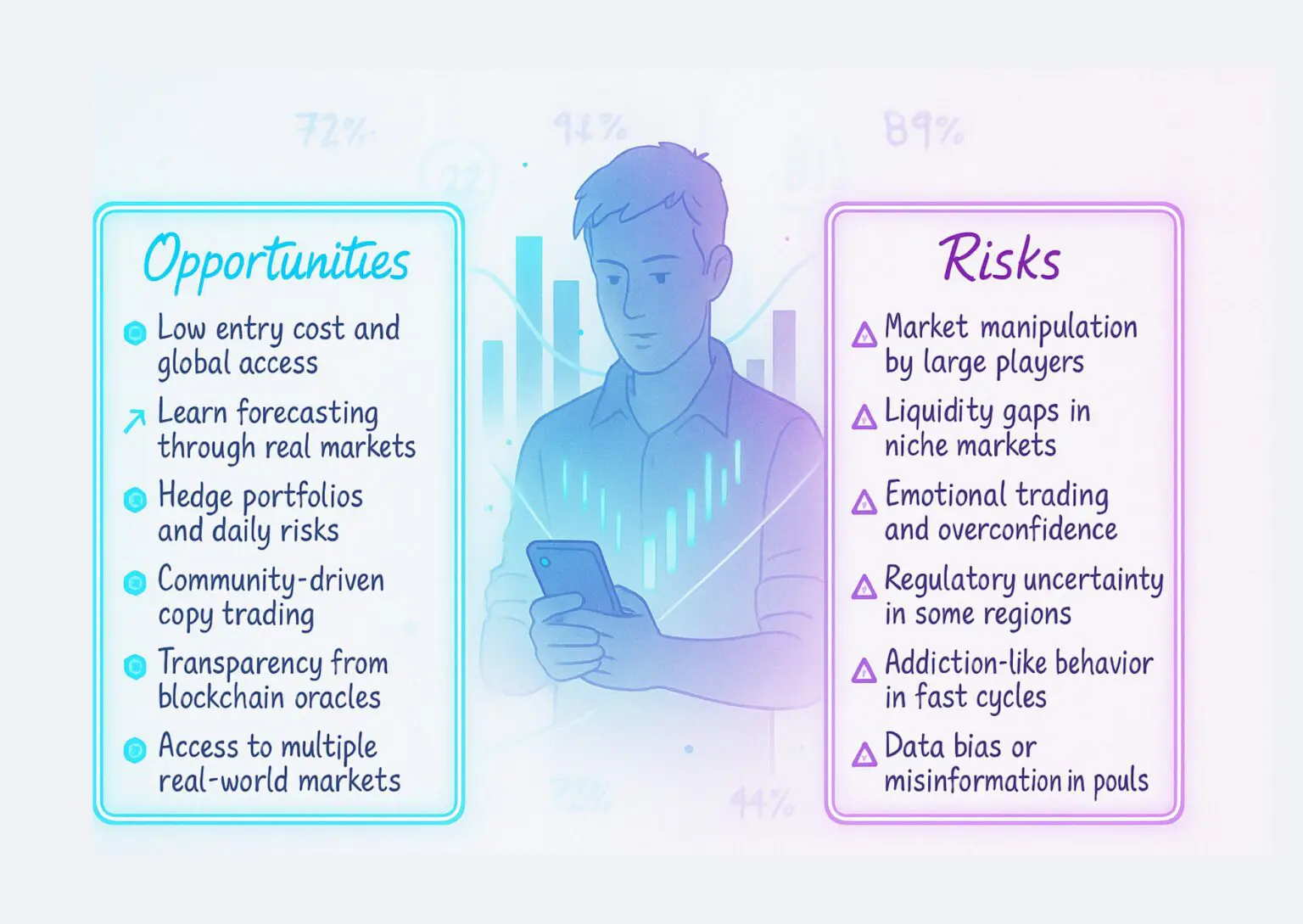
In 2025, prediction platforms like Kalshi and Polymarket have made entry seamless. All you need is a few dollars, a wallet, and curiosity. Whether it’s guessing when Bitcoin will hit $150,000 or how long a government shutdown will last, anyone can now turn their insight into income.
The Opportunities for Retail Traders
Prediction markets are leveling the playing field. They let small traders compete with experts and hedge funds using information they already have.
Here’s why they’re appealing:
- Low Entry Barriers: Unlike futures or options, there’s no need for large capital or complex setups.
- Diverse Topics: Users can bet on politics, weather, crypto, sports, or tech announcements.
- Better Accuracy: Crowds often outperform polls, especially in high-engagement events.
- Passive Learning: Each market teaches users about data, probabilities, and sentiment.
- Community-Driven: Social bots and copy-trading help beginners follow experienced traders.
For many, prediction markets feel like a mix between trading, news analysis, and gaming. The engagement keeps people informed and financially involved in global events.
Even investors are using them for portfolio hedging. For example:
- A Bitcoin holder might buy a “no” position on BTC > $130,000 by December as a partial hedge.
- A business dependent on weather conditions could use contracts tied to rainfall or temperature.
These strategies show how prediction markets aren’t only for speculation — they’re also tools for managing uncertainty.
The Risks That Come With It
Yet, the same accessibility that empowers retail traders can also invite problems.
Common risks include:
- Market Manipulation: Whales can move smaller markets by placing large bets.
- Liquidity Issues: Some niche markets have low participation, making exits harder.
- Overconfidence: Quick wins can lead to gambling-like habits.
- Regulatory Shifts: Sudden changes in jurisdiction rules can freeze certain platforms.
Retail traders must remember that while prediction markets look like simple “yes or no” bets, they are still financial instruments. Losing positions cost money, and emotional trading often leads to poor results.
Education is crucial. Most successful traders follow three golden rules:
- Never risk more than you can afford to lose.
- Diversify across topics and platforms.
- Track probabilities, not emotions.
The platforms themselves are improving guardrails. Kalshi’s CFTC oversight and Polymarket’s transparency tools have made manipulation harder. Bots like Fliprbot and Polycule include data dashboards that show leaderboards and success rates, helping users make informed decisions.
The Line Between Trading and Gambling
Critics argue that prediction markets blur the line between intelligent speculation and gambling. The difference lies in intent and discipline. Betting for entertainment is fine. Treating prediction markets as an information tool is smarter.
For serious users, these platforms can be research instruments — a real-time reflection of how the world perceives future risks. Traders who combine data with clear reasoning are turning prediction markets into modern forecasting labs.
Why Retail Involvement Matters
When millions of users participate, the markets get sharper. More liquidity means better prices and faster reactions to new information. In essence, retail traders are the foundation that makes prediction markets reliable.
This participatory structure is what gives the system its power — a global, decentralized, human-driven forecasting engine.
Conclusion: Betting Smarter on the Future
From papal elections in the 1500s to blockchain-powered forecasting in 2025, prediction markets have come full circle. What began as informal bets on outcomes has evolved into a sophisticated, data-rich ecosystem that quantifies belief itself.
Their success lies in the combination of three forces:
- Collective Intelligence: The wisdom of the crowd consistently beats isolated expert judgment.
- Decentralization: Blockchain ensures transparent settlements and removes middlemen.
- Financial Incentives: Traders think rationally when their money is at stake, improving accuracy.
Platforms like Polymarket, Kalshi, and Drift’s B.E.T. have proven that prediction markets are more than speculative playgrounds. They are the foundation for a new kind of financial analytics — one where markets become mirrors of human expectations.
They turn uncertainty into opportunity, and opinions into probabilities. As 2025 closes, one thing is clear: prediction markets aren’t about guessing anymore. They’re about understanding. And in this new era of decentralized truth, that understanding might just be the most valuable asset of all.
Frequently Asked Questions
What are prediction markets?
Why are prediction markets gaining popularity in 2025?
Are prediction markets the same as gambling?
How do crypto and blockchain improve prediction markets?
What can people trade on prediction markets?
Are there risks for retail traders?
What’s next for prediction markets?
In this article
The Origins of Prediction MarketsThe Hype Around Prediction Markets in 2025The Potential of Prediction Markets as a NarrativeTop Use Cases of Prediction MarketsNarrative Power in DeFi and BeyondPolymarket: The Crypto-Native LeaderEmerging Players: Kalshi and Drift’s B.E.T.Accessibility Revolution: Terminals, Bots, and Retail IntegrationFrom the Retail Perspective: Opportunities and RisksConclusion: Betting Smarter on the FutureFrequently Asked Questions