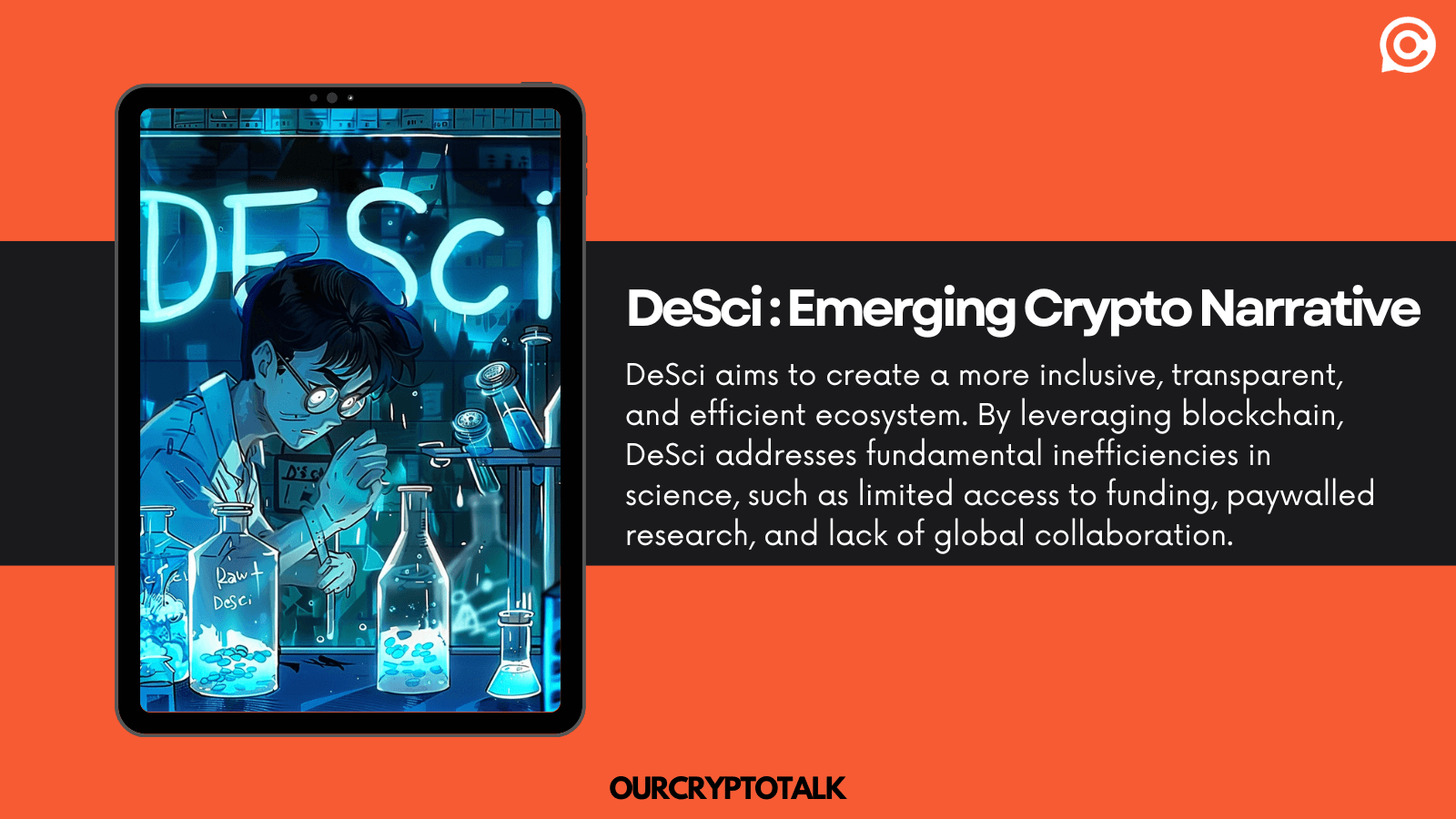
DeSci : Emerging Crypto Narrative
Discover how DeSci crypto revolutionizes scientific research with blockchain. Learn about some of the top projects in this narrative


Author: Chirag Sharma
The Decentralized Science – DeSci crypto narrative is rapidly emerging as one of the most transformative applications of blockchain technology. Unlike traditional approaches to scientific research and collaboration, DeSci aims to create a more inclusive, transparent, and efficient ecosystem. By leveraging blockchain, DeSci addresses fundamental inefficiencies in science, such as limited access to funding, paywalled research, and lack of global collaboration.
In today’s digital era, science remains largely bound by outdated systems of publication, funding, and IP management. Institutions dominate funding decisions, often sidelining bold or high-risk projects. Similarly, knowledge sharing is hampered by subscription-based journals that prevent many researchers and the public from accessing valuable insights. DeSci envisions a decentralized framework where research funding, data sharing, and IP management are democratized, opening up new opportunities for global collaboration and innovation.
As blockchain technology matures, the application of smart contracts, tokenization, and decentralized autonomous organizations (DAOs) in scientific research is gaining momentum. DeSci projects such as VitaDAO and Molecule are leading the charge in reshaping how science is funded and conducted. Additionally, projects like BIO Protocol and Dynex demonstrate the potential of integrating blockchain with cutting-edge research in healthcare and decentralized computing.

This article delves into the key aspects of the DeSci crypto narrative, explores top projects in this space, and highlights how blockchain is poised to disrupt traditional scientific systems.
Understanding the DeSci Crypto Narrative
What is DeSci?
At its core, DeSci uses blockchain technology to create a decentralized framework for scientific research and collaboration. It aims to democratize science by addressing key limitations in traditional systems, such as:
- Funding Bottlenecks: Centralized control by institutions often prioritizes safe, profitable research over innovative or high-risk studies.
- Restricted Access: Paywalls and subscription fees limit the availability of research to a select few.
- IP Ownership: Scientists often lose control over their work, as institutions or corporations claim ownership of their intellectual property.
DeSci operates on blockchain principles of decentralization, transparency, and community-driven governance. By enabling decentralized funding mechanisms and tokenized ownership of research outcomes, DeSci projects ensure that both scientists and communities have a stake in the results.
How Blockchain Enables DeSci
- Smart Contracts: Automate funding agreements and royalty distributions based on predefined conditions.
- Tokenization: Intellectual property (IP) can be converted into tokens, allowing fractional ownership and trade.
- DAOs: Community-led organizations manage research funding and governance, ensuring transparency and inclusivity.
In addition, DeSci platforms leverage blockchain for secure data storage and provenance, ensuring that research data is tamper-proof, traceable, and accessible globally. This enables collaborative efforts between researchers from different countries and disciplines, fostering innovation at an unprecedented scale.
Core Components of DeSci
Decentralized Research Funding
One of DeSci’s most significant contributions is the decentralization of funding mechanisms. Traditional research funding is dominated by government grants and private institutions, which often prioritize low-risk, commercially viable projects. DeSci introduces DAOs like VitaDAO and BIO Protocol, where communities decide which projects to fund, ensuring a broader range of research topics.
For example, VitaDAO focuses on longevity research, enabling members to collectively fund projects related to aging and healthspan. Similarly, BIO Protocol tokenizes scientific IP, creating a marketplace where funding decisions are democratized. These platforms allow scientists to bypass traditional gatekeepers and receive direct support from interested communities or investors.
Tokenization of Intellectual Property (IP)
DeSci projects like Molecule have pioneered the concept of tokenizing IP. By representing research outcomes as NFTs or fungible tokens, researchers can monetize their work and grant ownership rights to backers. This innovation not only provides a funding avenue but also ensures that scientists retain control over their intellectual contributions.
Transparency in Peer Review
Blockchain’s immutable nature offers a solution to biases and inefficiencies in traditional peer-review systems. By decentralizing the review process, DeSci ensures that research is evaluated based on merit rather than institutional affiliations or personal networks. Platforms like ResearchHub reward contributors with cryptocurrency for reviewing and enhancing scientific content, incentivizing quality and transparency.
Data Integrity and Accessibility
DeSci addresses critical issues in data sharing and management. Projects like OriginTrail use blockchain to create decentralized knowledge graphs, ensuring that scientific data is stored securely and remains accessible to all. This reduces the risk of data loss, tampering, or exclusivity, making science more open and collaborative.
Top DeSci Crypto Projects Revolutionizing the Space
The DeSci crypto narrative has seen the rise of several innovative projects that are reshaping the landscape of scientific research and collaboration. Let’s explore some of the standout projects driving this transformation.
BIO Protocol ($BIO)
- Functionality: BIO Protocol provides a decentralized financial layer for science by tokenizing intellectual property (IP) and enabling governance through BioDAOs. Scientists, patients, and investors can collectively fund and manage research in areas such as longevity, mental health, and rare diseases.
- Recent Developments:
- Binance Launchpool: BIO was listed on Binance Launchpool, enabling users to farm BIO tokens by staking BNB or FDUSD. This listing is set to increase visibility and liquidity for the project.
- Institutional Backing: Binance Labs’ investment in BIO Protocol highlights its potential to lead the DeSci space.
- Potential Impact:
- Democratizing biotech funding, especially for underfunded areas.
- Empowering communities with governance rights, allowing patient-driven research.
Dynex ($DNX)
- Functionality: Dynex focuses on decentralized computing for scientific research. It uses a Proof-of-Useful-Work (PoUW) algorithm, ensuring that mining activities contribute to solving real-world computational problems, such as data analysis or simulations.
- Unique Features:
- Neuromorphic Computing: Offers scalability and energy efficiency for research-intensive tasks.
- Decentralized Mining: Enables secure, distributed data processing.
- Potential Impact:
- Accelerates computational research, benefiting fields like climate modeling and drug discovery.
- Lowers costs for researchers through decentralized access to high-performance computing.
You can learn more about Dynex from our interview with the founder Clifford Mapp
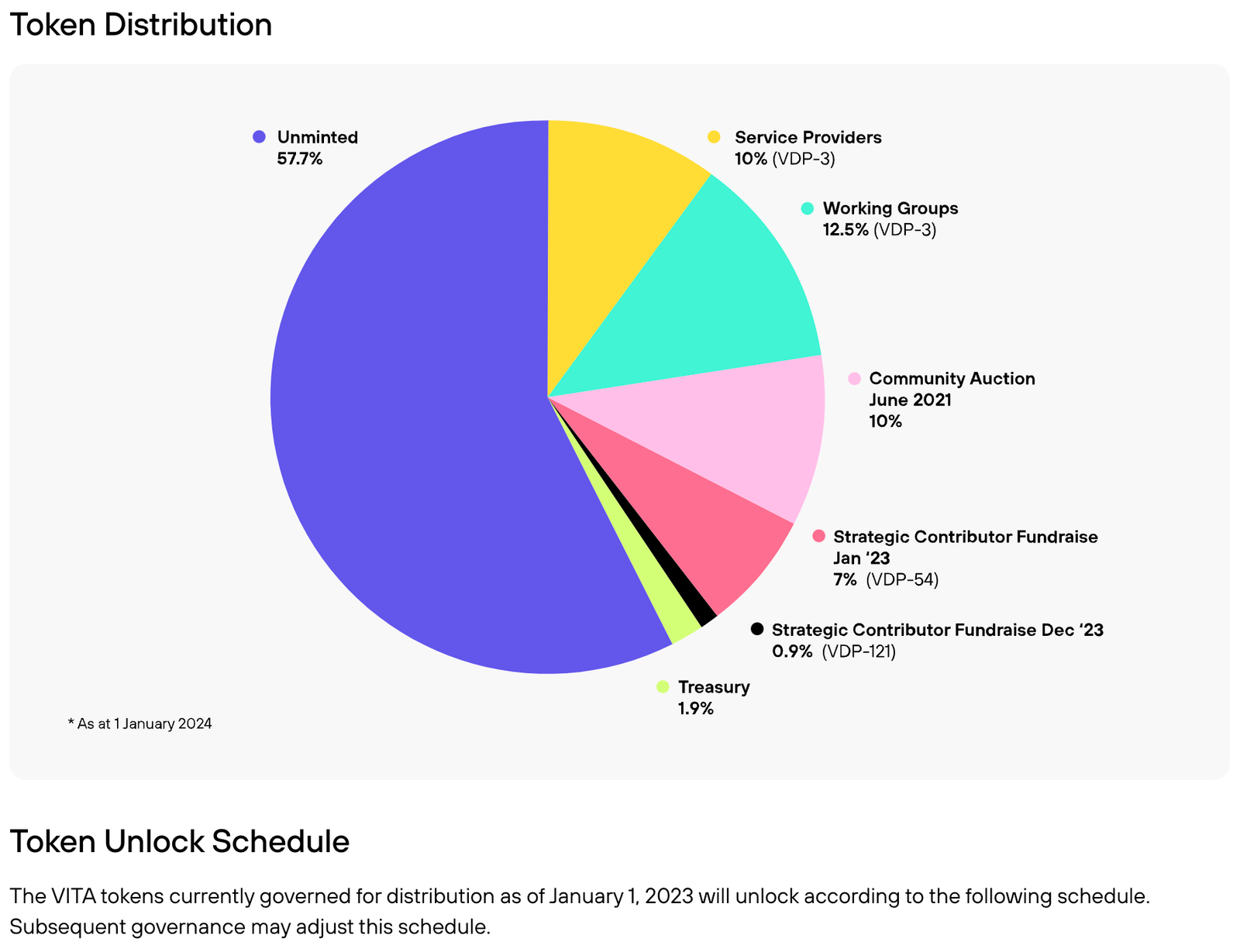
VitaDAO ($VITA)
- Functionality: VitaDAO focuses on funding longevity research through community-driven governance and Members pool resources to fund projects and share in the ownership of the research outcomes.
- Potential Impact: With the rise of interest in healthspan and aging, VitaDAO could become a central hub for decentralized funding in longevity science.
With a solid foundation of tokenomics, the token is 2 years in circulation
Data Lake ($LAKE)
Function: Data Lake focuses on streamlining research and medical operations through blockchain-based solutions. Its platform offers tools for managing research operations with marketing processes and even medical data management, ensuring efficiency and transparency.
Key Features:
- Blockchain-Based Audit Trails: Provides an immutable and transparent record for all research and medical operations, ensuring accountability and data integrity.
- Versatility in Applications: $LAKE helps in managing clinical trials to supporting marketing initiatives. It offers a wide range of use cases that cater to the needs of researchers, institutions, and marketers.

Potential:
- Undervalued Growth Potential: With a market cap of less than $15M, LAKE is poised for significant upside in the growing DeSci sector and Altcoins in general.
- Impact on Research and Medical Fields: By integrating blockchain technology, Lake Protocol could revolutionize how research operations are conducted and medical data is managed, addressing inefficiencies in these critical sectors.
- Opportunities for Early Adoption: LAKE presents an attractive entry point for those looking to invest in promising DeSci projects.
The Potential of DeSci Crypto Narrative: Why It Matters
The DeSci narrative goes beyond just being another use case for blockchain. Its transformative potential lies in addressing some of the most persistent challenges in the scientific ecosystem.
Decentralization of Funding
Traditional research funding is often skewed toward safe, incremental advancements, leaving bold and high-risk ideas underfunded. DeSci democratizes funding by enabling global participation. Through DAOs and tokenized IP, communities can collectively decide which projects to back, bypassing institutional gatekeepers.
For example, projects like VitaDAO allow stakeholders to fund longevity research directly, ensuring that public interest guides funding priorities. Similarly, BIO Protocol tokenizes research outcomes, making them accessible and tradable in decentralized markets.
Open Access to Research
Access to scientific knowledge is often restricted by paywalls, making it challenging for researchers and the public to engage with cutting-edge discoveries. DeSci leverages blockchain to ensure that research data and publications are openly accessible, breaking down barriers created by traditional academic publishing. Projects like ResearchHub reward contributors for sharing and reviewing research, incentivizing a more open and inclusive ecosystem.
Global Collaboration
Blockchain’s decentralized nature enables cross-border collaboration among researchers, institutions, and communities. By removing geographical and institutional barriers, DeSci fosters innovation at an unprecedented scale. For example, OriginTrail’s decentralized knowledge graph facilitates secure and transparent sharing of scientific data across diverse networks.
Transforming Data Management
Data integrity and accessibility are critical for scientific advancement. Blockchain ensures that research data is tamper-proof and traceable, reducing issues of fraud and replication. Projects like Dynex, with their focus on decentralized computing, allow for the secure processing of large datasets, enabling groundbreaking discoveries in areas like artificial intelligence and genomics.
Integration with Emerging Technologies
One of the most exciting aspects of the DeSci narrative is its intersection with other cutting-edge technologies, such as artificial intelligence (AI) and decentralized finance (DeFi).
AI and Longevity Science
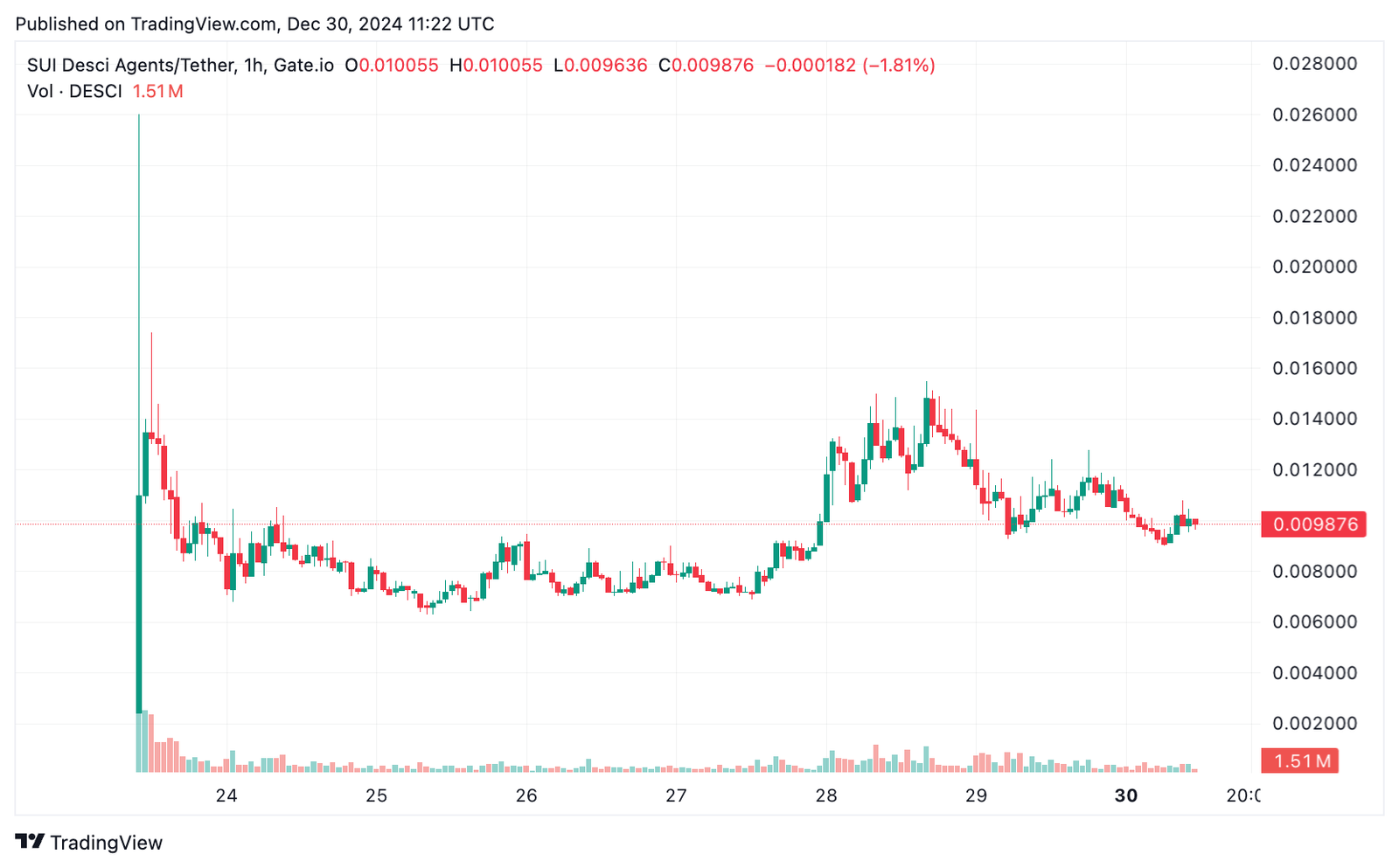
Projects like DeSci Agents on SUI Network exemplify how AI can enhance DeSci efforts. By combining AI-driven insights with blockchain-based funding mechanisms, researchers can identify novel areas of study, optimize experimental designs. This also accelerate discoveries in fields like longevity science.
Decentralized Finance for Science
DeFi principles, such as staking and yield farming, are being integrated into DeSci platforms to incentivize participation. For instance, BIO Protocol’s partnership with Binance Launchpool enables users to earn rewards while supporting biotech innovation. This fusion of DeFi and DeSci creates new avenues for funding, governance, and engagement.
Decentralized Computing
Dynex’s decentralized computing platform illustrates how blockchain can optimize resource usage in computationally intensive research. Neuromorphic computing, supported by Dynex, has the potential to redefine how we approach problems in physics, chemistry, and life sciences.
Top DeSci Crypto Projects Leading the Way
The DeSci narrative has become home to several pioneering projects, each tackling unique challenges within the scientific and research ecosystem. These projects exemplify the transformative power of decentralized technologies.
Molecule
- Functionality: Molecule introduces the concept of tokenized Intellectual Property (IP), represented as NFTs, to revolutionize scientific funding. Researchers can mint and sell fractional ownership of their IP to investors, democratizing the research funding process.
- Potential Impact:
- Facilitates direct connections between scientists and investors, bypassing traditional bottlenecks.
- Encourages innovative projects that may lack institutional backing.
- Creates an inclusive marketplace for research funding, enabling individuals and communities to own a stake in scientific breakthroughs.
OriginTrail (TRAC)
- Functionality: OriginTrail ensures secure, transparent, and efficient data sharing across industries, including scientific research. It offers a robust platform for managing complex datasets.
- Potential Impact:
- Enhances the integrity and accessibility of scientific data.
- Provides a standardized framework for collaboration between institutions, ensuring reproducibility and verifiability of results.
- Fosters a global network for research data, bridging gaps across disciplines and geographies.
ResearchHub
- Functionality: This platform reimagines academic publishing by incentivizing contributions to science. Researchers earn cryptocurrency rewards for sharing, reviewing, or editing scientific work, fostering a culture of open collaboration.
- Potential Impact:
- Reduces the influence of paywalls and exclusive publishing houses.
- Promotes a community-driven approach to research validation and dissemination.
- Encourages quality contributions through a decentralized reward system.
DeSci Agents on SUI Network
- Functionality:DeSci Agents focuses on integrating AI into longevity research. The platform aims to create a collaborative ecosystem for funding and developing innovative solutions in health and aging. They are a part of SUI blockchain which is growing rapidly
- Potential Impact:
- Merges AI-driven insights with decentralized funding mechanisms to accelerate discoveries.
- Pioneers a new model for research that emphasizes speed, precision, and collaboration.
Challenges Facing the DeSci Crypto Narrative
While the potential of the DeSci crypto narrative is immense, the path to widespread adoption is not without obstacles. These challenges must be addressed for DeSci to fulfill its transformative promise.
Regulatory Uncertainty
The intersection of blockchain, cryptocurrency, and science is subject to complex regulatory frameworks. Governments and institutions often lack clarity on how to classify and govern tokenized IP, decentralized DAOs, and blockchain-based funding models.
- Implications:
- Hinders the scalability of DeSci platforms.
- Creates risks for projects operating in legally ambiguous environments.
- Limits investor confidence in funding research through blockchain.
- Potential Solutions:
- Advocacy for clear, science-friendly regulations.
- Collaboration with policymakers to design frameworks that protect intellectual property while fostering innovation.
Adoption Barriers
Decentralized platforms often require a steep learning curve for researchers and institutions unfamiliar with blockchain technology.
- Implications:
- Slower onboarding of scientific communities.
- Resistance from traditional academic and research institutions.
- Potential Solutions:
- User-friendly interfaces and educational resources to bridge the knowledge gap.
- Strategic partnerships with universities and research organizations to drive adoption.
Data Security and Privacy
While blockchain is inherently secure, handling sensitive research data, particularly in areas like biotech and health sciences, requires robust privacy measures.
- Implications:
- Risks of unauthorized data access or misuse.
- Ethical concerns over the ownership and commercialization of sensitive datasets.
- Potential Solutions:
- Integration of advanced encryption techniques.
- Development of ethical guidelines for data sharing and commercialization.
Funding Limitations
Despite its democratizing potential, DeSci still faces challenges in attracting consistent funding, particularly for large-scale or long-term research projects.
- Implications:
- Limits the scope of research that can be undertaken.
- Creates reliance on external crypto market trends.
- Potential Solutions:
- Diversifying funding sources through partnerships with traditional institutions.
- Leveraging DeFi mechanisms like staking and yield farming to sustain funding pools.
The Future of DeSci: Opportunities and Market Potential
The DeSci crypto narrative is poised to become one of the most impactful use cases for blockchain technology. As the ecosystem evolves, several opportunities stand out:
Bridging the Gap Between Science and Society
DeSci offers an unprecedented opportunity to align scientific research with societal needs. By democratizing funding and governance, the public can directly influence which projects are prioritized. This could lead to:
- Increased investment in underfunded areas like rare diseases and mental health.
- Research outcomes that reflect public interest over profit motives.
Scaling with Blockchain Innovations
The rapid development of Layer1 and Layer2 solutions provides the scalability required for DeSci platforms to handle large datasets, complex computations, and global collaborations. For instance:
- Dynex’s decentralized computing can support computationally intensive research.
- VitaDAO’s community-driven funding model can scale to support diverse research initiatives.
Market Growth
Current market projections suggest significant growth for DeSci, with the potential to reach a market cap of $500 billion to $1 trillion by 2030. This growth is driven by:
- Increasing interest from institutional investors, as seen with Binance Labs’ backing of BIO Protocol.
- Expanding use cases for DeSci in fields like AI, longevity science, and decentralized data management.
Integration with Emerging Technologies
The synergy between DeSci and technologies like AI, DeFi, and IoT opens new possibilities for innovation. For example:
- AI-driven insights can optimize experimental designs and accelerate discoveries.
- IoT devices can contribute real-time data to decentralized knowledge graphs for more accurate and comprehensive research outcomes.
Long-Term Vision
The ultimate goal of DeSci is to create a global, inclusive, and transparent ecosystem for scientific discovery. By addressing current challenges and leveraging emerging opportunities, DeSci can become a cornerstone of innovation in the 21st century.
Conclusion
The DeSci crypto narrative shifts how we fund, conduct, and share scientific research. It enables scientists, investors, and the public to collaborate like never before. DeSci breaks down traditional barriers, such as restrictive funding models, paywalls, and data silos, and replaces them with transparency, accessibility, and innovation.
DeSci’s potential drives advancements in areas like longevity research, mental health, rare diseases, and cutting-edge computing. Projects such as BIO Protocol, Dynex, VitaDAO, and Molecule showcase blockchain’s ability to solve real-world problems in science. These platforms transform collaboration, ensuring global challenges receive global solutions.
Embracing the DeSci framework equips researchers with tools to accelerate discoveries while making their work accessible to everyone. The combination of blockchain and science goes beyond a narrative—it propels a movement toward a fairer, more inclusive future for innovation and knowledge.
TL;DR
Decentralized Science (DeSci) uses blockchain to democratize research funding, ensure transparency, and foster global collaboration. Projects like BIO Protocol and Dynex are leading this transformative movement. DeSci addresses key challenges like limited funding, data accessibility, and centralization, paving the way for a more inclusive, innovative, and globally connected scientific ecosystem. It unlocks new opportunities for research and discovery by merging blockchain with AI and decentralization,
Frequently Asked Questions
What is DeSci in crypto?
Why was DeSci created?
How does blockchain enable DeSci?
What are the key components of DeSci?
Which projects are leading the DeSci movement?
What challenges does DeSci face?
What is the future potential of DeSci?
In this article
Understanding the DeSci Crypto NarrativeCore Components of DeSciTop DeSci Crypto Projects Revolutionizing the SpaceThe Potential of DeSci Crypto Narrative: Why It MattersIntegration with Emerging TechnologiesTop DeSci Crypto Projects Leading the WayChallenges Facing the DeSci Crypto NarrativeThe Future of DeSci: Opportunities and Market PotentialConclusionTL;DRFrequently Asked Questions