Base suffered a second outage in 24 hours, reviving concerns over centralized sequencers and L2 reliability once more across crypto.

Author: Akshat Thakur
High attention and emotional sentiment detected.
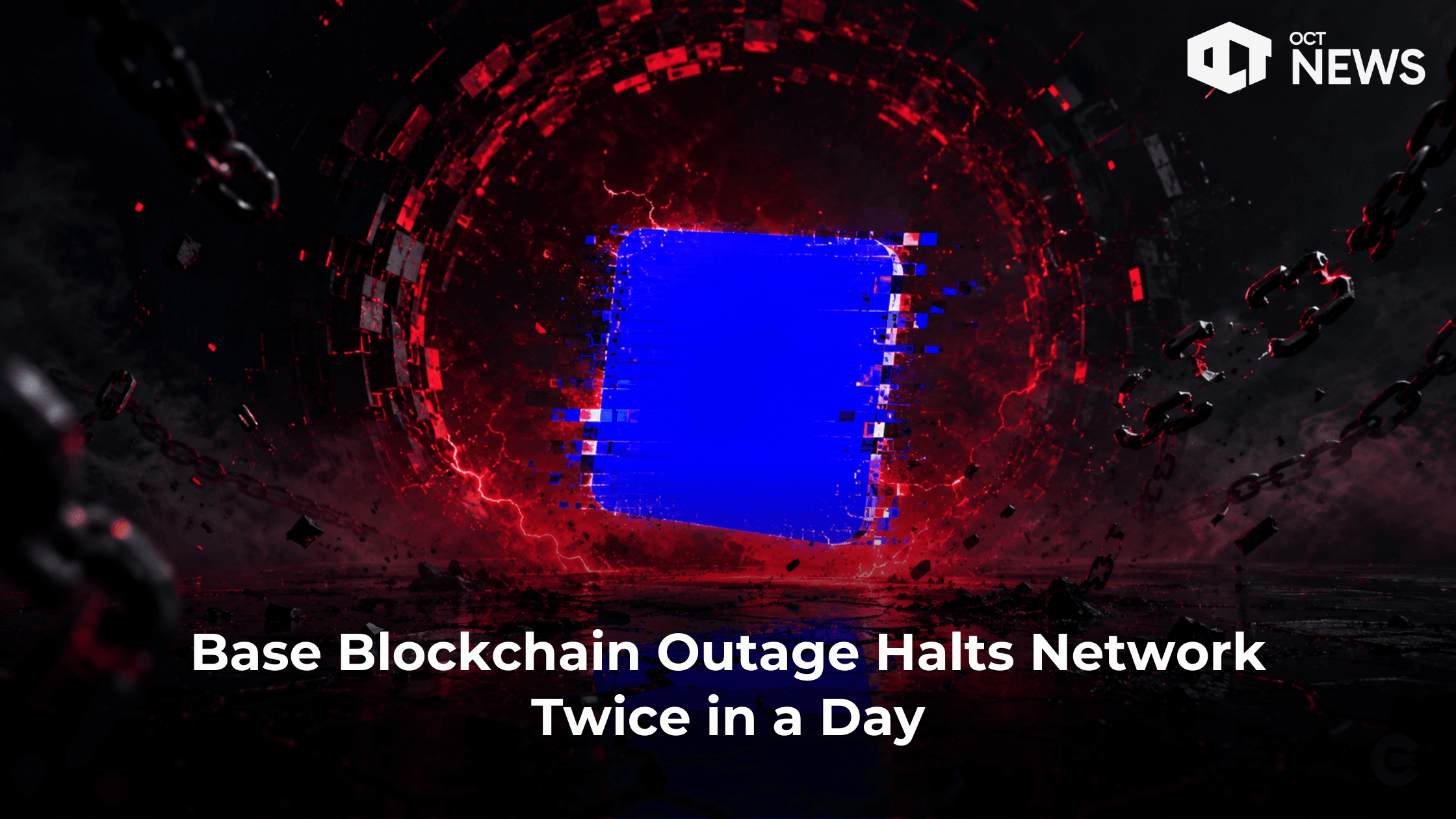
26th June 2026 – Base, Coinbase’s Ethereum Layer-2, halted twice in 24 hours. The second Base blockchain outage put its centralized sequencer back under scrutiny.
High Signal Summary For A Quick Glance
The first halt began on June 25 and lasted about two hours. The second hit on June 26 and cleared in roughly 13 minutes. Both incidents froze new blocks, yet no user funds were ever at risk.
The trouble started around 16:03 UTC on June 25. Block production stopped right after block #47,806,542. According to Base’s official status page, a problematic block triggered a consensus failure.
As a result, the chain stalled for close to two hours. Sequencing then resumed near 17:58 UTC. Soon after, at 18:00 UTC, the scheduled “Base Beryl” hardfork went live.
The timing raised eyebrows across crypto Twitter. Still, the team has not confirmed any link between the halt and the upgrade. CoinDesk reported the same roughly two-hour window and a clean restart.
The calm did not last long. On June 26, Base flagged a second halt at around 15:33 UTC. The status page described “similar symptoms” to the first event.
This time the fix came faster. Block production resumed by 15:47 UTC, so the active downtime ran about 13 minutes. However, node operators had to restart their Base mainnet nodes to resync.
The DegenerateNews account on X flagged the repeat outage near 15:59 UTC. The post linked to Basescan and called it the second outage in a single day. As of the latest data, Basescan shows the chain producing blocks again every two seconds near height #47,852,800.
Base runs on the OP Stack, like several other Ethereum rollups. It uses a single centralized sequencer to order and produce blocks quickly. That design is fast, but it carries a clear single-point-of-failure risk.
When an invalid block enters the sequence, the chain can hit what engineers call an “unsafe head” stall. In plain terms, the network cannot agree on the latest valid block. So new block production simply freezes until operators recover the state.
The June 25 trigger was block #47,806,542. To fix it, the team isolated the bad block, restarted internal systems, and asked node operators to resync. Transactions could still be submitted during the halt, yet none of them finalized until blocks resumed.
Base creator Jesse Pollak pointed users to the status page throughout both incidents. He confirmed the team had identified the root cause for June 25. He also stressed that no user funds were at risk.
A full post-mortem is forthcoming, according to ecosystem updates cited by 99Bitcoins. For now, the detailed root-cause report remains private. Whether the June 26 halt was a fresh fault or a residual issue is also unconfirmed.
The market barely flinched. Neither outage produced a notable price move in ETH or the broader market. Still, Base users reported stuck transactions, delayed finality, and brief bridge issues during the freezes.
Repeated halts feed an old criticism of Base and its peers. Many traders argue that a centralized sequencer is a recurring weak spot. Comparisons to past Solana outages spread quickly across X.
Defenders pushed back just as fast. They noted that the team responded within minutes, that funds stayed safe, and that brief halts are a known L2 limitation during scaling. Base has also ranked among the highest-activity L2s by transaction count.
Base previously suffered an outage in August 2025, so this pattern is not new. Other sequencer-dependent networks have stalled in similar ways. Users can in theory force transactions through Ethereum L1, yet that route is slower and more expensive.
The scale of this Base blockchain outage was modest next to the chain’s normal load. Base settles millions of transactions a day and posts blocks every two seconds. So a two-hour freeze and a 13-minute freeze touched a large user base, even if both windows were short.
The August 2025 stall offers the closest reference point. That earlier halt also traced back to sequencer-level trouble. This week’s repeat, though, packed two events into a single day, which is what alarmed traders.
Severity still looks limited on-chain. Basescan shows no permanent data loss and no stuck funds from either event. Instead, the cost landed on timing, as pending transactions waited and finality slipped for minutes at a time.
The near-term focus is the promised post-mortem. That report should clarify the exact fault and confirm whether the two halts share a root cause. Base will likely face pressure to show stronger safeguards before the next upgrade.
Longer term, decentralization plans aim to soften this risk. Shared sequencers and fault proofs could reduce the single-point-of-failure problem over time. For now, Base remains sequencer-dependent for the speed its users expect.
Traders watching the Base blockchain outage story should track the status page and the coming post-mortem for hard answers. None of this is financial advice. The next test will be whether Base can ship upgrades without another stall.
Our Crypto Talk is committed to unbiased, transparent, and true reporting to the best of our knowledge. This news article aims to provide accurate information in a timely manner. However, we advise the readers to verify facts independently and consult a professional before making any decisions based on the content since our sources could be wrong too. Check our Terms and conditions for more info.


Pando Solana ETF Debuts on HKEX as Second SOL Fund
Injective SEC Transfer Agent Registration Goes Live
Ledger Probes User Fund Losses Tied to Reseller CryptoBilis
Why Provenance Blockchain (HASH) Is Up 39.6% Today?
Pando Solana ETF Debuts on HKEX as Second SOL Fund
Injective SEC Transfer Agent Registration Goes Live
Ledger Probes User Fund Losses Tied to Reseller CryptoBilis
Why Provenance Blockchain (HASH) Is Up 39.6% Today?