NeoFi Protocols: Real Revenue, Not Hype
Understand NeoFi Protocols, how they generate real revenue, and why they are shaping the future of sustainable crypto finance.


Author: Chirag Sharma
Decentralized finance promised to rebuild the financial system without intermediaries. It delivered innovation at an incredible pace, but it struggled with one fundamental problem: sustainability. Most early DeFi protocols relied heavily on token emissions to attract liquidity. Users were rewarded with high yields, but those yields often came from newly minted tokens rather than real economic activity. As incentives dried up, liquidity disappeared and many protocols collapsed. This is where NeoFi Protocols enter the picture.
NeoFi represents a shift from speculative finance to revenue-driven finance. Instead of depending on inflation and hype, these protocols focus on generating real income from actual usage and distributing that value back to participants.
This evolution has already started to reflect in market performance. A basket of revenue-generating protocols has outperformed many traditional crypto assets, showing that investors increasingly value sustainable economics over short-term incentives.
At the same time, the growth of stablecoins and tokenized real-world assets has created new opportunities. These markets bring consistent, off-chain cash flows into blockchain systems, allowing protocols to build stronger financial foundations.
They combine decentralized infrastructure with real-world revenue sources, creating a new category of financial applications that behave more like businesses than experiments. Understanding this shift is essential for anyone analyzing the future of crypto.
What Are NeoFi Protocols?
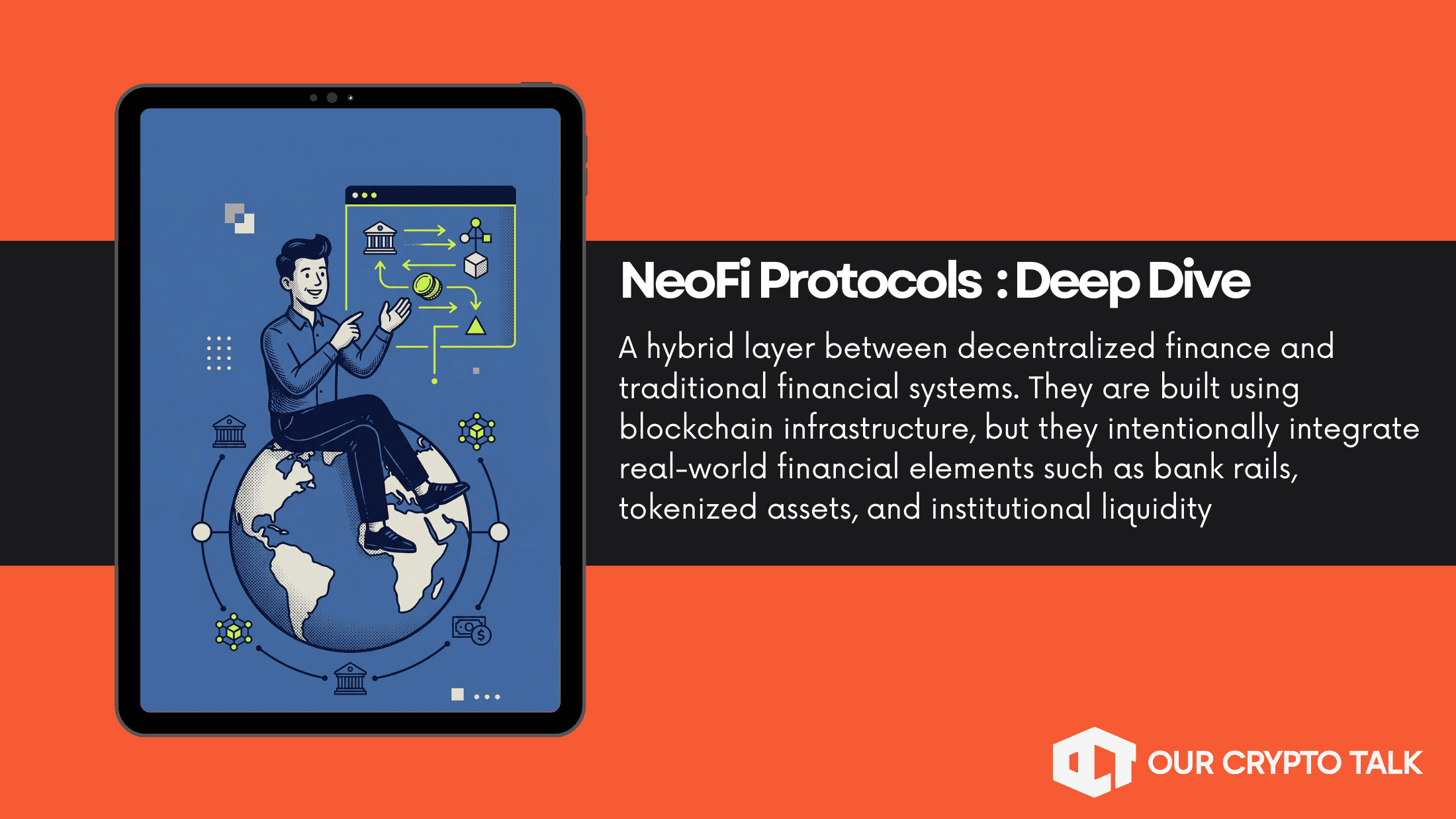
NeoFi Protocols represent a hybrid layer between decentralized finance and traditional financial systems. They are built using blockchain infrastructure, but they intentionally integrate real-world financial elements such as bank rails, tokenized assets, and institutional liquidity. This combination allows them to generate revenue from both on-chain and off-chain sources.
Unlike pure DeFi protocols that operate entirely within smart contracts, NeoFi protocols extend beyond the blockchain. They connect to real-world financial systems and bring external cash flows into the crypto ecosystem. A key concept here is exogenous yield.
Traditional DeFi mostly generates endogenous yield, which means returns come from within the crypto ecosystem itself. For example, one user borrows while another lends, and the yield circulates internally.
Several characteristics define true NeoFi protocols.
- Revenue-positive operations : NeoFi protocols focus on generating more income than they distribute through incentives. Instead of relying on token emissions, they build systems where real usage drives revenue. This creates a sustainable financial model that can survive market cycles.
- Token holder alignment : A meaningful portion of revenue flows back to token holders. This can happen through buybacks, burns, staking rewards, or direct distributions. As a result, token value becomes directly linked to protocol performance.
- Hybrid user experience : NeoFi protocols aim to simplify user interaction. They often integrate features such as email login, fiat on-ramps, and card payments. Users can interact with blockchain systems without dealing with unnecessary complexity.
- Regulatory readiness : Unlike early DeFi experiments, NeoFi protocols are designed with compliance in mind. They support institutional participation by aligning with regulatory frameworks while still preserving core blockchain principles.
This combination creates a new category of financial applications.
Why NeoFi Protocols Exist
To understand why NeoFi protocols are gaining traction, it is important to look at the limitations of traditional DeFi models. Early DeFi focused heavily on growth. Protocols competed to attract liquidity by offering extremely high yields. These yields were often funded by issuing new tokens rather than generating real income. While this approach worked in the short term, it created several long-term problems.
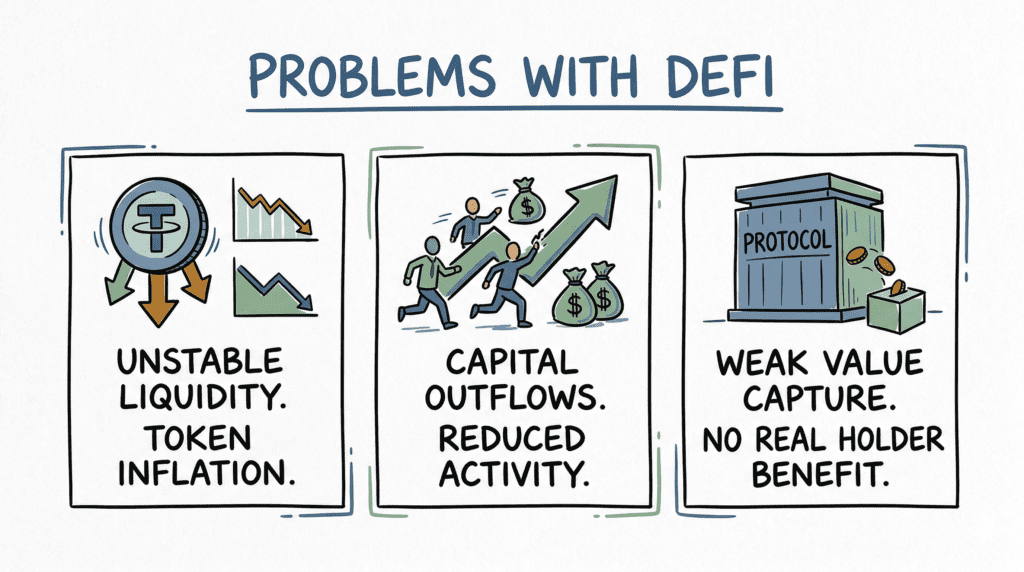
First, token inflation diluted value. As more tokens entered circulation, existing holders saw their ownership reduced. This made it difficult for tokens to maintain value unless new demand continuously entered the system.
Second, liquidity became unstable. When incentives decreased, users quickly moved their capital to other protocols offering higher yields. This led to sharp drops in total value locked and reduced protocol activity.
Third, there was little real value capture. Even when protocols generated fees, most of that revenue was distributed to users or offset by emissions. Token holders often received minimal benefit from the success of the platform.
Instead of focusing on short-term growth, they prioritize long-term value creation. They aim to build systems where revenue comes from real economic activity and where that revenue is shared with participants in a transparent way. This shift changes the entire dynamic of the ecosystem.
Protocols are no longer competing only on yield. They are competing on:
- revenue generation
- capital efficiency
- real-world integration
- long-term sustainability
This creates a more mature market environment where projects behave like financial businesses rather than speculative experiments.
It also introduces a powerful feedback loop. Higher usage leads to higher revenue. Higher revenue supports token value. Strong token value attracts long-term participants. This, in turn, strengthens the protocol’s ecosystem. As a result, NeoFi protocols tend to build more resilient systems that can survive both bull and bear markets.
NeoFi Protocols vs Traditional DeFi: What Actually Changed
To fully understand the significance of NeoFi Protocols, you need to compare them directly with traditional DeFi models. At a surface level, both operate on blockchain infrastructure and aim to remove intermediaries. However, their underlying economic models are fundamentally different.
Traditional DeFi protocols are built around endogenous systems. This means most value circulates within crypto itself. Lending, borrowing, trading, and staking all happen between crypto-native participants. While this creates efficiency, it also limits scalability. NeoFi protocols expand this model by integrating exogenous value sources. They bring in revenue from outside the crypto ecosystem, which creates a more stable and scalable foundation.
Yield Source
Revenue Model
Token Value
User Base
Sustainability
Complexity
One of the biggest shifts is how value is created and captured.
In traditional DeFi, high yields often come from token emissions. These emissions dilute supply over time, which reduces long-term value. Even when protocols generate fees, those fees rarely translate into strong token value accrual.
NeoFi protocols flip this model. They prioritize real revenue first, then distribute that value efficiently. This creates a direct connection between protocol performance and token value.
Another key difference lies in capital efficiency. Traditional DeFi often requires over-collateralization. Users must lock large amounts of capital to access relatively small yields. NeoFi protocols, on the other hand, can leverage real-world assets and institutional flows, which improves capital efficiency significantly.
User experience also plays a major role. DeFi platforms typically require wallets, gas fees, and technical understanding. NeoFi protocols simplify this process by integrating familiar financial tools such as fiat gateways and account-based systems.
This makes them more accessible to mainstream users. In simple terms, traditional DeFi built the infrastructure. NeoFi protocols are building the business models on top of that infrastructure.
Revenue Models
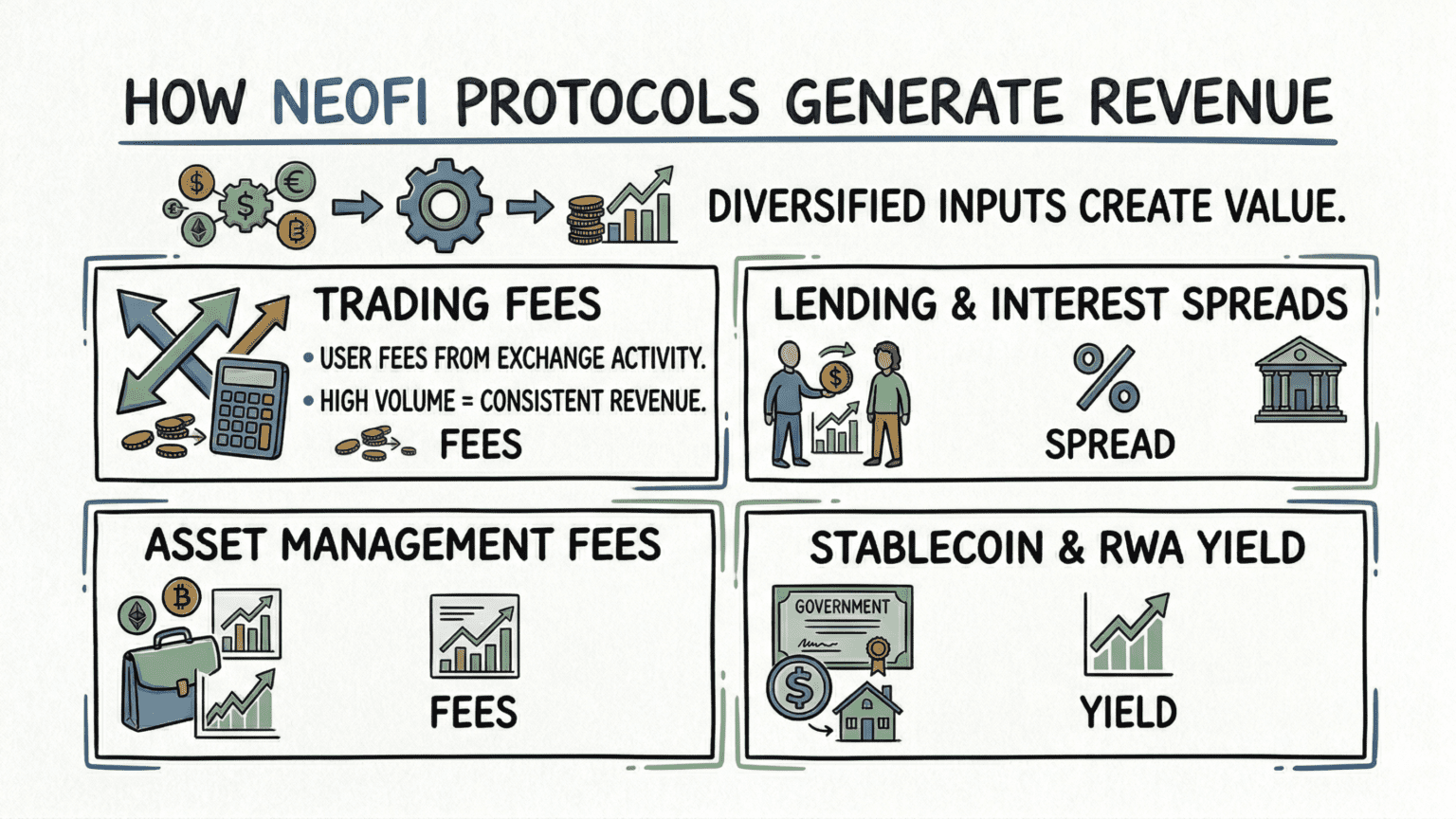
The most important aspect of NeoFi Protocols is how they generate and distribute revenue. Unlike earlier models, these protocols rely on multiple diversified revenue streams. This reduces dependency on any single source and creates more stability over time.
Let’s break down the major revenue categories.
Trading Fees
Many NeoFi protocols operate exchanges, derivatives platforms, or liquidity hubs. These platforms generate fees from user activity.
- Users pay a small percentage on each trade
- High trading volume translates into consistent revenue
- Advanced platforms attract institutional trading flow
Unlike traditional DeFi, a portion of these fees is retained by the protocol instead of being fully distributed. This retained portion becomes a key driver of value.
Lending and Interest Spreads
Lending remains one of the most important revenue sources.
NeoFi protocols expand this model by integrating real-world borrowers and institutional credit markets.
- Borrowers pay interest on loans
- Lenders receive a portion of that interest
- The protocol keeps a spread as revenue
This structure mirrors traditional banking models but operates with greater transparency.
Because the demand for credit exists beyond crypto, this revenue stream can scale significantly.
Asset Management and Strategy Fees
Some NeoFi protocols act as on-chain asset managers.
They offer structured products, automated strategies, or yield aggregation services.
- Users deposit capital into strategies
- Protocols charge management or performance fees
- Returns are generated through diversified strategies
These strategies may include arbitrage, market making, or exposure to tokenized assets.
This introduces a more sophisticated layer of financial services within crypto.
Stablecoin and RWA Yield
One of the most important innovations is the integration of real-world assets.
NeoFi protocols often generate yield from:
- tokenized government bonds
- corporate debt instruments
- off-chain lending markets
This creates stable and predictable income streams.
Unlike volatile crypto yields, these returns are based on traditional financial systems. This makes them more attractive to institutions and risk-averse users.
How Revenue Gets Distributed
Generating revenue is only one part of the equation. The real innovation lies in how NeoFi protocols distribute that value.
Most protocols follow a structured approach.
Protocol Treasury Allocation
A portion of revenue is retained by the protocol treasury.
- Funds ongoing development
- Supports ecosystem growth
- Provides long-term sustainability
This ensures the protocol can continue operating without relying on external funding.
Token Holder Value Accrual
NeoFi protocols actively link revenue to token value.
This happens through mechanisms such as:
- buybacks that reduce circulating supply
- token burns that create scarcity
- staking rewards funded by real revenue
These mechanisms create a direct relationship between usage and token demand.
When protocol activity increases, token value tends to strengthen as well.
Incentive Alignment
Unlike early DeFi models, incentives in NeoFi are designed more carefully.
- Rewards are backed by real revenue
- Emissions are reduced or eliminated
- Long-term participation is encouraged
This leads to more stable ecosystems where users are aligned with protocol growth rather than short-term gains.
Why This Model Changes Everything
The introduction of NeoFi protocols marks a major shift in how crypto projects are evaluated. Instead of focusing on metrics such as total value locked alone, analysts now look at:
- total fees generated
- retained revenue
- earnings and profitability
This aligns crypto more closely with traditional financial analysis. Protocols are increasingly valued based on price-to-revenue ratios rather than speculative narratives. This creates a more disciplined and mature market environment.
It also changes investor behavior. Participants begin to focus on fundamentals rather than hype. Capital flows toward protocols that demonstrate real usage and sustainable economics. Over time, this leads to a healthier ecosystem. NeoFi protocols are not just another trend. They represent a structural upgrade in how decentralized finance operates.
Real-World Examples of NeoFi Protocols
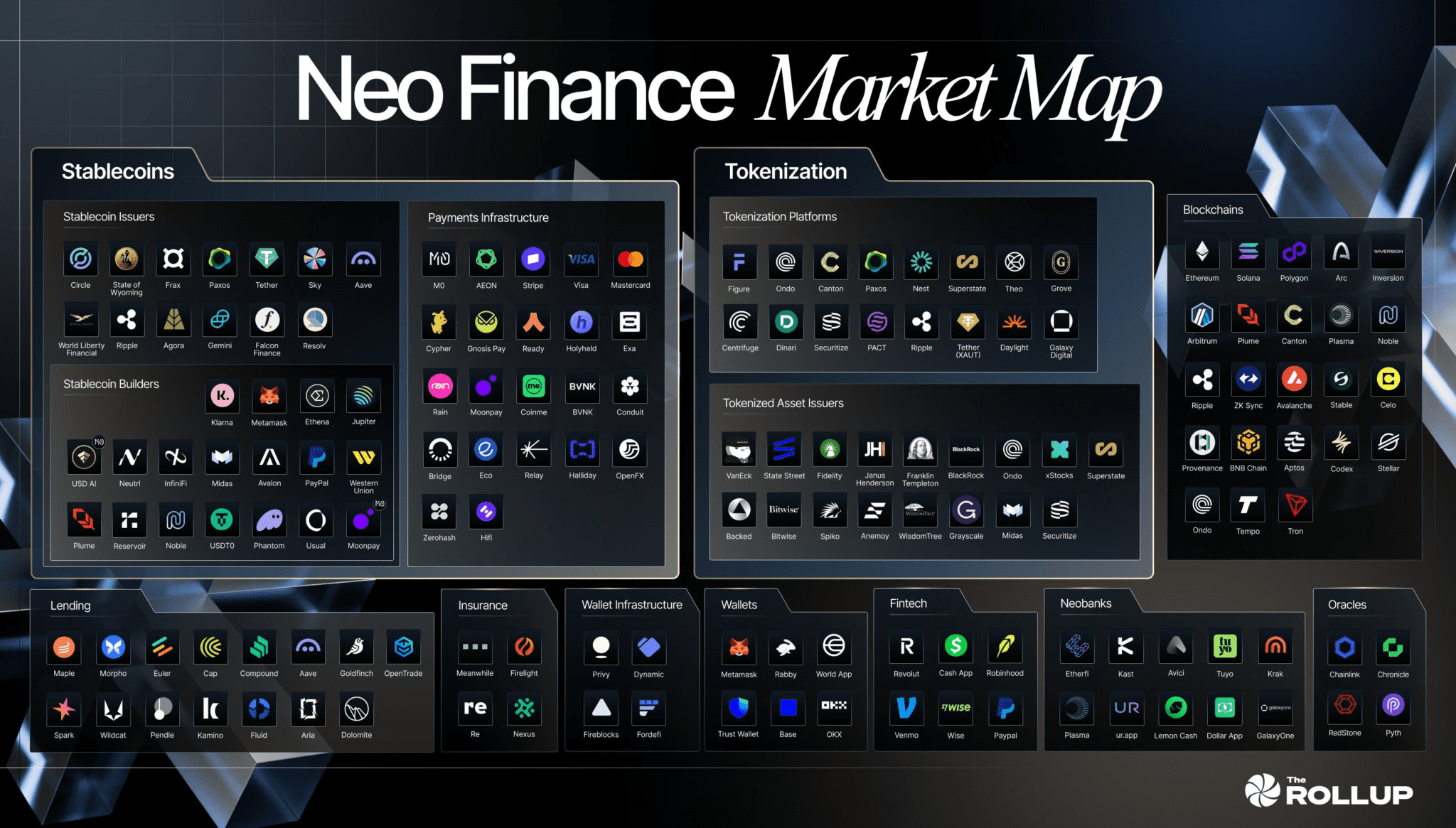
To truly understand how NeoFi Protocols work, it helps to look at real-world implementations that already reflect these principles. The Rollup has laid out a comprehensive market cap map for NeoFi
One strong example is Morpho.
Morpho operates as a lending optimization layer that improves capital efficiency. It matches lenders and borrowers directly while still integrating with existing DeFi liquidity pools. What makes it NeoFi-like is its focus on efficient yield generation and real usage, rather than relying on token incentives. Revenue comes from lending spreads, and the model scales with actual borrowing demand.
Another example is Ethena. It introduces a synthetic dollar backed by delta-neutral strategies. Instead of depending on inflationary rewards, it generates yield from derivatives markets. This creates an exogenous revenue stream, which aligns closely with NeoFi principles. Users earn yield based on real market activity rather than emissions.
You can also observe NeoFi characteristics in protocols integrating RWAs. Projects that tokenize government bonds or real-world credit markets bring stable, off-chain income into blockchain ecosystems. These protocols generate consistent yield from traditional finance while maintaining on-chain transparency. Across all these examples, one pattern stands out.
Revenue is tied to real economic activity, not artificial incentives. This is what differentiates NeoFi protocols from earlier generations of DeFi.
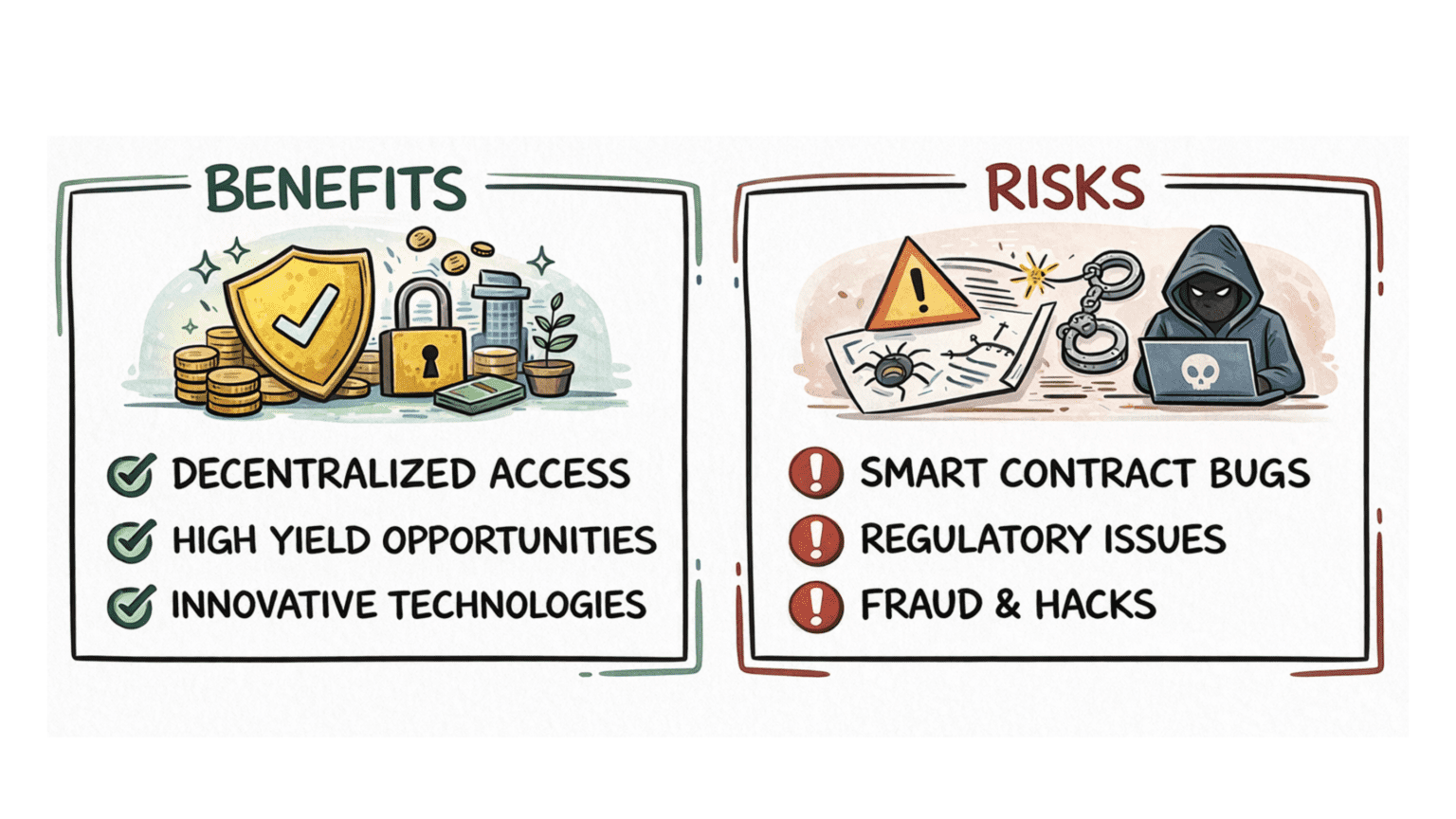
Benefits and Risks of NeoFi Protocols
NeoFi protocols introduce a stronger and more sustainable model, but they are not without trade-offs.
Benefits
- Sustainable yield : NeoFi protocols generate yield from real revenue sources. This makes returns more stable and less dependent on market hype. Users can rely on consistent performance rather than short-term incentives.
- Institutional adoption : Because NeoFi integrates with traditional finance, it attracts institutional capital. This increases liquidity and strengthens market depth across protocols.
- Improved user experience : Simplified interfaces and fiat integrations make NeoFi protocols easier to use. This lowers the barrier to entry for new participants and supports broader adoption.
- Better value accrual : Token holders benefit directly from protocol success. Revenue-driven models create stronger alignment between users, developers, and investors.
Risks
- Hybrid complexity : Combining on-chain and off-chain systems introduces complexity. Users must trust both blockchain infrastructure and external financial systems.
- Regulatory exposure : NeoFi protocols often interact with real-world assets and institutions. This makes them more exposed to regulatory changes across jurisdictions.
- Counterparty risk : When off-chain elements are involved, there is always some level of counterparty risk. This includes reliance on custodians, financial institutions, or service providers.
- Execution risk : Building and maintaining these systems requires strong operational capabilities. Poor execution can affect performance and user trust.
The Future of NeoFi Protocols
The rise of NeoFi Protocols signals a broader transformation in the crypto ecosystem. The next phase of growth will likely be driven by deeper integration between blockchain systems and traditional financial infrastructure.
Several trends are already shaping this future. Tokenized real-world assets are expanding rapidly. Governments and institutions are exploring blockchain-based financial instruments, which creates new opportunities for NeoFi protocols to capture stable revenue streams.
Artificial intelligence is also beginning to play a role. AI-driven strategies can optimize trading, lending, and risk management within these systems, improving efficiency and returns. Stablecoins continue to dominate transaction volume in crypto. NeoFi protocols that integrate stablecoin infrastructure can benefit from consistent usage and demand.
Over time, NeoFi may evolve into the default financial layer of crypto. Instead of separate ecosystems, we may see a unified system where traditional finance and decentralized infrastructure operate together seamlessly.
This would represent a major milestone in the evolution of global finance.
TL;DR — NeoFi Protocols
- NeoFi protocols combine DeFi with traditional finance systems.
- They generate revenue from both real-world and on-chain activity.
- Unlike DeFi, they do not rely on token emissions for yield.
- Returns come from exogenous sources like RWAs and trading activity.
- Token holders benefit through buybacks and revenue sharing models.
- Capital efficiency is higher compared to traditional DeFi systems.
- Institutional adoption is accelerating rapidly.
- Risks include regulatory uncertainty and hybrid system complexity.
- Revenue and earnings metrics are becoming key valuation drivers.
- NeoFi represents the next phase of crypto financial infrastructure.
In this article
What Are NeoFi Protocols?Why NeoFi Protocols ExistNeoFi Protocols vs Traditional DeFi: What Actually ChangedRevenue ModelsHow Revenue Gets DistributedWhy This Model Changes EverythingReal-World Examples of NeoFi ProtocolsBenefits and Risks of NeoFi ProtocolsThe Future of NeoFi Protocols