Peaq ( $PEAQ ) Review: Is PEAQ Worth Buying in 2026?
peaq review covering tokenomics, machine economy, DePIN technology, risks, and whether PEAQ is worth buying in 2026.


Author: Akshat Thakur
Why DePIN Layer-1 Blockchains for the Machine Economy Are Hard to Get Right
Building a blockchain for the machine economy is harder than launching a general-purpose Layer-1. Success depends on more than transaction speed or low fees. The network must convince businesses to connect real devices that generate ongoing economic activity.
That is easier said than done. Hardware operators care about reliability, integration, and operating costs more than token rewards. Device manufacturers also need infrastructure that works across different hardware, software, and communication standards. Without seamless integration, adoption slows.
Generating sustainable activity is another challenge. A machine may register on-chain once but never perform meaningful transactions afterwards. The real goal is continuous machine-to-machine commerce, where devices buy services, sell data, or complete payments without human involvement. Reaching that stage requires both infrastructure and a thriving application ecosystem.
This creates a familiar problem. Developers want active users before building applications, while users want useful applications before joining the network. Many DePIN projects struggle to escape this cycle.
Competition adds another layer of difficulty. General-purpose chains already offer low-cost transactions, while several DePIN-focused networks target similar markets. A specialized Layer-1 must prove that its machine-specific features justify choosing it over broader alternatives.
Rather than positioning itself as another general blockchain, peaq focuses exclusively on the machine economy. Its success will ultimately depend on whether machines generate meaningful on-chain activity instead of simply increasing wallet numbers.
What Is peaq?
peaq is a Layer-1 blockchain built specifically for Decentralized Physical Infrastructure Networks, or DePIN, and the machine economy. Its goal is to give machines, vehicles, robots, and sensors their own on-chain identities so they can own assets, exchange data, and pay for services without constant human involvement.
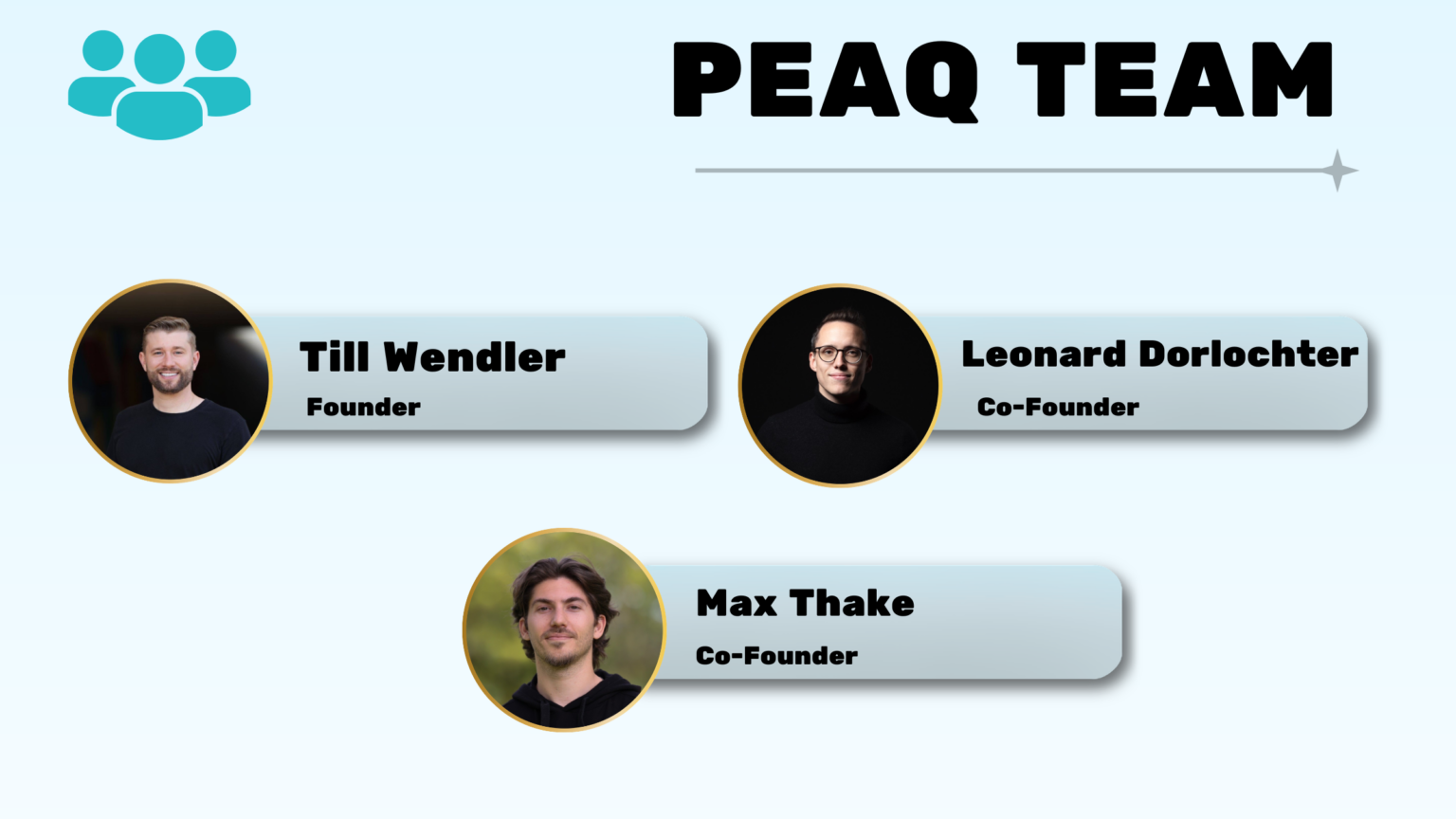
The project was co-founded by Till Wendler, Leonard Dorlöchter, and Max Thake. After several years of development, peaq launched its mainnet and native PEAQ token in late 2024. Built using Substrate, the network is optimized for machine identities, autonomous payments, and high-frequency micro-transactions.
As of late July 2026, the ecosystem includes more than 60 DePIN applications, over 6 million onboarded machines, devices, and users across 22 industries, and more than 48 million machine-generated transactions. Activity continues to grow as additional DePIN projects integrate with the network.
Unlike general-purpose Layer-1s, peaq is designed specifically for machine commerce. Its long-term success depends less on speculative trading and more on whether connected devices generate meaningful economic activity across the network.
How peaq Works
peaq provides the infrastructure that allows machines to participate directly in blockchain-based economies.
Developers build DePIN applications on the network, while machines receive self-sovereign identities through peaq’s identity framework. Once connected, devices can authenticate themselves, exchange data, pay for services, and interact with users or other machines without constant human oversight.
A key component is peaqOS, the software layer running on connected devices. It manages identity, permissions, data exchange, and economic activity. Recent upgrades introduced peaqOS Stream, allowing machines to encrypt, sign, and deliver verified data directly to buyers through peer-to-peer connections.
Another major addition is Virtuals Agent Pairing. Machines running peaqOS can now connect with AI agents from Virtuals Protocol, enabling autonomous purchasing of services using spending limits defined by the device owner. This expands the network from machine-to-machine transactions toward AI-driven machine commerce.
The ecosystem already includes projects such as Teneo, DeNet, Silencio, SkyX, and XMAQUINA, covering sectors ranging from decentralized storage and environmental data to robotics and AI infrastructure.
The objective is straightforward. Instead of treating machines as passive hardware, peaq turns them into economic participants capable of earning revenue, purchasing services, and exchanging value on-chain.
Technology and Architecture
peaq is built on Substrate and designed specifically for DePIN applications rather than general-purpose smart contracts. The network focuses on three core capabilities: machine identity, autonomous payments, and low-cost transactions suitable for high-frequency device activity.
Every connected machine receives a self-sovereign identity that allows it to authenticate itself, own digital assets, and interact securely with other participants. Combined with built-in payment functionality, these identities allow devices to operate independently within decentralized applications.
The software layer, peaqOS, extends these capabilities beyond the blockchain. It manages device identities, verifies data, and enables secure communication between machines. Recent upgrades introduced peaqOS Stream, allowing encrypted peer-to-peer data delivery, while integration with Virtuals Protocol enables AI agents to transact on behalf of connected machines within predefined spending limits.
Interoperability is another focus. peaq supports cross-chain connectivity, allowing DePIN applications to access liquidity and users across multiple blockchain ecosystems while continuing to use peaq’s machine-specific infrastructure.
Compared with traditional Layer-1 networks, peaq is less focused on supporting every type of decentralized application. Instead, it concentrates on providing the identity, payment, and automation tools needed for machine economies. Whether this specialization becomes a competitive advantage will depend on how quickly real-world device adoption continues to grow.
Team and Backers
peaq was co-founded by Till Wendler, Leonard Dorlöchter, and Max Thake, who collectively bring experience across blockchain infrastructure, product development, and the emerging machine economy.
Leonard Dorlöchter serves as Co-Founder, Chief Product Officer, and Managing Director, leading product strategy and network development. Max Thake focuses on ecosystem growth, partnerships, and adoption across the DePIN sector. Till Wendler contributes experience from technology startups and decentralized infrastructure, helping shape the network’s long-term vision. The broader team includes engineers and specialists with backgrounds in blockchain, IoT, and distributed systems.
The project has also attracted support from several well-known crypto investors. Backers include Animoca Brands, Borderless Capital, HashKey Capital, Spartan Group, Fundamental Labs, and Generative Ventures. peaq raised approximately $15 million through a private funding round in 2024, followed by a public CoinList sale that raised around $20 million.
Compared with many early-stage DePIN projects, peaq benefits from experienced leadership and institutional backing. Those resources provide funding for ecosystem development, partnerships, and grants. Ultimately, however, long-term success will depend on whether the network can translate funding into sustained machine adoption and real on-chain activity.
peaq Tokenomics (PEAQ)
PEAQ launched with a genesis supply of 4.2 billion tokens. Under its disinflationary model, total supply is expected to gradually increase toward approximately 5.67 billion as inflation declines over time. Around 2.4 billion tokens are currently in circulation.
The token allocation balances investors, contributors, and ecosystem growth. Approximately 34 percent of the supply was allocated to investors, around 21 percent to community and public-sale participants, roughly 20 percent each to the team and ecosystem initiatives, and the remaining 5 percent to network security and validator incentives.
Unlike fixed-supply assets, PEAQ follows a declining inflation schedule. Inflation starts at 3.5 percent and falls by 10 percent each year until reaching a long-term rate of 1 percent. Investor, team, and ecosystem allocations also unlock gradually through multi-year vesting schedules, creating ongoing supply entering the market through 2026 and beyond.
PEAQ serves several roles within the network. It pays transaction fees, secures the chain through staking, supports governance, and enables payments between machines and DePIN applications.
Unlike some DePIN projects, peaq does not rely on a dedicated buyback-and-burn mechanism. Instead, long-term token demand depends on increasing machine activity, application growth, and staking participation. As a result, the network’s economic model is closely tied to whether real machine commerce continues to expand.
Is peaq Safe?
From a technical perspective, peaq has maintained a solid security record since its mainnet launch in late 2024. The network underwent a CertiK audit before launch, which reported no critical vulnerabilities, and the project continues to operate a bug bounty program to encourage responsible security disclosures.
Network security is built on Substrate’s staking model, where validators secure the blockchain and can be penalized through slashing if they behave maliciously. The project has not experienced any publicly reported exploits affecting the core chain or token since launch.
That does not eliminate risk.
Audits reduce, but cannot remove, the possibility of future vulnerabilities. Like any Layer-1 blockchain, peaq remains exposed to software bugs, validator risks, and ecosystem-level issues that may emerge over time.
There are also execution risks beyond the blockchain itself. peaq’s long-term success depends on DePIN applications, connected devices, and machine operators continuing to use the network. Hardware failures, slow adoption, or weak ecosystem growth could limit activity even if the blockchain itself remains secure.
Overall, peaq has established a credible security foundation through independent audits, transparent development, and a clean operating history. Investors should view technical security as one part of the broader picture alongside adoption, tokenomics, and execution risk.
peaq vs Competitors
peaq competes with several projects building infrastructure for connected devices and DePIN applications. Each network approaches the problem differently, focusing on different types of hardware, use cases, and economic models.
peaq
60+ apps and 48M+ machine transactions.
IoTeX
Helium
peaq differentiates itself by focusing entirely on the machine economy. Rather than connecting devices or building wireless infrastructure, it provides identity, payment, and automation tools that allow machines to operate as independent economic participants.
IoTeX takes a broader approach to connected devices and digital identities, while Helium focuses on wireless coverage for IoT and mobile networks. Whether peaq’s specialization becomes a competitive advantage will depend on how quickly machine-to-machine commerce develops over the coming years.
Strengths and Risks
peaq’s biggest strength is its clear focus. The network was designed specifically for DePIN applications, machine identities, and autonomous payments rather than adapting a general-purpose blockchain for those use cases. Its ecosystem has grown to more than 60 projects, over 6 million onboarded machines and users, and more than 48 million machine-generated transactions. Recent additions such as peaqOS Stream and Virtuals Agent Pairing also expand the network’s capabilities for autonomous AI and machine commerce.
The risks are equally important.
PEAQ continues to face supply pressure from token unlocks and ongoing inflation. The project also competes with established DePIN platforms such as IoTeX and Helium, alongside high-performance Layer-1 networks that already offer low transaction costs. Most importantly, long-term success depends on converting onboarded devices into consistent on-chain activity and fee generation rather than simply increasing registration numbers.
The investment case ultimately depends on execution. Machine adoption, transaction growth, and application activity will matter far more than ecosystem size alone.
Should You Buy PEAQ?
The answer depends on what you are looking for.
Builders developing DePIN applications, robotics platforms, or machine-focused services may find peaq’s infrastructure attractive. Features such as machine identities, autonomous payments, and peaqOS are designed specifically for these use cases.
For investors, the key metrics to monitor are machine transaction volume, application growth, fee generation, and ecosystem adoption. These indicators will provide a better measure of the network’s long-term progress than price movements alone.
PEAQ presents a differentiated investment thesis within the DePIN sector. Its focus on the machine economy gives it a clear niche, but the project remains at an early stage where continued adoption and execution will determine whether that specialization translates into lasting value.
As with any cryptocurrency investment, investors should conduct their own research and ensure the project’s risk profile aligns with their investment objectives.
Final Verdict: Is peaq Worth Buying in 2026?
peaq has established itself as one of the more specialized Layer-1 networks in the DePIN sector. Rather than competing as a general-purpose blockchain, it focuses on providing the identity, payment, and automation infrastructure needed for machines to participate in on-chain economies.
The project has demonstrated measurable progress through ecosystem growth, increasing machine onboarding, and continued product development. Recent upgrades also show that the team is expanding the network beyond simple device registration toward autonomous machine commerce.
The next challenge is adoption at scale. Long-term success will depend on whether machines generate sustained transaction volume, fee revenue, and economic activity that support token demand over time.
Overall, peaq presents a credible long-term thesis on the growth of the machine economy. Like many early-stage infrastructure projects, however, its future will depend less on the technology itself and more on the pace of real-world adoption and execution.
Frequently Asked Questions
What is peaq?
How does peaq work?
What are the latest developments on peaq?
What is PEAQ used for?
Is peaq safe?
How is peaq different from other DePIN projects?
Is PEAQ a good investment?
In this article
Why DePIN Layer-1 Blockchains for the Machine Economy Are Hard to Get RightWhat Is peaq?How peaq WorksTechnology and ArchitectureTeam and Backerspeaq Tokenomics (PEAQ)Is peaq Safe?peaq vs CompetitorsStrengths and RisksShould You Buy PEAQ?Final Verdict: Is peaq Worth Buying in 2026?