Brickken ( $BKN ) Review: Is BKN Worth Buying in 2026?
Brickken (BKN) review covering RWA tokenization, tokenomics, clients, risks, competitors, and whether BKN is worth buying in 2026. %


Author: Akshat Thakur
Why Institutional RWA Tokenization Platforms Are Hard to Get Right
Institutional RWA tokenization is harder than simply putting assets on a blockchain. The platform must handle legal ownership, KYC, AML, investor onboarding, reporting, and regulations across different jurisdictions.
Attracting serious issuers is another challenge. Enterprises want established infrastructure, clear legal structures, reliable compliance, and operational support. Small pilots are relatively easy. Turning them into recurring business is much harder.
Liquidity creates another problem. Tokenizing an asset does not automatically create buyers or an active secondary market. Many platforms can announce large tokenized values, but actual on-chain activity and trading liquidity can remain limited.
Revenue is also difficult to sustain. Issuance fees can generate income, but long-term platforms need recurring fees from asset management and other services. Multi-chain expansion adds another layer of complexity because liquidity and compliance can become fragmented across networks.
Competition is intense. Traditional financial institutions are entering tokenization with established relationships, while crypto-native RWA platforms compete for the same issuers and capital.
Brickken focuses on this institutional gap. Its platform combines no-code issuance, compliance tools, investor onboarding, and multi-chain infrastructure. The thesis is straightforward, but specialization only matters if real clients, tokenized assets, and recurring platform revenue continue to grow.
What Is Brickken?
Brickken is an RWA tokenization platform that allows businesses and institutions to issue and manage digital representations of real-world assets. These can include equity, debt, real estate, funds, and private credit.
The platform uses a no-code and white-label approach. Companies can create tokenized assets without building their own blockchain infrastructure. Brickken also provides investor onboarding, compliance tools, cap-table management, reporting, and other lifecycle functions.
Founded in 2020, Brickken is led by CEO and co-founder Edwin Mata Navarro. The project aims to make regulated asset tokenization easier for businesses that may not have deep blockchain expertise.
As of mid-August 2026, Brickken reports more than 150 clients across 40+ countries and more than $660 million in total tokenized value. On-chain TVL remains much smaller, highlighting the difference between assets processed through the platform and capital actively represented on-chain.
The platform generates revenue through fees linked to issuance and asset management activity. Recent milestones include broader multi-chain support, Chainlink integrations, the ERC-7943 standard, and the BKN 2.0 smart-contract migration completed during June and July 2026.
Brickken is therefore better understood as institutional tokenization infrastructure than as a traditional DeFi protocol.
How Brickken Works
Brickken allows companies to structure and issue digital assets representing real-world assets through its no-code platform.
An issuer can create a tokenized security or other compliant asset, configure its parameters, and onboard investors through the platform. KYC and KYB processes help verify participants before they gain access to the relevant investment opportunity.
The platform also handles functions such as cap-table management, reporting, distributions, and other lifecycle events. This gives issuers a single system for managing tokenized assets after the initial issuance.
Brickken supports multiple asset categories and provides white-label investor portals and API integrations. Its multi-chain infrastructure extends across networks including Ethereum, Polygon, BNB Chain, Base, MANTRA, and XDC.
Platform fees are collected in BKN, creating a direct connection between platform usage and the token. As more companies issue and manage assets through Brickken, transaction and service activity can potentially create additional demand for the token.
The key question is whether client growth translates into sustained economic activity. A large number of registered clients or headline tokenized values can look impressive, but recurring issuance, asset management, investor participation, and on-chain activity are more important indicators of a functioning RWA platform.
Technology and Architecture
Brickken combines smart-contract infrastructure with compliance and asset-management tools designed for regulated tokenization.
One of its notable contributions is ERC-7943, a vendor-neutral standard designed to provide a common interface for compliant tokenized assets. The goal is to make regulated assets easier to integrate across applications and infrastructure without locking issuers into a single provider.
Brickken also integrates Chainlink services. These include Proof of Reserve for asset verification, CCIP for cross-chain communication, and ACE for programmable compliance requirements. Together, these tools help connect on-chain assets with external data, compliance rules, and multiple blockchain networks.
The platform supports Ethereum, Polygon, BNB Chain, Base, MANTRA, XDC, and other networks. This multi-chain approach gives issuers greater flexibility, although it also introduces the usual challenges around interoperability and fragmented liquidity.
The BKN 2.0 smart-contract migration was another major 2026 development. The migration was completed at a 1:1 ratio and audited by OpenZeppelin, with no Critical, High, or Medium findings reported. It established a canonical Ethereum contract designed to improve interoperability and support future compliance requirements.
Compared with many RWA platforms, Brickken emphasizes no-code accessibility, compliance infrastructure, open standards, and multi-chain issuance. Its long-term opportunity depends on whether those tools can turn institutional interest in tokenization into recurring platform activity and sustainable revenue.
Team and Backers
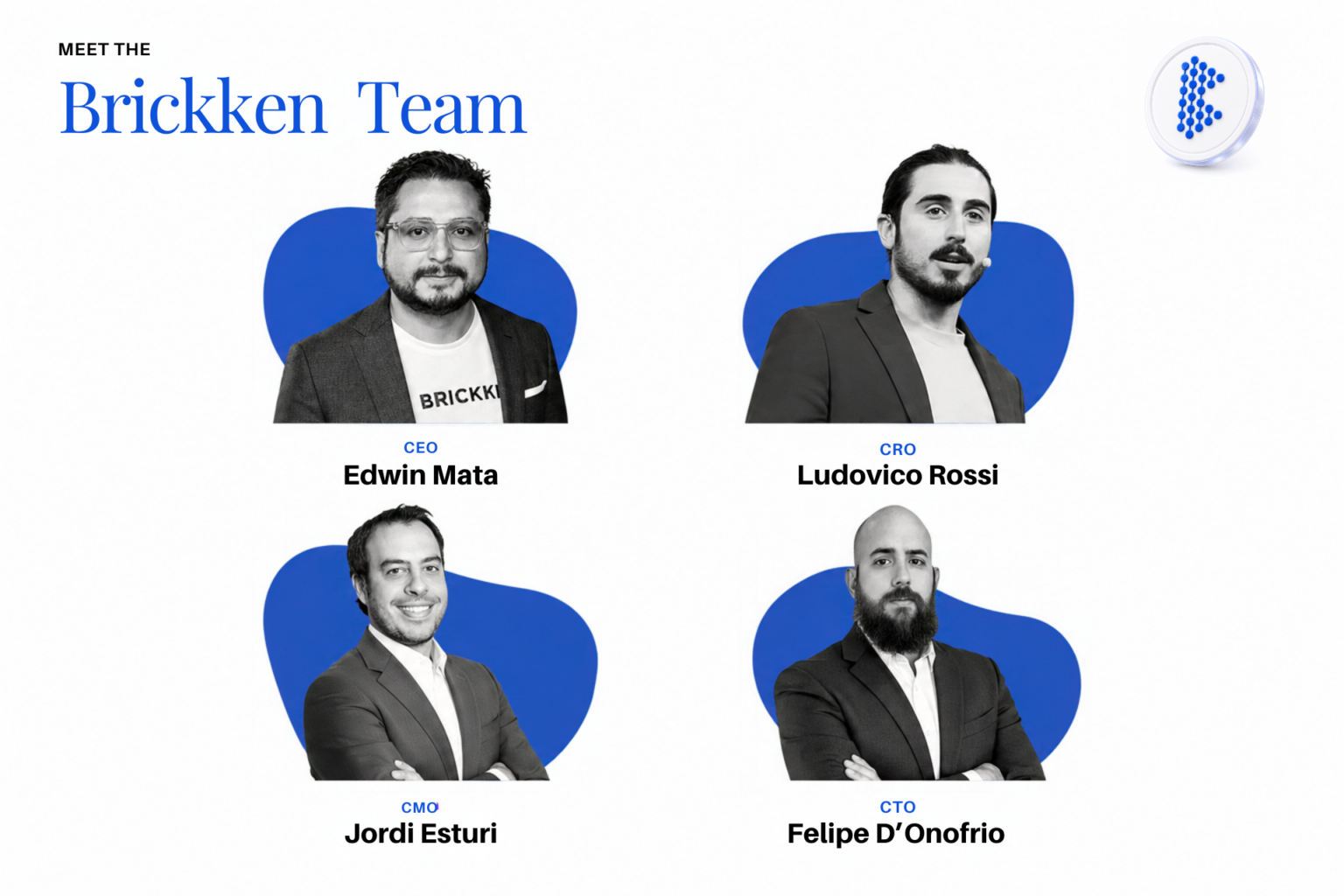
Brickken is led by CEO and co-founder Edwin Mata Navarro, who has a background in M&A law and blockchain advisory. Co-founder Yassir Haouati is also part of the leadership team, while CTO Felipe Donofrio oversees the platform’s technical architecture. Other contributors, including Dario Lo Buglio, have worked on standards development and security.
The broader team combines experience across fintech, legal compliance, blockchain engineering, and institutional sales. That mix fits Brickken’s focus on regulated asset tokenization, where legal and operational expertise matters alongside the underlying technology.
Brickken has also attracted strategic and institutional funding. The company raised approximately €2.5 million in a 2025 seed round at a €22.5 million post-money valuation, followed by a €3 million pre-Series A round in 2026 at a €38 million post-money valuation.
Backers include Ergodic Capital, Blue Bay Ventures, SNZ Holding, DEDA Group, and GRX. This funding provides resources for product development, compliance infrastructure, and institutional expansion.
Compared with smaller RWA projects that rely heavily on token incentives or community funding, Brickken has built a more traditional startup financing structure. The key question is whether that capital can translate into sustained institutional adoption and recurring platform revenue.
Brickken Tokenomics (BKN)
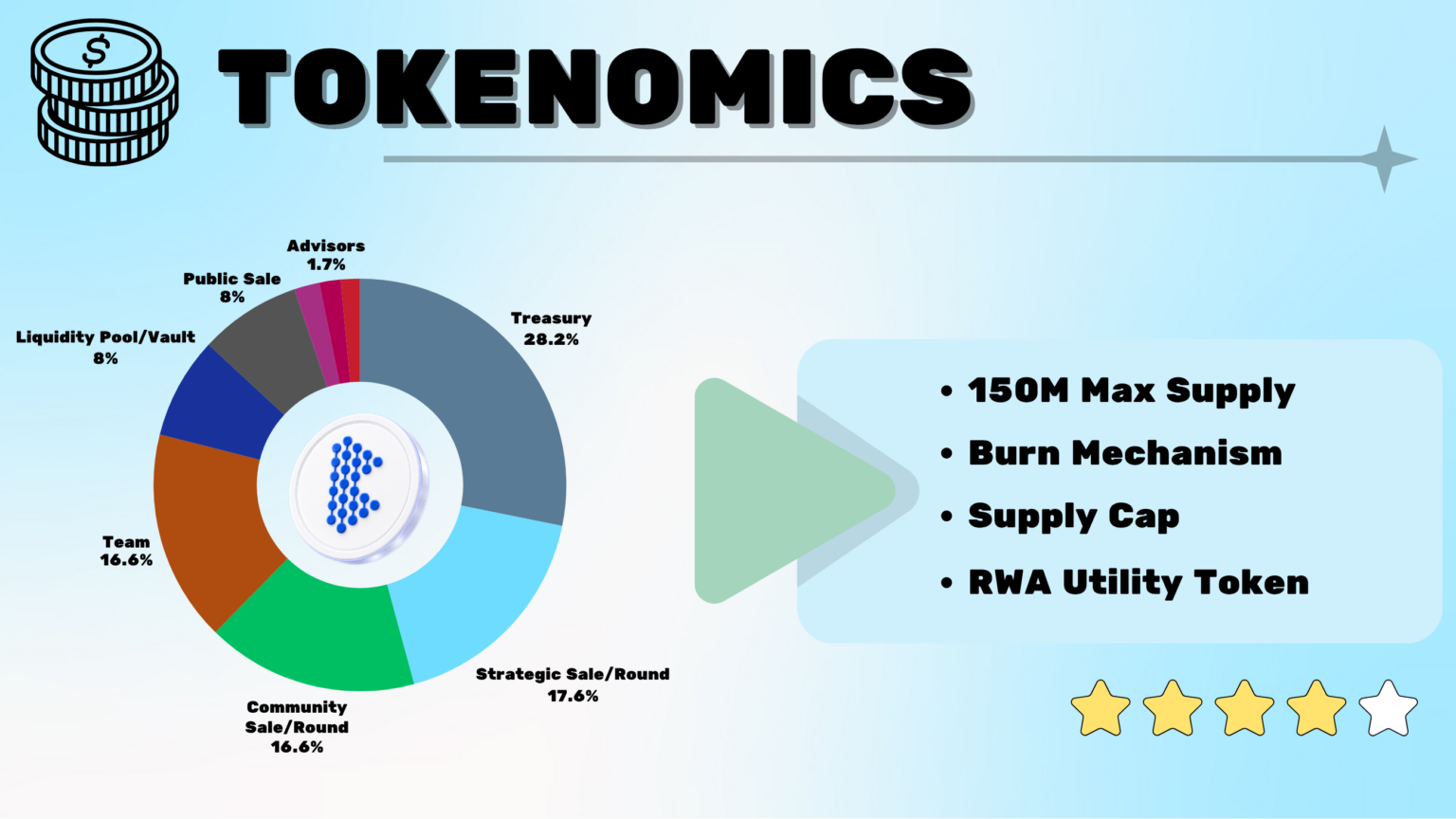
BKN has a total and maximum supply of 150 million tokens. Circulating supply is estimated at roughly 80 to 98 million as of mid-August 2026, while the token trades around $0.06 and carries a market capitalization of approximately $4.8 million to $6 million.
The original allocation included around 16.67% for the team, 17.67% for strategic investors, and 28.33% for the treasury or warchest. Other allocations covered community programs, incentives, airdrops, liquidity, advisors, and public sales.
The BKN 2.0 migration in 2026 aligned the token supply with the original 150 million figure outlined in the project’s documentation. The migration did not materially increase allocations to the team or investors.
Vesting schedules vary across allocation categories. Team and strategic allocations generally followed multi-year vesting, while some public-sale distributions completed earlier. Remaining team and treasury releases can still add supply pressure.
BKN is used to pay platform issuance and service fees. It also supports staking and governance. The token’s value proposition therefore depends heavily on Brickken’s ability to increase real-world asset issuance and generate recurring platform activity.
Future plans have also discussed giving BKN holders access to equity-related opportunities as the company grows. However, investors should distinguish between current token utility and potential future mechanisms.
Is Brickken Safe?
Brickken’s recent BKN 2.0 smart-contract migration underwent an independent OpenZeppelin audit. The review reported no Critical, High, or Medium severity findings, while lower-severity items and informational notes were addressed as part of the migration process.
The platform also places compliance at the center of its architecture. KYC and KYB processes, investor controls, and regulated asset-management features are designed to reduce operational and compliance risks. No major publicly reported exploit affecting the core platform has emerged to date.
However, smart-contract security is only one part of the risk profile.
RWA platforms also depend on legal structures, asset originators, counterparties, and regulatory frameworks. Problems with the underlying asset, inaccurate reporting, weak counterparties, or changes in regulation could affect investors even if Brickken’s smart contracts operate correctly.
The platform’s multi-chain infrastructure introduces additional interoperability considerations, while token holders also face the usual risks associated with smaller crypto assets.
Overall, Brickken has established a reasonable technical security foundation through its recent OpenZeppelin audit and compliance-focused architecture. The broader risk assessment still needs to include legal enforceability, regulatory compliance, asset quality, and counterparty exposure.
Brickken vs Competitors
Brickken operates in the institutional RWA infrastructure market, where it competes with both dedicated tokenization platforms and larger on-chain asset protocols.
Institutional RWA Tokenization & Capital Markets
| Project | Core Focus | Execution Architecture | Programmability | Token Utility | Notes |
|---|---|---|---|---|---|
|
| Institutional RWA tokenization (equity, debt, funds, credit, real estate) + Agentic Capital Markets | Multi-chain EVM (Ethereum primary post-BKN 2.0 + Base/BNB/etc.); Chainlink CCIP + PoR | Full (EVM Solidity; co-authored ERC-7943) | Issuance fees, platform services, staking (5% APY) | BKN 2.0 live on Ethereum (June 2026 migration, 150M max supply); 150+ clients, 40+ countries; no-code + API/CLI for agents |
|
| Private credit & structured RWA tokenization | Multichain EVM-native (Ethereum, Avalanche, Base, etc.) | Full (EVM) | Governance, utility, staking (CFG) | Leading private credit/credit funds; institutional partnerships (e.g. Janus Henderson, New York Life); strong DeFi integration |
|
| Tokenized Treasuries, stocks & ETFs | Multi-chain (Ethereum, Solana, BNB, etc.) | Full (EVM) | Governance (ONDO) | Major player in Treasuries + tokenized equities; institutional focus and broad product suite |
|
| Regulated institutional securities tokenization | Multi-chain; full regulated stack (broker-dealer, transfer agent, ATS) | Full (proprietary + ERC standards) | N/A (platform token less central) | Powers BlackRock BUIDL and large institutional funds; strongest US regulatory stack |
|
| Enterprise EU-focused tokenization | Multi-chain EVM; ERC-3643 standard | Full (EVM) | Utility/platform fees | Strong on-chain identity (ONCHAINID) and cross-border EU compliance |
|
| Permissioned L1 for regulated securities | Custom PoS L1 with on-chain identity | Full (Substrate-based) | Governance, staking (POLYX) | Built specifically for securities; compliance and identity primitives native |
Brickken’s main differentiation is accessibility. Its no-code platform allows institutions to create and manage tokenized assets without developing their own blockchain infrastructure. It also supports multiple asset classes and contributes to standards such as ERC-7943.
Centrifuge operates at a larger scale but focuses more heavily on on-chain private credit and structured asset pools. Tokeny takes a more compliance-focused approach to regulated security token issuance without placing the same emphasis on a public utility token.
Brickken’s opportunity is therefore not simply competing on TVL. It is competing on ease of issuance, compliance, and institutional workflow integration.
Strengths and Risks
Brickken has several measurable strengths. The platform reports more than $660 million in tokenized value and over 150 clients across 40+ countries. Its multi-chain infrastructure, Chainlink integrations, and contribution to ERC-7943 provide additional technical credibility. The 2026 funding round and completed BKN 2.0 migration also strengthen the project’s operational foundation.
The token presents a different picture.
BKN’s market capitalization remains extremely small compared with the platform’s reported tokenized value and client base. Liquidity is also limited, while larger RWA platforms have significantly more capital, distribution, and institutional reach.
The main question is whether platform growth translates into token demand. Client numbers and tokenized value can increase without creating proportional demand for BKN. Fee capture, token utility, and any future equity-related mechanisms therefore remain important variables.
Brickken has made meaningful progress as an RWA infrastructure provider. The challenge is converting that operational progress into durable token economics.
Should You Buy BKN?
For builders, Brickken may be worth evaluating if you need no-code token issuance, compliance tooling, white-label infrastructure, or multi-chain asset management.
For traders, BKN’s small market capitalization and limited liquidity make position sizing particularly important. Client announcements, platform revenue, exchange listings, and broader RWA market activity are the key catalysts to monitor.
For long-term investors, the most important question is whether platform fees and token utility grow alongside client activity and tokenized assets. The infrastructure has gained traction, but the token still needs to demonstrate a stronger connection to that underlying business activity.
So, is Brickken worth buying? The answer depends heavily on whether future platform adoption translates into measurable BKN demand and stronger fee capture.
As always, investors should conduct their own research and assess the risks before making an investment decision.
Final Verdict: Is Brickken Worth Buying in 2026?
Brickken has built a credible institutional tokenization platform with more than $660 million in reported tokenized value, over 150 clients, and operations across more than 40 countries.
Its technology and client traction provide a stronger foundation than a purely narrative-driven RWA project. The bigger question is token economics.
BKN remains a small-cap asset relative to the platform’s reported activity. Future growth in platform fees, token utility, liquidity, and institutional adoption will determine whether the token can capture more of the value created by the business.
Overall, Brickken presents an interesting early-stage RWA infrastructure thesis. Its long-term potential depends on turning institutional tokenization activity into sustainable revenue and meaningful demand for BKN.
Frequently Asked Questions
What is Brickken?
How does Brickken work?
What is the status of the BKN 2.0 migration and recent funding?
What is BKN used for?
Is Brickken safe?
How is Brickken different from other RWA platforms?
Is BKN a good investment?
In this article
Why Institutional RWA Tokenization Platforms Are Hard to Get RightWhat Is Brickken?How Brickken WorksTechnology and ArchitectureTeam and BackersBrickken Tokenomics (BKN)Is Brickken Safe?Brickken vs CompetitorsStrengths and RisksShould You Buy BKN?Final Verdict: Is Brickken Worth Buying in 2026?