
Author: Arushi Garg
The privacy coin narrative is back in focus in 2026 and the Zcash vs Monero debate is taking a new turn. For years, Monero led the category as the default choice for on-chain privacy. Today, Zcash is outperforming on multiple fronts. Prices, infrastructure, institutional interest, and on-chain usage are all pointing in the same direction.
This is not a simple “one is better” argument. It is a structural shift. Zcash and Monero made different design choices years ago. Those choices are now producing very different market outcomes. If you are looking for a full sector overview, see our privacy altcoins guide. This piece goes deep into the two assets driving the narrative.
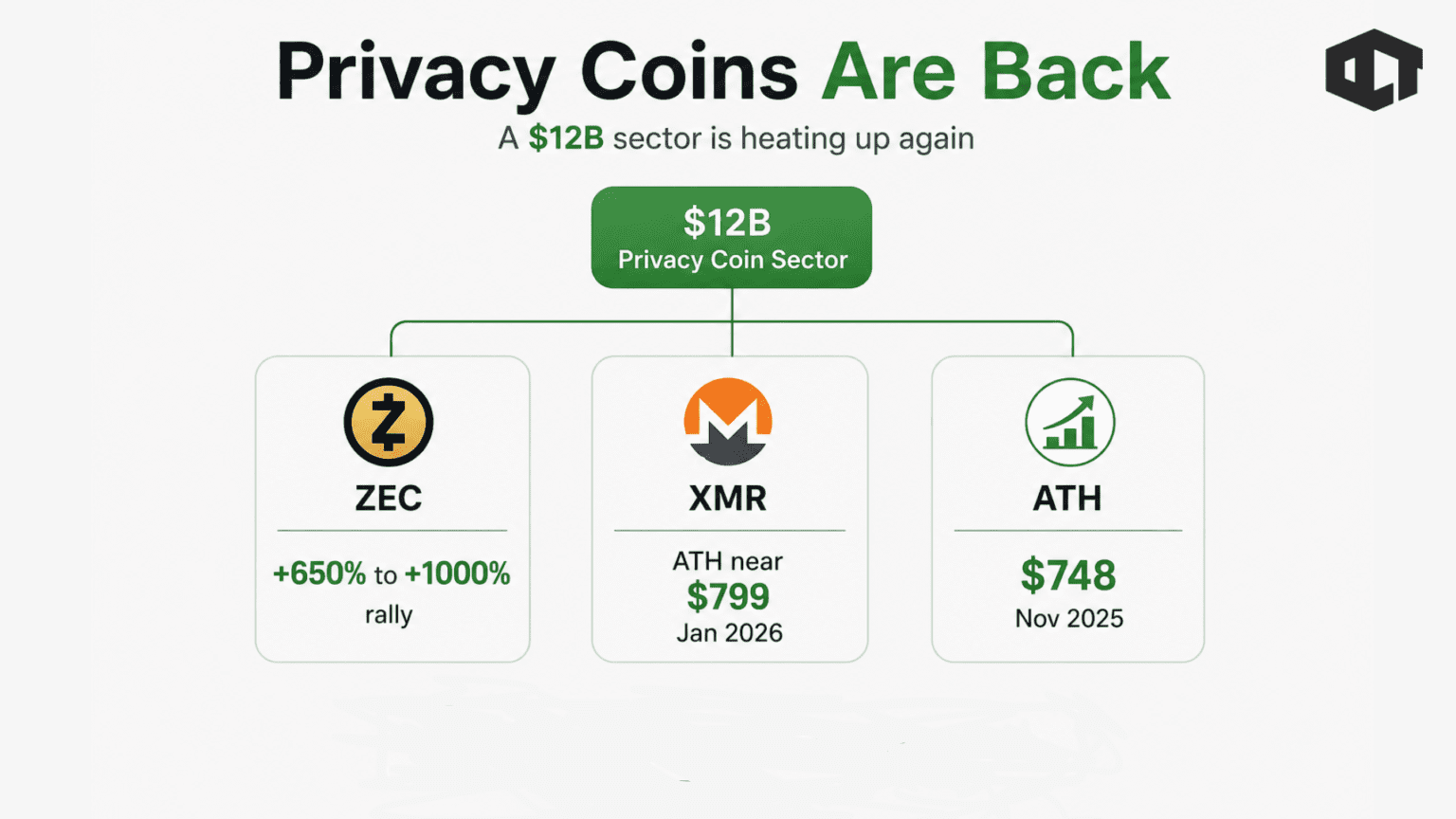
The privacy coin sector, valued around $12 billion, has seen a strong resurgence since late 2024. Capital rotated back into privacy narratives as regulatory clarity improved in some regions and surveillance concerns increased globally. Zcash led the move. After trading below $20 in 2024, it surged between 650% and 1,000% to reach an all-time high of $748 in November 2025. As of April 2026, it is consolidating in the $300–$400 range after posting a 53% monthly gain.
Monero also performed well. It reached a new all-time high near $799 in January 2026 and maintains a market cap around $6.5 billion, ranking among the top 20 cryptocurrencies. However, its price action has been more muted since the peak, largely consolidating under regulatory pressure.
Both assets rallied, but the catalysts differ. Zcash’s rally is tied to structural upgrades and institutional alignment. Monero’s rally reflects continued demand for strong, censorship-resistant privacy.
Another key factor for Zcash was the November 2024 halving. Daily issuance dropped from 3,600 to 1,800 ZEC, tightening supply just as demand began rising. The result is a divergence. One asset is building toward institutional integration. The other is reinforcing its role in parallel, permissionless markets.
To understand the current breakout, you need context. Zcash launched in October 2016 with advanced cryptography but struggled to gain traction for years. The biggest issue was trust. Early versions relied on a “trusted setup” ceremony, which critics argued introduced potential vulnerabilities. Even though the process was designed to be secure, perception mattered.
Adoption was another problem. In early 2024, only about 8% of ZEC supply was in shielded addresses. Most transactions were transparent. This reinforced the bearish narrative that optional privacy would not be used in practice. Monero, by contrast, made privacy mandatory. Every transaction is private by default. This clarity gave it a strong identity and loyal user base.
Zcash was often dismissed as a compromised middle ground. That changed with the Halo 2 upgrade. The trusted setup was removed entirely, eliminating one of the biggest long-term criticisms. At the same time, shielded adoption began to rise meaningfully.
The numbers tell the story:
This is not speculative activity. It is actual usage growth during a price rally. That combination matters. It signals that users are not just trading ZEC. They are using its privacy features. The narrative flipped. What was once seen as a weakness, optional privacy, is now being tested at scale.
The core of Zcash’s outperformance comes down to one metric: the shielded pool. As of April 2026, the shielded pool holds $5.18 billion worth of ZEC. That represents roughly 31% of total supply. Two years ago, it was just 8%. This growth is the foundation of the current thesis.
At the same time, a series of institutional signals aligned:
On January 15, 2026, the SEC closed its investigation into Zcash without charges. This removed a major overhang that had limited institutional participation for years.
Grayscale filed the first-ever spot ETF for a privacy coin, converting its $137 million Zcash Trust into a public vehicle. If approved, estimates suggest $500 million to $2 billion in potential inflows.
Foundry USA, the largest Bitcoin mining pool globally, added ZEC support in April 2026. It now controls around 29% of Zcash hashrate. This is a major signal that institutional infrastructure is forming around the network.
The Winklevoss twins donated $1.2 million to Shielded Labs. Grayscale reportedly accumulated $46 million in shielded ZEC, not just holding but actively using private transactions.
Zcash gained native swap functionality via THORChain, enabling decentralized trading without wrapped assets. The announcement triggered an 11.8% single-day rally.
This is the most underappreciated feature. Zcash allows users to share transaction details selectively through viewing keys.
This means:
That combination is rare. It allows Zcash to operate in regulated environments without sacrificing its core privacy functionality. Grayscale summarized the thesis clearly in March 2026: Zcash could benefit from a repricing of financial privacy in an AI-driven world. The key takeaway is simple. Zcash is not just rallying. It is building infrastructure that institutions can actually use.
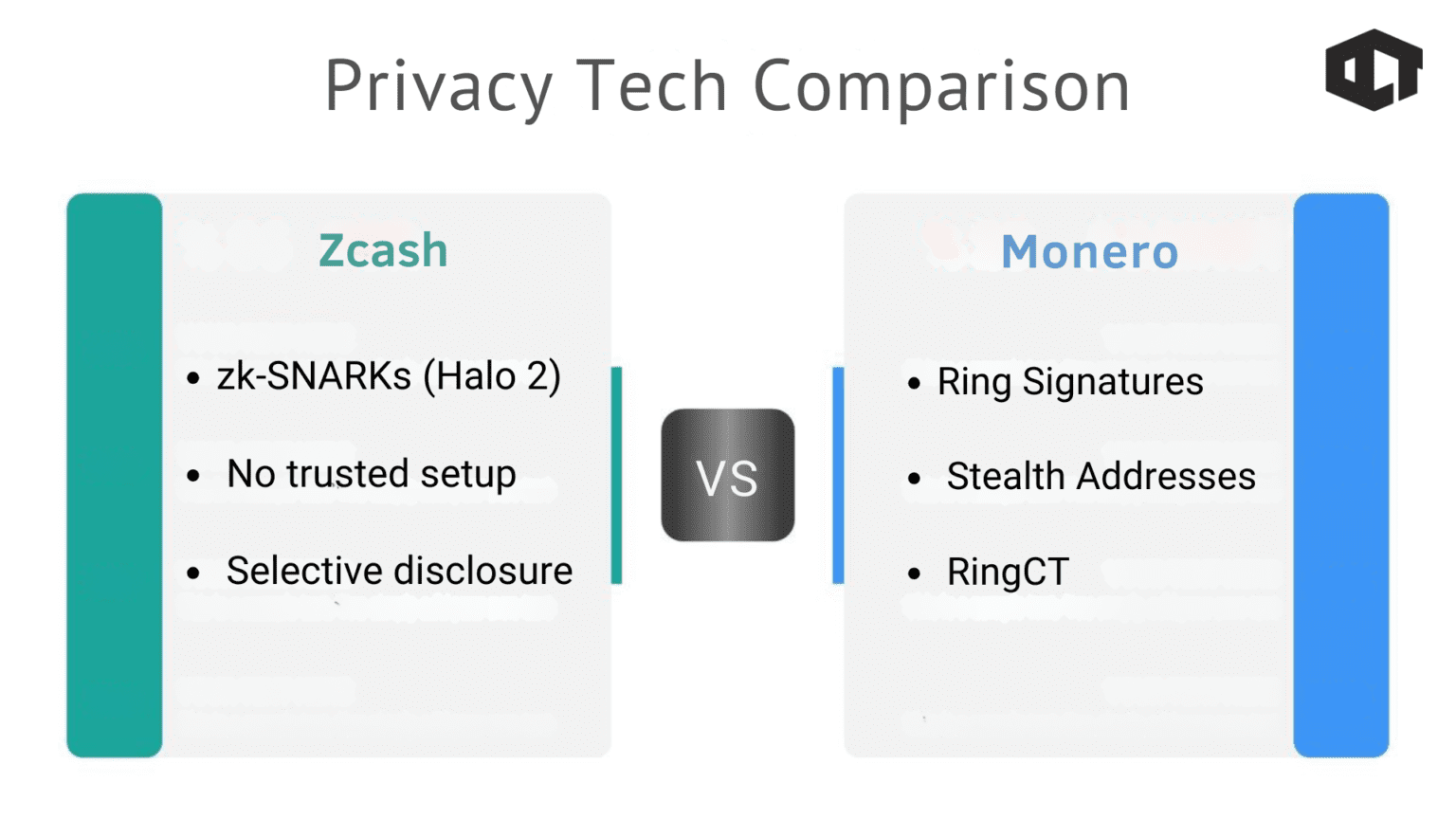
Monero remains the strongest privacy protocol in terms of pure anonymity. It uses ring signatures, stealth addresses, and RingCT to ensure every transaction is private. That strength is also creating friction. Because all transactions are opaque, exchanges struggle to meet KYC and AML requirements. There is no equivalent to Zcash’s viewing keys. Compliance teams cannot selectively verify transactions.
This has led to a wave of delistings:
Kraken still supports Monero in certain jurisdictions, but access is shrinking overall.
The EU’s AMLR regulation, set for implementation in July 2027, is a major risk. Mandatory privacy coins are more likely to be restricted under current interpretations. Despite this, Monero is far from weak. It reached an all-time high of around $799 in January 2026. Demand for strong, censorship-resistant privacy remains intact. Its user base continues to operate across P2P networks and alternative marketplaces.
The upcoming FCMP++ upgrade, expected in May 2026, will further strengthen its privacy guarantees through Full Chain Membership Proofs. The situation is not decline. It is divergence. Monero is consolidating its position in a parallel financial system. Zcash is expanding into regulated markets.
Zcash vs Monero across privacy design, accessibility, and institutional positioning
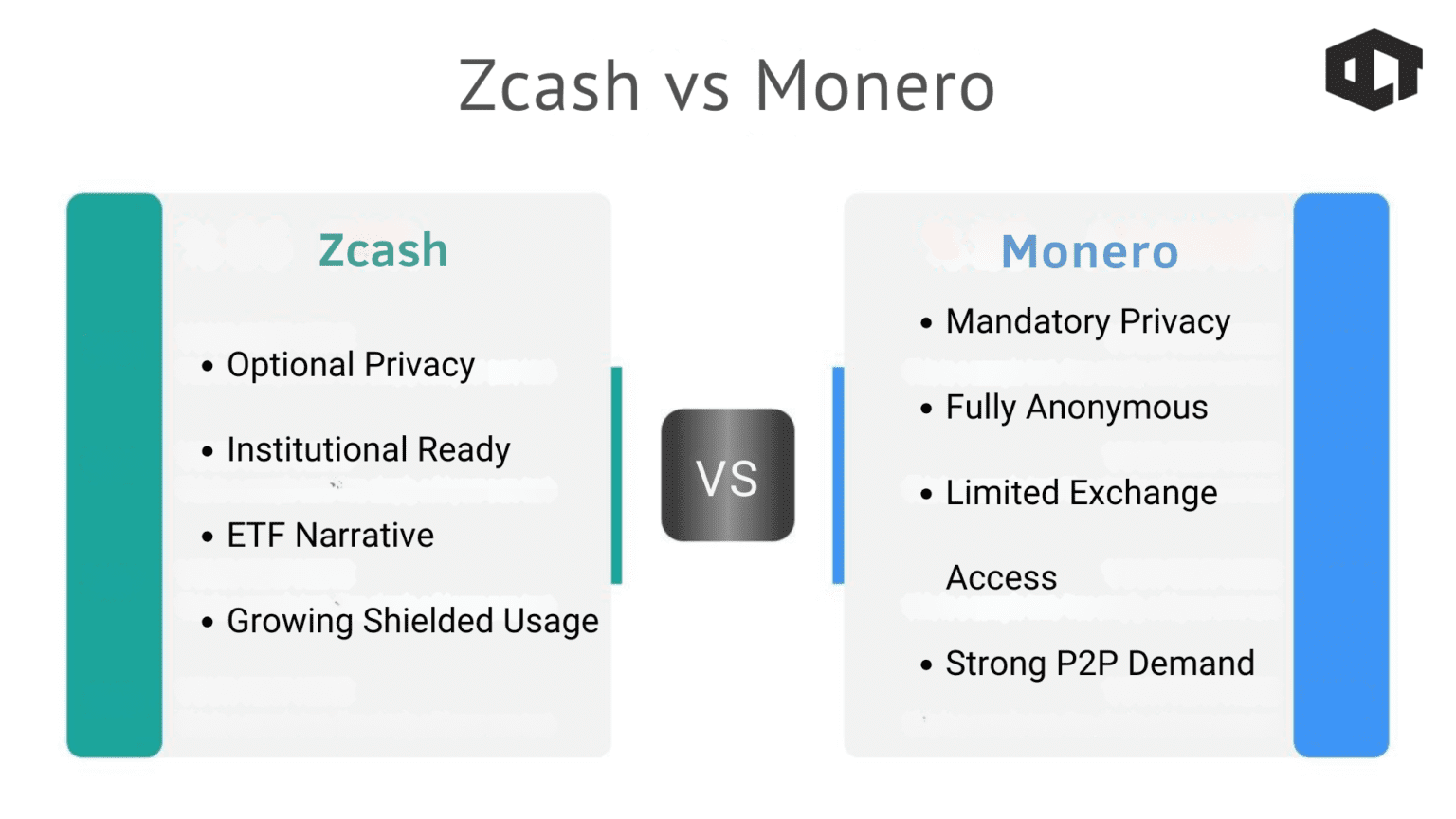
The difference is philosophical. Monero prioritizes maximum privacy. Every transaction is hidden. There are no exceptions. Zcash prioritizes optionality. Users can choose privacy or transparency. They can also selectively disclose information when needed.
This creates two different outcomes:
Neither is inherently better. They serve different audiences. Monero appeals to privacy maximalists and censorship-resistant use cases. Zcash appeals to users and institutions that need both privacy and compliance. The market is currently favoring flexibility.
Access differences between the two assets highlight the broader trend.
Available on major centralized exchanges including Coinbase, Binance, Kraken, Gemini, and OKX.
Storage options:
Limited centralized exchange access. Available on Kraken in select regions.
Primary access routes:
Storage options:
The contrast is clear. Zcash is widely accessible through regulated channels. Monero is increasingly accessed through decentralized infrastructure.
Zcash’s momentum is strong, but not guaranteed.
That said, Monero has survived multiple crackdowns before and still reached new highs.
The current trend is not permanent. It is a snapshot of how the market is pricing different design choices today.
The reason Zcash is outperforming Monero in 2026 is not hype. It is structure. Zcash’s optional privacy model allows it to operate within regulatory frameworks while still offering strong privacy tools. That has opened the door to ETFs, institutional mining, and broader exchange access.
Monero has taken a different path. It delivers unmatched privacy at the cost of institutional compatibility. That trade-off is pushing it toward decentralized and peer-to-peer ecosystems. Both approaches are valid. Both have demand. The market is not choosing one over the other universally. It is assigning each to a different role.
Zcash is becoming the privacy layer that institutions can interact with. Monero remains the privacy layer that operates outside institutional systems. Understanding that distinction is key to understanding the current rally.