Who is Garrett Jin? From BitForex's collapse to a $735M Bitcoin short, we trace the career, holdings, and controversies of crypto's most-watched whale.

Author: Kritika Gupta
Garrett Jin is a Chinese crypto entrepreneur linked to Hong Kong and best known as a former BitForex executive, co-founder of GroupFi and WaveLabs. On-chain investigators and crypto media have also linked Jin to large Bitcoin and Ethereum positions, including wallets associated with the ENS names garrettjin.eth and ereignis.eth, although those claims rely on public wallet attribution rather than audited ownership records.
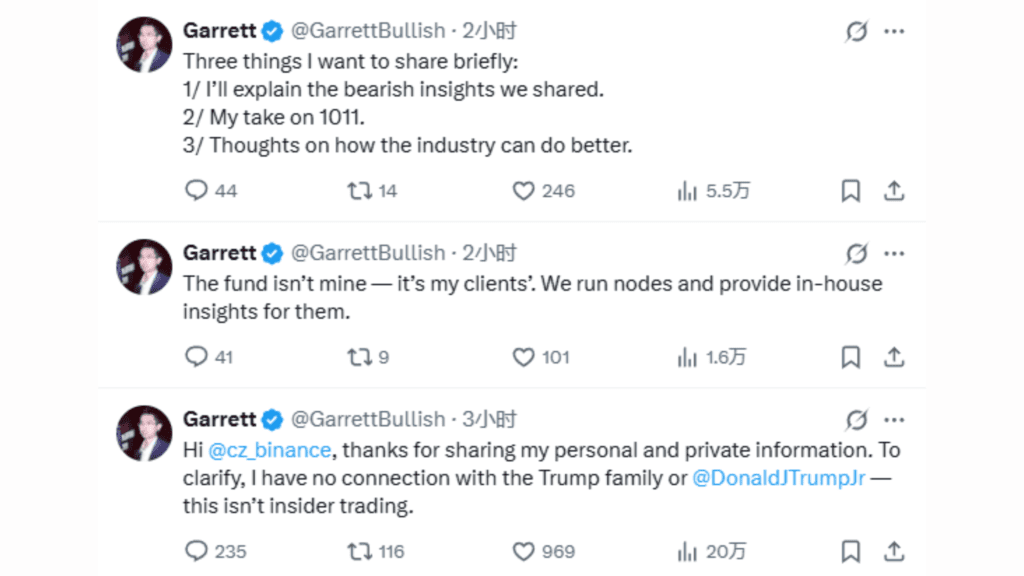
His public profile now sits at the center of several overlapping narratives: BitForex’s collapse, large on-chain BTC and ETH holdings, post-exchange crypto ventures, and a high-profile Hyperliquid short that drew insider trading speculation in October 2025. Jin has denied the insider trading allegations and described the trade as a hedge tied to large spot exposure, according to reports that cited his public response.
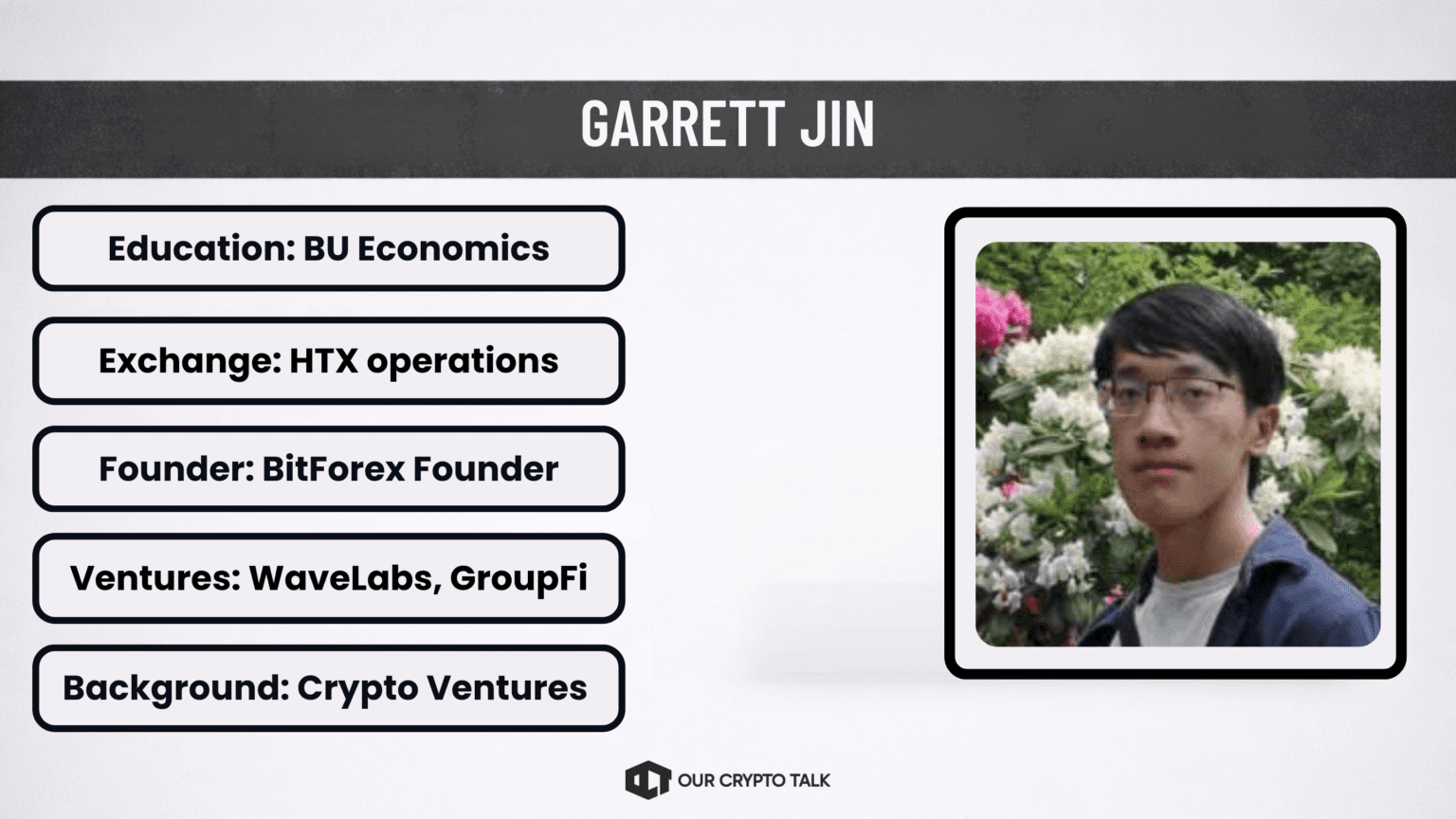
Garrett Jin graduated from Boston University with a degree in economics, according to RootData, which lists him as co-founder of XHash and records previous roles at HTX and BitForex. The same profile identifies him as a co-founder of WaveLabs and GroupFi, and as a former director of operations at HTX.
Jin’s early career reportedly included work at China Construction Bank and the founding of Da Yo Trading (HK) in 2012, according to a report that summarized EyeOnChain’s investigation into his background. That report also said Da Yo Trading operated until around 2014.
His crypto career gained visibility through Huobi, now known as HTX. RootData lists Jin’s work experience at HTX and identifies him as a former director of operations there. That role placed him inside one of Asia’s better-known crypto exchange ecosystems before BitForex became his most visible venture.
After that, Jin became linked to several crypto and technology ventures, including BitForex, WaveLabs, GroupFi, TanglePay, and XHash. Crypto media and data profiles describe those projects as part of his post-Huobi and post-BitForex career path, although public records around some early roles remain limited.
Garrett Jin became associated with BitForex as a co-founder and senior executive. RootData describes him as a former co-founder and vice president of BitForex, while crypto media reports have often referred to him as the former CEO of the exchange.
BitForex operated as a global crypto exchange and became part of the broader offshore exchange boom that served retail traders during earlier crypto market cycles. However, regulators later raised concerns about the platform’s status. Hong Kong’s Securities and Futures Commission said in March 2024 that BitForex had not obtained a licence from the SFC and had not applied to operate a virtual asset trading platform in Hong Kong.
Hong Kong’s SFC later warned the public about BitForex for suspected virtual asset fraud. The regulator said victims had reported withdrawal difficulties under the stated reason of “wallet and website maintenance,” and later reported that BitForex’s website had shut down, which prevented users from accessing accounts and withdrawing assets.
Key milestones in BitForex’s rise and collapse
Garrett Jin became associated with BitForex as a co-founder and senior executive during the exchange’s early formation.
BitForex operated as an offshore trading platform serving retail users across multiple crypto market cycles.
Japan’s Financial Services Agency previously warned BitForex for operating without registration.
CoinDesk reported that BitForex went offline after around $57 million moved out of the exchange’s hot wallets.
Hong Kong’s securities regulator warned the public about BitForex for suspected virtual asset fraud.
Yahoo Finance reported that BitForex planned to reopen withdrawals after a police investigation.
Jin had left BitForex before the collapse, but his former executive role keeps him connected to its reputational fallout.
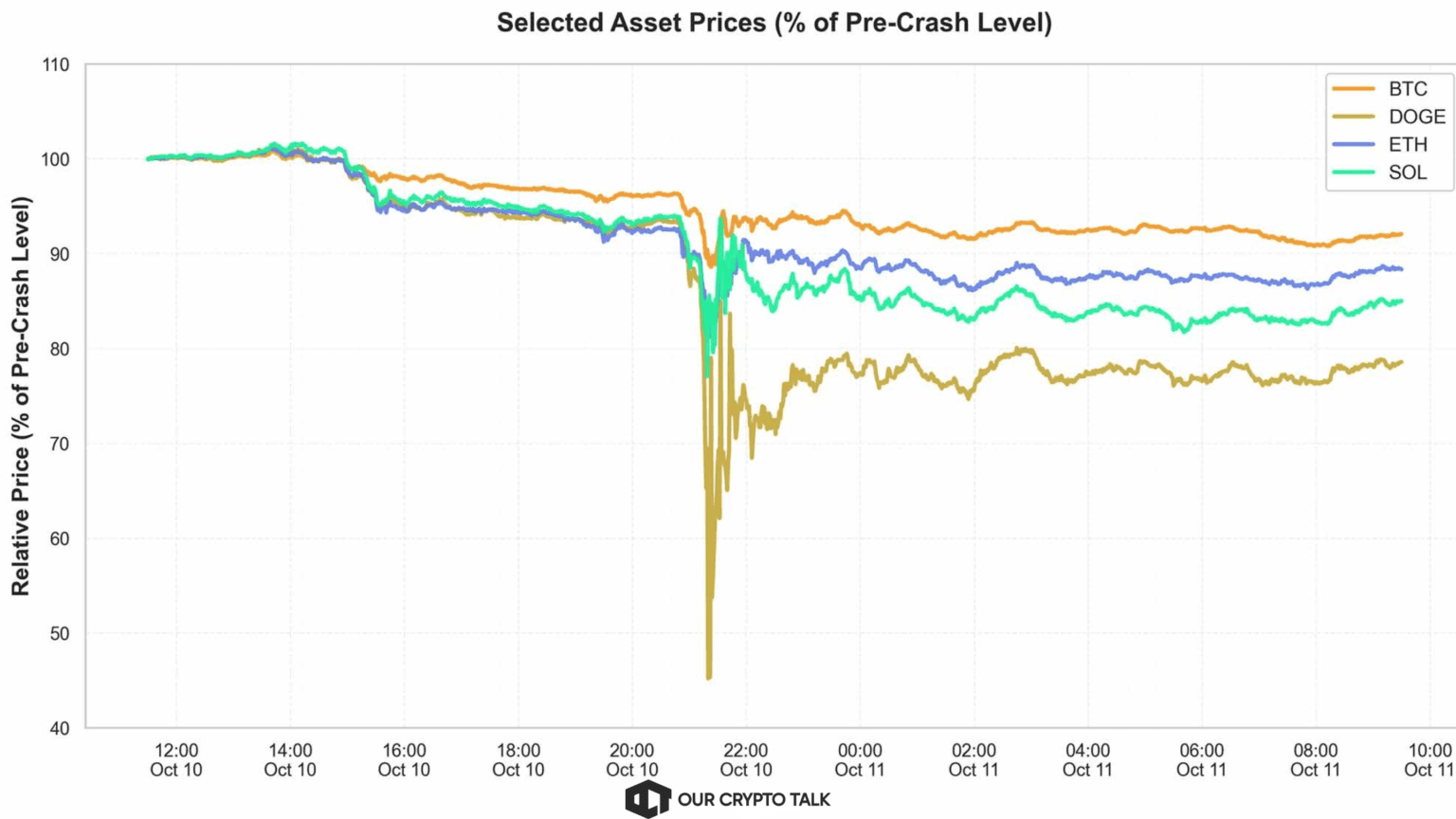
Garrett Jin drew renewed attention in October 2025 after on-chain investigators linked him to a major Hyperliquid whale. TradingView, republishing Cointelegraph reporting, said crypto researcher Eye linked a whale controlling more than 100,000 BTC to Jin, the former BitForex CEO.
The same report said Eye connected the whale’s main wallet, ereignis.eth, to garrettjin.eth, which allegedly led to Jin’s verified X account, @GarrettBullish. Eye argued that the ENS link identified Jin as the actor behind large-scale Hyperliquid and Hyperunit operations, although this remains an on-chain attribution rather than a court-tested finding.
The timing fueled speculation because the short reportedly preceded a market selloff linked to U.S. tariff news. CryptoRank and TradingView reported that on-chain investigators linked the trade to Jin, while other outlets framed the event as one of the most visible examples of whale-level positioning on a transparent derivatives venue.
Jin denied insider trading allegations. Reports citing his response said he described the position as a hedge against large spot holdings and rejected claims that he had access to non-public information or Trump-linked inside information.
The case remains significant because it combined three features that crypto markets rarely separate cleanly: public wallet tracking, large leveraged positions, and macro news timing. It also showed how on-chain transparency can expose trading behavior while still leaving unresolved questions about ownership, intent, and information access.
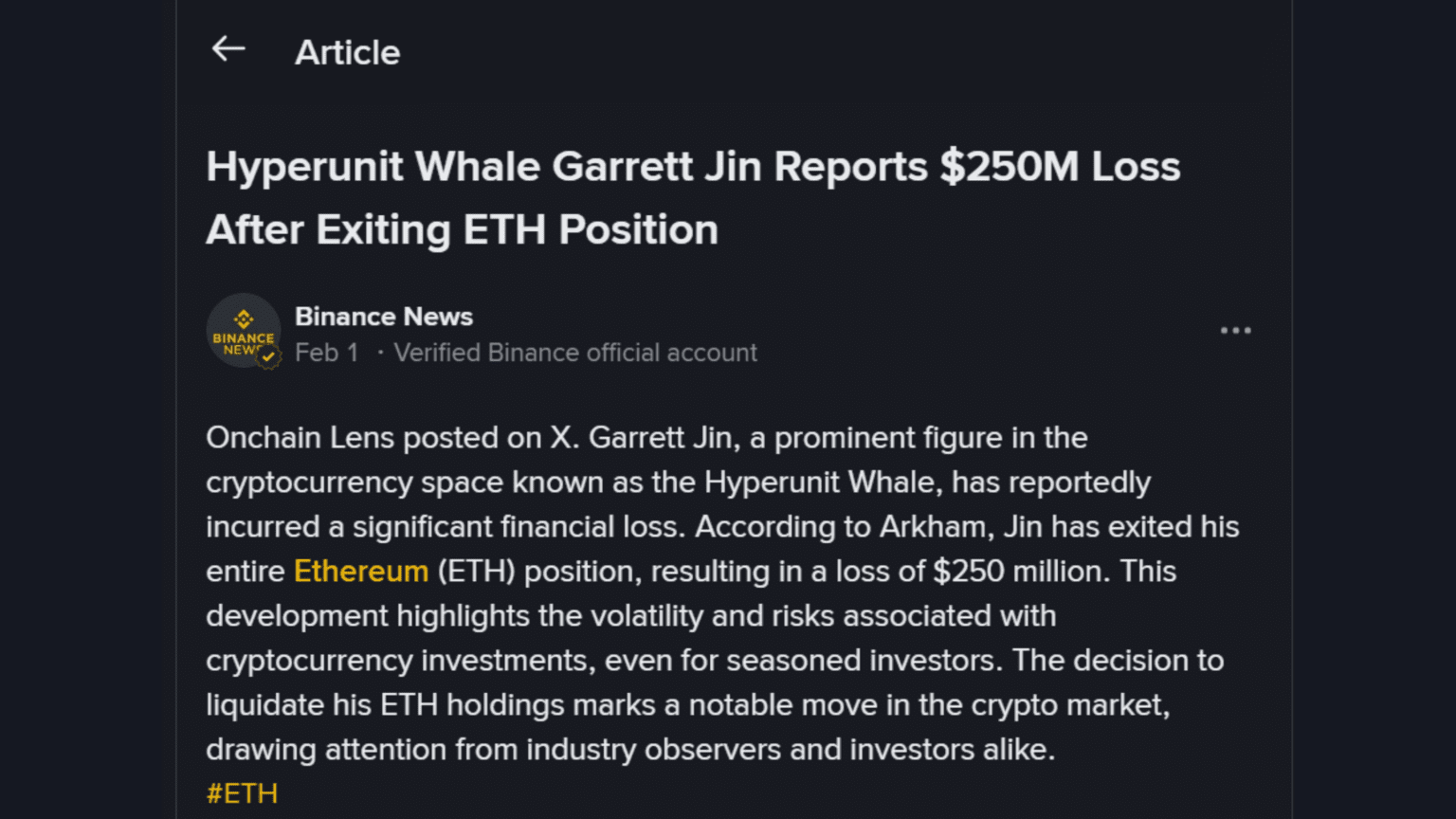
On-chain analysts and crypto media have repeatedly linked Jin to large Bitcoin and Ethereum positions. TradingView, citing Cointelegraph, reported that Eye linked a whale controlling more than 100,000 BTC to Jin through ENS and transaction connections.
Other reports provided narrower wallet-specific figures. PANews reported that Garrett held 46,295 BTC, valued at about $5.19 billion at the time of that report, and identified him as the founder of XHash, a non-custodial Ethereum staking platform. Because these figures depend on wallet attribution and market pricing, readers should treat them as reported on-chain estimates, not confirmed personal balance sheets.
MEXC also reported that Eye connected Garrett Jin, XHash’s agent, and two staking pools to significant Ethereum deposits, while Phemex reported that those pools received ETH after Bitcoin swaps on Hyperliquid and Hyperunit. These claims rely on analyst attribution and reported blockchain traces, not on audited disclosures from Jin or XHash.
The strongest factual framing remains cautious: analysts have connected Jin to major BTC and ETH-linked wallet activity, but public records do not verify the exact ownership structure. Wallets can represent personal holdings, investor funds, managed accounts, counterparties, or pooled operations.
Garrett Jin’s net worth in 2026 remains unverified because no audited public disclosure confirms his personal holdings, liabilities, private investments, or managed capital. RootData lists his roles across XHash, WaveLabs, GroupFi, HTX, and BitForex, but it does not provide a verified net worth figure.
Reported wallet estimates suggest that Jin may control or influence substantial crypto exposure. PANews reported a figure of 46,295 BTC, while TradingView and Cointelegraph reported Eye’s broader claim linking Jin to a whale controlling more than 100,000 BTC. These numbers create a wide range of possible exposure, but they do not establish personal ownership.
Ethereum-linked reports add further uncertainty. BingX and MEXC reported that Eye connected Jin and XHash to staking pools involving 886,440 ETH, but those reports also rely on on-chain investigation rather than audited entity-level disclosures.
For that reason, any specific net worth estimate would require speculation. The most defensible conclusion is that Jin has been linked to large crypto positions and staking flows, but readers should treat all net worth claims as unverified unless they come from audited statements, court filings, regulator filings, or direct disclosure from Jin.
Garrett Jin’s current and recent ventures include XHash, GroupFi, TanglePay, and WaveLabs, according to RootData and crypto media reports. RootData lists Jin as co-founder of XHash, WaveLabs, and GroupFi, and also lists his previous work at HTX and BitForex.
XHash operates in Ethereum staking infrastructure. RootData lists Jin as co-founder at XHash, while crypto media reports describe XHash as a non-custodial or institutional Ethereum staking platform. In January 2026, multiple outlets reported that Eye connected XHash to large Ethereum staking pools, including deposits allegedly totaling 886,440 ETH.
GroupFi operates in the social finance and Web3 communication category. RootData identifies Jin as a co-founder of GroupFi, while the TanglePay GitHub repository describes TanglePay as a Web3 “Talking Wallet” powered by GroupFi protocol.
TanglePay connects Jin’s project history to the IOTA ecosystem. The TanglePay GitHub repository describes the product as a mobile wallet for iOS and Android, while the Chrome extension repository describes it as an open-source IOTA wallet for managing IOTA tokens and exploring the IOTA ecosystem through mobile or browser access.
Apple’s App Store listing describes TanglePay as an IOTA wallet that supports the Chrysalis network and uses Stronghold technology to keep private keys encrypted on the user’s device. The listing also says the wallet aims to serve as a gateway to IOTA’s ecosystem, including DeFi, NFTs, and IoT-related use cases.
WaveLabs appears in Jin’s venture history as an incubator or venture-related project. RootData lists Jin as co-founder of WaveLabs, and TradingView, citing Cointelegraph reporting, said Jin founded several ventures after BitForex, including WaveLabs VC, TanglePay, IotaBee, and GroupFi.
Garrett Jin has faced two major lines of public scrutiny: BitForex’s 2024 collapse and the October 2025 Hyperliquid short. The first centers on exchange operations and user withdrawals, while the second centers on trading timing, wallet attribution, and allegations of insider knowledge
The BitForex controversy began when the exchange went offline in February 2024 after reported hot-wallet outflows. CoinDesk reported that BitForex went offline on February 23 after about $57 million was withdrawn from hot wallets, while Hong Kong’s SFC later warned the public about suspected virtual asset fraud involving BitForex.
The SFC said victims reported withdrawal difficulties under the explanation of wallet and website maintenance, then later reported that BitForex’s website had shut down and prevented users from accessing accounts or withdrawing assets. That regulatory statement did not name Jin directly in the quoted warning, but his former role at BitForex keeps him connected to public discussion of the exchange.
Jin denied the insider trading allegations. Reports said he framed the short as a hedge against large spot holdings and rejected claims that he had access to non-public information or Trump-linked inside information.
Garrett Jin’s profile sits at the intersection of crypto entrepreneurship, exchange risk, on-chain wealth, and market controversy. His career moved from traditional finance and Huobi-era exchange operations into BitForex, then later into ventures such as XHash, GroupFi, TanglePay, and WaveLabs. That path makes him a notable figure in Asia-linked crypto infrastructure, but it also places his record under close scrutiny.
BitForex’s 2024 collapse, the wallet attributions tied to large Bitcoin and Ethereum positions, and the $735 million Hyperliquid short have all shaped public perception of Jin. Some claims rely on regulator statements and media reporting, while others depend on on-chain analysis from accounts such as EyeOnChain. That distinction matters because wallet attribution can reveal transaction patterns, but it does not always prove ownership, intent, or legal responsibility.
This article is for informational purposes only and does not constitute financial advice.


AI Needs Cheap Inference. Can Orbio Deliver?
Web3 Gaming Comeback 2026: GTA 6 Hype vs 99% Crashes
Layer 2 Projects Shutting Down: Who’s Next After Blast?
Embodied Data Pyramid and Decentralized Data Layer for Robotics
AI Needs Cheap Inference. Can Orbio Deliver?
Web3 Gaming Comeback 2026: GTA 6 Hype vs 99% Crashes
Layer 2 Projects Shutting Down: Who’s Next After Blast?
Embodied Data Pyramid and Decentralized Data Layer for Robotics