Quantum ready crypto projects ranked by how protected they really are: native, or roadmap, plus the NIST algorithm. Updated June 2026

Author: Kritika Gupta
Quantum Ready Crypto Projects are becoming a serious research category as crypto networks prepare for a future where today’s signature systems may no longer be enough. The key question is not whether quantum computers break crypto tomorrow, but which projects have already started reducing that long-term risk.
Quantum ready crypto Projects entered the 2026 crypto news cycle through three concrete signals. Citi’s 2026 quantum-threat report estimated that 25% of Bitcoin supply, or about 4.5 million to 6.7 million BTC, sits in quantum-exposed outputs. That warning pushed quantum risk back into crypto’s 2026 news cycle, alongside Coinbase’s April 2026 guidance that the industry should begin preparing now and Google’s updated quantum-resource estimates for attacking elliptic-curve cryptography.
The risk is “harvest now, decrypt later”: attackers can record public blockchain data today and target exposed keys once a powerful enough quantum computer exists.
So this is not a collapse warning. Instead, it is a migration window that is closing while crypto still has time to upgrade.
A crypto project is not quantum-ready just because it uses the phrase in a roadmap. Real readiness starts with post-quantum cryptography, or PQC, at the security layer.
For quantum ready crypto Projects, NIST’s core PQC toolkit gives the industry clearer building blocks. Dilithium, standardized as ML-DSA, is a lattice-based signature scheme and works as the balanced default for most deployments. Falcon, selected for standardization as FN-DSA, also uses lattice cryptography and offers smaller signatures, but its complexity makes implementation and audits harder. SPHINCS+, standardized as SLH-DSA, uses hash-based signatures and gives projects a very conservative security model, although it produces much larger signatures. Kyber, standardized as ML-KEM, handles key exchange rather than transaction signing, so it matters more for secure communication and encryption flows.
The trade-off is simple: Dilithium gives teams the best general balance, Falcon saves space but adds complexity, and SPHINCS+ offers conservative security at the cost of size.
For blockchains, however, the algorithm alone does not decide readiness. Native protection at the protocol layer beats a signature scheme bolted on later. A chain that signs transactions with PQC from the start carries far less migration risk than one that depends on future wallets, exchanges, governance votes, and user behavior. That is why the ranking separates native projects from active upgrades and roadmap-only claims.
This ranking focuses on genuine quantum readiness, not market cap, liquidity, exchange listings, or brand size. That distinction matters because many large crypto networks still discuss post-quantum security as a future research problem, while smaller chains have already built quantum-resistant signatures into the protocol layer.
Relative positioning by algorithm, readiness, live status, and execution clarity
For buyers, this creates a very different risk profile. A small chain with native post-quantum signatures can rank above a major network that only has a roadmap, because live cryptographic protection reduces future migration risk. In other words, the best quantum ready crypto projects are not always the biggest projects. They are the projects that have already shipped meaningful quantum-resistant infrastructure, tested it in public, and reduced reliance on future wallets, exchanges, governance votes, and user behavior.
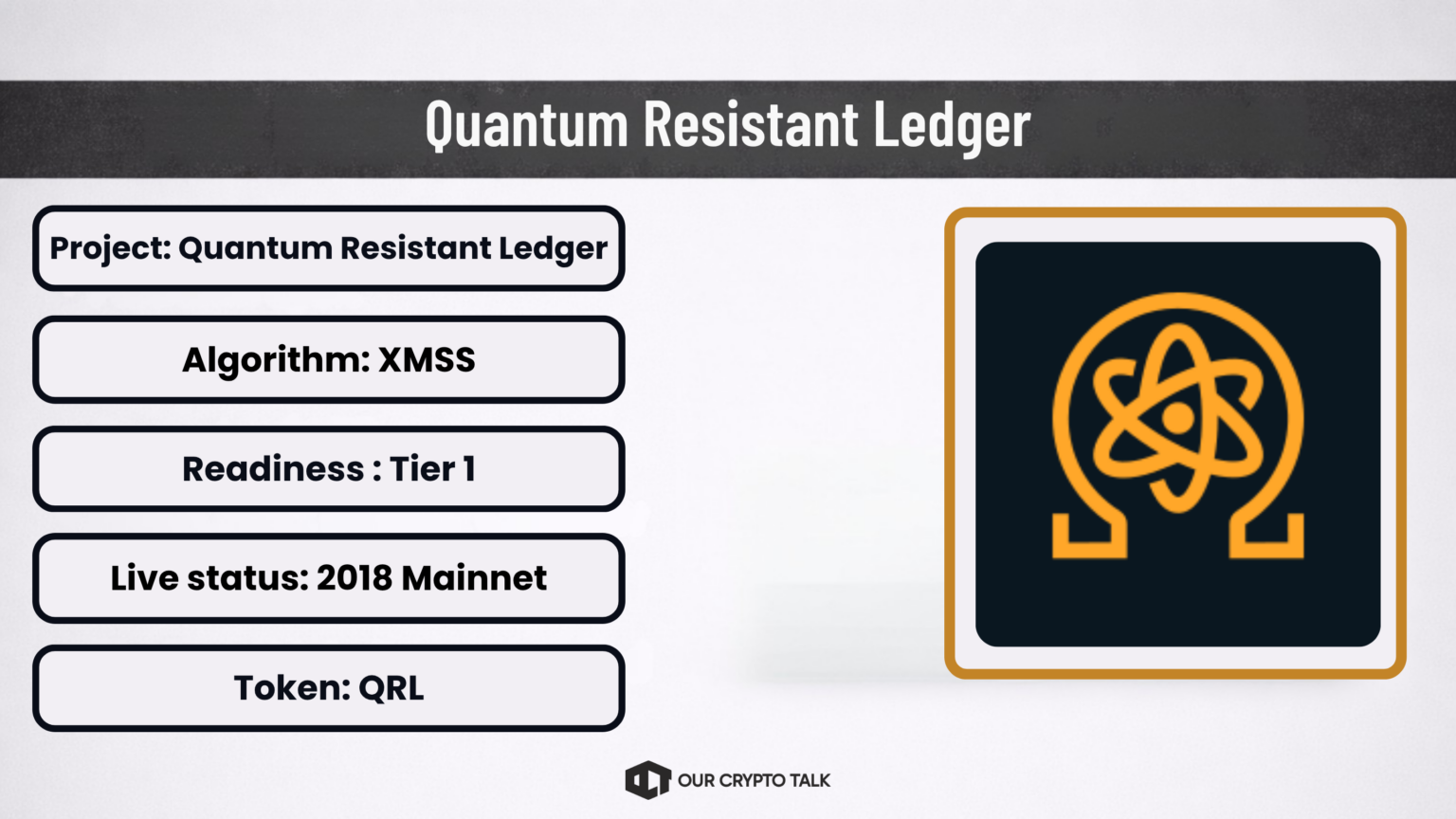
Algorithm: XMSS, with QRL 2.0 moving toward newer NIST-aligned post-quantum primitives
Readiness Tier: Tier 1, Native
Live status: Mainnet live since 2018. QRL 2.0 Testnet V2 launched in March 2026 with PoS, Hyperion, and QRVM.
Token: QRL
QRL leads the ranking because it built post-quantum security into the protocol from the start. Unlike chains that need to redesign their signature layer later, QRL launched with XMSS and positioned itself as a purpose-built quantum-resistant blockchain. That gives it one of the longest live track records in the category.
The project also matters because it continues to evolve instead of relying only on its early-mover status. QRL 2.0 adds a more modern architecture with proof-of-stake, Hyperion, and QRVM, which gives the network a path toward broader developer use. At the same time, it keeps the core quantum-resistance thesis intact.
What this means for you: QRL offers the clearest live example of a quantum-resistant crypto settlement layer today, especially for users who prioritize protocol-level security over ecosystem size.
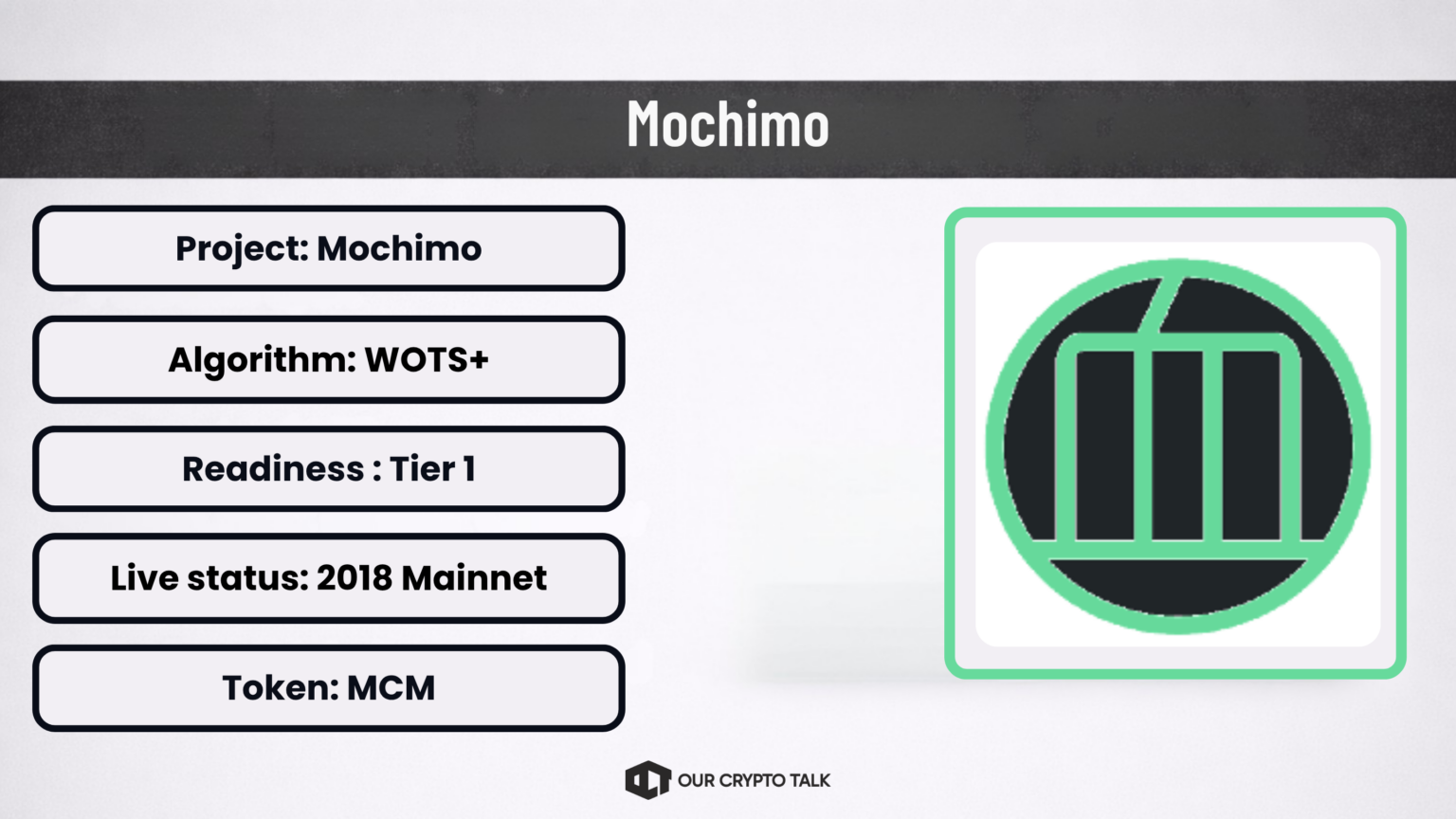
Algorithm: WOTS+
Readiness Tier: Tier 1, Native
Live status: Mainnet live since June 2018, with WOTS+ protecting transactions at the protocol level.
Token: MCM
Mochimo ranks near the top because it does not treat quantum resistance as a future upgrade narrative. The project uses WOTS+ across its transaction system and designed its address, ledger, and validation model around that security choice. That native design gives it a stronger readiness profile than larger chains that still depend on future migration plans.
However, Mochimo also shows the trade-off that many quantum ready crypto projects face. It has a smaller ecosystem, less liquidity, and less smart-contract depth than major Layer 1 networks. Even so, readiness ranking should reward shipped cryptography first, because quantum resistance only matters if the protocol actually uses it.
What this means for you: Mochimo fits users who want native quantum resistance first and ecosystem scale second.
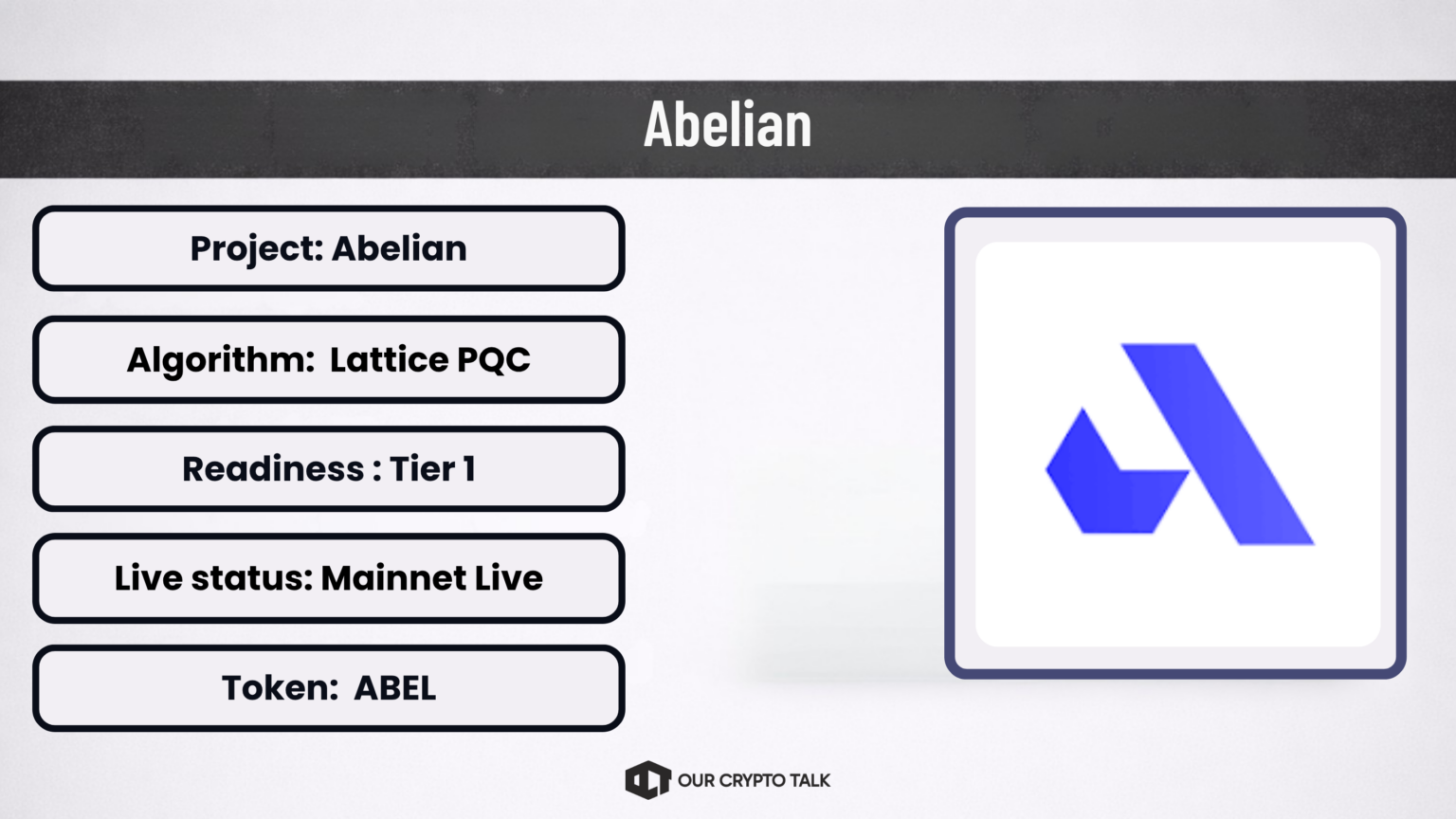
Algorithm: Lattice-based post-quantum cryptography with linkable ring signatures
Readiness Tier: Tier 1, Native
Live status: Mainnet infrastructure live, with official docs supporting mainnet nodes, wallets, and privacy features.
Token: ABEL
Abelian combines quantum resistance with privacy, which gives it a different profile from pure payment-style PQC chains. Its design uses post-quantum cryptography to protect long-term ownership while also hiding wallet addresses and transaction amounts. That makes Abelian one of the stronger native lattice-based candidates in this category.
What this means for you: Abelian suits users who want quantum resistance plus confidentiality, not just post-quantum signatures.
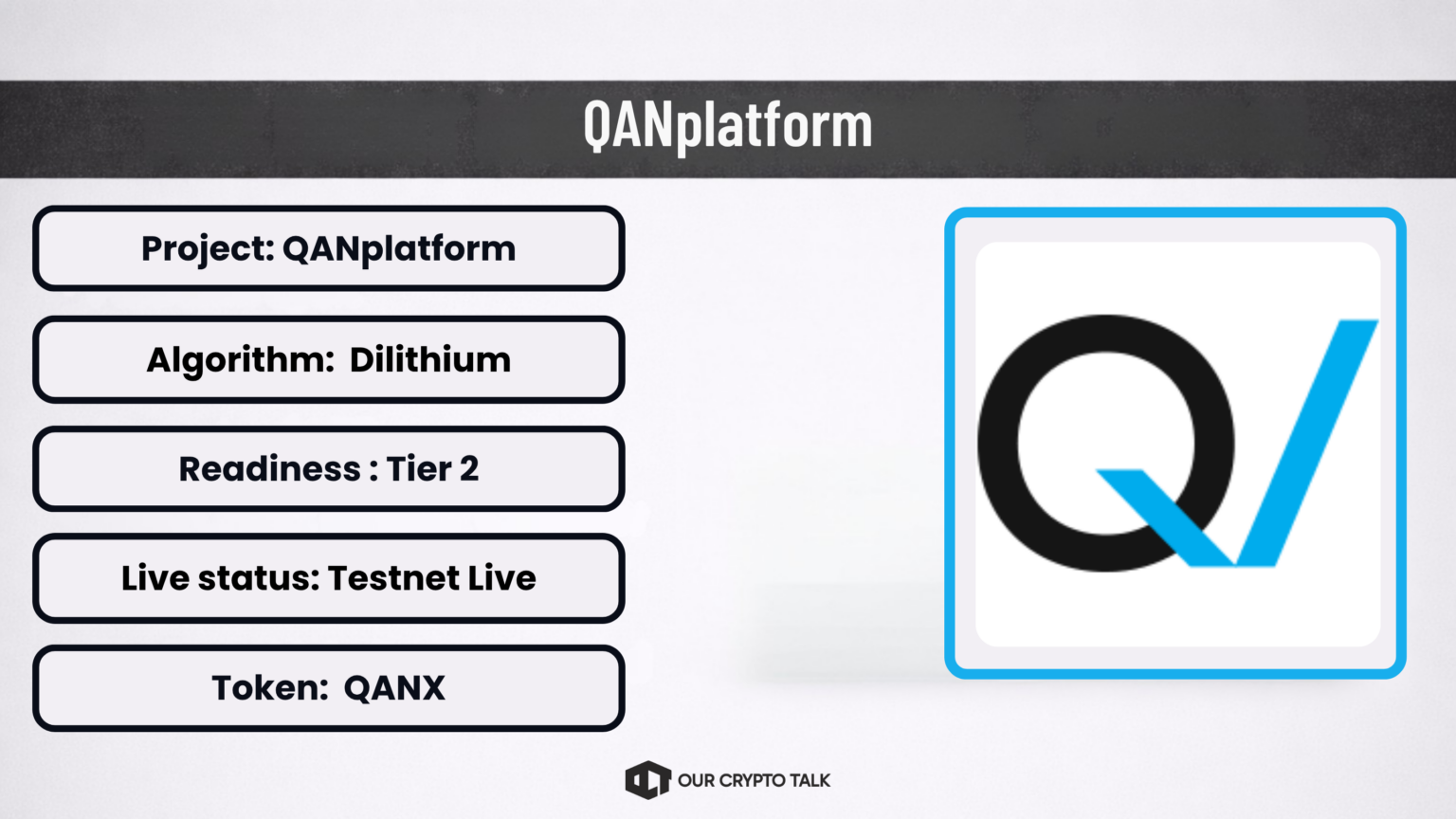
Algorithm: CRYSTALS-Dilithium through QAN XLINK
Readiness Tier: Tier 2, Advanced Upgrading
Live status: Quantum-resistant, Ethereum-compatible testnet live, with QANscan showing active blocks and transactions.
Token: QANX
QANplatform ranks highly because it combines post-quantum transaction security with EVM compatibility and multi-language smart contracts. The project gives developers a more familiar migration path than most native PQC chains. However, its ranking stays below live native mainnets because public mainnet execution still matters.
What this means for you: QANX is a developer-focused quantum-readiness play, but mainnet delivery remains the key checkpoint.
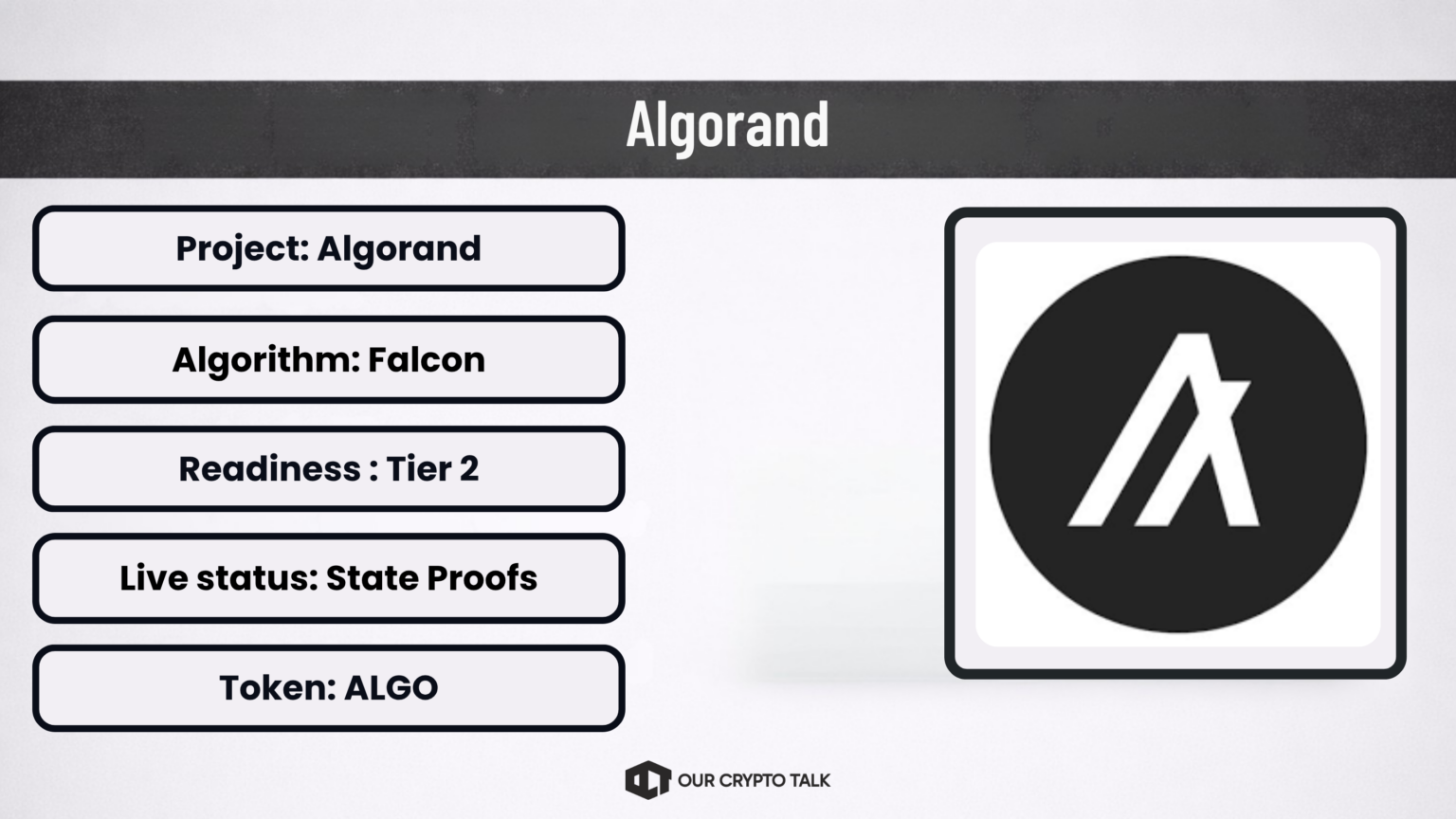
Algorithm: Falcon-1024 signatures
Readiness Tier: Tier 2, Actively Upgrading
Live status: Mainnet live with Falcon-1024 state proofs every 256 rounds. Algorand executed its first post-quantum mainnet transaction using Falcon signatures on November 3, 2025.
Token: ALGO
Algorand has shipped more real post-quantum cryptography than most larger Layer 1 networks. Its Falcon-based state proofs help protect blockchain history, which makes its post-quantum work more concrete than simple research posts or vague future commitments. That gives Algorand an important place in any ranking of quantum ready crypto projects.
At the same time, Algorand has not completed a full protocol-wide migration for every authorization path. That is why it belongs in Tier 2 rather than Tier 1. It has meaningful post-quantum components live, but it still needs broader coverage before investors can treat the entire network as fully quantum-ready.
What this means for you: Algorand gives large-cap investors one of the strongest partial post-quantum deployments, but it still needs full-ledger migration.
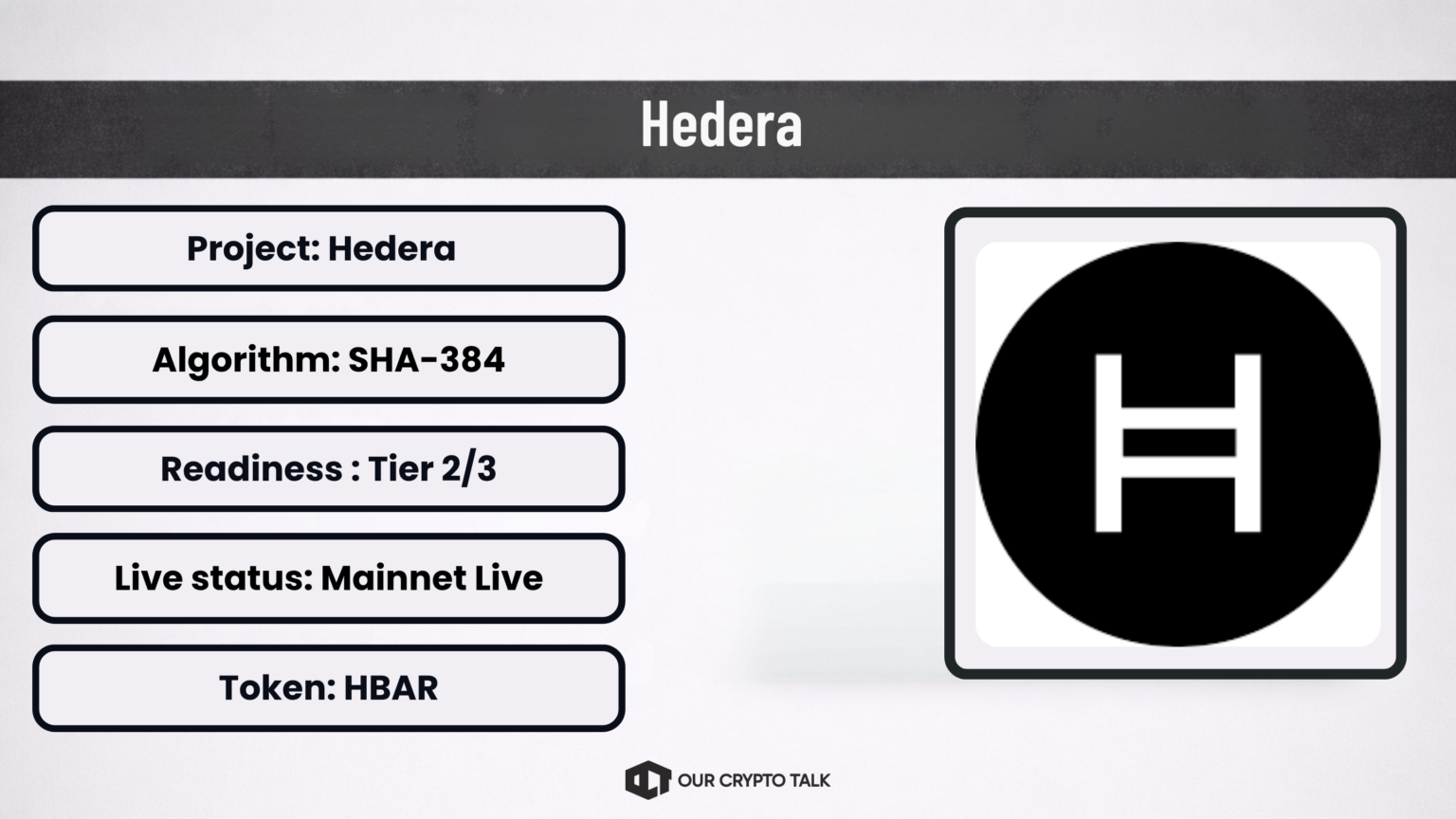
Algorithm: SHA-384 foundation, with post-quantum roadmap work
Readiness Tier: Tier 2/3, Strong foundation with active roadmap
Live status: Mainnet live, enterprise network active, and official guidance highlights SHA-384 for hashgraph history and data integrity.
Token: HBAR
Hedera does not yet operate as a native post-quantum signature chain. However, it already uses SHA-384 for hashgraph history, which gives its hash layer a strong security baseline under quantum assumptions. That foundation makes Hedera more credible than projects that only use quantum language for marketing.
The network also benefits from its enterprise posture. Institutions tend to care about security roadmaps, compliance, uptime, and long-term infrastructure risk. As a result, Hedera has a practical reason to move toward stronger post-quantum readiness over time. Still, buyers should separate strong preparation from full protocol-level quantum safety.
What this means for you: Hedera offers credible preparation, but investors should wait for specific post-quantum signature rollout details.
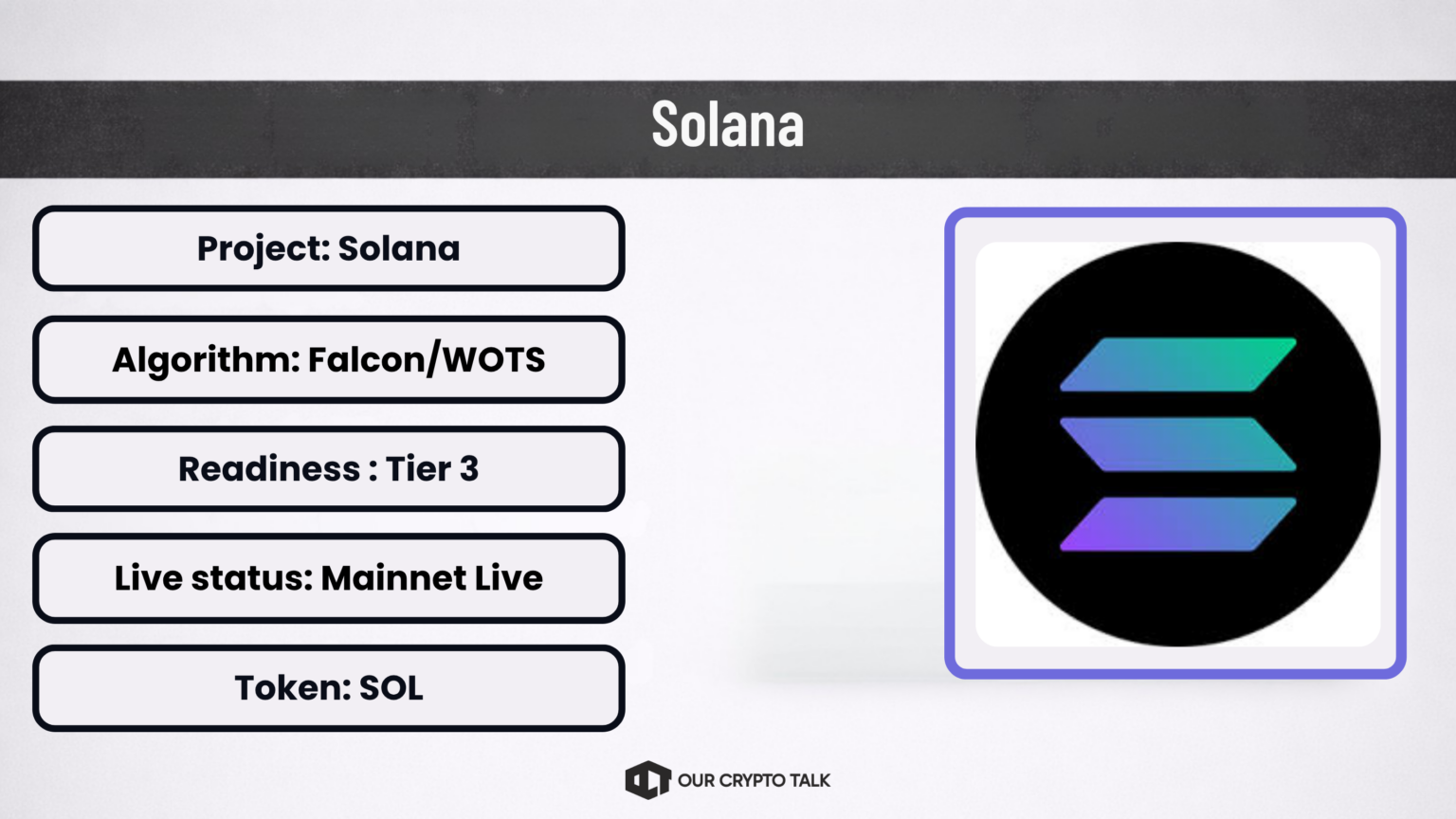
Algorithm: Falcon research path, plus optional WOTS-based vault experiments
Readiness Tier: Tier 3, Experimental or partial
Live status: Mainnet live, with Anza and Firedancer researching Falcon migration paths and a separate Solana Winternitz Vault implementation available as an optional primitive.
Token: SOL
Solana has not activated protocol-level post-quantum signatures, so users should not treat normal SOL accounts as quantum-safe today. However, the ecosystem has produced concrete research and code, including Falcon implementation work and a WOTS-based lamports vault. That puts Solana ahead of chains that only publish high-level statements.
The key distinction is scope. Optional vaults and research paths can help users experiment with protection, but they do not equal full protocol coverage. For Solana to move higher in the ranking, the ecosystem would need a clearer path from optional primitives to broad account-level or transaction-level protection.
What this means for you: Solana has credible technical preparation, but users should not treat SOL accounts as protocol-level quantum-safe today.
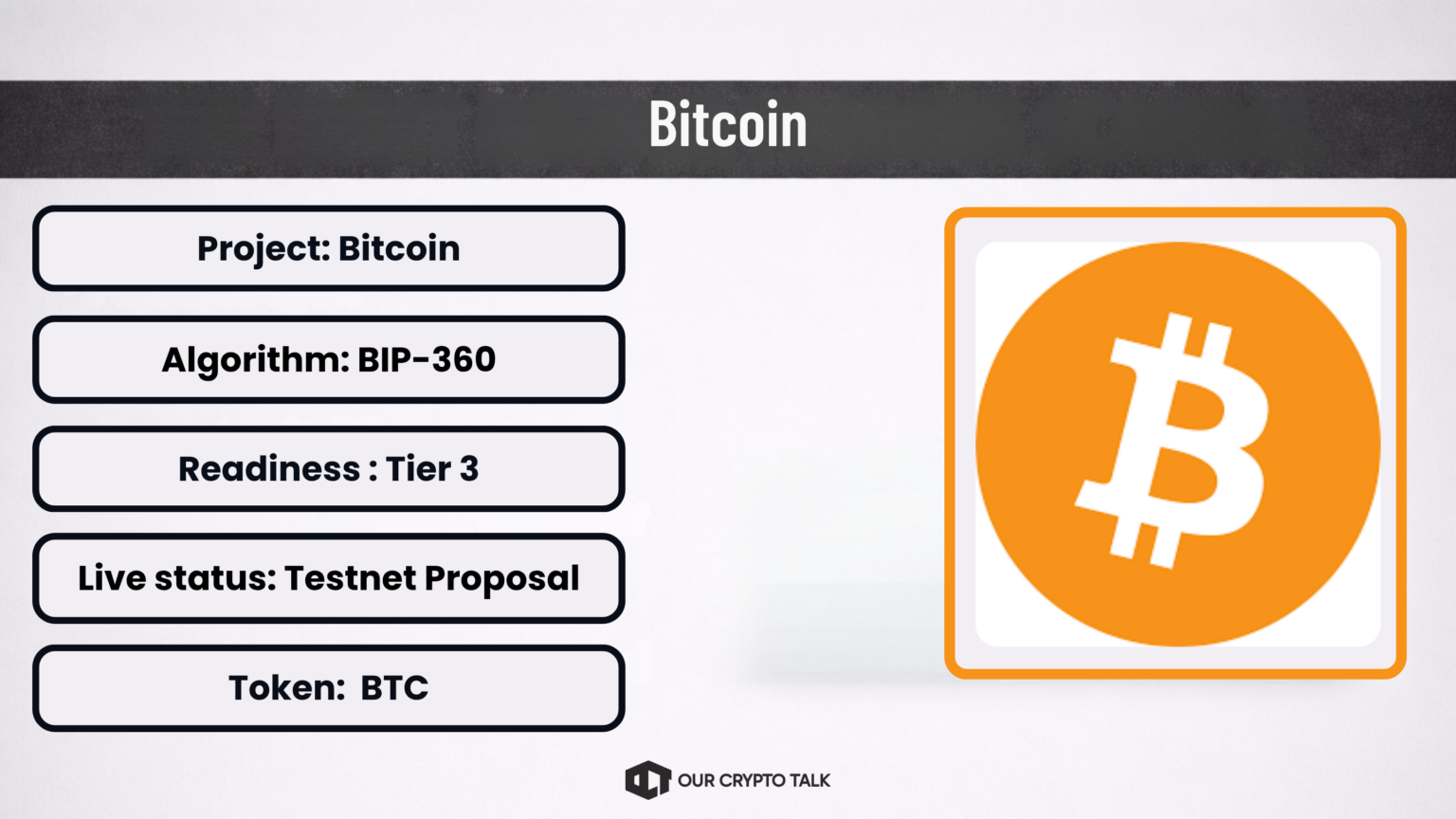
Algorithm: BIP-360 P2MR path, with Dilithium opcodes tested on Bitcoin Quantum testnet
Readiness Tier: Tier 3, Proposal and testnet
Live status: Bitcoin mainnet live. BIP-360 exists as a formal proposal, while BTQ’s Bitcoin Quantum testnet has implemented and tested P2MR transactions.
Token: BTC
Bitcoin carries the largest quantum-risk discussion because it holds the deepest liquidity, the largest holder base, and the biggest stock of older exposed outputs. Early addresses, reused addresses, and visible public keys create a long-term risk if a powerful quantum computer arrives before migration finishes.
BIP-360 proposal removes the quantum-vulnerable keypath spend from new P2MR outputs and helps reduce long-exposure risk going forward. However, Bitcoin mainnet has not activated this change, and BIP-360 does not retroactively protect already exposed coins by itself.
What this means for you: Bitcoin has a credible first step, but BTC is not quantum-safe at the protocol level yet.
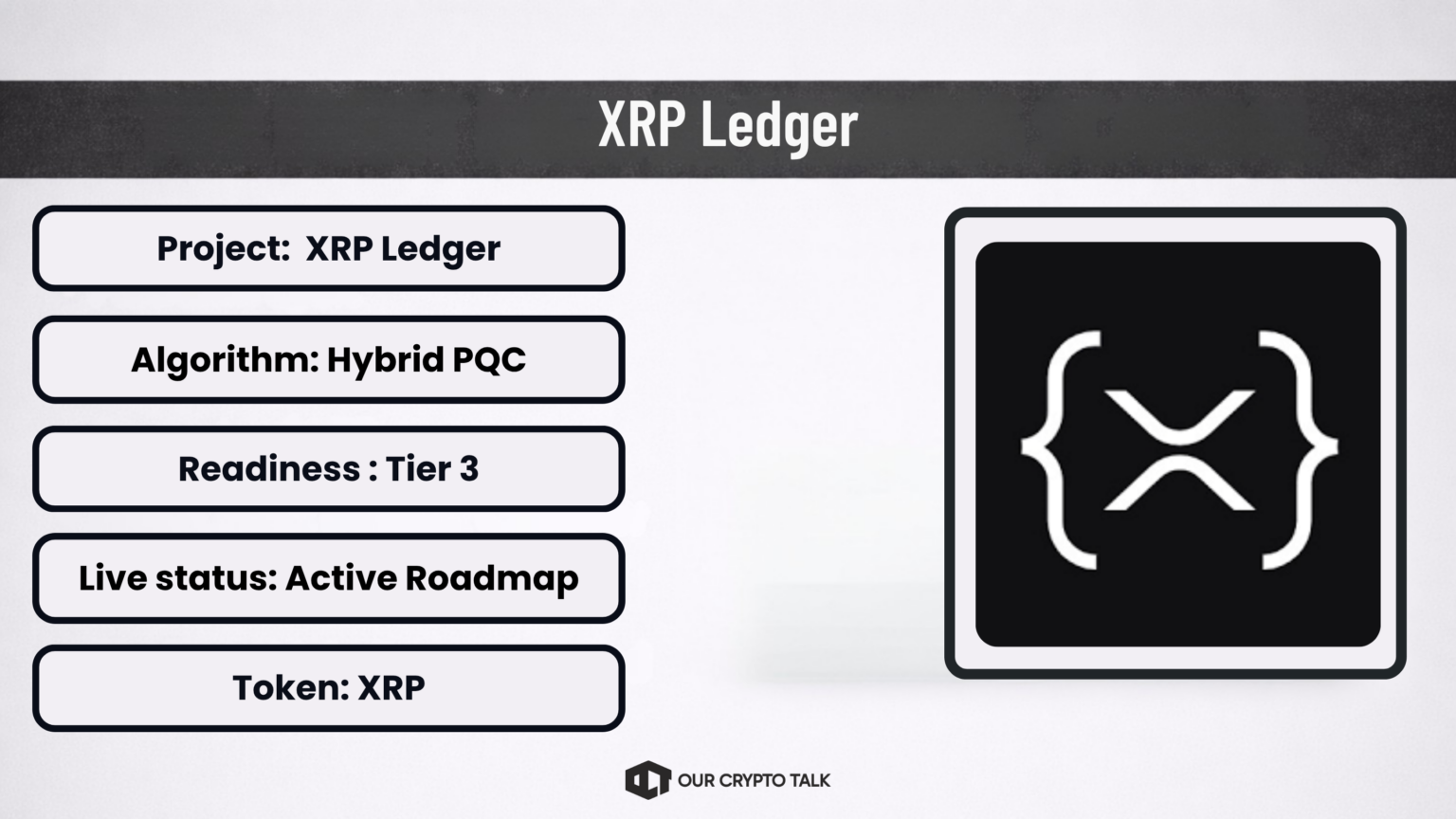
Algorithm: Hybrid post-quantum migration under testing, final scheme still evolving
Readiness Tier: Tier 3, Active roadmap
Live status: XRPL mainnet live, with Ripple outlining a multi-phase roadmap toward full readiness by 2028, including validator testing and custody prototypes.
Token: XRP
XRP Ledger ranks above generic roadmap-only chains because Ripple has outlined a more defined migration path. The roadmap includes phased testing, validator work, and custody-related prototypes, which gives the network more substance than projects that only promise future post-quantum support.
However, XRPL still sits in Tier 3 because it has not completed live protocol-level post-quantum activation. A roadmap can reduce uncertainty, but it does not remove execution risk. The network still needs to prove that its migration can work across validators, wallets, exchanges, custody systems, and regular users.
What this means for you: XRP has a clearer roadmap than many large caps, but its quantum readiness depends on execution through 2028.
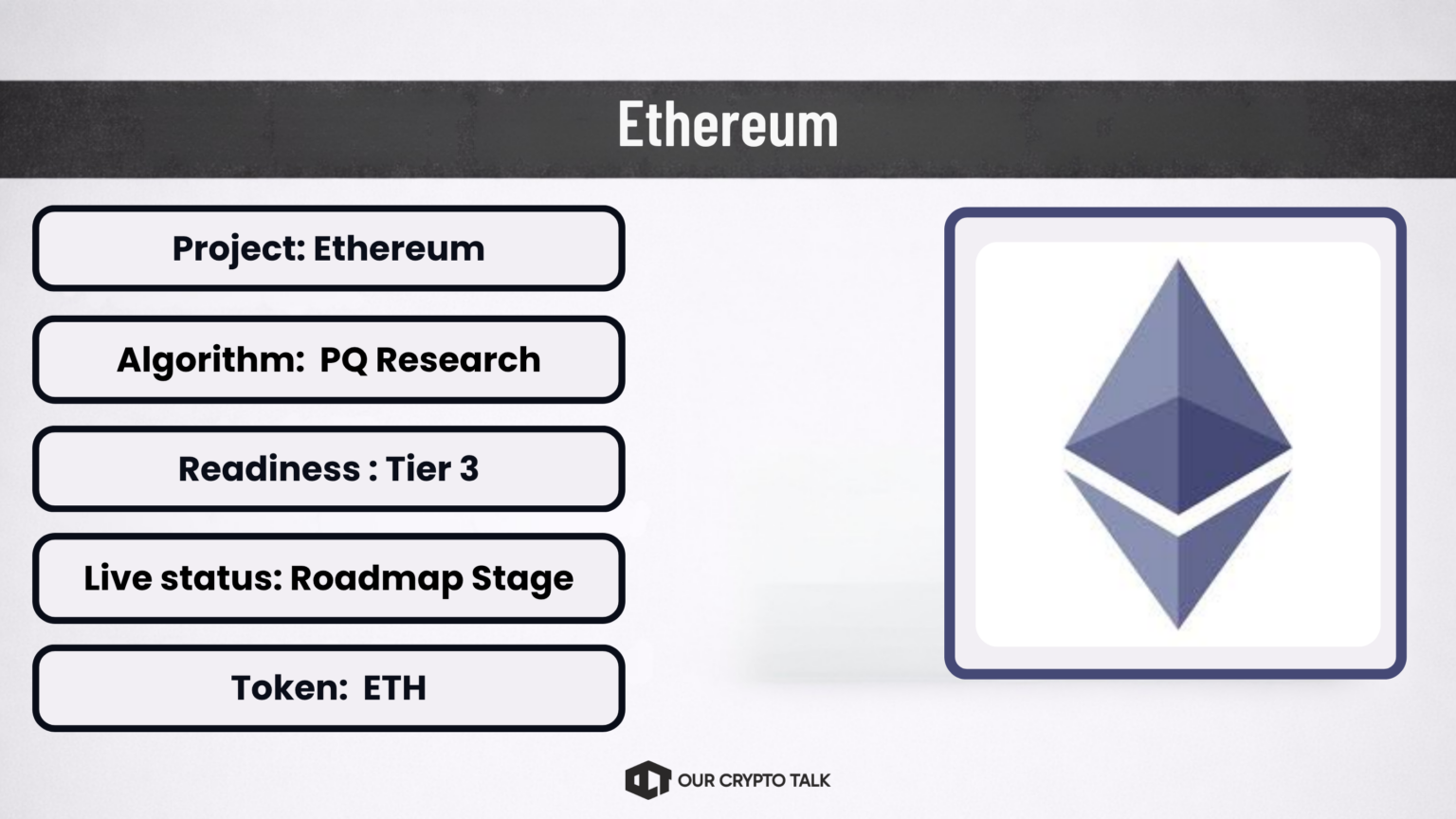
Algorithm: Research includes post-quantum signature precompiles, hash-based validator signatures, and aggregation work
Readiness Tier: Tier 3, Roadmap and research
Live status: Ethereum mainnet live, with an Ethereum Foundation post-quantum team and a roadmap targeting full protection later in the decade.
Token: ETH
Ethereum has one of the deepest research ecosystems in crypto, but it also faces one of the hardest post-quantum migrations. The network must consider user accounts, smart contracts, validators, rollups, wallets, bridges, staking infrastructure, and data availability. That complexity makes Ethereum’s quantum-readiness challenge much larger than a simple signature swap.
This is why Ethereum ranks below smaller native quantum ready crypto projects. The network may eventually develop a strong post-quantum migration path, but today it remains in the research and roadmap stage. Its scale gives it resources, but that same scale also makes coordination harder.
What this means for you: Ethereum has strong research depth, but ETH holders should view quantum safety as a future migration process, not a current protocol feature.
The readiness tier matters because it changes a buyer’s risk. Native quantum-resistant chains already protect users at the protocol layer, so buyers do not need to wait for future governance votes, wallet upgrades, exchange support, or user migration. Upgrading chains show real progress, but they still carry execution risk. Roadmap-only projects carry the most uncertainty because they ask buyers to trust future delivery before the security model actually changes.
This is the key filter for 2026. A large chain with a roadmap does not automatically outrank a smaller chain with native post-quantum security live today. For long-term holders, the strongest signal is not brand size. It is whether the protocol already protects transactions against future quantum risk.
Quantum readiness tier comparison
No. Bitcoin is not quantum-safe at the protocol level yet.
Bitcoin still relies on elliptic-curve signatures, which a sufficiently powerful quantum computer could attack once a public key becomes visible. The main risk sits in early Pay-to-Public-Key outputs, reused addresses, Taproot keypath spends, and any coins whose public keys already appear on-chain.
Current estimates vary by methodology. Citi’s January 2026 report placed Bitcoin’s quantum-exposed supply at about 4.5 to 6.7 million BTC, or roughly 25% of supply. Other 2026 estimates put the figure closer to 6.9 million BTC when they include early exposed outputs and reused addresses. So the safer range to cite is roughly 4.5 to 6.9 million BTC.
Bitcoin does have a serious upgrade path. BIP-360 proposes Pay-to-Merkle-Root, or P2MR, as a new output type through a soft fork. P2MR removes Taproot’s keypath spend and lets users commit directly to a script tree. As a result, it reduces long-exposure quantum risk for new outputs.
However, BIP-360 remains a draft proposal. It has not activated on Bitcoin mainnet, and it does not retroactively protect already exposed coins. It also does not add full post-quantum signatures by itself. That would require follow-on work.
For the wider timeline debate, read our companion analysis: Vitalik’s quantum warning and the Bitcoin 2028 threat window.
Investors should treat quantum readiness as a security filter, not as a short-term trading narrative.
First, check the exact cryptography behind the claim. A serious project should name the algorithm it uses, such as Dilithium, Falcon, SPHINCS+, XMSS, WOTS+, or Kyber. If a project only says “quantum-resistant” without naming the scheme, the claim needs more scrutiny.
Next, look for deployment evidence. A credible project should show live mainnet protection, an active testnet, public code, wallet support, explorer activity, audits, or a clear activation timeline. Marketing language alone does not reduce risk.
For a coin you already hold, study the migration path. A real migration path should explain how the project moves from today’s signature system to post-quantum protection. It should cover algorithm selection, testnet testing, audits, mainnet activation, wallet upgrades, exchange support, and user instructions. Without those steps, holders still depend on future coordination.
Also watch the red flags. Be cautious with roadmaps that have no testnet, vague claims about adopting NIST standards “later,” old announcements with no follow-up, optional wallet-level tools presented as protocol-level security, or projects that use quantum fear to drive token demand.
Finally, reduce avoidable exposure where possible. Avoid unnecessary address reuse, track major upgrade proposals, and separate live protocol-level readiness from future promises.
This article is educational and informational only. It does not provide investment, financial, or trading advice.