The top 10 GPU-based crypto projects powering AI, 3D rendering, and decentralised compute in 2025. Includes Render, Akash,io.net, and more.

Author: Chirag Sharma
GPU-based crypto projects are blockchain protocols that create decentralized marketplaces for graphics processing unit (GPU) compute power. They allow anyone with idle GPUs to rent capacity to AI researchers, 3D rendering studios, and machine learning developers. The top GPU crypto projects in 2025 include Render Network, Akash Network, io.net, and Bittensor, which collectively serve the growing demand for decentralized compute alternatives to AWS and Google Cloud.
Traditionally, most crypto relied on either CPU or ASIC mining, but GPU-based networks are proving to be far more efficient for complex computing tasks. These projects offer decentralized computing power for industries like AI training, 3D rendering, and machine learning while rewarding GPU providers with crypto incentives.
GPU-based altcoins are gaining traction because they align with a broader market shift. The increasing dominance of AI-driven applications and decentralized infrastructure networks (DePIN) has created a massive demand for scalable and cost-effective GPU resources. Instead of relying on centralized giants like NVIDIA and AWS, these blockchain projects provide distributed GPU computing that is accessible to anyone.
GPUs offer significantly higher parallel processing capabilities than traditional CPUs, making them ideal for computationally intensive tasks. This has made them essential for various industries, including AI, gaming, and scientific research. Compared to CPUs, GPUs can process large data sets more efficiently, allowing for more complex blockchain computations, smart contract executions, and real-time data processing.
This shift has fueled the rise of GPU-powered blockchain networks that leverage decentralized infrastructure for tasks like AI training, 3D rendering, and cloud computing. Instead of relying on centralized data centers, these projects distribute computing workloads across a network of GPU providers, creating a decentralized alternative to tech giants like Google Cloud and Amazon Web Services.
Open AI CEO, Sam Altman telling us why GPU is the currency for AI :
As blockchain technology matures, decentralized computing will play a larger role in shaping the future of Web3. GPU-powered crypto projects have already demonstrated their potential, with networks like Render Network ($RENDER) gaining mainstream adoption. Meanwhile, newer players like io.net ($IO) and Aethir ($AETHIR) are entering the market with ambitious goals to decentralize AI and cloud computing.
Institutional interest is also growing. With venture capital flowing into AI and blockchain infrastructure, GPU-powered crypto projects stand to benefit significantly. These projects don’t just enable cheaper computing solutions; they also provide lucrative staking and reward mechanisms for participants.
As the demand for computational power surges, GPU-based altcoins could be among the best-performing crypto assets in 2025. The next section will break down the top 10 projects leading this space.
Decentralized GPU networks allow anyone with idle graphics cards to rent out compute power to researchers, developers, and AI companies. Instead of relying on centralized providers like AWS or Google Cloud, these protocols create peer-to-peer marketplaces for GPUresources.
At the core, GPU owners connect their hardware to the network and offer spare capacity. They run specialized software or containers that enable secure remote execution of workloads. Blockchain technology supports the system and handles key functions.
• Discovery and matching. Users on the demand side, such as AI developers, submit job requirements like GPU type (for example H100 or A6000), VRAM needs, duration, and latency preferences through a decentralized marketplace or scheduler. Automated algorithms then match tasks with the most suitable nodes based on price, performance, location, and reliability.
• Execution. Networks distribute containerized workloads, often through tools like Docker, across selected nodes. For parallelizable jobs such as AI inference, training batches, or 3D rendering, the system splits tasks into subtasks and processes them simultaneously on multiple GPUs. As a result, overall throughput increases.
• Verification and consensus. Networks verify results through mechanisms such as proof-of-compute, redundant execution across multiple nodes, or cryptographic validation to prevent falsified outputs. In some cases, platforms also use zero-knowledge proofs or probabilistic verification models to strengthen trust.
• Payments and incentives. Blockchain smart contracts automate micropayments in native tokens such as $IO for io.net, $RNDR for Render, and $AKT for Akash. Suppliers earn tokens for providing compute, while staking mechanisms discourage malicious behavior.
GPU-based cryptocurrencies are at the forefront of decentralized computing, offering solutions for AI training, 3D rendering, cloud computing, and more. Here are ten of the most promising GPU-powered altcoins that could make a major impact in 2025.
Quick comparison of leading GPU crypto projects
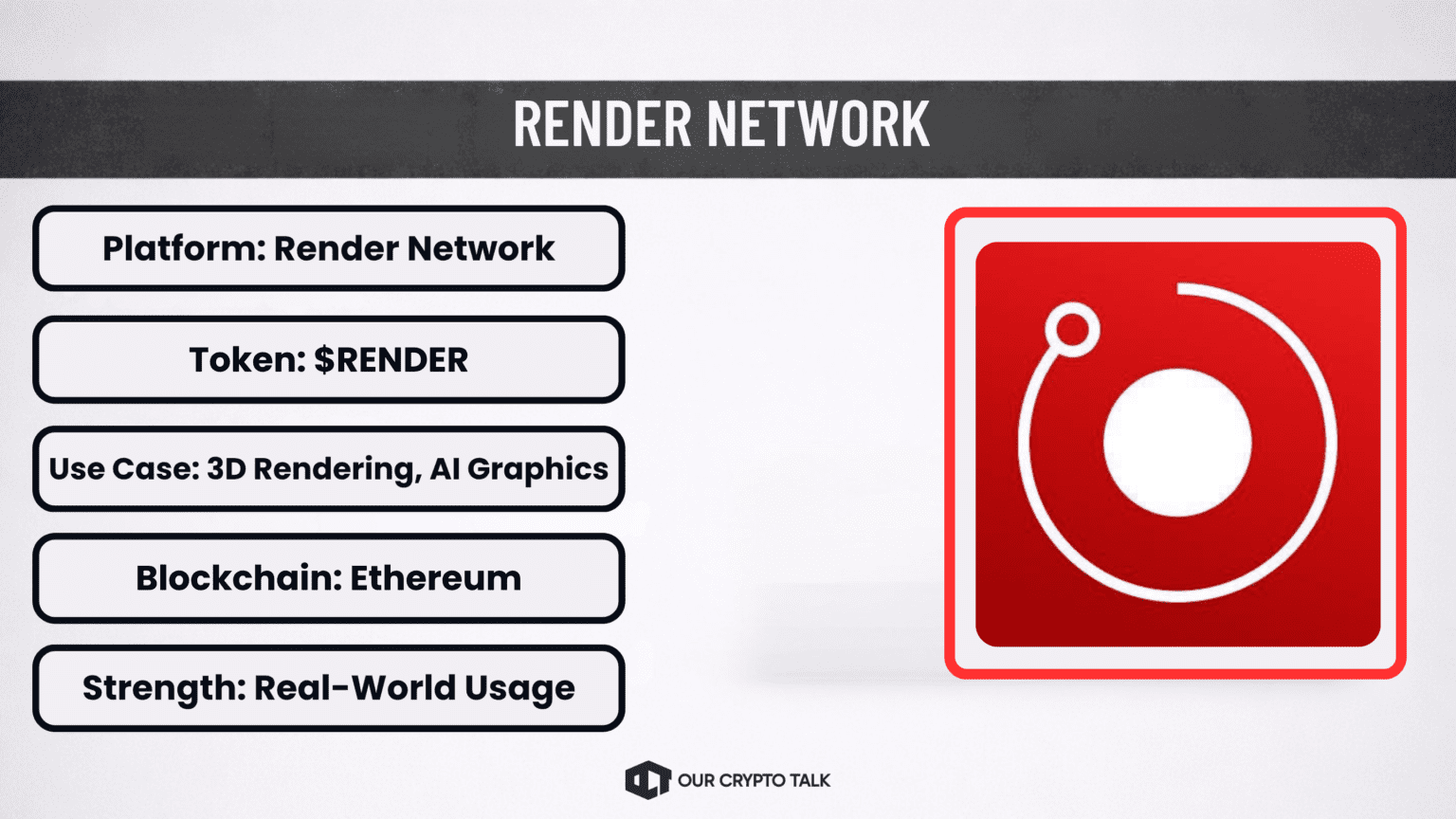
Render Network ($RENDER) is a decentralized GPU rendering protocol that connects artists, studios, and AI developers who need high-performance 3D rendering and compute power with GPU owners willing to rent out their hardware. It operates on Solana, having migrated from Ethereum in late 2023, the network enables users to access distributed GPU resources on demand to render high-quality visuals, run AI workloads, and scale creative production without relying on centralized cloud providers.
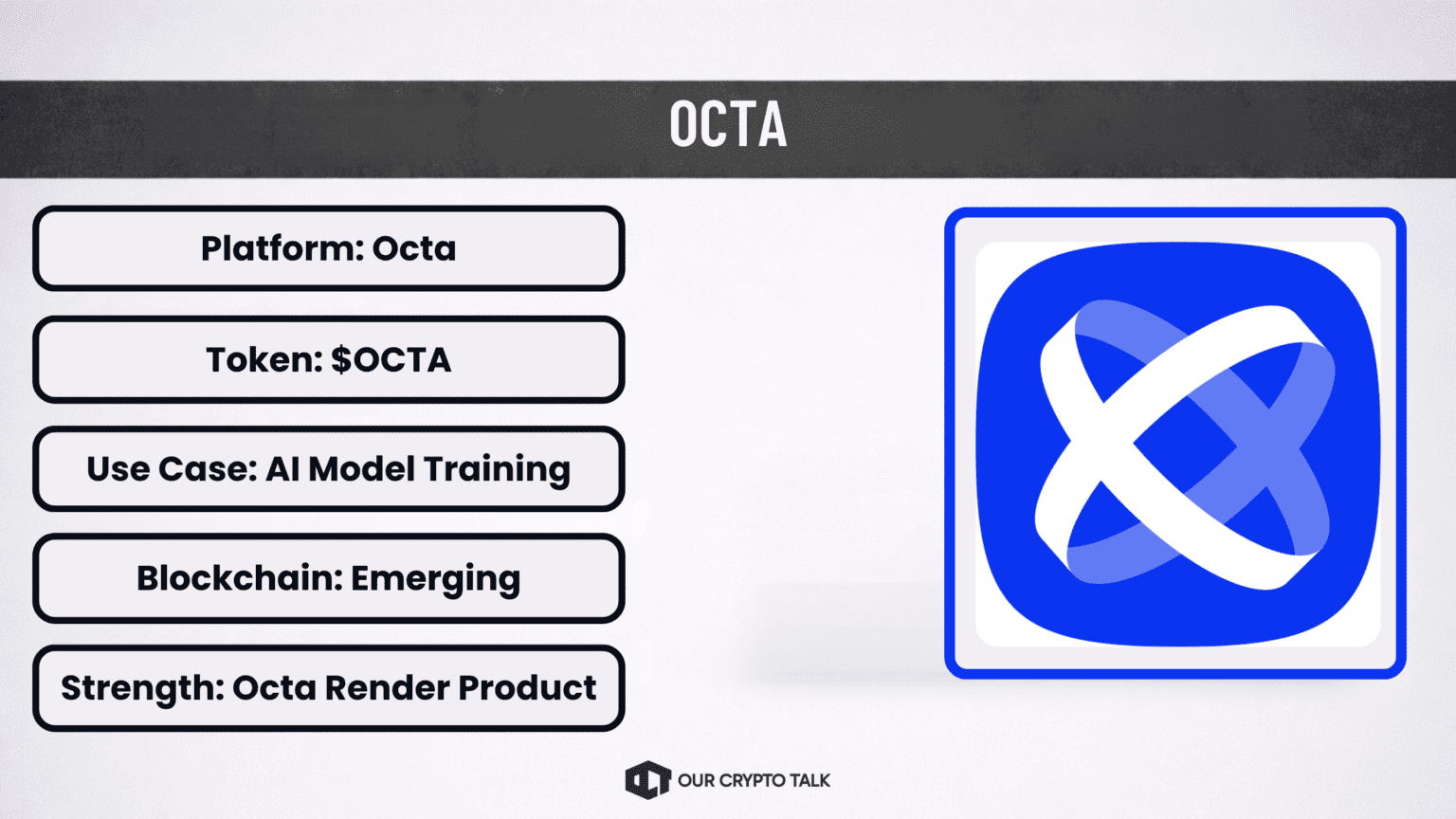
Octa ($OCTA) is a decentralized GPU compute network that provides distributed computing power for AI, machine learning, and high-quality rendering workloads. The project enables users to access on-demand GPU capacity through its flagship product, OctaRender, positioning itself as an emerging alternative to traditional centralized cloud computing services.
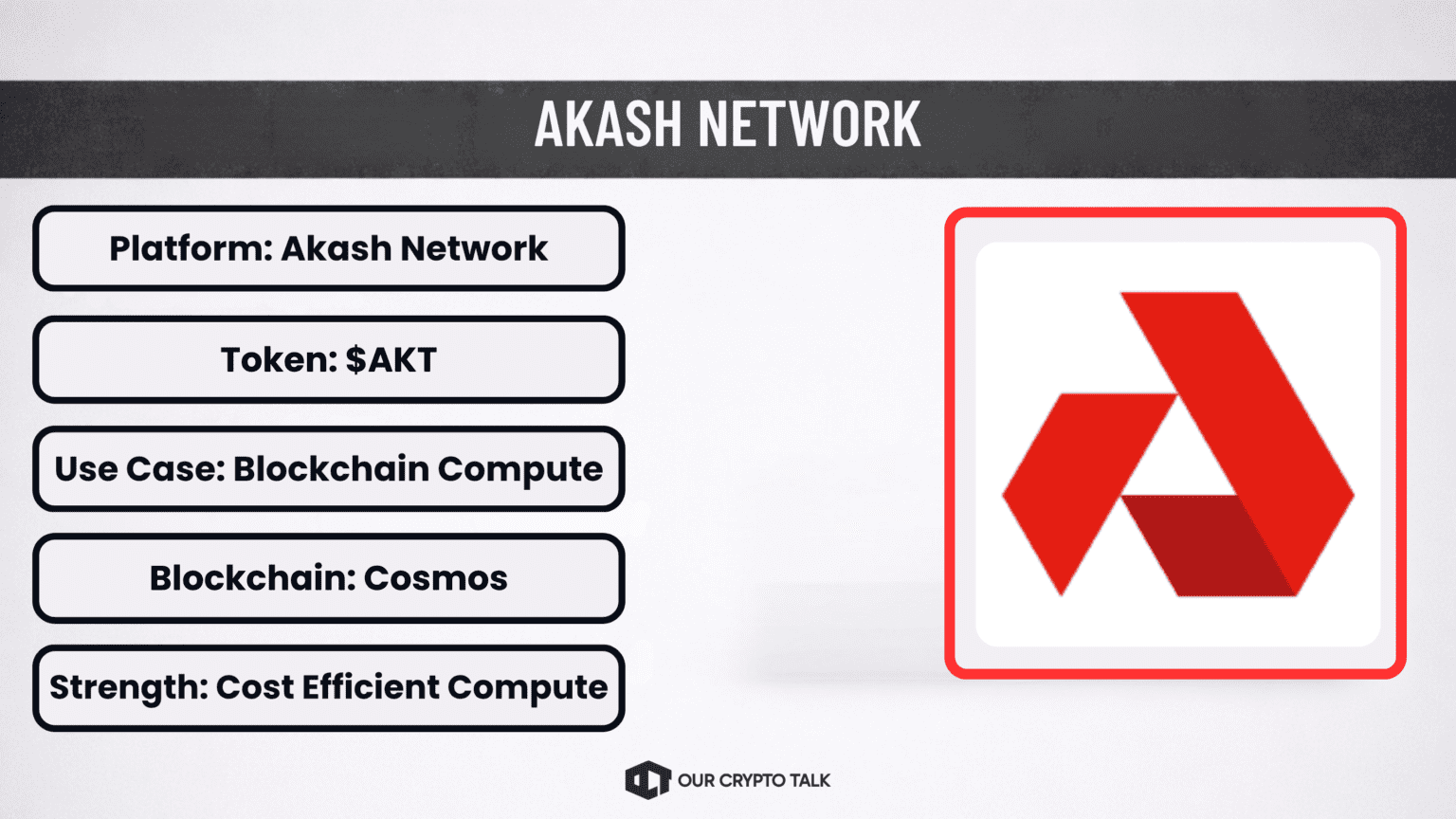
Akash Network ($AKT) is a decentralized cloud computing marketplace that allows users to buy and sell compute resources, including GPU capacity, through open auctions. The network enables developers to deploy applications and access high-performance computing at lower costs by sourcing capacity from a global pool of independent providers instead of centralized cloud platforms.
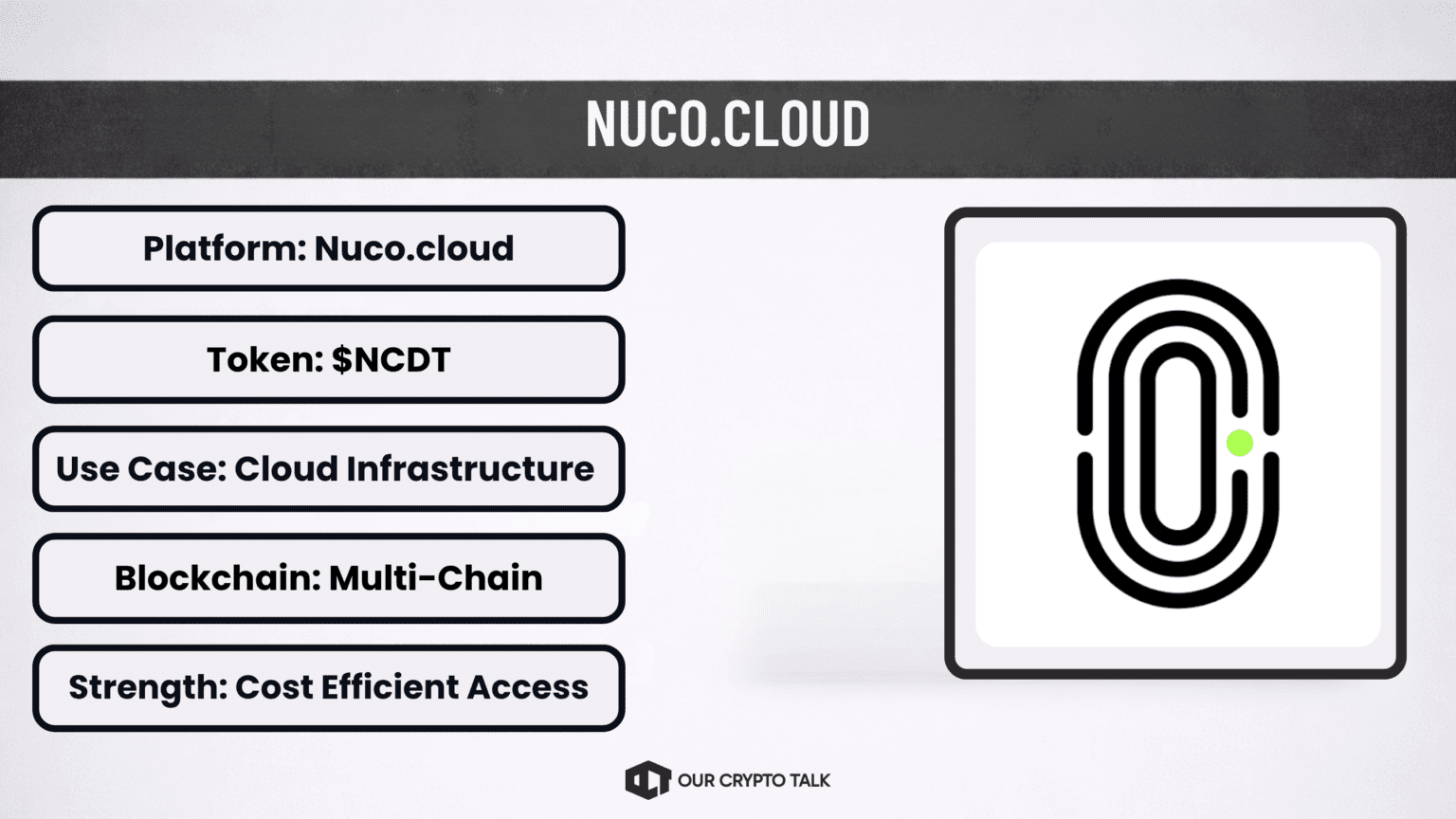
Nuco.cloud ($NCDT) is a decentralized cloud compute network that connects users who need high-performance GPU computing with providers offering underutilized hardware capacity. The platform enables AI developers, researchers, and businesses to access scalable computing resources on demand while reducing dependence on centralized cloud infrastructure.
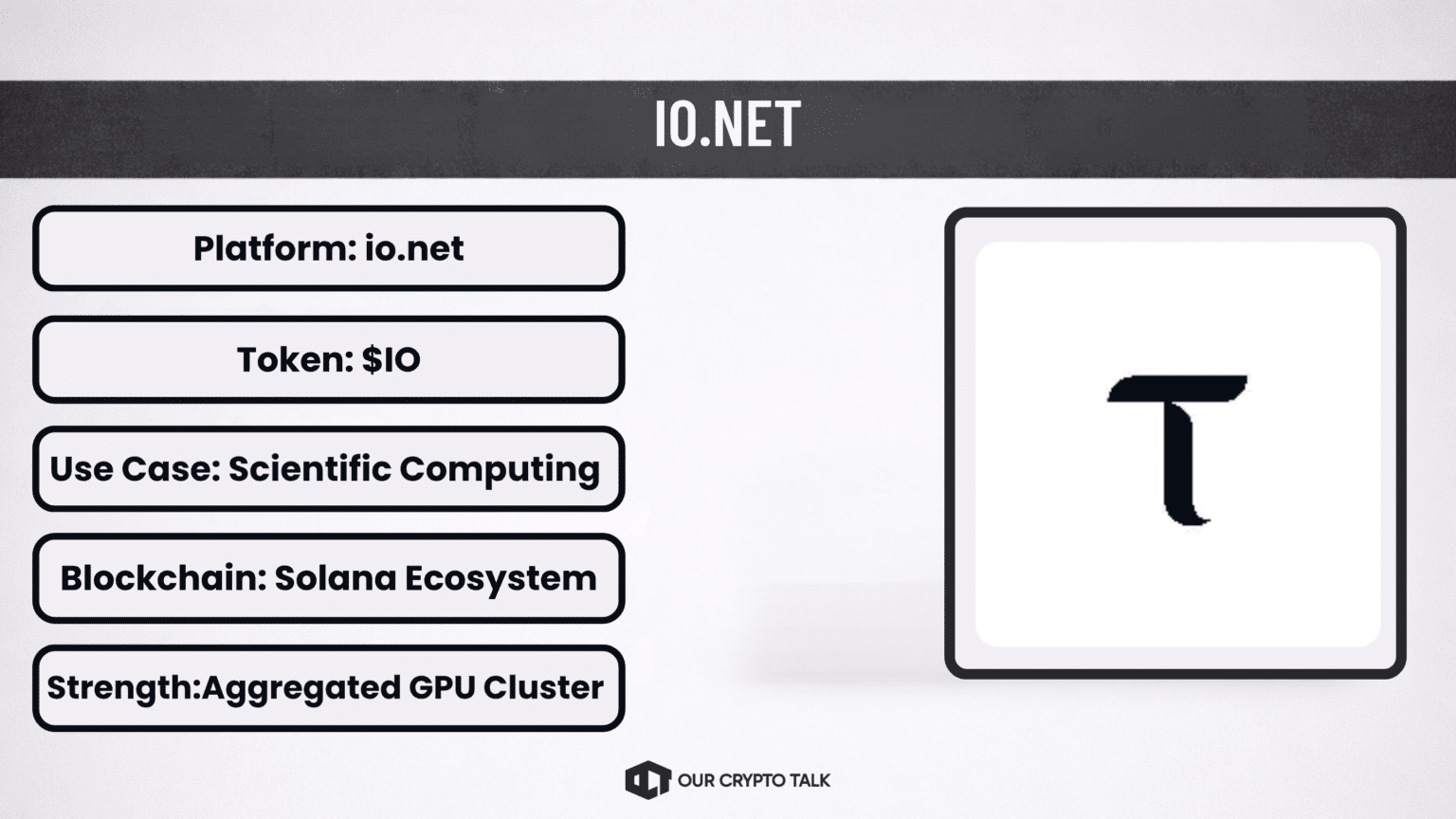
io.net ($IO) is a decentralized AI compute network that provides large-scale distributed GPU infrastructure for training and running machine learning models. The platform enables AI startups and developers to access scalable GPU clusters on demand by aggregating idle capacity from data centers, miners, and independent providers worldwide.
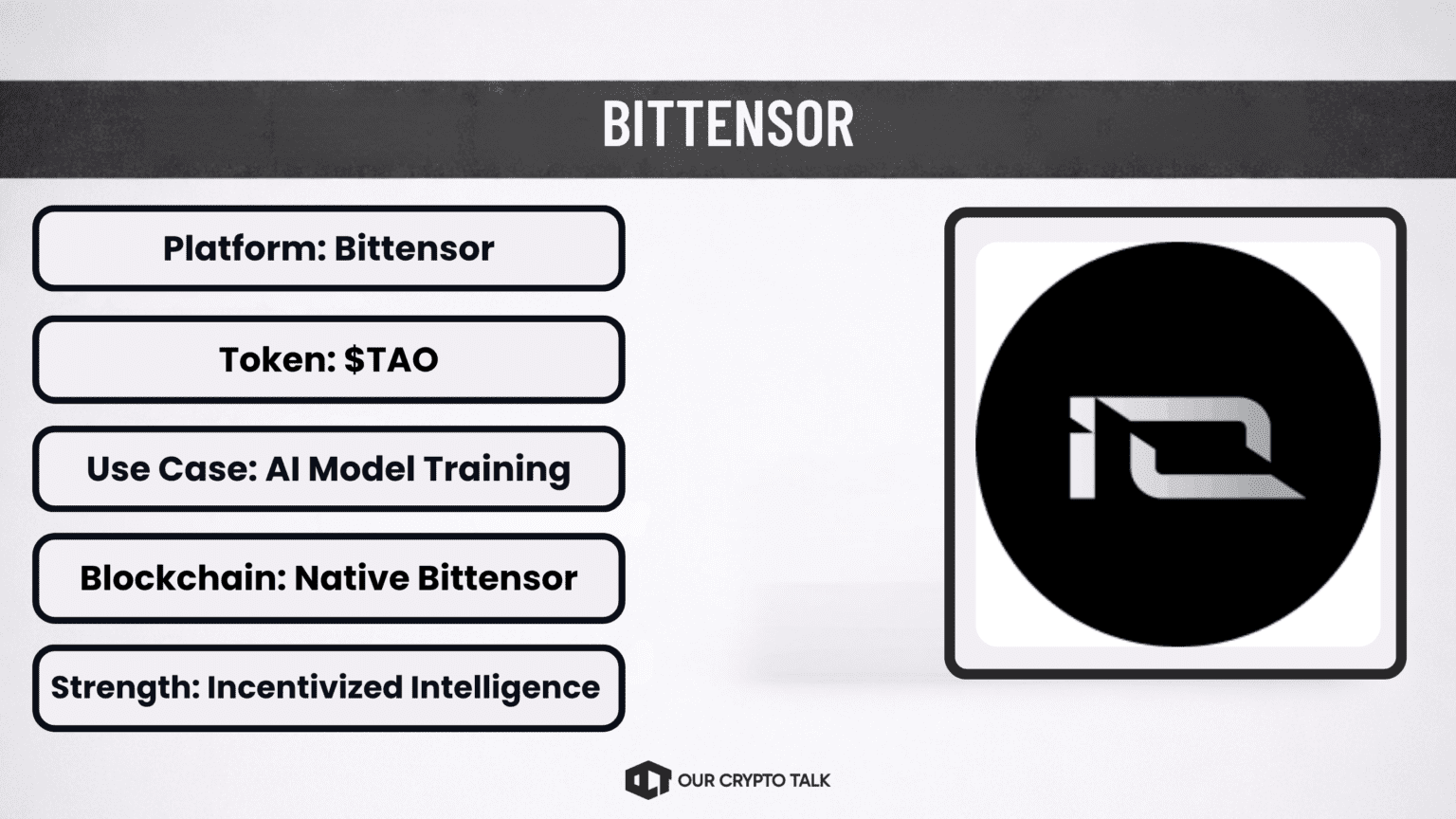
Bittensor ($TAO) is a decentralized machine learning network that incentivizes participants to contribute GPU compute and AI models to a shared intelligence marketplace. The protocol enables models to train, validate, and improve collaboratively across a distributed network while rewarding useful computational contributions with token emissions.
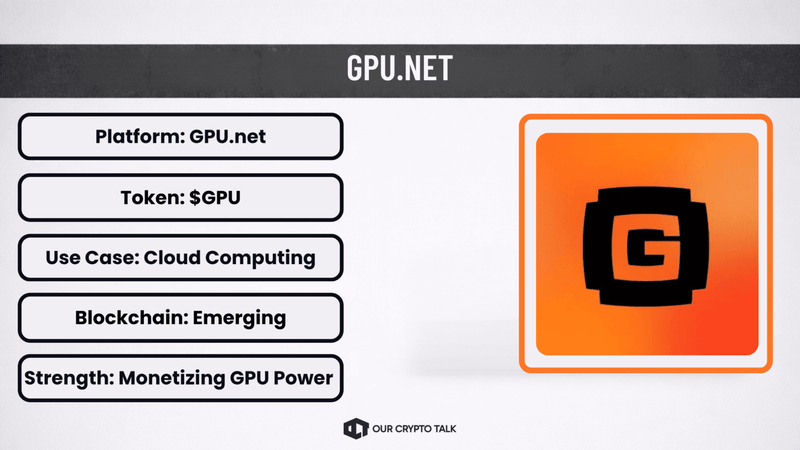
GPU.net ($GPU) is a decentralized GPU compute marketplace that connects users who need high-performance computational power with providers offering spare GPU capacity worldwide. The platform enables on-demand access to distributed GPU resources for AI workloads, rendering, and other compute-intensive applications.
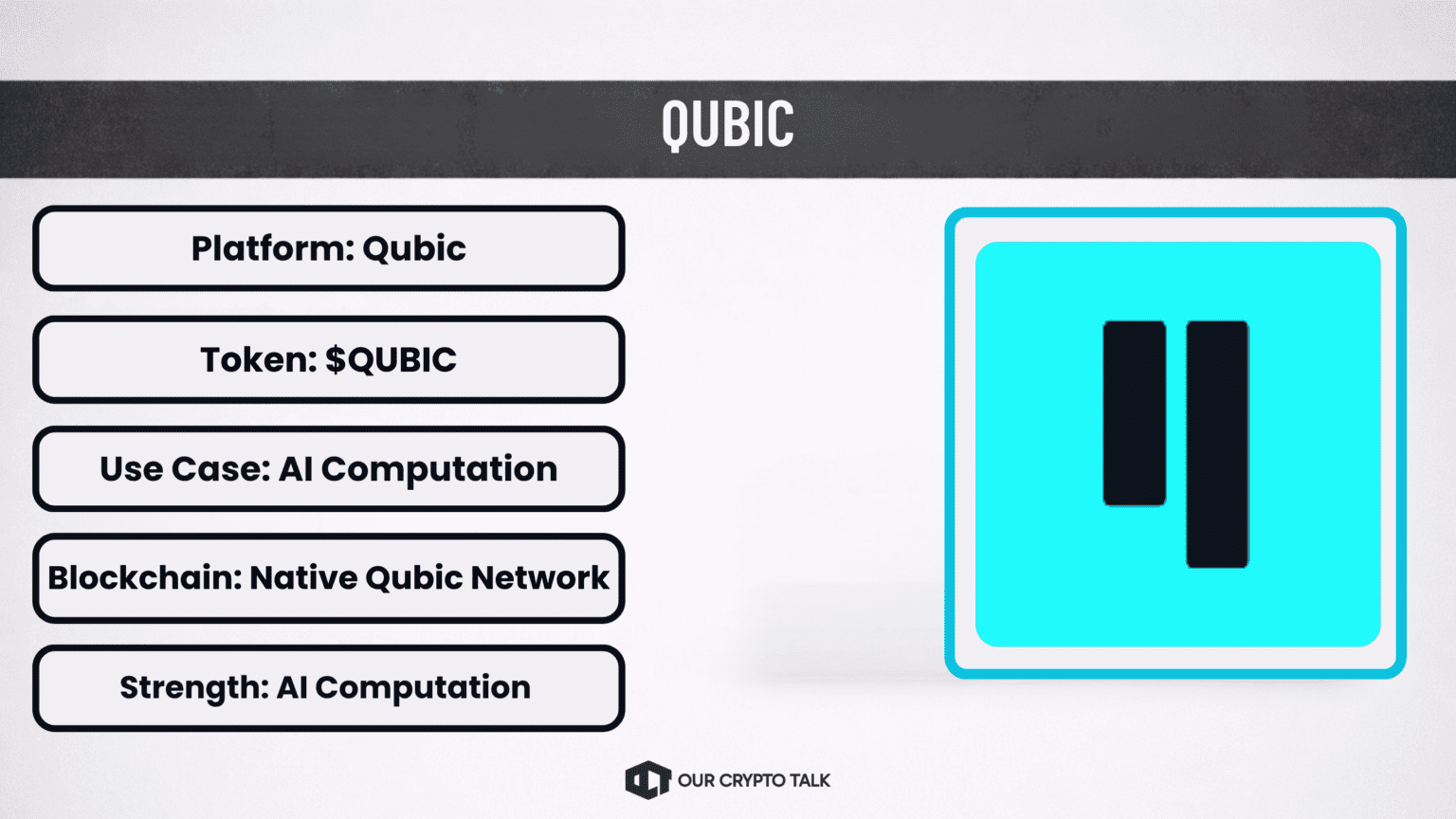
Qubic ($QUBIC) is an AI-focused blockchain network that utilizes GPU-based proof-of-useful-work to power decentralized AI computation and automation. The protocol enables participants to contribute GPU resources to run AI models, execute smart contracts, and support machine-driven services within a secure and scalable distributed ecosystem.
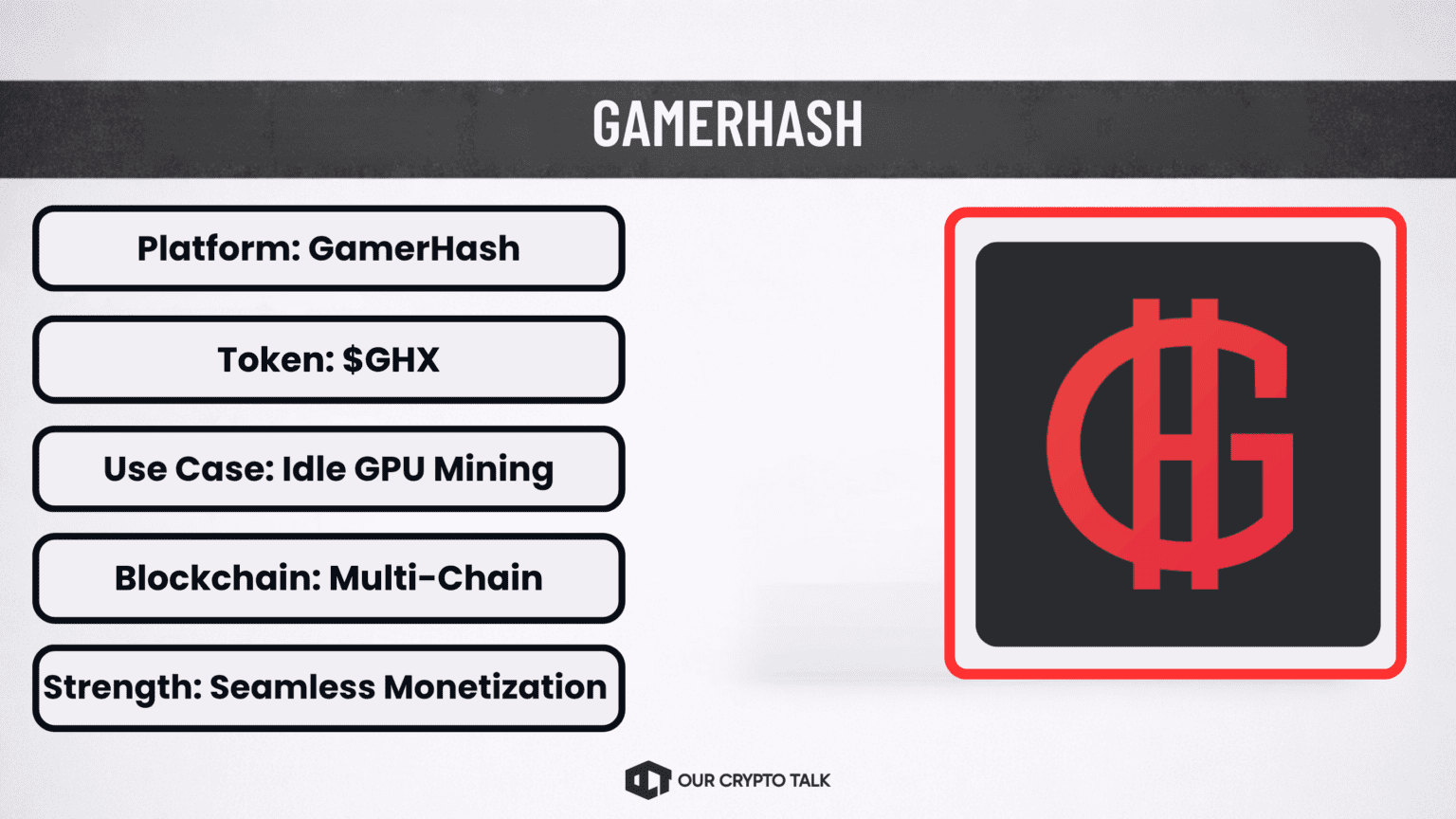
GamerHash ($GHX) is a decentralized GPU monetization platform that allows users to earn rewards by contributing idle graphics processing power for crypto mining and compute tasks. The network enables gamers and everyday users to passively generate income while their hardware runs background workloads, effectively linking the gaming ecosystem with decentralized compute and crypto incentives.
GPU Use Case: Utilizing excess GPU power for crypto mining without disrupting gaming performance.
Current Status: Over 700,000 registered users, expanding its digital goods marketplace, and integrating NFT and Web3 gaming solutions.
Why It’s Promising: GamerHash taps into the growing GameFi sector, allowing gamers to passively earn crypto. Its user-friendly model and strategic partnerships position it well for mainstream adoption.
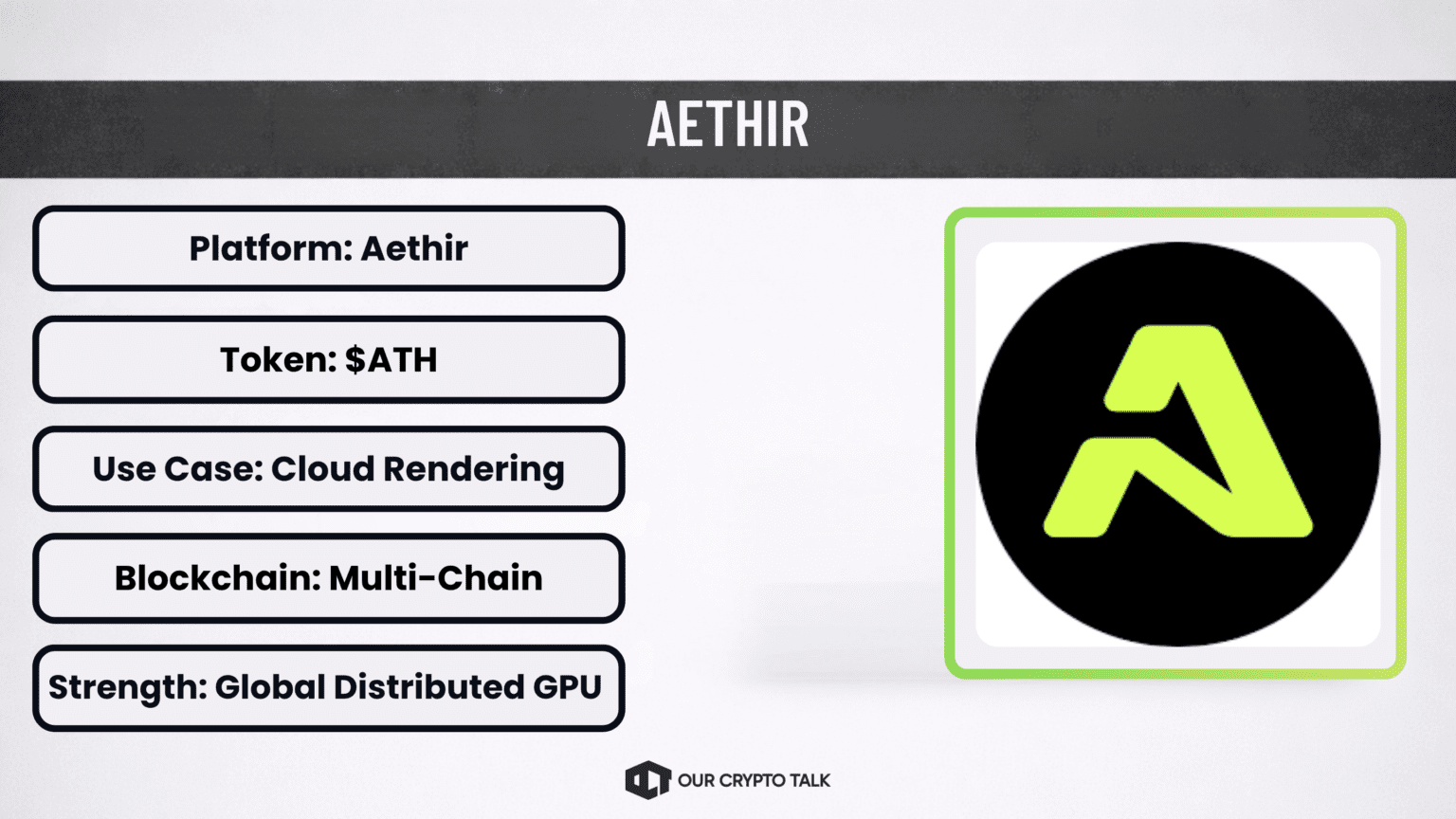
Aethir ($ATH) is a decentralized GPU cloud infrastructure network that provides high-performance compute resources for gaming, AI, and metaverse applications. The platform enables developers and enterprises to access scalable GPU capacity on demand through a distributed network of nodes instead of relying on centralized data centers.
The ten GPU-based altcoins listed above cater to different use cases, but they all share the goal of decentralizing computational power. Here’s how they compare:
GPU-based crypto projects have immense potential, but they also face risks. The next section will explore investment opportunities and risks to help readers make informed decisions.
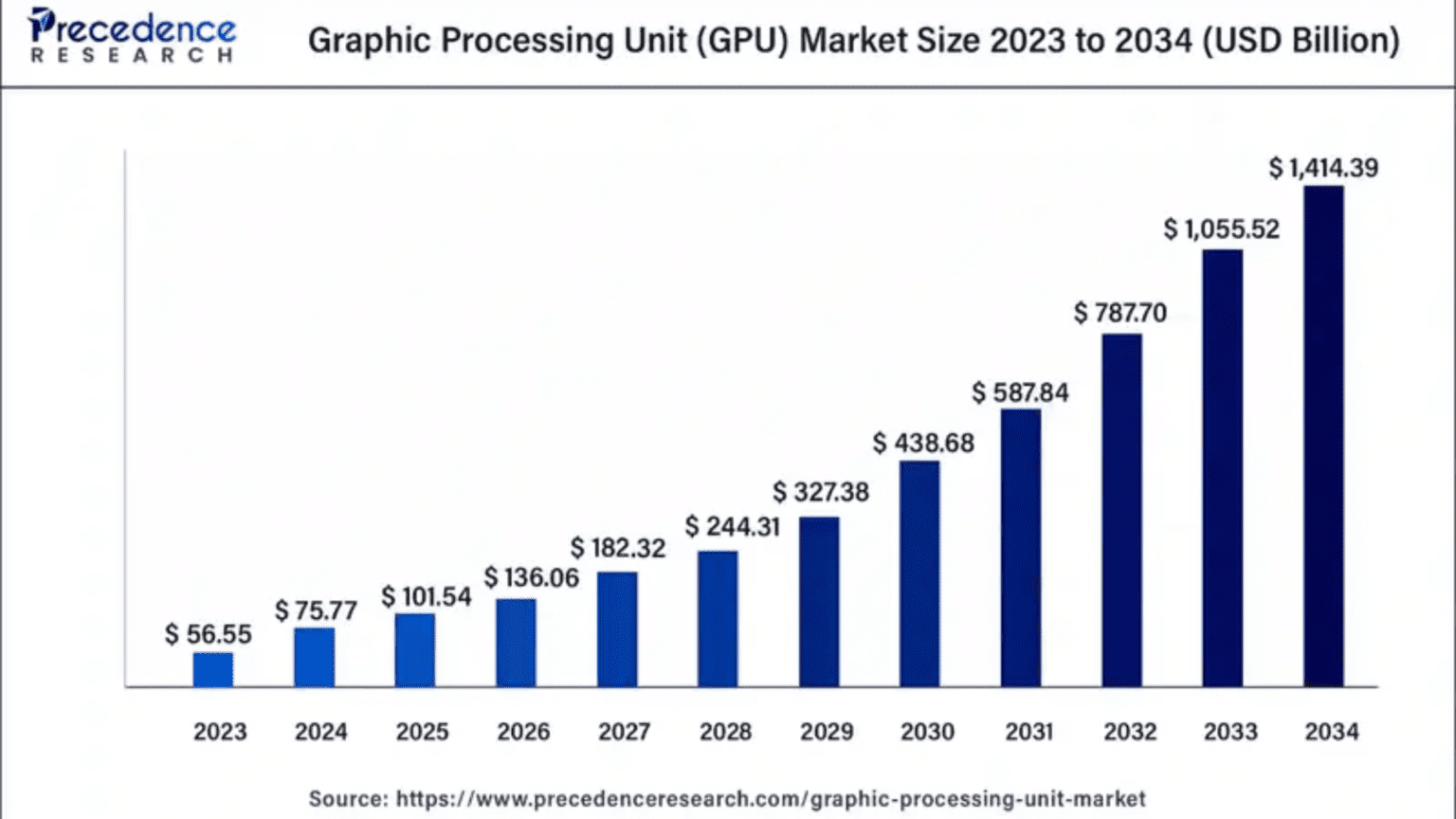
GPU-based cryptocurrencies are gaining momentum as AI, cloud computing, and decentralized infrastructure continue to grow. However, investing in this sector comes with both opportunities and challenges.
This section is for informational purposes only and does not constitute financial advice.
The GPU revolution is still in its early stages, but its impact could reshape the digital economy beyond 2025.
Decentralized GPU projects have the potential to challenge traditional cloud computing providers. If platforms like $AKT, $GPU, and $ATH continue expanding, they could take market share from Amazon Web Services and Google Cloud. This shift could lead to lower costs for businesses and more equitable access to computational power.
GPU computing requires significant energy consumption. As these projects grow, they will need to address sustainability by integrating renewable energy solutions or optimizing efficiency.
The future of GPU-powered crypto will be shaped by scalability, adoption, and technological advancements. While challenges exist, these projects have the potential to redefine how computation is accessed and utilized.
GPU-based crypto projects are rapidly becoming one of the most exciting areas in blockchain, merging the power of decentralized networks with the demand for high-performance computing. As AI, cloud rendering, and DePIN continue to expand, these projects are poised to play a major role in shaping the future of Web3.
The 10 altcoins covered in this article offer a diverse range of use cases, from decentralized cloud computing to AI model training and rendering services.
For investors, the GPU crypto sector offers massive potential rewards but also carries risks. The competition with centralized giants, regulatory challenges, and market hype cycles could impact long-term growth. However, the fundamentals of these projects demand for GPU power, decentralization, and the increasing integration of AI suggest that at least some of these altcoins could become major players in the industry.
As 2025 unfolds, it’s crucial to stay updated on GPU demand, new partnerships, and market developments. Whether you’re a trader, developer, or blockchain enthusiast, GPU crypto represents one of the most promising narratives in the crypto space.
“In a world where AI and blockchain are colliding, GPU crypto projects could be the backbone of decentralized computation. The question is, are you positioned for the next wave?”


AI Needs Cheap Inference. Can Orbio Deliver?
Web3 Gaming Comeback 2026: GTA 6 Hype vs 99% Crashes
Layer 2 Projects Shutting Down: Who’s Next After Blast?
Embodied Data Pyramid and Decentralized Data Layer for Robotics
AI Needs Cheap Inference. Can Orbio Deliver?
Web3 Gaming Comeback 2026: GTA 6 Hype vs 99% Crashes
Layer 2 Projects Shutting Down: Who’s Next After Blast?
Embodied Data Pyramid and Decentralized Data Layer for Robotics