Learn how Zoth combines stablecoin payments, RWA yield and AI finance. Review ZOTH tokenomics, valuation, traction and risks ahead of TGE.

Author: Akshat Thakur
Zoth is building a stablecoin neobank that combines RWA-backed yield, cross-border payments, tokenization and early AI-driven financial tools. Its target market is the Global South, where stablecoins can improve access to financial services and settlement.
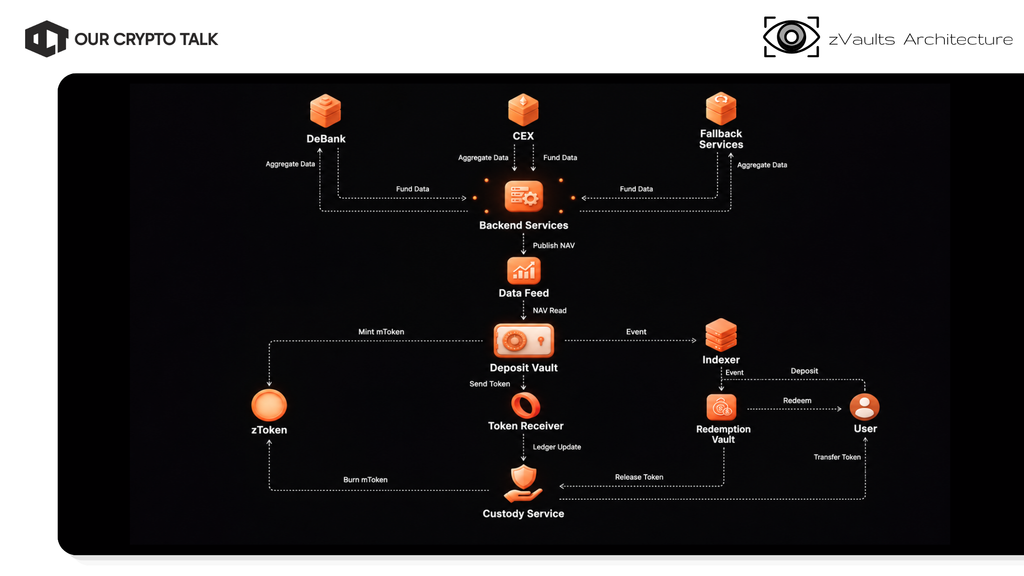
The platform brings several products under one stack: zVaults for yield, zPayments for cross-border transfers, Fund-as-a-Service for tokenization, and agentic CFO tools for financial automation. Zocta adds a loyalty layer.
Zoth positions itself as more than an RWA marketplace or payments app. Its institutional setup includes a Cayman SPC, BVI management structure, Canadian FINTRAC MSB registration and partner licensing arrangements.
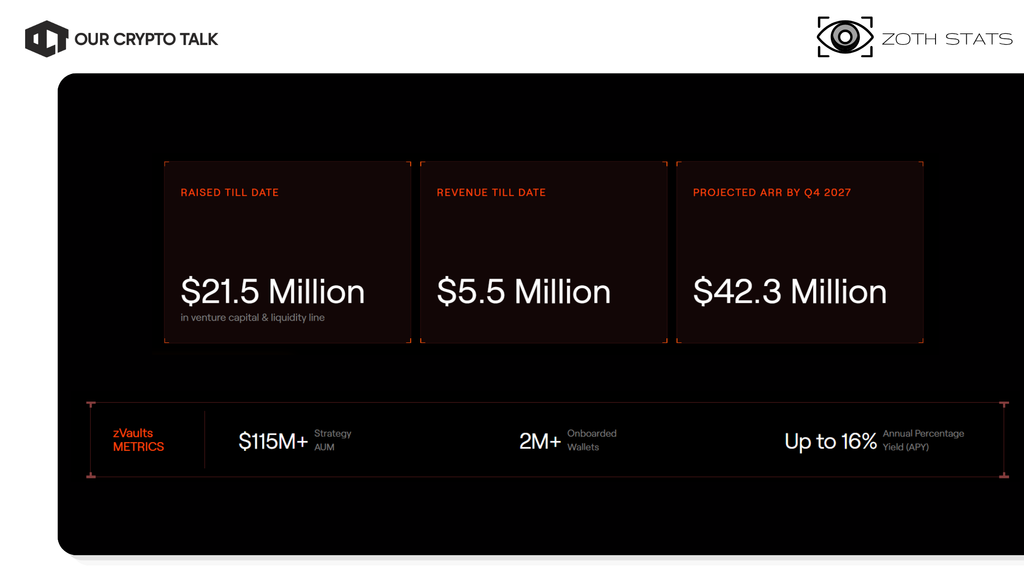
The project reports more than 2M onboarded wallets, $500M+ in payment volume and $75M+ in yield products sold. Some communications cite higher strategy AUM figures. Vault strategies such as zOPAL advertise APYs of around 12–16%, depending on the product and underlying strategy.
The timing matters. Stablecoin settlement, tokenized equities and RWA yield products are attracting attention, while AI agents are beginning to enter financial workflows. Zoth is trying to connect these trends through one product stack.
Its community sale opened on November 16, 2026, through Sonar and Echo, with reported FDV tiers ranging from $90M to $180M.
Zoth operates across several crowded markets.
Cross-border payments compete with Bridge, Rain, licensed money-service businesses and traditional remittance providers.
RWA yield products face established names such as Ondo, Superstate, Maple, Centrifuge and OpenEden. Tokenized equity baskets are also becoming common, making products such as zMAG7 a feature rather than a standalone moat.
The broader stablecoin neobank category is crowded too. Several projects combine yield, payments, cards and compliance through partner infrastructure. A single interface does not automatically create a defensible business.
Zoth’s main differentiator is its integrated approach to the Global South and emerging AI-driven financial workflows. It combines RWA yield vaults, payment corridors across more than 170 countries, Fund-as-a-Service tokenization, early agentic tools and a loyalty layer.
The project also highlights its institutional structures and compliance footprint. These can help establish trust and access, although partner licenses and offshore structures are not impossible for competitors to replicate.
The strongest potential moat is execution. If Zoth can retain deposits, sustain payment volume and maintain a reliable licensing and banking network, its existing distribution could become difficult to challenge.
The agentic finance layer remains early. Its long-term value depends on whether users adopt it for real financial tasks rather than treating it as another AI feature.
Zoth’s integration story is credible as a product strategy. Its advantage will come from corridor volume, retention and operational reliability, not from a unique technical primitive.
Zoth has a publicly identified leadership team, which is appropriate for a business handling payments, yield products and regulated financial infrastructure.
Founder and CEO Pritam Dutta is publicly associated with Stanford GSB and a fintech and cross-border payments background. Co-founder Koushik Bhargav is also named in the company’s history.
Public team listings identify Tejas Chitnis as CTO and Murali Kumar Nandini as COO, alongside product, payments and ecosystem leads.
Zoth was founded in 2023 and has evolved from its earlier RWA fixed-income and Zoth-Fi focus toward a broader neobank stack. The team has shipped vaults, payment products and institutional structures rather than remaining at the concept stage.
However, the company has a serious security incident in its history. In March 2025, Zoth disclosed two incidents, including a smaller $285K logic exploit and a larger loss reported around $8.4–8.85M. The larger incident involved a compromised deployer private key that enabled a malicious proxy upgrade.
That was an operational security failure, not simply an obscure contract bug. Key custody and upgrade permissions are central risks for any financial protocol.
Zoth continued operating and building after the incidents, which shows some resilience. But the events remain a permanent concern for users and token holders.

Zoth has raised meaningful capital across several rounds and strategic commitments. Public and secondary sources place total funding around $21.5M, with some trackers reporting approximately $21.7–21.8M.
The early seed round in April 2024 reportedly raised around $2.5M, with Blockchain Founders Fund, Borderless Capital and Outlier Ventures among the names associated with it.
An August 2024 strategic round reportedly added around $4M. Taisu Ventures and a wider group of investors participated, including G20, GemHead, DCI, Fat Cat and Foundership. Coverage also references Coinbase- and Hedera-adjacent support, alongside XRPL-related grant history.
In 2025, Bolts Capital was widely reported to have made a strategic commitment of approximately $15M. A February 2026 follow-on included Taisu Ventures, Luca Netz of Pudgy Penguins and JLabs Digital.
This is credible backing, although it is not the same investor profile as a heavily publicized a16z- or Paradigm-led round. Zoth has attracted regional crypto funds, strategic investors and notable angels.
The funding history supports the view that the company has had enough capital to develop licensing, payment operations and its product stack. It also continued building after the March 2025 security incidents.
Zoth has live products across yield, payments and tokenization. It is not a deck-only project.
zVaults allows users to deposit stablecoins into strategies such as zOPAL, which targets around 12% base APY. zMAG7 offers exposure to a tokenized Magnificent Seven basket through Coinbase Tokenized Stocks on Base.
zPayments supports cross-border stablecoin payouts. Zoth reports more than $500M in cumulative payment volume, around $55M monthly volume and coverage across 171–172 countries. Its operating structure includes a Canadian FINTRAC MSB registration and partner licenses.
The platform also offers Fund-as-a-Service through Cayman SPC and BVI management structures. CFO Agent remains in early access, while Zocta provides a live loyalty layer.
The community sale runs from November 16 to 29, 2026, through Sonar and Echo, with KYC and USDC or USDT payments on Ethereum.
Public on-chain TVL tells a different story. Recent trackers show around $2.2M, far below the reported $115M strategy AUM and $75M+ in yield products sold. Payment volume largely runs through off-chain and partner rails, so it will not appear fully in DeFi TVL. Still, the gap deserves attention.
Zoth also has a serious security history. In March 2025, it suffered a roughly $285K logic exploit and an $8.4–8.85M loss linked to a compromised deployer key and malicious proxy upgrade.
The product is real. The remaining questions are capital retention, independently verified activity and whether users trust the platform after its security failures.
Zoth has several meaningful signals beyond social attention.
The Zoth community sale has received $512,139 in total commitments, against its $500K target. That puts the sale at approximately 102.4% of its target, with commitments exceeding the stated cap by $12,139.
The sale runs from November 16 to 29, 2026, at reported FDV tiers of $90M–$180M. It is now more than fully subscribed based on the reported commitment figure.
The company reports $5.5M in revenue, around $55M monthly payment volume and a 99%+ payment success rate. These figures suggest operational activity, but they remain company-reported. Independent verification would make them stronger.
Its FINTRAC registration, Cayman SPC, BVI management structure and partner licenses represent real operational work. The previous funding rounds also provide financial backing.
zMAG7 reportedly attracted tens of thousands of users during launch communications, although adoption figures remain project-reported.
The weaker signals are the 2M+ wallet count without a clear active-user breakdown, follower numbers, and Zocta points that may not require meaningful economic commitment.
The largest gap is between reported strategy AUM of around $115M and public on-chain TVL near $2.2M. Off-chain payment activity can explain part of that difference, but it does not prove sticky deposits or high-margin revenue.
Zoth shows operational traction, but the quality of that traction remains difficult to verify independently.
ZOTH has a fixed supply of 1B tokens, with no further minting planned under the published design. The community sale sets a public valuation before the planned Q1 2027 TGE.
The sale offers three price tiers: Platinum at $0.18, equivalent to $180M FDV; Gold at $0.135, or $135M FDV; and Silver at $0.09, or $90M FDV.
Allocations are scheduled for December 5, 2026. Platinum unlocks 35% at TGE and completes vesting in around seven months. Gold unlocks 25% at TGE over around nine months, while Silver unlocks 15% at TGE over around twelve months.
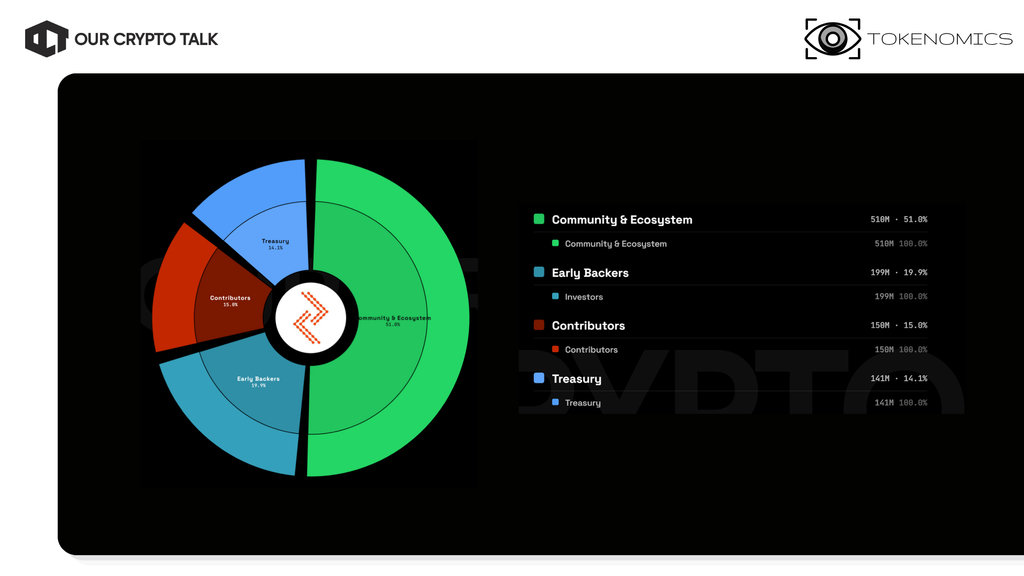
The reported allocation places around 51% in community and ecosystem buckets, 19.9% with early backers, 15% with contributors and 14.1% in treasury. Exact circulating supply at TGE remains unclear until final unlock details are published.
ZOTH utility includes staking into sZOTH for Club benefits, fee discounts, vault boosts, priority access and agent credits.
The design also includes quarterly revenue-funded buybacks distributed to stakers, discounted fee payments, listing bonds and a 2% unstaking fee retained for remaining stakers.
The critical question is whether revenue supports these mechanisms. A $90M–$180M FDV is not an extreme multi-billion-dollar valuation, but it is still a pre-TGE pricing event. Buybacks only matter if revenue is sustained and the token receives the promised value flow.
Without that, ZOTH risks becoming a fee-discount and governance token attached to a neobank narrative.
The clearest early-entry route is the community sale running from November 16 to 29, 2026.
The sale takes place through sale.zoth.io, with Sonar KYC and USDC or USDT payments on Ethereum. The stated target is $500K, while total commitments have reached $512,139.
Referral and zMAG7 holders may receive up to 7% cashback in zMAG7, with a reported 5% referral component. US users may receive a Zocta equivalent. The sale cap means oversubscription could affect allocation.
The other path is product usage. Depositing into zVaults, processing payments or holding zMAG7 may contribute to Zocta activity and potential ecosystem weighting. None of this guarantees a meaningful future airdrop.
Zocta is best treated as a loyalty program, not a confirmed second points farm. The CFO Agent waitlist and partner integrations may offer access for operators, but they are not clear retail allocation opportunities.
The honest distinction is simple: the priced early-entry opportunity is the community sale. It comes with KYC, vesting and a valuation between $90M and $180M FDV.
Grinding points without meaningful activity is unlikely to offer strong expected value. Anyone considering the sale should weigh the valuation against reported, not fully on-chain-verified, business volume and the March 2025 security incidents.
Zocta farming looks like a low-EV activity. Zoth does not have a clear incentivized testnet with a confirmed large airdrop ahead.
Zocta is a loyalty layer tied to a live product, not a points campaign with a reliable $/hour benchmark.
Without sizeable deposits or meaningful payment activity, grinding points is unlikely to justify the time, KYC effort and capital opportunity cost.
The community sale is the real decision. The community sale provides a defined entry, but it is not a stealth round at a tiny valuation. The stated $500K target has received $512,139 in commitments, putting it slightly above the target.
The sale prices ZOTH between $90M and $180M FDV. That valuation, along with vesting and allocation risk, should be considered before committing.
Zoth’s reported $21.5M funding, $500M+ payment volume, around $55M monthly TPV, $5.5M revenue and $115M strategy AUM can support that valuation if the figures are durable and high quality.
But public on-chain TVL near $2M and the $8.4–8.85M key-compromise loss in 2025 argue for a discount.
Points-only participation is not worth the hours. Sale participation makes sense only if you are comfortable underwriting the FDV, accepting vesting and sizing small against the $500K cap and oversubscription risk.
Silver offers the lowest entry price but the longest vesting. Platinum provides a larger TGE unlock while pricing the token at the highest FDV.
The upside depends on payment volume and vault AUM continuing to grow, with buybacks executed as designed. The base case is a mid-cap fintech token trading on narrative and unlocks until revenue becomes independently verifiable.
There is no free money here.
Zoth faces competition across nearly every part of its business. Ondo, Superstate and Maple cover tokenized assets and credit, while Bridge-class rails, licensed MSBs and bank-affiliated stablecoin programs compete in payments and settlement.
The full-stack neobank positioning is a useful product strategy, but not a structural monopoly.
The reported $500M payment volume, $115M AUM and 2M wallets must translate into retained deposits, recurring revenue and transparent attestations.
If they do not, the $90M–$180M sale valuation becomes difficult to defend. Public TVL near $2M remains the bearish anchor.
Security is the most serious operational risk. The March 2025 incidents included a roughly $285K logic exploit and an $8.4–8.85M loss caused by a compromised deployer key and malicious proxy upgrade.
This was an upgrade-authority and custody failure. A repeat after TGE or as retail deposits grow could destroy trust with users and banking partners.
The token structure also deserves scrutiny. A $500K public sale sits alongside large ecosystem, backer and team allocations, while the full circulating supply remains unclear.
Thin initial float followed by sequential unlocks can leave price discovery dominated by insider liquidity. Buybacks will not offset that pressure unless revenue is real and routed as promised.
Regulatory exposure spans cross-border payments, yield products, tokenized stocks and token distribution. MSB and partner licenses do not remove securities, stablecoin, offering or marketing obligations across jurisdictions. Enforcement affecting payment corridors or yield products could disrupt banking access.
Zoth also carries execution and concentration risk. Banking partners, FX liquidity, compliance staffing and incident response are core to a neobank.
The previous key compromise showed how fragile those operations can be. CFO Agent remains early and is not yet a proven business driver.
If independently verified growth fails to materialize, ZOTH may trade as RWA and stablecoin sector beta. In a rotation away from that narrative, mid-caps with unlock pressure and exploit history are vulnerable to multiple compression.
The community sale is the only immediate time-sensitive event. It closes on November 29, 2026, and sets the public FDV mark. Allocations and zMAG7 cashback claims are scheduled for December 5.
The planned Q1 2027 TGE will establish the first liquid market and bring unlock pressure into focus. The key metrics after launch are monthly payment volume, vault AUM and revenue. These need to be disclosed consistently and independently enough to support the valuation.
Security controls also matter. Zoth needs to demonstrate stronger upgrade authority, key custody and incident response after the 2025 loss.
The sale deadline is the only reason to act now. After allocation, the next major window is TGE.
If the sale FDVs do not work for your valuation, the more rational approach is to watch circulating supply, first unlock behavior and actual buyback execution rather than farm points in the interim.
Zoth is worth keeping on the radar, but the current entry points leave little room for mistakes.
The project has moved beyond the concept stage. It has live vaults, cross-border payments, tokenization infrastructure, regulatory registrations and around $21.5M in reported funding. The $500M+ payment volume and $5.5M revenue claims also suggest a business with activity beyond token speculation.
The challenge is valuation. The community sale places ZOTH between $90M and $180M FDV, while public on-chain TVL remains near $2M. The gap between reported AUM and visible on-chain capital needs clearer evidence. The March 2025 key-compromise loss also remains a serious concern, particularly as the platform prepares for wider token distribution.
Zocta farming offers limited appeal without a meaningful, confirmed reward structure. The community sale provides a defined entry, but it comes with vesting, oversubscription risk and a valuation that already assumes progress.
The next phase matters more than the current narrative. Sustained payment volume, growing vault deposits, independently verifiable revenue and visible buyback execution could strengthen the case. A transparent TGE float and stronger security controls would also help reduce uncertainty.
For now, Zoth is a WATCH. The business is real, but the token still needs to prove that its valuation can hold up against actual usage, unlocks and the cost of rebuilding trust.
All the opinions in this article are that of the author and in no way are financial advice. Our Crypto Talk and the author always suggest you do your own research in crypto and to never take anything as financial advice that you read on the internet. Check our Terms and conditions for more info.


Stablecoin Payments Are Growing. Can Zoth Capture the Market?
Top 7 Crypto Tokens with the Highest Token Unlocks Left
Bitcoin Midterm Crash: Every Q4 Selloff Since 2014
AI Needs Private Inference. Can Nesa Deliver?
Stablecoin Payments Are Growing. Can Zoth Capture the Market?
Top 7 Crypto Tokens with the Highest Token Unlocks Left
Bitcoin Midterm Crash: Every Q4 Selloff Since 2014
AI Needs Private Inference. Can Nesa Deliver?