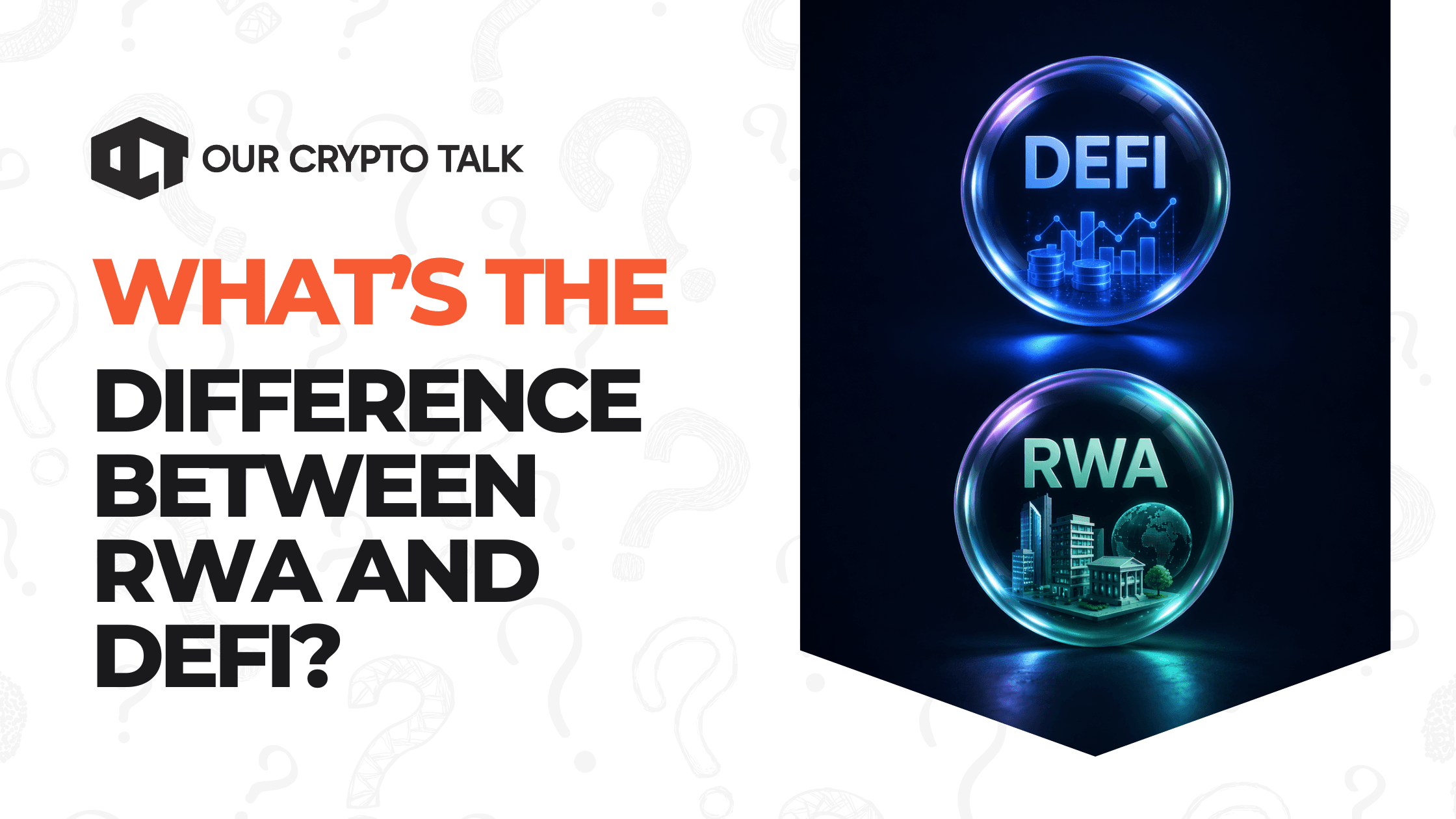
RWA vs DeFi explained: key differences, risks, and which offers better yield opportunities for beginners in crypto investing.

Author: Arushi Garg
If you’ve been around crypto lately, you’ve probably seen two very different claims: DeFi protocols offering 50%, 100%, even 200% APY and at the same time, RWA platforms offering a much more “boring” 4–5%. Naturally, the question is: which one is real, and which one is actually better? This beginner-friendly RWA vs DeFi guide cuts through the confusion. By the end, you’ll understand exactly where DeFi yield comes from, where RWA yield comes from, and which approach makes more sense for you in 2026.
The short version? DeFi built the system. RWA is upgrading it. But the details matter and that’s where most beginners get tripped up.
Decentralized Finance (DeFi) refers to financial applications built on blockchain networks that operate without intermediaries like banks. Instead, smart contracts self-executing code handle lending, trading, and yield generation.
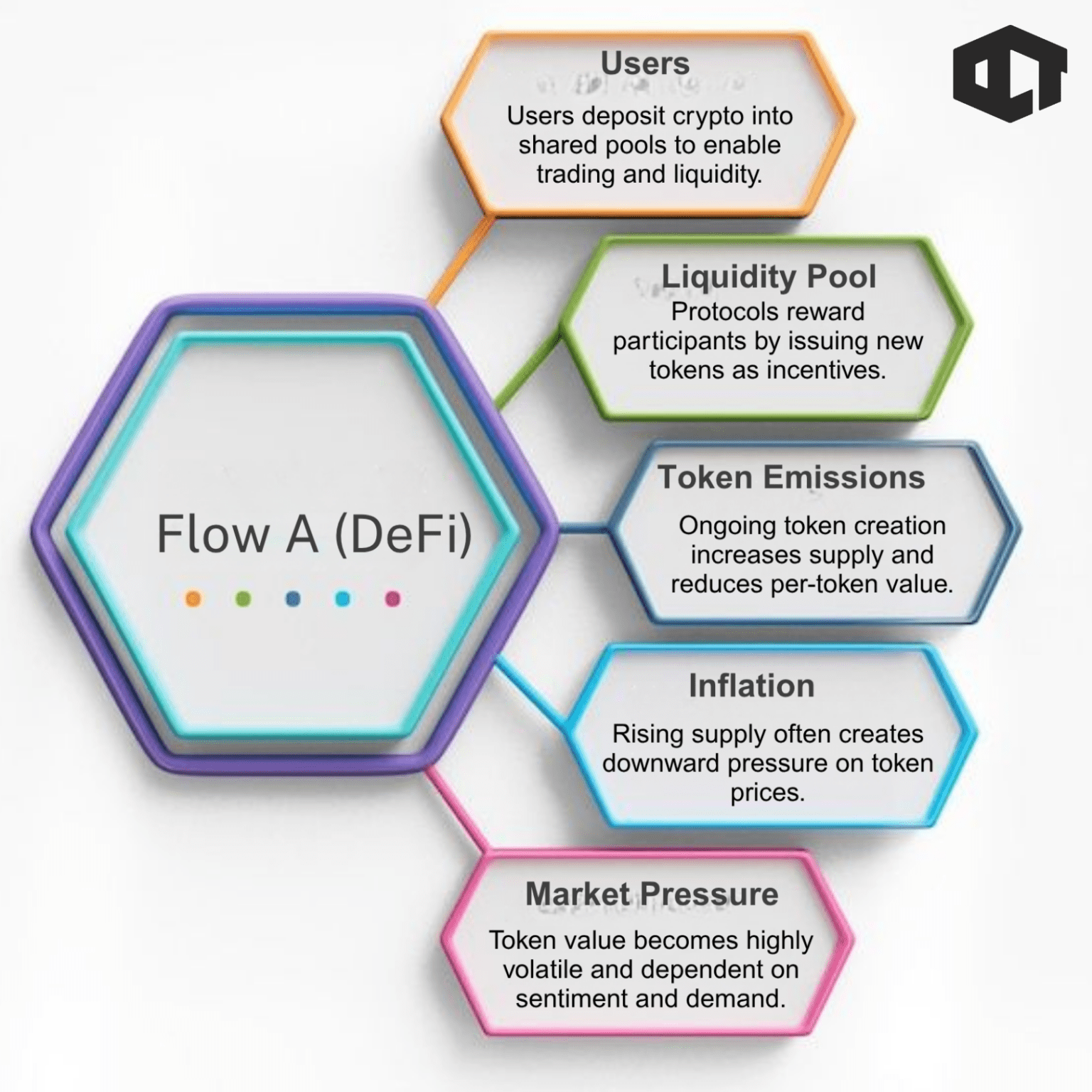
But here’s the key question: where does the yield actually come from?
This is where those triple-digit yields came from.
Protocols would create their own token and distribute it as a reward to users. For example, if you provided liquidity or staked assets, you’d earn newly minted tokens. At first glance, this looks like profit. But in reality, it’s closer to dilution. If a protocol prints more tokens to pay users, the total supply increases. Unless demand grows faster than supply, the token price drops. That means your “yield” may not actually translate into real gains.
DeFi yield can look attractive on the surface, but it doesn’t always translate into real profit. For example, you might earn 100% APY in a token, but if that token’s price drops by 80%, your actual return becomes negative. Many users lost money during the 2021 DeFi boom because projects relied on unsustainable token emissions for rewards.
Another source of DeFi income comes from trading fees on decentralized exchanges like Uniswap or Curve. Here, liquidity providers earn a share of fees whenever users swap tokens. This is considered real yield because it comes from actual trading activity. However, it is still variable and carries risks such as impermanent loss, which occurs when price movements reduce the value of your deposited assets compared to simply holding them.
Lending protocols like Aave and Compound offer another model. Users deposit crypto into lending pools and earn interest from borrowers who take out loans. This is also real yield, but it is highly dependent on market demand. When borrowing activity increases, yields rise; when demand falls, returns can drop significantly.
Finally, there are liquidation bonuses, which are more advanced. If borrowers fail to maintain sufficient collateral, the protocol automatically liquidates their positions, and liquidators earn a fee for executing the process. While this is a legitimate source of yield in the ecosystem, it is generally more relevant to advanced users and not something most beginners actively participate in.
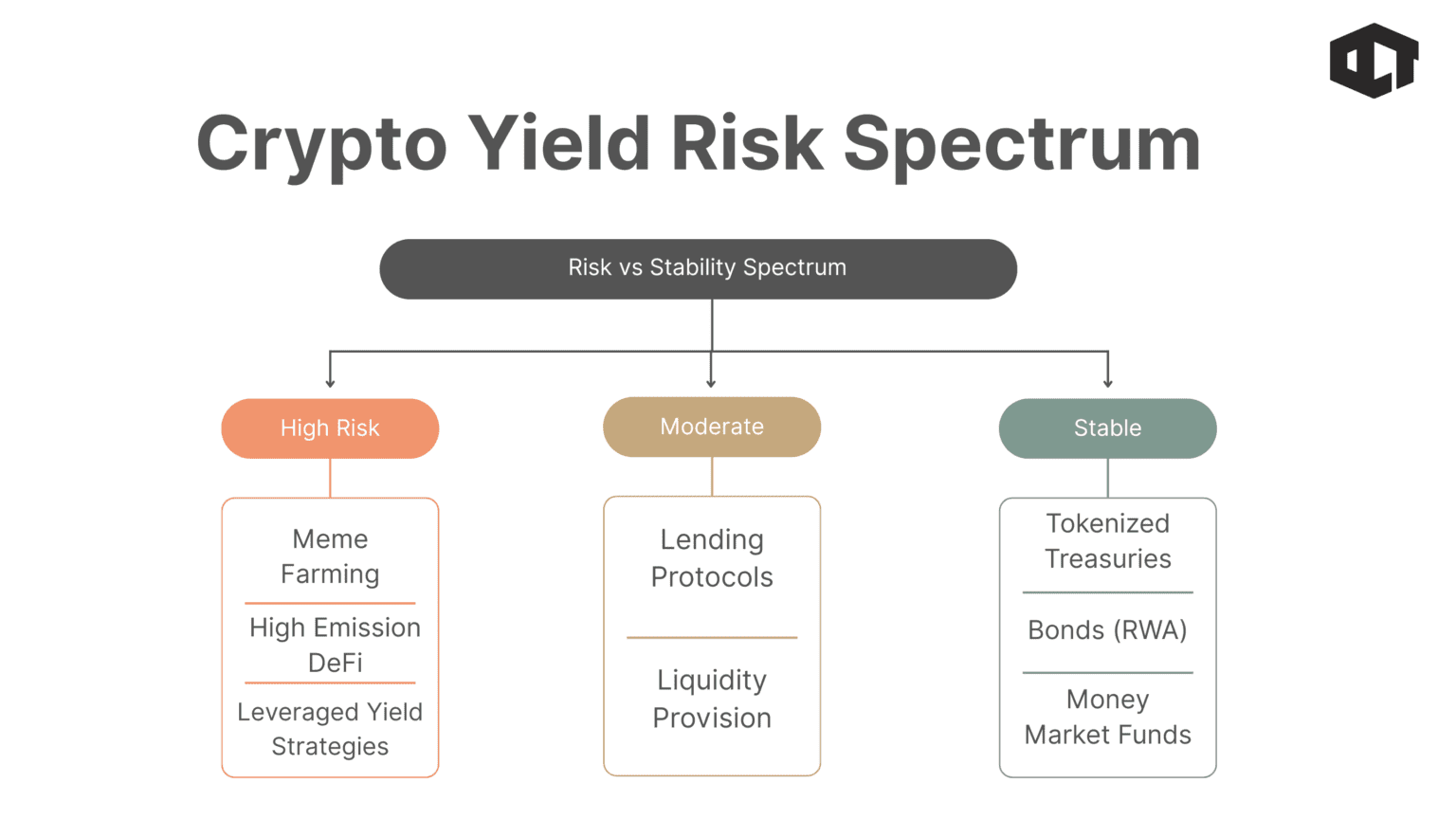
Real Yield comes from actual economic activity, trading fees, lending interest, or business income.
Emission Yield comes from printing new tokens. Emission-based yield drove most of DeFi’s early growth. It attracted users quickly but proved unsustainable when token prices fell.
RWA stands for Real-World Assets. These are traditional financial assets like government bonds, real estate, or corporate loans, that are tokenized and brought onto the blockchain.
Instead of earning yield from crypto-native activity, you’re earning yield from the real world.
When these are tokenized, you hold a blockchain-based representation of the asset or its income stream.
Unlike DeFi token emissions, RWA yield is grounded in real cash flows:
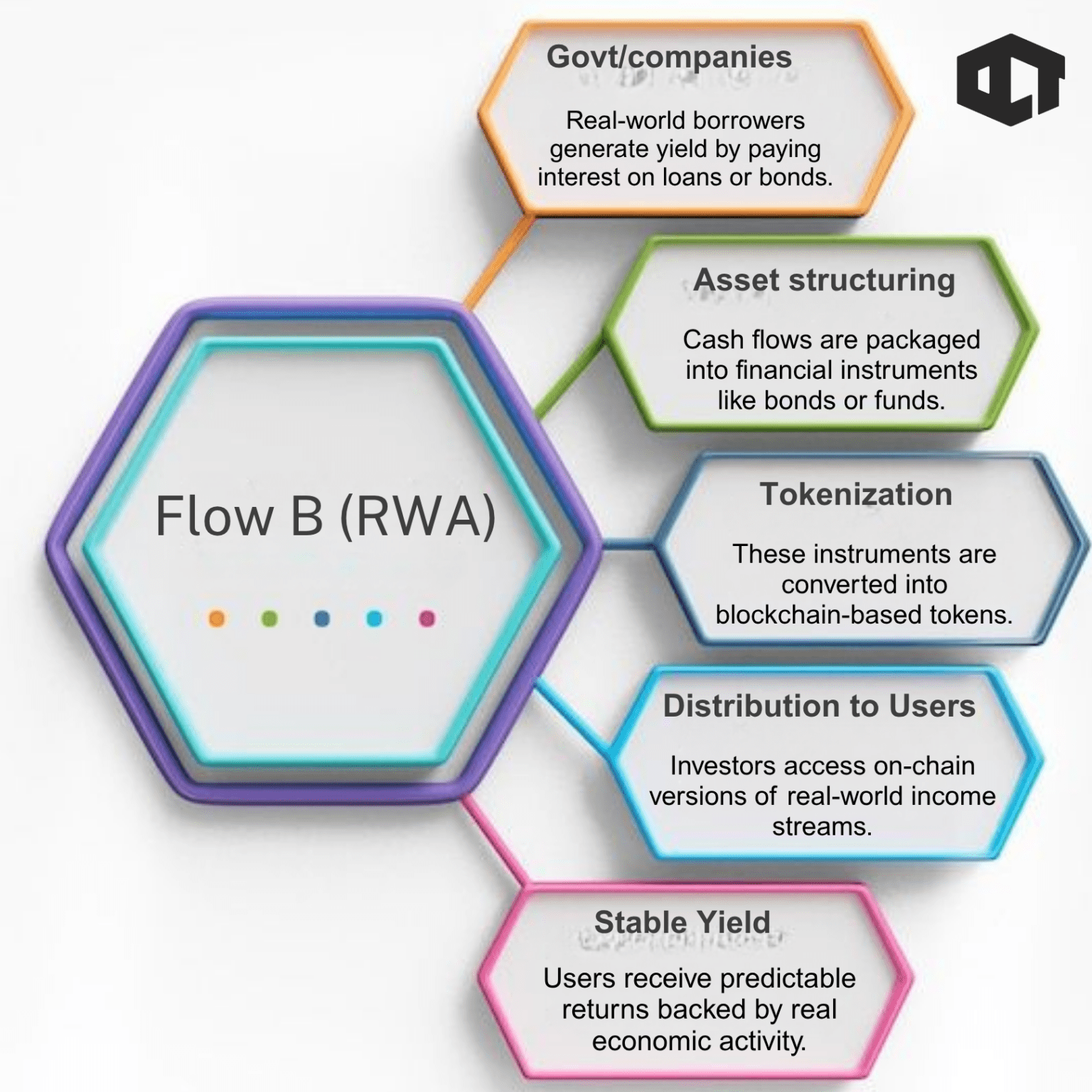
This is the same yield that traditional finance institutions earn just made accessible on-chain.
RWA yield is considered “sustainable” because it is backed by real-world economic activity rather than token incentives or emissions. For example, a Treasury bill generates interest because governments borrow money and agree to pay it back with interest, while a rental property produces income because tenants pay monthly rent. In both cases, the yield comes from established financial systems and real cash flows rather than crypto-native reward mechanisms.
Since there is no token printing involved, RWA-based returns tend to be lower compared to high-yield DeFi strategies, but they are also more stable and predictable. This makes them easier to understand and evaluate, especially for beginners who prefer clarity over high-risk, variable returns.
RWA isn’t replacing DeFi, it’s upgrading it from the inside. To understand this shift, it helps to think of DeFi as financial infrastructure. DeFi originally created the core building blocks of the ecosystem: automated market makers (AMMs) that enable decentralized trading, lending protocols that allow users to borrow and lend assets without banks, and yield aggregators that optimize returns across different platforms. These systems made it possible for assets to move, earn, and interact without traditional intermediaries, but early DeFi had one major limitation, it was largely disconnected from real-world economic activity.
RWA solves this by introducing real-world value directly into DeFi systems. Instead of relying on recycled crypto liquidity or token incentives, DeFi can now connect to government bonds, credit markets, real estate income, and other traditional financial instruments. This fundamentally improves the quality of yield because it ties returns to actual cash flows rather than speculative token emissions.
Stablecoins like USDC and USDT were the first step in bridging traditional finance and DeFi by providing on-chain representations of fiat value. RWA tokens take this a step further, they don’t just preserve value, they actively generate yield. This marks a significant evolution in how capital behaves on-chain.
Institutional adoption is accelerating this trend. Major financial players are entering crypto through RWA-focused products rather than speculative DeFi strategies. Examples include BlackRock’s BUIDL fund, Franklin Templeton’s BENJI, and Ondo’s USDY product, which reflects the broader direction highlighted in Ondo Finance’s 2026 roadmap. The message is clear: institutions prefer predictable, asset-backed yield over volatile incentive-driven returns.
One of DeFi’s most powerful features is composability, which allows different protocols to integrate and build on top of each other. When RWAs are tokenized, they become programmable assets within this system. A Treasury token can be used as collateral in lending protocols, traded on decentralized exchanges, or included in automated yield strategies. This effectively merges traditional finance assets with DeFi’s infrastructure.
Old DeFi was driven by token emissions, high risk, and volatile returns. New DeFi is increasingly driven by real-world assets, institutional-grade backing, and more predictable yields. The underlying infrastructure hasn’t changed, the inputs powering it have.
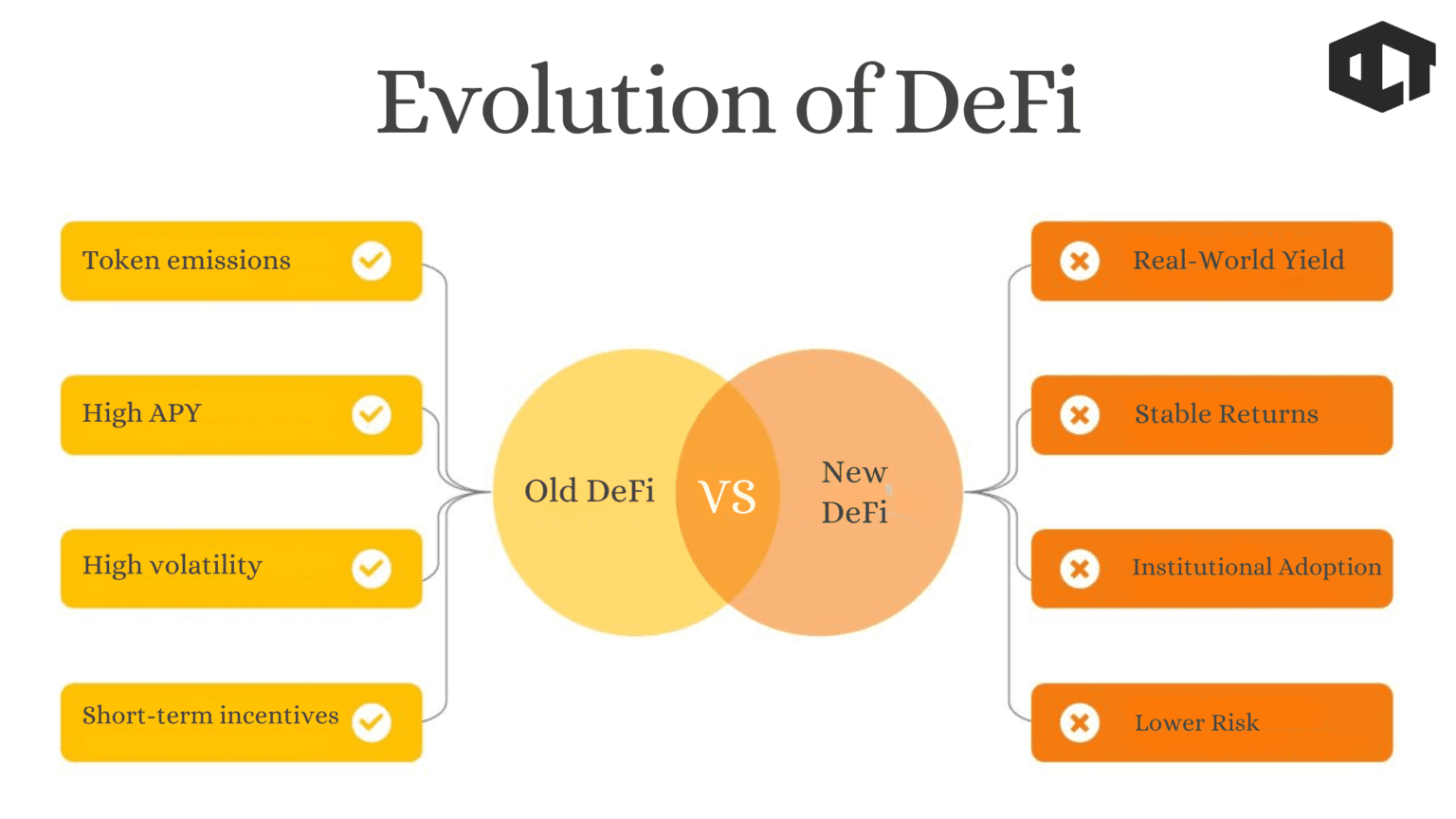
For beginners in 2026, RWA-based yield is generally the better starting point. It’s easier to understand because the returns are tied to real-world assets like government bonds, credit markets, or real estate rather than complex token incentive systems. This also makes the income stream more predictable and grounded in real economic activity. On top of that, RWA products now have growing institutional backing, which adds an extra layer of credibility and stability.
That said, traditional DeFi still plays an important role in the ecosystem. It often offers higher potential returns, along with a wider range of strategies such as liquidity provision, leveraged yield farming, and lending optimizations. However, those higher returns come with significantly more risk, including volatility, smart contract exposure, and unstable incentive structures.
If you’re exploring the broader crypto ecosystem, it’s worth understanding both approaches rather than choosing only one. Many users eventually combine them, using RWA for stability and DeFi for higher-risk opportunities.
For context, a growing number of the best stablecoins in 2026 are now evolving toward RWA-backed models, blending the reliability of traditional finance with the accessibility of crypto rails.
Now that you understand the basics, the next step is actually accessing RWA yield in practice. While the concept is simple, the onboarding process is slightly different from traditional DeFi.
Start by selecting a reputable RWA platform. Some of the leading options include Ondo Finance, Maple Finance, and BlackRock’s BUIDL product. These platforms represent different parts of the RWA ecosystem, from tokenized treasuries to private credit markets. It’s also useful to compare different offerings under top RWA projects before committing funds.
Unlike permissionless DeFi protocols, many RWA platforms require identity verification (KYC). This is because they deal with real-world financial instruments that fall under regulatory frameworks.
The requirement exists for two main reasons:
This is one of the clearest differences between RWA systems and fully decentralized DeFi protocols.
For beginners, the safest entry point is typically tokenized government bonds.
You can start with assets like Treasury-backed tokens such as USDY or BUIDL.
These are ideal because they offer:
One of the most important rules in RWA investing is ensuring yields are aligned with real-world interest rates.
For example, if US Treasuries are yielding around 4.5%, then:
Always verify whether the yield is genuinely coming from the underlying asset or being artificially boosted.
If an RWA protocol promises yields significantly higher than the real-world asset it represents, something is likely wrong.
For instance, US Treasuries typically yield around 4.5%. If a platform offers 20% on tokenized versions of those same assets, it usually means one of two things:
The most important question to always ask is: Where does the yield actually come from?
Once you are comfortable with basic RWA exposure, you can gradually explore more advanced strategies.
These include:
Some newer protocols, such as AFi Protocol’s rwaUSDi, are experimenting with these blended models that merge traditional assets with DeFi-native yield structures.
The core idea is simple: DeFi built the infrastructure, and RWA is filling it with real value. Early DeFi revealed what was possible, but unsustainable token emissions fueled most of its initial yield. RWA introduces real-world cash flows into that same infrastructure, creating a more stable and fundamentally sound foundation for yield generation. For beginners in 2026, RWA-based yield is often the more practical entry point. It offers clearer return sources, lower complexity, and stronger alignment with traditional financial systems.
However, DeFi is not disappearing, it is evolving. Over time, DeFi and RWA will increasingly converge, with more DeFi yield backed by real-world assets by default. If you want to go deeper, you can start by exploring top RWA projects or understanding how modern stablecoins are transitioning into yield-bearing financial instruments.


Tokenization of RWA yields onchain might be the biggest opportunity that no one has noticed
Cold Wallet Safety 2026: Are Hardware Wallets Still Safe?
One Token, Multiple Products. Can Zylo Deliver?
The Rise of NEAR Protocol 2026: Inside the 530% Rally and the ETF
Tokenization of RWA yields onchain might be the biggest opportunity that no one has noticed
Cold Wallet Safety 2026: Are Hardware Wallets Still Safe?
One Token, Multiple Products. Can Zylo Deliver?
The Rise of NEAR Protocol 2026: Inside the 530% Rally and the ETF