InfoFi in Crypto: Turning Attention into Assets
InfoFi in crypto rewards users for attention and engagement. Learn how this Web3 trend transforms influence into real value through rewards.


Author: Chirag Sharma
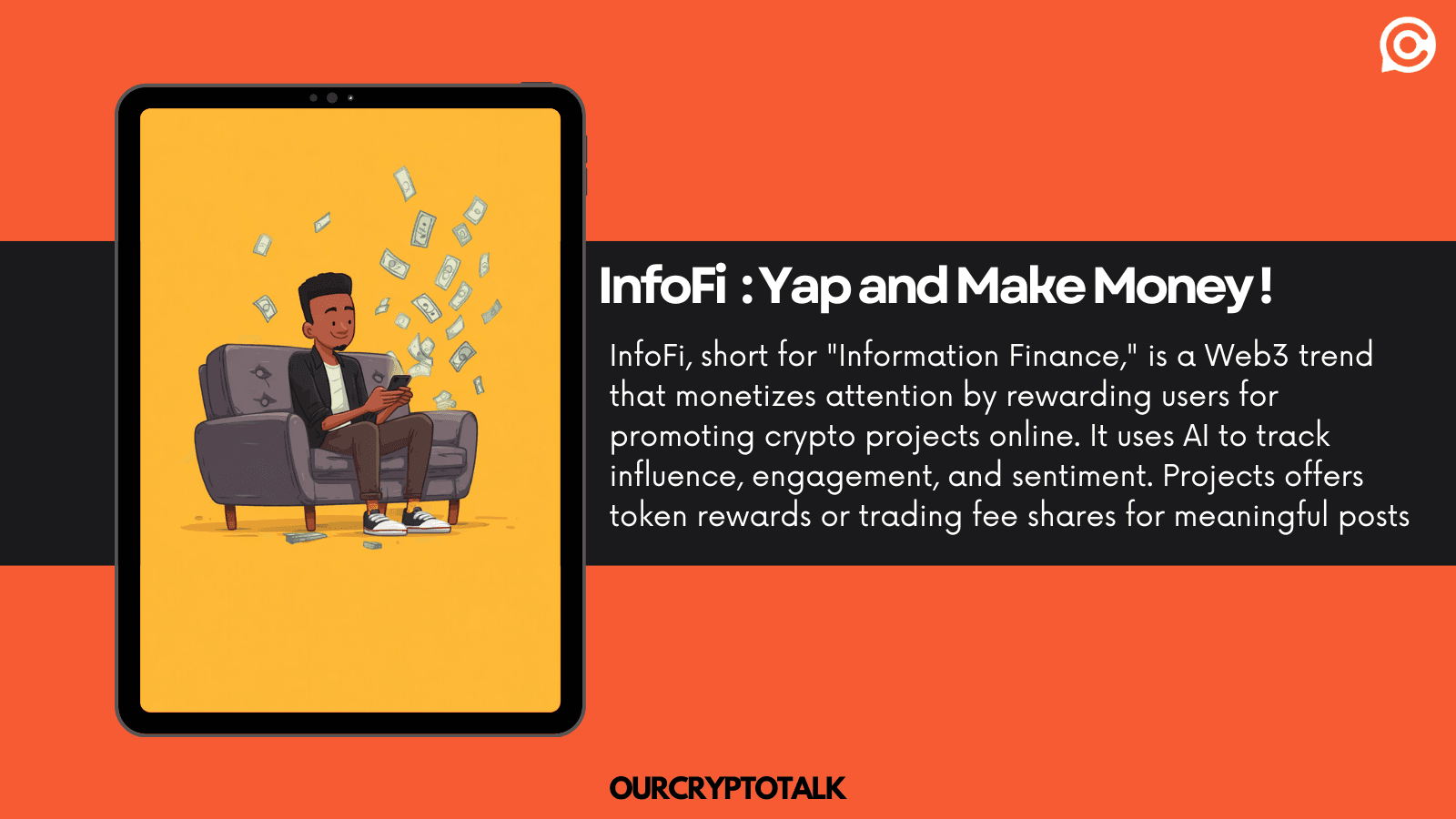
InfoFi in crypto is a new narrative that places attention and influence at the heart of value creation. Instead of focusing on staking or liquidity provision, InfoFi rewards users for their ability to generate visibility for crypto projects. It is a system that ties digital influence to financial incentives, built on top of social media engagement and blockchain transparency.

At its core, InfoFi is about monetizing mindshare. When users post about a crypto project, discuss it on social platforms like X, or help it trend within the community, they contribute to its visibility. This visibility is measurable through modern AI tools that analyze engagement metrics such as sentiment, reach, and interaction quality. Projects can then reward those users who generate meaningful awareness.
The rise of InfoFi in crypto is closely tied to the broader shift toward attention-based economics. As the internet becomes more crowded, projects are looking for better ways to cut through the noise. InfoFi offers a structure where the community becomes an active participant in marketing and communication. It transforms users from passive observers into incentivized promoters, building a feedback loop where visibility brings value and value brings more visibility.
This model is different from older reward systems in Web3. InfoFi doesn’t require technical knowledge or high capital. It rewards creativity, relevance, and communication. As a result, it opens new doors for participation, especially for creators and community builders. The future of InfoFi looks closely linked with the way crypto projects grow and engage their audiences across Web3 platforms.
The Origins of InfoFi
InfoFi didn’t appear out of nowhere. It evolved from earlier Web3 models that tried to reward users for non-financial contributions, especially in the realm of content and community. Platforms like Steemit and Hive, for example, introduced blockchain-based systems where writers and curators could earn tokens for creating or promoting valuable content. These early experiments laid the foundation for what would later become InfoFi.
The concept gained momentum as AI tools began to reshape Web3 analytics. With advancements in natural language processing and engagement tracking, projects could now quantify how much attention they were getting and from whom. This allowed them to distinguish genuine community support from bot activity or spam. AI could measure mindshare in a way that was scalable and trustworthy, giving InfoFi a technological backbone.
Another major influence was the growth of SocialFi — a narrative where social interactions are rewarded directly. As Web3 communities became more active on platforms like X, it became clear that engagement was a form of labor. Users were not just spectators; they were contributing to a project’s growth. The question was how to reward this work fairly?

InfoFi emerged to answer that question. It formalized the idea that attention is not just a side effect of success but a resource that can be earned, measured, and distributed. Combined with on-chain data, InfoFi offered a way to create token-based incentives around visibility. This opened the door for new tools and platforms focused on engagement scoring, content leaderboards, and automated reward systems.
The result is a structure where a project can build visibility not through paid advertising or influencer deals, but by encouraging its real users to participate in shaping its public image. In a crowded market, this makes InfoFi a compelling strategy for both early-stage and established crypto teams.
The Problems InfoFi Solves
The crypto market is full of noise. Thousands of projects launch every year, but only a few manage to gain meaningful traction. Even strong ideas struggle to stand out because traditional marketing strategies often don’t work in Web3. Communities are skeptical, influencers can feel transactional, and bots distort real engagement.
One of the biggest challenges in crypto is discoverability. With so many tokens and platforms, users have a hard time identifying what’s credible and worth their time. On the other side, genuine projects find it difficult to attract organic attention without large budgets or centralized promotion.
InfoFi solves this by realigning incentives. Instead of relying on paid promotion, projects can reward users who help generate interest in a meaningful way. This shifts the focus to authentic content, community participation, and real engagement. It encourages word-of-mouth growth, which tends to be more effective and trusted.
Another issue is the rise of low-quality or spammy content. Many past efforts to reward users for posting about crypto ended up flooded with irrelevant or copied material. InfoFi addresses this with AI moderation. By analyzing engagement quality, sentiment, and originality, platforms can filter out low-value activity. This ensures that only useful and thoughtful contributions receive rewards.

There is also a fairness problem in current social engagement models. Large influencers often receive all the attention and payouts, while smaller but loyal community members are ignored. InfoFi helps level the playing field. By tracking the quality of posts rather than just follower count, it allows more users to participate in growth and earn something in return.
Finally, InfoFi makes marketing more sustainable. Instead of short-term hype cycles, projects can build long-term visibility by keeping their community active and rewarded. It’s a better way to foster loyalty and consistent engagement, which is critical in the volatile world of crypto.
How InfoFi Works: Mechanisms and Incentives
The operational layer of InfoFi in crypto is where social interaction meets tokenomics. At a glance, it looks simple: users post, projects track, and rewards are distributed. But underneath that is a carefully structured model combining AI-driven analytics, token-based rewards, and gamified social engagement.
Projects running InfoFi campaigns rely on AI tools that track and analyze what people say about them online, especially on platforms like X. These tools assess content quality, engagement levels, sentiment, originality, and reach. This is where the idea of “mindshare” comes into play — the more your post contributes to the visibility or reputation of a project, the more likely you are to earn points, tokens, or other incentives.
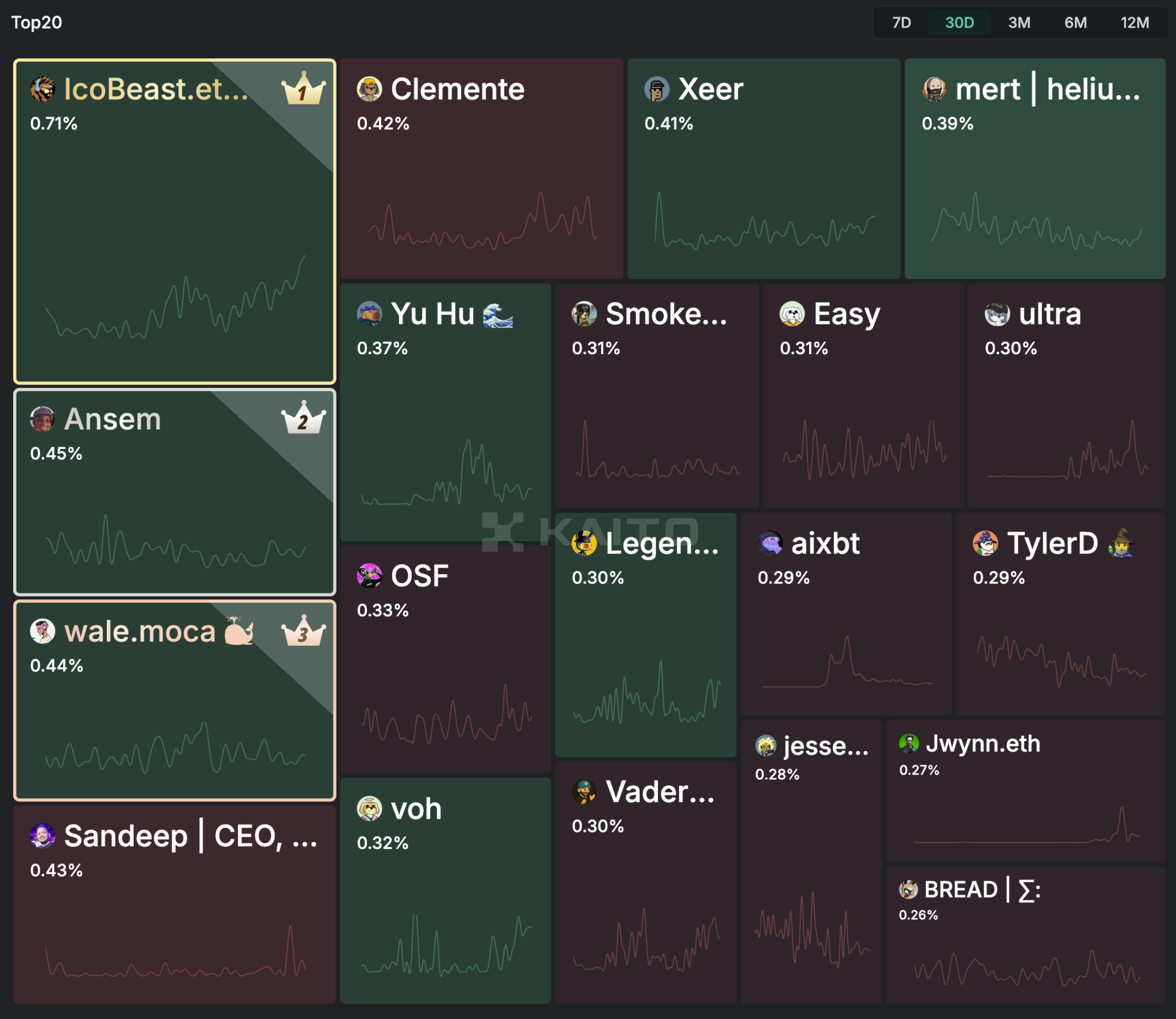
These systems often operate through leaderboards, where users are ranked based on performance over a campaign period. Metrics like number of posts, engagement ratios, and sentiment positivity factor into this. It’s not just about quantity. High-quality, relevant content is rewarded more than repetitive noise.
On the rewards side, users can earn:
- Campaign-specific tokens
- Loyalty points (like Yap Points)
- Airdrop allocations
- Fee-sharing incentives from partner DEXs or token launches
Platforms also use anti-spam filters and reward decay systems. This helps protect the ecosystem from being gamed by bots or low-effort posters. For example, reposts or irrelevant memes might carry little value, while original content with community interaction earns more.
The result is a real-time marketing engine powered by the community. InfoFi makes it possible for even casual users to support projects meaningfully, without needing capital or technical skills. All it takes is presence, participation, and relevance — something that’s now easier to quantify and reward than ever before.
Case Study: Kaito and Loudio
To understand how InfoFi in crypto works in real-world settings, two standout examples are Kaito and Loudio — each taking a unique approach while following the same narrative of attention-based rewards.
Kaito is an AI-powered platform that integrates deeply with X, tracking how users talk about crypto projects in real time. Its flagship feature is the Yapper Leaderboard, where users earn Yap Points based on the quality and reach of their posts. This system evaluates not just volume, but relevance and engagement. Yap Points are used to claim rewards tied to featured projects, such as token allocations or early access opportunities.
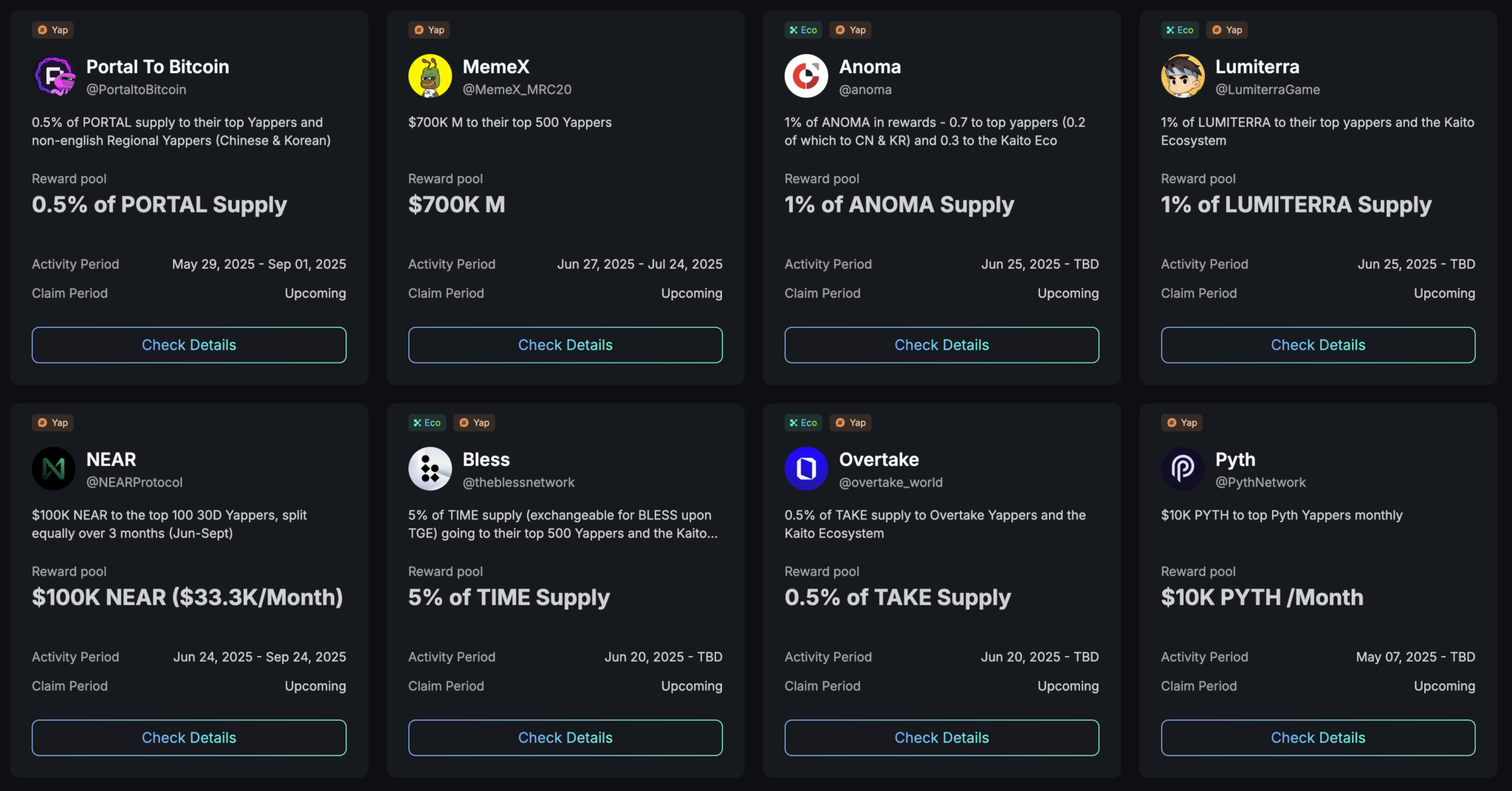
Kaito has worked with major Web3 campaigns, showcasing how InfoFi can scale across ecosystems. Its strength lies in its wide AI analytics engine, which brings legitimacy to reward distribution by filtering low-quality content and rewarding users who actually move the needle in public discourse.
Loudio, on the other hand, takes a more experimental route. Built on Solana, it rewards users directly in SOL, not project tokens. The premise is simple: post about LOUD, the platform’s native token, and earn a portion of trading fees from associated DEX activity. This creates a self-reinforcing cycle where users are financially motivated to keep LOUD relevant and trending.

However, Loudio’s model has received criticism. Since rewards are tied tightly to token promotion, some users exploit it with spam-like tactics, making it hard to distinguish real community engagement from opportunistic posting. Still, it serves as a clear test case for how tokenomics can be wired directly into user-generated content loops.
Loudio is considered a “huge hit” early on, outperforming many projects in its first week, with some comparing its launch success to major platforms like Hyperliquid and Kaito. As an experiment in optimizing attention for token launches, Loudio demonstrated a viable model for generating buzz without traditional funding or venture capital. Some view this as a success, even if the token’s value later declined.
Case Study: CookieDAO, Wallchain, and Infinex
InfoFi’s narrative expands beyond just a few platforms. CookieDAO, Wallchain, and Infinex are three diverse projects applying attention-based mechanics to different layers of the Web3 stack. Each contributes its own spin to the InfoFi in crypto narrative.
CookieDAO operates Cookie.fun, a platform built around indexing and promoting AI agents and infra tools. It uses a points-based reward model, where users earn by boosting the visibility of selected projects. The scoring considers how users position projects across social platforms, using AI to identify both sentiment and originality. CookieDAO’s uniqueness lies in its focus on AI, using InfoFi not just to promote tokens but to amplify AI narratives in Web3. You can use Cookie.fun’s free sentiment analysis around crypto projects which are significantly helpful.
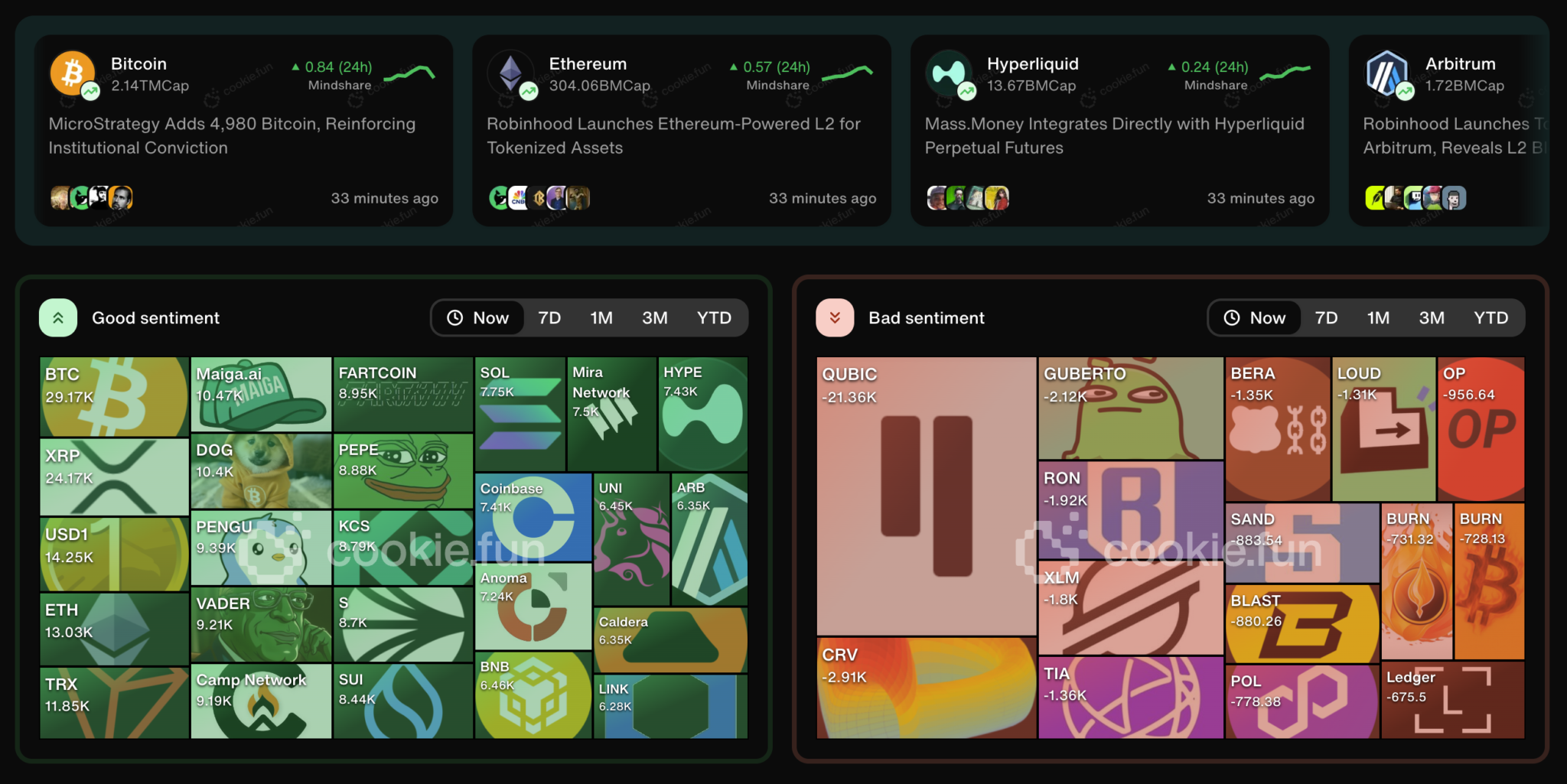
Wallchain is ecosystem-specific, focusing solely on Solana. It rewards users with “quacks,” a points-based system tied to project engagement across the Solana ecosystem. Unlike Loudio’s open promo system, Wallchain rewards users who create meaningful commentary or thought leadership around ecosystem upgrades, token launches, or governance events. It’s closer to an influencer campaign, but democratized — anyone can rise up the leaderboard if they contribute valuable insight.
Infinex, through its Yaprun campaign, blends both Kaito’s backend and its own scoring model. Yaprun uses Kaito’s analytics to track campaign performance while rewarding users with Micro Patrons — digital badges that serve as collectibles and proof of contribution. With over $6 million distributed across various seasons, Infinex represents one of the most comprehensive examples of InfoFi execution.
| Project | Focus Area | Reward Mechanism | Platform Base | Unique Approach |
|---|---|---|---|---|
| Kaito | Ecosystem-wide promotion | Yap Points via AI-based leaderboards | Cross-chain (X-based) | AI-powered mindshare tracking, campaign-specific rewards |
| Loudio | Token-centric shilling | SOL from trading fees | Solana | Direct token-promo rewards tied to DEX activity |
| CookieDAO | AI and infrastructure visibility | Points and potential airdrops | Multi-chain | Indexes AI agents, filters contributions for technical quality |
| Wallchain | Solana ecosystem engagement | Quacks (points) for quality posts | Solana | Ecosystem-specific leaderboard, anti-spam filtering |
| Infinex (Yaprun) | Hybrid campaign promotion | Micro Patrons + $ rewards | Cross-chain | Combines Kaito backend with collectible rewards and multi-season design |
The Future of InfoFi: Opportunities for Growth
As crypto matures, InfoFi has the potential to become the go-to model for community-driven growth. It creates a low-cost, scalable way for projects to generate attention by rewarding users directly instead of paying intermediaries.
The most promising direction is deeper integration with other crypto layers. InfoFi can link with DeFi rewards, staking incentives, or access to token-gated features. Some platforms are already exploring NFT badges, in-app ranking systems, and loyalty rewards, pushing InfoFi beyond social media into broader ecosystems.
There’s also clear room for expansion beyond X. Platforms like Farcaster, Lens, Telegram, and even Discord could be added to InfoFi scoring systems, especially as AI tools improve at tracking engagement and filtering noise. This opens doors for multi-platform campaigns with higher reach and better targeting.
With more use cases, InfoFi can support different types of contributors—writers, meme creators, analysts, community mods—giving each a way to earn and participate meaningfully.
Challenges to Watch in the InfoFi Model
Despite its potential, InfoFi faces real challenges.
Spam is a big one. If the model gets overrun by low-effort posts and engagement farming, it loses trust. Projects need smarter filters, AI scoring, and incentive models that prioritize quality over volume.
Sustainability is another key issue. Campaigns can’t rely on giving away tokens forever. Reward systems need backing—either from trading volume, real platform revenue, or rotating incentives with capped budgets.
There’s also the regulatory question. Some jurisdictions may view InfoFi campaigns as paid promotions or marketing activities requiring disclosures. If users are rewarded for shilling tokens, platforms must walk a fine line between permissionless engagement and legal compliance.
To scale without collapsing, InfoFi must evolve responsibly—rewarding real contributions while protecting its core idea: attention as a valuable, measurable asset.
Conclusion: The Attention Layer of Web3
InfoFi is not just a trend. It’s a structural shift in how value is created, distributed, and recognized in crypto. By tying user engagement directly to incentives, InfoFi in crypto turns attention into a measurable resource — and users into active stakeholders in a project’s growth.
This model gives new life to community-driven marketing. It challenges the dominance of centralized influencer campaigns, replacing them with smarter systems where everyone has a chance to contribute. Whether you are posting on X, building a reputation on Cookie.fun, or climbing the Yaprun leaderboard, InfoFi rewards effort and authenticity.
Projects like Kaito, Loudio, CookieDAO, Wallchain, and Infinex show that InfoFi is not just theory. It’s already happening. These platforms are writing the rules for a new kind of participation economy, where value isn’t just about buying tokens, but about earning them through presence, impact, and visibility.
At the same time, this model demands careful design. Quality must be prioritized. Spam must be managed. Reward systems must stay sustainable. But if the builders can get this balance right, InfoFi could become the attention layer of Web3 — a space where users aren’t just followers, but force multipliers.
As Web3 grows, expect to see more InfoFi-powered campaigns, integrated with DeFi, collectibles, and even real-world brand promotions. It’s still early. But the playbook is clear. Attention has value. Communities create momentum. And now, through InfoFi, both can be measured, rewarded, and scaled.
For users, this is a chance to contribute and earn. Project building solutions have a chance to grow through engagement, not just speculation. For Web3 as a whole, InfoFi is a natural next step — where information becomes finance, and influence becomes infrastructure.
TL;DR: InfoFi in Crypto
- InfoFi stands for “Information Finance” in the Web3 ecosystem.
- It rewards users for generating attention and engagement online.
- The narrative blends DeFi mechanics with attention economy principles.
- InfoFi uses AI to measure visibility and user influence across platforms.
- Projects like Kaito and Loudio are pioneers in this space.
- X serves as the main platform for InfoFi engagement.
- InfoFi evolved from earlier SocialFi experiments like Steemit.
- It solves the discoverability challenge in an overcrowded crypto market.
- Traditional Web3 marketing is inefficient—InfoFi offers alternatives.
- Leaderboards and point systems incentivize quality content.
- Anti-spam algorithms ensure only meaningful engagement is rewarded.
- CookieDAO, Wallchain, and Infinex show different InfoFi implementations.
- InfoFi democratizes crypto exposure—any user can earn, not just influencers.
- Reward formats vary: airdrops, points, trading fee revenue, or tokens.
- Campaigns are measurable and transparent through blockchain tech.
- There’s growing interest in expanding InfoFi to Farcaster and Lens.
- DeFi and staking integrations may fuel long-term sustainability.
- Spam and reward farming remain the biggest threats.
- Regulation and disclosure requirements may soon apply to InfoFi models.
- If scaled responsibly, InfoFi could become Web3’s default attention layer.
Frequently Asked Questions
What is InfoFi in crypto?
Where did InfoFi come from?
What problems does InfoFi solve?
How does InfoFi work in practice?
What are some real-world examples of InfoFi?
What makes InfoFi different from older Web3 reward systems?
What are the risks and challenges of InfoFi?
What is the future of InfoFi in crypto?
What’s the bottom line on InfoFi?
TL;DR: Key takeaways on InfoFi in crypto
In this article
The Origins of InfoFiThe Problems InfoFi SolvesHow InfoFi Works: Mechanisms and IncentivesCase Study: Kaito and LoudioCase Study: CookieDAO, Wallchain, and InfinexThe Future of InfoFi: Opportunities for GrowthChallenges to Watch in the InfoFi ModelConclusion: The Attention Layer of Web3TL;DR: InfoFi in CryptoFrequently Asked Questions