strkBTC Starknet brings private Bitcoin to DeFi with shielded BTC transfers, STRK20 ZK privacy, and a May 12, 2026 mainnet launch.

Author: Kritika Gupta
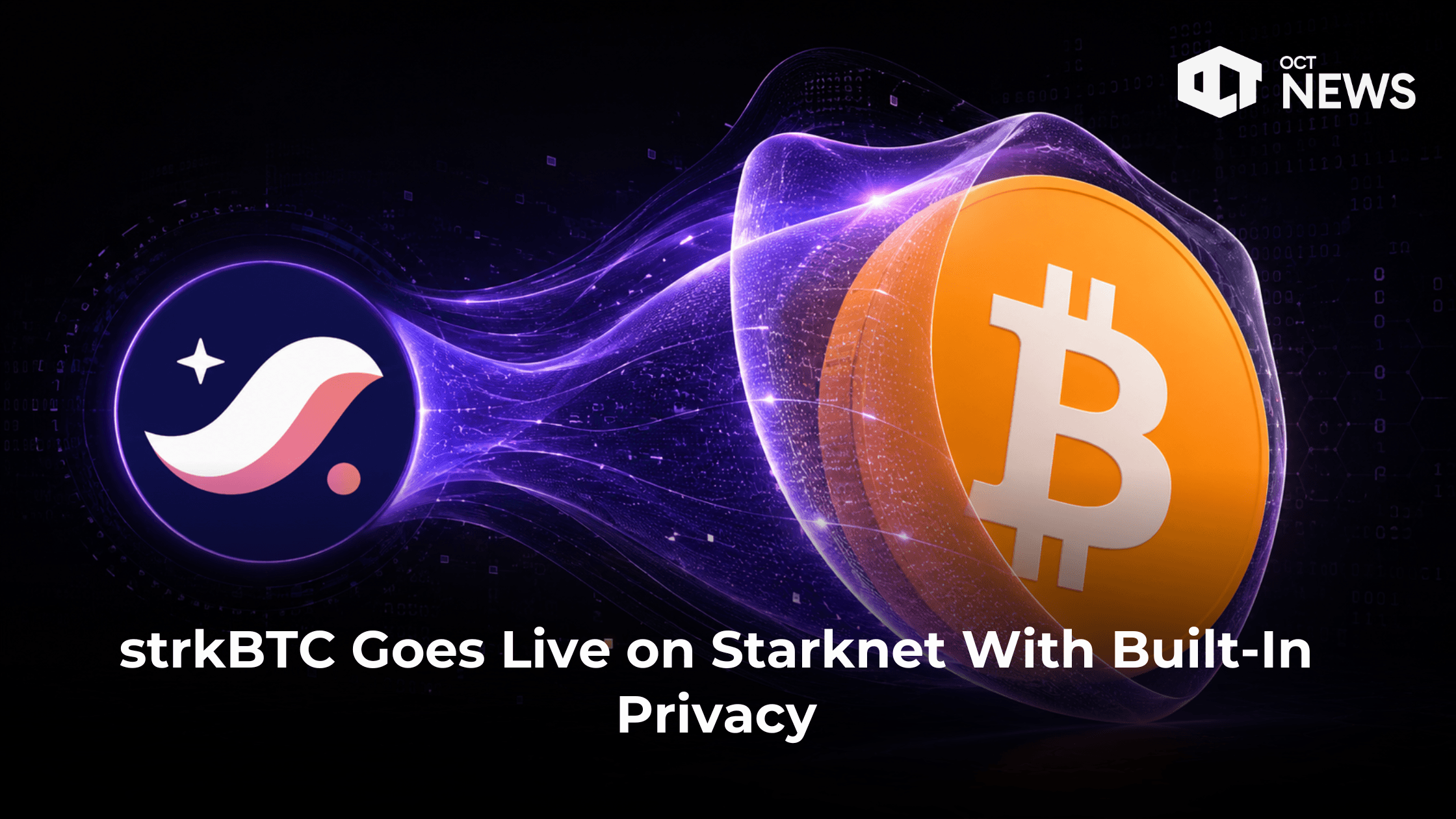
12th May 2026 – strkBTC, the first Bitcoin-backed asset with built-in privacy, is now live on Starknet Mainnet. The token allows users to wrap native BTC at a 1:1 ratio and optionally shield their balances and transfers. StarkWare and the Starknet Foundation built strkBTC using the STRK20 privacy framework, which was enabled by the Starknet v0.14.2 upgrade in April 2026.
“The first Bitcoin-backed asset with built-in privacy is now officially live on Starknet Mainnet,” StarkWare wrote on X. “You can encrypt your Bitcoin activity onchain TODAY.”
High Signal Summary For A Quick Glance

Cointelegraph
@Cointelegraph

🔥 UPDATE: Starknet launches strkBTC, a privacy-focused Bitcoin asset powered by zero-knowledge technology. https://t.co/fQWwuRUvip

01:01 PM·May 12, 2026
Steady attention without excessive speculation.
The process starts with a standard bridge. Users send native BTC to a federation multisig on Bitcoin. Five institutional signers then verify the deposit and co-sign a mint transaction on Starknet.
The result is strkBTC, a token redeemable 1:1 for BTC at any time. What sets strkBTC on Starknet apart is the optional privacy layer.
After minting, users can “shield” any amount into a single Privacy Pool contract. Shielding deposits public tokens into the pool and issues private encrypted notes that represent ownership.
From that point, transfers and balances stay hidden on-chain. Only ZK-STARK proofs, generated on the user’s device, are posted to verify validity. These proofs confirm transactions without revealing amounts or counterparties.
Users can unshield back to public strkBTC or redeem for native BTC whenever they choose. Viewing keys also let users share transaction details for compliance.
The bridge currently operates through a transparent federation of five public signers: Twinstake, NEAR Intents, Luganodes, UTXO, and Xverse. These institutions manage the Bitcoin multisig that secures all deposited BTC.
This federation model mirrors other wrapped Bitcoin solutions. The key difference is community governance. Bridge operations follow SNIP-38 and SNIP-39, two governance proposals that define how the federation operates.
StarkWare has outlined plans to upgrade the bridge using BitVM for trust minimization. That transition would reduce reliance on the federation, though no timeline has been confirmed.
Key milestones related to this development
StarkWare develops STARK-based proof systems to bring scalable, verifiable computation to blockchain networks.
It goes live as a Layer 2 network, proving STARK scalability in production and expanding the ecosystem beyond research.
Developers explore ways to bring Bitcoin liquidity into Starknet through wrapped BTC, bridges, and trust-minimized interoperability models.
StarkWare announces a Bitcoin-focused privacy asset initiative, positioning STARK proofs as a way to add privacy and scalability to BTC activity.
The Bitcoin privacy integration launches on mainnet, marking a major step toward private, STARK-powered Bitcoin utility on Starknet.
StarkWare signals future work around Bitcoin’s long-term cryptographic resilience, including research tied to quantum-era security risks.
Bitcoin’s public ledger makes every transaction visible to anyone. While this transparency supports auditability, it also exposes balances, counterparties, and spending patterns by default.
The Starknet Foundation framed the problem directly: “Bitcoin is the most sovereign money ever created. It is also the least private money people have ever used. strkBTC fixes that.”
StarkWare co-founder Eli Ben-Sasson emphasized the team’s credentials. “There are many traditional Bitcoin wrappers, but strkBTC adds something different: privacy, delivered by the most privacy-literate team in the space,” he said, according to The Defiant.
STARK proofs enable the privacy model because they are transparent, scalable, and require no trusted setup. They also carry post-quantum security properties, which StarkWare teased in a related tweet: “Should we fix Bitcoin’s quantum risk next?”
strkBTC on Starknet remains fully composable with the network’s DeFi ecosystem. Users can lend, swap, or stake shielded tokens without unshielding first. This keeps the privacy intact across multiple protocols.
Wallets like Xverse and Ready already support the token. A launch guide published by the Starknet Foundation covers bridging steps, wallet setup, and early incentive programs.
Before today, users could swap BTC or WBTC into Starknet through Atomiq and Garden. Those options lacked native privacy. strkBTC adds the shielding layer on top of a dedicated bridge.
Starknet’s total value locked stands at roughly $201 million, according to DefiLlama. strkBTC inflows could boost that figure in the coming days, though it is too early to measure the impact.
STRK, the network’s native token, traded between $0.048 and $0.052 as of May 11. The token gained about 26% in early May on pre-launch momentum tied to the federation and strkBTC announcements.
Community sentiment on X has been strongly positive. Early reactions celebrate the launch as a milestone for both BTCFi and on-chain privacy. Chinese crypto media outlets including PANews and Wu Blockchain amplified the announcement almost immediately.
The biggest open question is the federation bridge. Bitcoin maximalists may argue that a 5-of-5 multisig introduces centralization risk. Until the BitVM upgrade arrives, users must trust the five signers to honor redemptions.
Privacy advocates have also noted that strkBTC’s privacy is optional and includes viewing keys. That makes it less private than protocols like Zcash, where shielding is the default. StarkWare positions this as a feature for regulatory compliance, not a limitation.
The audit status of the new bridge contracts remains unconfirmed. The exact mainnet token contract address should be verifiable on Starkscan and Voyager as bridge activity begins.
The near-term focus is adoption. Early incentive programs and wallet integrations aim to attract Bitcoin holders who want DeFi access with privacy. Starknet’s existing DeFi protocols will likely add strkBTC as a collateral and trading pair.
Longer term, the BitVM trust-minimization upgrade could address the federation concern. StarkWare’s quantum-safety research, teased in today’s launch tweet, may also shape the roadmap ahead.
For now, strkBTC on Starknet represents a first: wrapped Bitcoin with native, optional privacy. Whether it captures meaningful BTC capital will depend on DeFi integrations, the bridge’s security track record, and how quickly the trust model evolves.
Our Crypto Talk is committed to unbiased, transparent, and true reporting to the best of our knowledge. This news article aims to provide accurate information in a timely manner. However, we advise the readers to verify facts independently and consult a professional before making any decisions based on the content since our sources could be wrong too. Check our Terms and conditions for more info.



Starknet