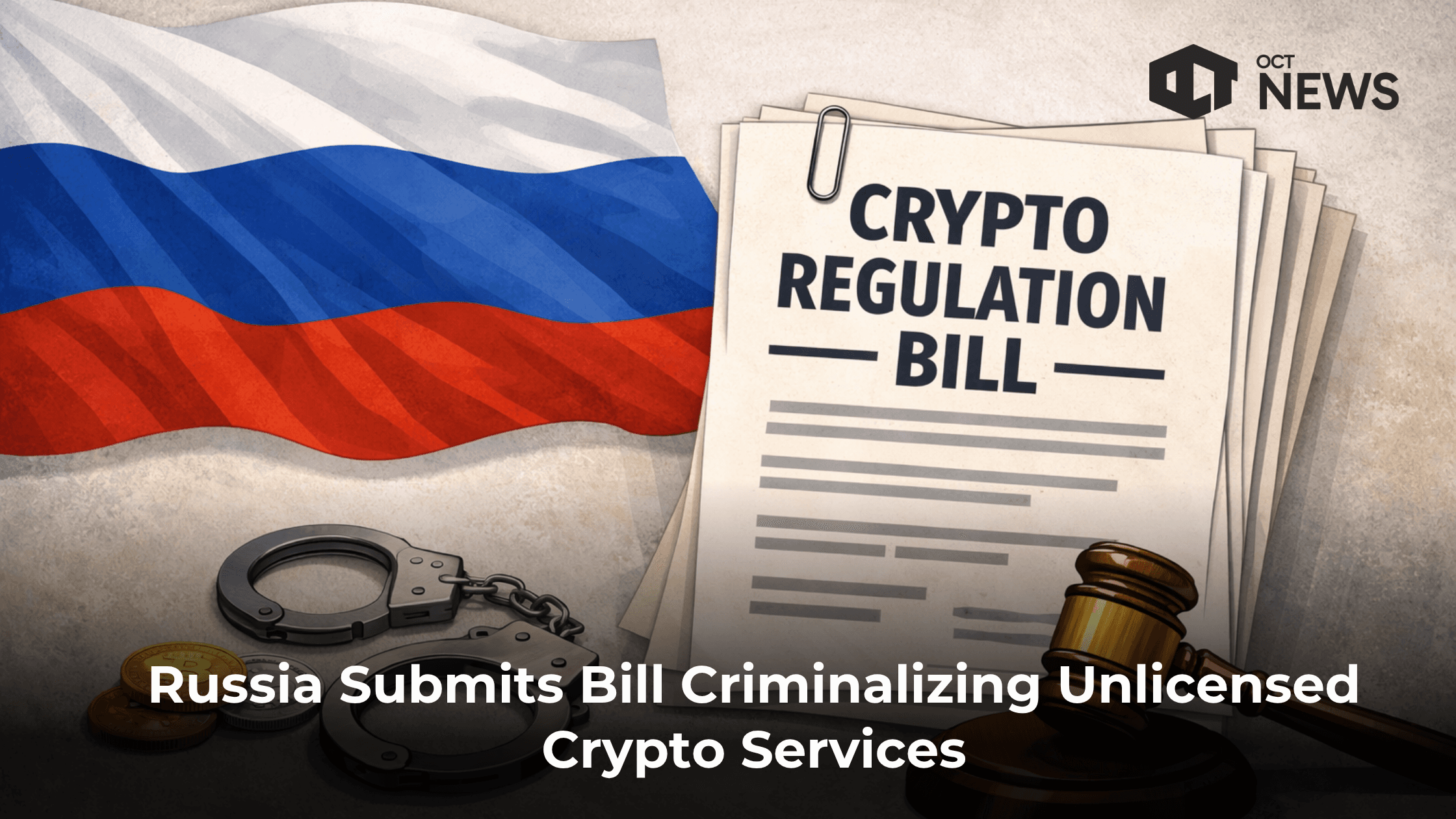
Russia crypto regulation tightens as bill proposes up to 7-year prison terms for unlicensed crypto services.

Author: Kritika Gupta
Steady attention without excessive speculation.
20th April 2026- Russia crypto regulation is entering a stricter phase as the government moves to criminalize unlicensed cryptocurrency services. The proposal introduces severe penalties, including up to seven years in prison, signaling a major shift in how authorities plan to control digital asset activity.
The government submitted the draft bill to the State Duma. It introduces Article 171.7 to the Criminal Code and targets anyone organizing digital currency circulation without approval from the Bank of Russia. If passed, the law will take effect on 1 July 2027, giving businesses time to comply with upcoming licensing requirements under Russia crypto regulation.
High Signal Summary For A Quick Glance
Russia crypto regulation has evolved rapidly since the Russia-Ukraine conflict led to sweeping Western sanctions. As a result, crypto adoption surged as a workaround for cross-border payments and trade settlements.
In August 2024, Russia legalized crypto mining, which accelerated industry growth. The country quickly became a major hub for Bitcoin mining due to low energy costs. At the same time, unregulated platforms began processing large daily volumes, often reaching hundreds of millions of dollars.
However, regulators grew concerned. The Bank of Russia repeatedly warned about risks such as money laundering, terrorist financing, and capital flight. Therefore, policymakers shifted toward a licensing-first approach that requires exchanges, custodians, and trading platforms to operate under strict approval.
Moreover, this bill builds on earlier enforcement efforts. In March 2026, authorities proposed prison terms of up to five years for illegal crypto mining at scale. Even earlier, in December 2025, the Ministry of Justice floated similar penalties targeting unregistered mining activity.
Despite these actions, market impact remained limited. Global crypto prices showed little reaction. Meanwhile, domestic enforcement led to temporary disruptions, yet much activity moved offshore or underground. This trend highlights how adaptable the crypto sector remains under regulatory pressure.
The bill defines “illegal organisation of digital currency circulation” as operating crypto services without central bank approval. Authorities apply penalties based on severity and scale.
For basic violations, individuals may face fines between 100,000 and 300,000 rubles. In addition, courts may impose compulsory labor or prison terms of up to four years.
However, penalties increase significantly in aggravated cases. If an organized group commits the offense or if damages exceed 3.5 million rubles, punishments escalate. Severe cases involving damages above 13.5 million rubles can lead to up to seven years in prison. Furthermore, authorities may impose fines of up to 1 million rubles or equivalent income for five years. Notably, even individuals could face liability if regulators classify their activity as “organized” trading or brokerage.
The Supreme Court of Russia has already raised concerns. It called the bill premature and argued that criminal penalties should follow, not precede, the full rollout of the licensing system expected in July 2026.
At the same time, industry participants worry about unintended consequences. Strict enforcement could push legitimate businesses out of Russia or deeper into informal markets. As a result, compliance costs may rise and innovation could slow.
On the other hand, policymakers defend the proposal. They argue that licensing will improve consumer protection, increase transparency, and integrate crypto into the formal financial system. Looking ahead, the impact on Russia’s sanctions-driven crypto usage remains uncertain. The law could reduce illicit activity. However, it may also create new friction for miners, exchanges, and cross-border payment flows.
Ultimately, the bill still requires full approval from the State Duma and a presidential signature. Therefore, the coming months will determine whether Russia can formalize its crypto sector or whether parallel shadow markets continue to operate alongside it.
Our Crypto Talk is committed to unbiased, transparent, and true reporting to the best of our knowledge. This news article aims to provide accurate information in a timely manner. However, we advise the readers to verify facts independently and consult a professional before making any decisions based on the content since our sources could be wrong too. Check our Terms and conditions for more info.


Alaoui Capital
@Alaouicapital

Russia about to get much stricter on crypto They submitted a bill that could make running unlicensed crypto services a criminal offense Penalties are fines and even prison time This looks like a hard move to drag crypto fully under state control https://t.co/hCjSYeUj5F
10:37 AM·Apr 18, 2026

The ₿itcoin⚡️Libertarian
@TheBitcoin__
Russia considers criminalizing unregistered crypto services, which could affect exchanges and wallets. #cryptocurrency #bitcoin #regulation. It's time for crypto companies to adapt to new norms and keep innovating. https://t.co/U5ykAoOUV4
02:38 AM·Apr 18, 2026