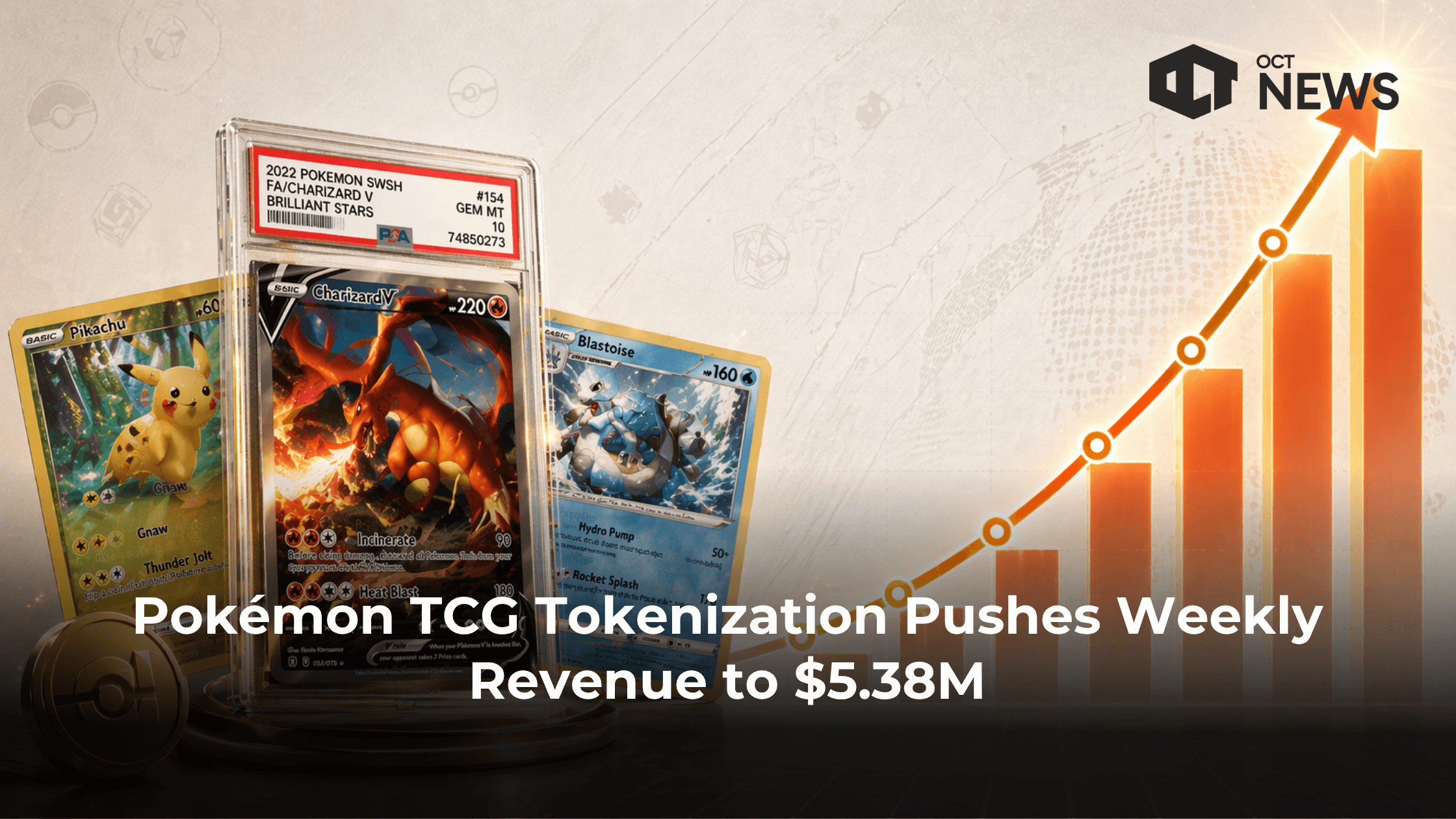
Pokémon TCG tokenization drives $5.38M weekly revenue showing sustained growth as NFTs backed by physical cards bring liquidity to collectibles.

Author: Kritika Gupta
Steady attention without excessive speculation.
22nd April 2026- Weekly revenue across Pokémon Trading Card Game marketplaces has climbed to $5.38 million, according to data tracked by The Block. This surge highlights how Pokémon TCG tokenization is reshaping the collectibles market. Notably, the tokenization has pushed volumes to levels just below the September 2025 peak, while maintaining consistent growth. As a result, Pokémon TCG tokenization now reflects structural demand rather than short-term hype.
High Signal Summary For A Quick Glance

TRIP🔜BTC Vegas
@HypeTrip

Pokémon cards are booming with crypto! 📈 $5.38M in weekly sales, almost at all-time highs, with steady growth for 6 weeks straight thanks to @Courtyard_io Real physical cards get tokenized into NFTs you can actually redeem. There's real demand and on-chain liquidity for your https://t.co/meeCO70pJt

08:15 PM·Apr 21, 2026

Natsuki Freya
@TabinekoKIKI
@EKCrypto888 TCG market doubled to $13.3B in 2 years, yet only 23% of the market is actively playing — held back by physical play requirement and high entry barrier. Pokémon released an online TCG, generated $669M revenue in 2025, yet still miles away from the physical TCG market — players
@TabinekoKIKI TCG card gacha alone on solana reached roughly $200–300 million in Q1. Let's add a few hundred million to it with this killer app One Arena 😎
02:03 PM·Apr 21, 2026

Richard Galvin
@richwgalvin
Good Pokémon cards have delivered Druckenmiller-like returns as an asset class. Have spent some time looking at the tokenisation platforms - hard to wrap your head around as a non-participant, but the revenue is crazy and the tokenised model is genuinely better than the legacy
06:06 AM·Apr 21, 2026
The current momentum reflects the broader maturation of real-world asset tokenization in collectibles. Platforms like Courtyard allow users to deposit graded Pokémon cards into secure vaults managed by custodians such as Brink’s. In turn, they mint NFTs that represent ownership of these assets.
This model removes traditional friction points. For example, it eliminates shipping delays, reduces authentication risks, and enables global access. At the same time, it preserves the ability to redeem the physical asset. Consequently, demand has shifted toward collectors who value liquidity and accessibility over short-term speculation.
Previously, the market experienced sharp but short-lived spikes. In September 2025, a token generation event on Solana via Collector Crypt pushed weekly revenue to record levels. Similarly, in August 2025, tokenized Pokémon card trading volume surged 5.5× year-to-date, reaching $124.5 million for the month.
However, those gains faded quickly once the hype subsided. In contrast, the current six-week growth trend reflects organic demand and consistent participation.
Courtyard’s model focuses on utility rather than speculation. It verifies and grades physical cards through firms like PSA, CGC, and BGS before storing them in insured vaults.
Each NFT acts as a redeemable ownership claim. Users can trade these assets instantly on-chain or redeem them for the physical card after completing KYC and paying fees. Notably, early redemption activity has already occurred. This validates pricing mechanisms and strengthens trust in the system.
Furthermore, the platform introduces features that enhance engagement. These include digital pack openings that mirror physical experiences and zero-fee secondary trading for vaulted assets. As a result, Courtyard has scaled to approximately $200 million in annualized revenue while maintaining lower marketing costs than traditional NFT projects.
This trend signals a broader shift in how markets value tokenized assets. By converting illiquid physical collectibles into tradable digital instruments, platforms like Courtyard address long-standing inefficiencies. These include limited liquidity, high transaction friction, and counterfeiting risks.
In addition, the sustained growth indicates changing behavior among participants. Collectors and investors now prioritize infrastructure and usability over hype cycles. This shift supports more stable and repeatable market activity.
Our Crypto Talk is committed to unbiased, transparent, and true reporting to the best of our knowledge. This news article aims to provide accurate information in a timely manner. However, we advise the readers to verify facts independently and consult a professional before making any decisions based on the content since our sources could be wrong too. Check our Terms and conditions for more info.


Securitize Stocks Launches Tokenized Equities on Solana
OCC GENIUS Act Final Rule Sets U.S. Stablecoin Rules
Stellar Settles First Institutional Repo Using Tokenized Treasury Collateral
Kelsier Ventures Wallets Fall From $300M to Under $2M
Securitize Stocks Launches Tokenized Equities on Solana
OCC GENIUS Act Final Rule Sets U.S. Stablecoin Rules
Stellar Settles First Institutional Repo Using Tokenized Treasury Collateral
Kelsier Ventures Wallets Fall From $300M to Under $2M