
The Coinbase Citi stablecoin partnership connects payments with stablecoin conversion. See how it works and what remains in private beta.

Author: Kritika Gupta
Steady attention without excessive speculation.
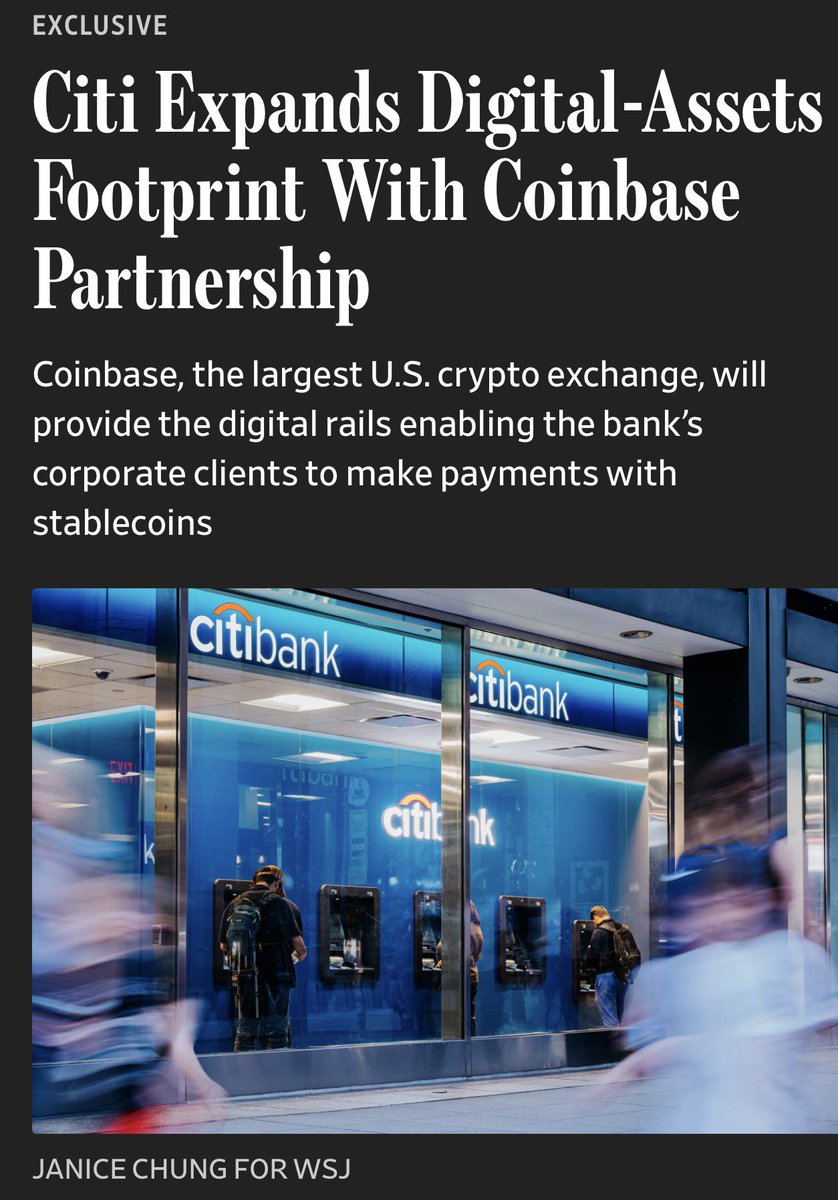
28th September 2026- Coinbase said on Monday that it is bringing stablecoins into the banking system with Citi. The post promised instant stablecoin acceptance for institutions on bank-grade, regulated infrastructure.
High Signal Summary For A Quick Glance

Frank Chaparro
@fintechfrank

First you fight them then you join em. Citi is partnering with Coinbase to let its institutional clients accept stablecoin payments, with Coinbase providing the payment rails and blockchain infrastructure while Citi settles the funds as bank of record. The partnership will also https://t.co/xxdUYmlc5O
11:38 AM·Sep 28, 2026
The Coinbase Citi stablecoin push is not a brand-new partnership. Instead, it productizes a collaboration the two firms first announced on Oct. 27, 2025. The Wall Street Journal reported the product mechanics on Monday, and Coinbase confirmed the direction in its own post on X.
The product works in two directions. On the Citi side, institutional clients can accept customer stablecoin payments through Citi merchant-acquiring. Coinbase supplies the payment rail and the blockchain conversion, while Citi settles the fiat as the bank of record.
On the Coinbase side, business customers get Citi-provisioned virtual U.S. bank accounts. Because those accounts use ACH and Fedwire, a counterparty can send ordinary dollars. Coinbase then converts the incoming cash into a dollar stablecoin.
According to WSJ-attributed reporting via Crypto Briefing, cash auto-converted to stablecoins at Coinbase currently earns a 3.75% annualized reward. That figure is a Coinbase platform reward, not a Citi deposit rate. Also, it is not FDIC insurance.
The mechanics are simpler than the marketing suggests. First, a business receives a Citi virtual account with a routing and account number. Next, a payer wires dollars over ACH or Fedwire. Then Citi credits the account, and Coinbase converts the balance into USDC.
Coinbase developer documentation names USDC as the target asset and Base as the example network. Still, WSJ-attributed summaries describe “US dollar-pegged stablecoins,” not one ticker. So the safe reading is USDC first, with room for other dollar coins later.
The docs also matter for one other reason. They label the service a private beta, with USD only and enablement through a Coinbase representative. As a result, there is no public launch date, client roster, or geography list yet.
The word instant carries weight here, so it is worth separating hype from plumbing. An on-chain USDC transfer settles in seconds. Fedwire moves same-day. ACH, by contrast, takes hours to days.
Because of that mix, calling the whole stack instant is a press line. The honest description is bank-account collection plus automated stablecoin conversion, with the on-chain hop optional. In other words, this is payments orchestration, not a new settlement rule for public chains.
The timeline matters for accuracy. Back in October 2025, Citi and Coinbase framed the work as exploring on and off-ramps, with stablecoin payouts to follow. At the time, Bloomberg and Reuters both described a study of fiat-to-crypto transfers.
Today the language is different. Coinbase now uses shipped-product framing, even though the docs still say private beta. Therefore the real news is the shift from exploring to acceptance, not a first handshake between the two companies.
Debopama Sen, then Citi’s Head of Payments and Services, set the tone in 2025. “We see collaborating with Coinbase as a natural extension of our network of networks approach,” she said in the original Citi press release.
The most interesting angle is Citi against Citi. The same bank is now piping USDC with Coinbase. Meanwhile, it keeps scaling Citi Token Services, its private tokenized-deposit platform, which is a separate rail from public stablecoins.
There is a third track too. On Sept. 1, 2026, a 21-bank group that includes Citi, Bank of America, Goldman Sachs, and Wells Fargo said it plans a shared USD stablecoin for the first half of 2027. Consequently, this Coinbase deal looks like optionality, not a clean USDC victory.
Rivals are moving on similar ground. For example, JPMorgan runs its JPMD deposit token on Base, and BNY Mellon is expanding USDC custody with Circle. So bank stablecoin distribution is fast becoming table stakes rather than a category exclusive.
From Citi’s tokenized deposits to the Coinbase payments rollout
Citi introduces tokenized deposits on a private network. This is separate from the public-chain stablecoin payments it later develops with Coinbase.
The U.S. establishes a federal framework for payment stablecoins. Its requirements are scheduled to take effect in January 2027.
Citi projects $1.9 trillion in stablecoin issuance by 2030 in its base case, signaling its interest in the market.
The companies begin exploring fiat-to-stablecoin payment options for institutional clients, including on-ramps, off-ramps and future payouts.
Coinbase presents the collaboration as an institutional payments product. Its Citi virtual-account documentation still describes private-beta access.
Watch for named clients, a confirmed go-live scope and a general availability date.
Regulation sits underneath all of this, and it is only half-built. Congress enacted the GENIUS Act in July 2025, yet its statutory effective date is Jan. 18, 2027. Meanwhile, implementing rules were still not final as of late September 2026.
That timing creates a trap for writers and marketers alike. Because the rules are unfinished, calling this fully GENIUS-compliant infrastructure would be wrong. Separately, Coinbase National Trust Company won only preliminary OCC approval in April 2026, and that charter is distinct from the Citi rail.
The 3.75% reward adds another wrinkle. Since GENIUS bars issuer interest on payment stablecoins, a platform reward on converted balances will invite scrutiny. Coinbase frames it as a reward, not issuer yield, so the distinction will matter to regulators.
Plenty is still missing from the picture. As of Monday, there is no general-availability date, no named launch client, and no fee schedule. Furthermore, the chains beyond Base and any coins beyond USDC stay unconfirmed.
Market signals are quiet so far. USDC circulation held near $75.2 billion on Sept. 24, according to Circle’s transparency page. Meanwhile, Coinbase stock closed at $195.11 on Friday, and no clean announcement spike is measurable yet.
The takeaway is straightforward. Coinbase is selling rails, and Citi is selling the promise that corporate customers never touch a wallet. For now, though, the shipped-product framing runs ahead of a documented private beta, so readers should watch the launch details before treating this as everyday money. This article is analysis, not financial advice.
Our Crypto Talk is committed to unbiased, transparent, and true reporting to the best of our knowledge. This news article aims to provide accurate information in a timely manner. However, we advise the readers to verify facts independently and consult a professional before making any decisions based on the content since our sources could be wrong too. Check our Terms and conditions for more info.