Barry Silbert, founder and CEO of Digital Currency Group, declared on X that the "privacy era" in crypto has officially begun

Author: Sahil Thakur
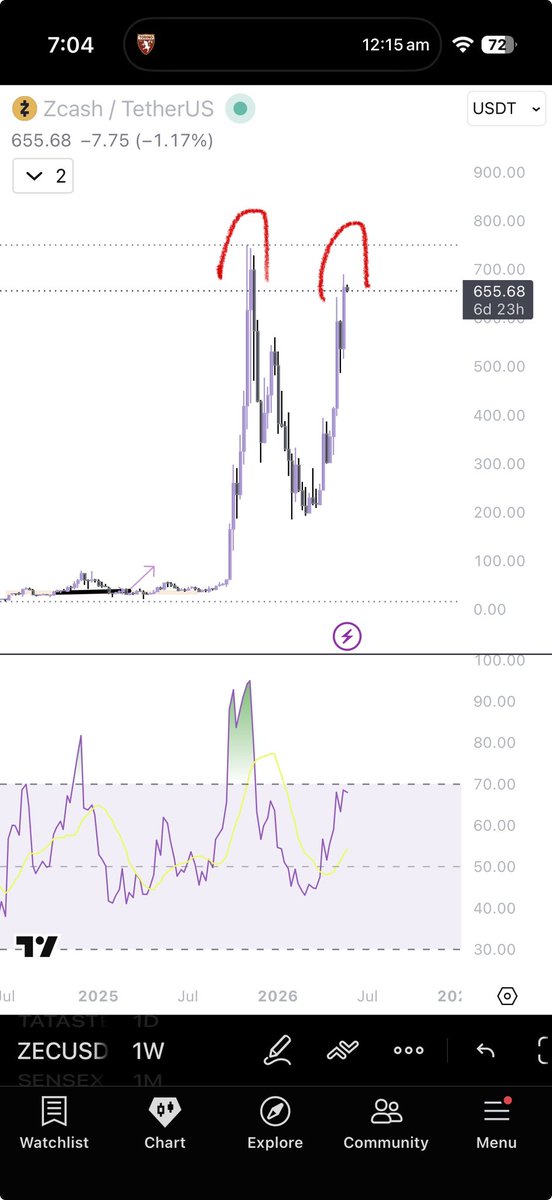
25th May 2026 – Barry Silbert, founder and CEO of Digital Currency Group, declared on X that the “privacy era” in crypto has officially begun. His post on May 24 came as Zcash ($ZEC) surged to six-month highs near $647.
High Signal Summary For A Quick Glance

VECTOR PRIME
@VECTORCP

@BarrySilbert Are we doing this Barry? https://t.co/WMH6DKqdvv
The "privacy" era in crypto has officially begun
01:34 AM·May 25, 2026

Alex Chepurnoy
@chepurnoy
@BarrySilbert Awesome! Firo and then Monero bridges are coming timely for uncensorable onramp options, and we in Ergo are preparing a lot of things for fruitful interactions between transparent and private economic circuits
The "privacy" era in crypto has officially begun
09:08 PM·May 24, 2026

jake
@xmr_jake
@BarrySilbert The "privacy" era = ZCash The privacy era = Monero
The "privacy" era in crypto has officially begun
06:09 PM·May 24, 2026
Steady attention without excessive speculation.
The statement quickly attracted over 2,200 likes and 250,000 views. Meanwhile, ZEC trading volume topped $755 million and its market cap crossed $10 billion.
Several catalysts drove the rally. Zcash’s shielded transaction supply rose from roughly 11% to 30% of total supply. In addition, wallet upgrades like Zashi and a new integration with Near Protocol boosted usability. The U.S. SEC also closed its probe into the Zcash Foundation with no enforcement action.
This post did not come out of nowhere. Silbert has promoted privacy as a major crypto theme for years.
In 2021, he called privacy “an emerging investing theme,” according to CoinDesk. He also expressed bullish views on Zcash and Horizen at the time.
By April 2025, he predicted that people would “wake up one day and realize financial privacy is important to them.” Then in October 2025, he said early crypto participants were “not thrilled with what crypto has become.”
By December 2025, his thesis had sharpened further. He argued that “privacy is essential for most real-world use cases.” As a result, he suggested “a handful of privacy chains could own most of crypto.”
Silbert’s boldest claims came during a February 2026 interview with Anthony Pompliano at Bitcoin Investor Week.
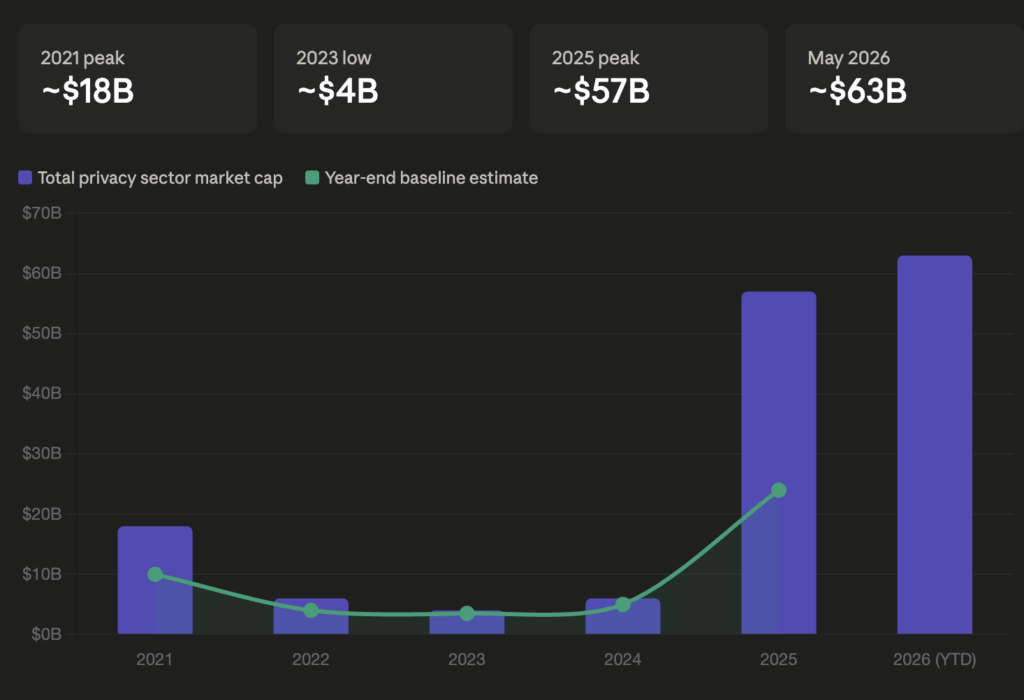
Specifically, he predicted that 5% to 10% of Bitcoin’s market cap could rotate into privacy-focused cryptos like Zcash. He called it an “asymmetric bet” similar to early Bitcoin.
He even floated potential 500x upside for ZEC. In addition, he argued that Bitcoin “lost the plot” on anonymity because of analytics firms.
Silbert also suggested Zcash could hedge against quantum computing risks. However, he noted the threat is not imminent.
These are bold projections from one investor. Silbert and his companies hold significant ZEC positions, so a conflict of interest exists. This is not financial advice.
Silbert’s post gains additional weight from Grayscale’s recent moves. The asset manager filed Form S-3 to convert its Zcash Trust into a spot ETF.
If approved, the Grayscale Zcash Trust (ticker ZCSH) would become the first U.S. spot privacy-coin ETF on NYSE Arca. That would mark a major regulatory milestone for privacy assets.
The trust currently holds roughly 391,000 ZEC. Its estimated AUM ranges from $99 million to $236 million depending on price. It charges a 2.5% expense ratio.
Grayscale launched the Zcash Trust in 2017. That made it one of the earliest institutional vehicles for ZEC exposure. DCG also operates one of the largest ZEC mining pools through Foundry.
Beyond Zcash, Grayscale has maintained exposure to Horizen through a separate trust. The firm also referenced Monero and Dash positively in its “Financial Privacy in the Age of AI” research note.
Grayscale remains one of the largest crypto asset managers globally. Its products now include spot Bitcoin and Ethereum ETFs, plus staking ETPs for Solana and Avalanche.
The firm’s 2026 outlook, titled “Dawn of the Institutional Era,” anticipated bipartisan U.S. crypto legislation. It also projected deeper institutional adoption across the board.
Notably, privacy is a growing part of that thesis. Grayscale’s research highlights financial privacy as increasingly relevant amid AI-driven surveillance and data collection.
The post sparked strong reactions across crypto social media. In particular, the Zcash community was enthusiastic, with calls for ZEC to become “the new Bitcoin.”
Other privacy projects quickly weighed in as well. Monero supporters countered that the crypto privacy era belongs to XMR, not ZEC. Similarly, Dash reminded followers it has offered privacy features since 2014.
Railgun, Ergo, and several smaller projects also positioned themselves as part of the trend. Broader sentiment leaned bullish overall.
Many viewed Silbert’s statement as validation from a major institutional figure. Still, some skeptics questioned whether his post was primarily marketing for Grayscale’s ZEC products.
Several catalysts could shape the crypto privacy era in coming months.
First, the SEC’s decision on Grayscale’s ZEC ETF will set the tone. Approval would open the door for broader institutional access. Rejection could stall momentum.
On-chain metrics will also matter. If shielded supply continues rising past 30%, it strengthens the case for real privacy adoption. Wallet improvements like Zashi could accelerate that trend.
The competitive landscape is evolving too. Monero, Dash, Railgun, and newer projects like Salvium are all vying for attention in the privacy space.
For now, Silbert’s declaration and the ZEC rally signal that privacy is no longer a fringe narrative. Institutional capital, regulatory clarity, and on-chain adoption are converging around this theme.
Our Crypto Talk is committed to unbiased, transparent, and true reporting to the best of our knowledge. This news article aims to provide accurate information in a timely manner. However, we advise the readers to verify facts independently and consult a professional before making any decisions based on the content since our sources could be wrong too. Check our Terms and conditions for more info.


Ledger Probes User Fund Losses Tied to Reseller CryptoBilis
Why Provenance Blockchain (HASH) Is Up 39.6% Today?
Halborn Clears XMAQUINA RCM Audit With Zero Critical Bugs
Fidelity Scoops $354M Bitcoin, ETH & SOL in 20 Days
Ledger Probes User Fund Losses Tied to Reseller CryptoBilis
Why Provenance Blockchain (HASH) Is Up 39.6% Today?
Halborn Clears XMAQUINA RCM Audit With Zero Critical Bugs
Fidelity Scoops $354M Bitcoin, ETH & SOL in 20 Days

Zcash