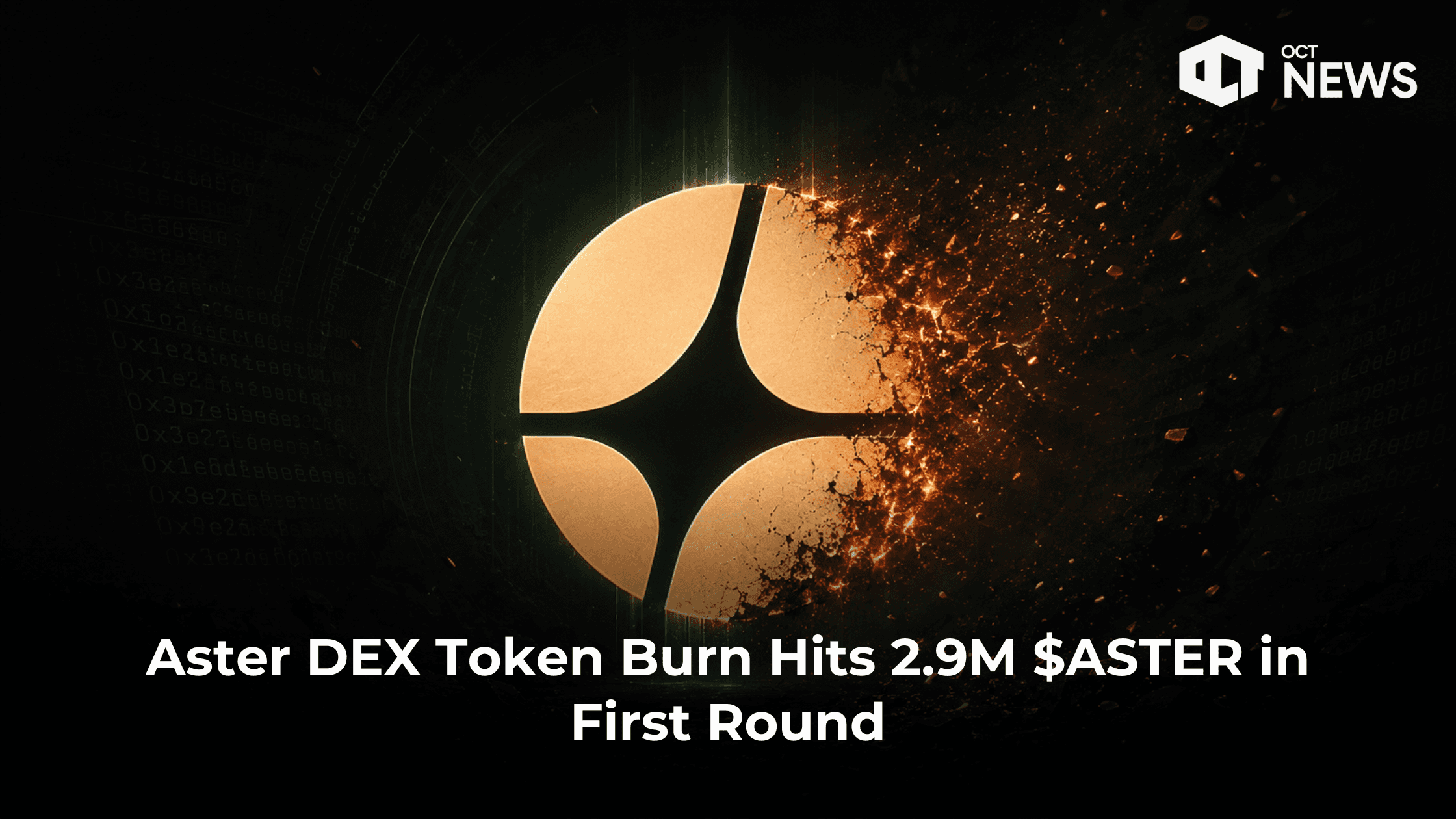
Aster token burn brings 99% fee buybacks, staker rewards, and matching team-allocation burns under the new $ASTER model.

Author: Kritika Gupta
29th June 2026 – Aster DEX has executed its first token burn under upgraded tokenomics. The Aster DEX token burn destroyed 2,937,125.53 $ASTER and sent a matching buyback to stakers.
High Signal Summary For A Quick Glance

oil
@VOLECTR0

@Aster_DEX .@Leonard_Aster Instead of wasting funds on token burns to hype your coin, you should have focused on building trust, protecting users, and delivering functional services! You let your users get wiped out in zero-liquidity traps while you play marketing games. Scammers! https://t.co/JXytOenogw
The first burn under the upgraded tokenomics is executed and verifiable on-chain. Since 2026-06-17, 99% of daily fees have bought back 2,937,125.53 $ASTER for stakers (as of 2026-06-29 00:00 UTC). A matching 2,937,125.53 $ASTER has been burned from team allocation. https://t.co/oOs83pyGLa
07:58 AM·Jun 29, 2026
oil
@VOLECTR0
@Aster_DEX .@Leonard_Aster Instead of wasting funds on token burns to hype your coin, you should have focused on building trust, protecting users, and delivering functional services! You let your users get wiped out in zero-liquidity traps while you play marketing games. Scammers!
The first burn under the upgraded tokenomics is executed and verifiable on-chain. Since 2026-06-17, 99% of daily fees have bought back 2,937,125.53 $ASTER for stakers (as of 2026-06-29 00:00 UTC). A matching 2,937,125.53 $ASTER has been burned from team allocation. https://t.co/oOs83pyGLa
07:56 AM·Jun 29, 2026

Ngoạ Long
@ngoalong_btc
@Aster_DEX The crucial point is that your product is absolutely terrible, so burning any amount of tokens is completely pointless. 😁
The first burn under the upgraded tokenomics is executed and verifiable on-chain. Since 2026-06-17, 99% of daily fees have bought back 2,937,125.53 $ASTER for stakers (as of 2026-06-29 00:00 UTC). A matching 2,937,125.53 $ASTER has been burned from team allocation. https://t.co/oOs83pyGLa
07:26 AM·Jun 29, 2026
High attention and emotional sentiment detected.
The team announced the burn on June 29 and called it verifiable on-chain. According to Aster’s post on X, the figures cover roughly 12 days of activity since the mechanism went live.
The new model started at 12:00 PM UTC on June 17, 2026. Since then, 99% of Aster’s daily platform fees flow into automatic $ASTER buybacks.
These buybacks run through a TWAP, or time-weighted average price, strategy. As a result, the protocol spreads its purchases across the day to limit slippage.
Every bought-back token then goes to veASTER stakers as a Loyalty Reward. That reward sits on top of a 300,000 $ASTER base per epoch, which the protocol splits by lock weight.
For each token bought back, the protocol also burns an equal amount one-for-one. Crucially, that burn comes from the team and reserve allocation, and the team allocation burns first. The full mechanics live in the official Aster tokenomics docs.
As of 2026-06-29 00:00 UTC, the protocol bought back 2,937,125.53 $ASTER for stakers. In turn, it burned a matching 2,937,125.53 $ASTER from the team allocation.
So far, that burn equals about 0.037% of the original 8 billion supply. In other words, the dent is small for now. The team frames this as a long campaign, not a one-off event.
Burns will continue on a bi-weekly schedule. They run until total supply drops from the initial 8,000,000,000 to the 3,000,000,000 target, according to the docs.
Aster says traders can verify the activity on-chain. The buyback wallet sits at this BscScan address, while burned tokens move to the standard dead address. Specific transaction hashes for this exact batch were not yet widely indexed in public searches at publication time.
Side-by-side view of Aster’s latest buyback and burn metrics
The design ties platform success directly to staker rewards. Because 99% of fees buy back $ASTER for lockers, more trading volume means larger Loyalty Rewards.
The matching burn then works on the other side of the equation. While buybacks add demand and reward holders, the reserve burn slowly trims total supply.
CryptoBriefing described the combined effect as a “198%” update, since each fee dollar drives both buy pressure and supply destruction. You can read its June 17 coverage here.
Rewards also scale with how long users lock. Because the protocol splits the 300,000 $ASTER base by lock weight, longer locks earn a bigger share of each epoch.
This is not Aster’s first burn. The project ran seasonal buyback and burn programs well before the upgrade.
In December 2025, for example, Aster burned roughly 78 million $ASTER in a single event from its buyback wallet. By comparison, the new model makes burns continuous rather than seasonal.
That shift matters for holders. Instead of waiting for occasional campaigns, stakers now earn buyback rewards on a rolling basis. The token launched with an 8 billion total supply, so the path to 3 billion stays long.
Key milestones related to this development
Aster introduces a tokenomics upgrade focused on buybacks and team-allocation burns.
The upgraded model activates, directing 99% of daily fees toward $ASTER buybacks.
Aster records a snapshot showing 2,937,125.53 $ASTER bought back.
The first matching team-allocation burn is executed on-chain.
The market now watches how regularly Aster continues future buyback-linked burns.
The upgrade first landed on June 17, and the price reacted fast. $ASTER spiked to roughly $0.79 intraday, its highest level since January, according to CoinDesk.
Those gains proved short-lived, though. By late June, $ASTER traded near $0.63, with a market cap around $1.68 billion on CoinGecko data.
On the protocol side, DefiLlama shows TVL near $771 million. Its fee figures include an off-chain reported component, so the real buyback fuel may differ from headline numbers.
Reaction on X stayed split rather than uniformly bullish. Some holders praised the mechanics, posting that “stakers get the buyback” is how a DeFi project should run.
Others pushed back hard. A few users called the burn a gimmick, arguing that token mechanics cannot fix product or trust concerns. Meanwhile, some asked why Aster does not burn billions in unused supply immediately instead of trickling out bi-weekly batches.
Price action also drew complaints, with traders noting the familiar “good news, then dumping” pattern. Still, no major outlet or analyst has disputed the June 29 figures, partly because the announcement is so recent.
The next test is simple: fee revenue. Because buybacks and burns both depend on daily fees, sustained trading volume will decide whether the program scales or stalls.
Aster grew out of the APX Finance and Astherus merger, and YZi Labs backs the project. It competes directly with perps venues like Hyperliquid. The team plans to repeat the Aster DEX token burn every two weeks.
For now, traders can watch the buyback wallet and the burn address to confirm each round. This article is not financial advice. Readers should do their own research before acting on any token mechanics or price move.
Our Crypto Talk is committed to unbiased, transparent, and true reporting to the best of our knowledge. This news article aims to provide accurate information in a timely manner. However, we advise the readers to verify facts independently and consult a professional before making any decisions based on the content since our sources could be wrong too. Check our Terms and conditions for more info.



Aster