Centrifuge ( $CFG ) Review: Is CFG Worth Buying in 2026?
Centrifuge (CFG) review covering tokenomics, RWA tokenization, protocol fees, risks, and whether CFG is worth buying in 2026.


Author: Akshat Thakur
Why RWA Tokenization Protocols Are Difficult to Scale
Tokenizing real-world assets is one of crypto’s biggest opportunities, but it is also one of its hardest problems.
Unlike purely on-chain assets, RWAs must comply with legal, regulatory, and operational requirements across multiple jurisdictions. Asset originators need to satisfy KYC, AML, securities, and reporting obligations while ensuring investors have clear legal rights over the underlying assets. That complexity makes scaling far more difficult than launching a traditional DeFi protocol.
Attracting institutional capital is another challenge. Large investors want proven underwriting, transparent reporting, and predictable risk management before committing capital. They also expect reliable legal structures and established counterparties rather than experimental blockchain infrastructure.
Liquidity presents another hurdle. Tokenized assets may generate yield, but creating active secondary markets is much harder than issuing tokens. Many RWA products remain relatively illiquid, making price discovery and capital efficiency more difficult than in traditional crypto markets.
Competition is also increasing. Traditional financial institutions are launching their own tokenization platforms, while DeFi protocols compete for the same asset originators and institutional investors. Simply benefiting from the “RWA narrative” is unlikely to be enough over the long term.
Centrifuge focuses specifically on bringing private credit, Treasuries, and other structured assets on-chain. Whether that specialization creates lasting value depends on continued growth in institutional participation, high-quality asset origination, and sustainable fee generation.
What Is Centrifuge?
Centrifuge is a real-world asset tokenization protocol that connects traditional financial assets with on-chain capital. It allows businesses and asset managers to tokenize private credit, invoices, Treasury products, and other real-world assets, making them accessible through blockchain-based investment pools.
Founded in 2017 by Lucas Vogelsang, Martin Quensel, Philip Stehlik, and others, Centrifuge was one of the earliest projects focused on bringing RWAs into DeFi. Its original Tinlake platform introduced on-chain financing for real-world assets, and the protocol has since expanded into a broader multi-chain asset management platform.
As of early August 2026, Centrifuge reports approximately $1.63 billion in total value locked, making it one of the largest RWA protocols in the market. Protocol growth has accelerated following the introduction of protocol fees in early 2026 and continued expansion into tokenized Treasuries and private credit products.
Today, Centrifuge positions itself as infrastructure for institutional-grade tokenized assets rather than a traditional lending protocol. Its long-term success depends on attracting both high-quality asset originators and investors seeking real-world yield on-chain.
How Centrifuge Works
Centrifuge allows businesses and asset managers to tokenize real-world assets and raise capital directly from on-chain investors.
Originators create investment pools backed by assets such as private credit portfolios, invoices, or Treasury products. These pools often separate investors into different risk levels through senior and junior tranches, allowing participants to choose different combinations of yield and risk.
Investors deposit capital into these pools and earn returns generated by the underlying assets rather than by token emissions alone. Meanwhile, asset originators gain access to financing without relying entirely on traditional banking channels.
The protocol earns revenue by charging fees on asset management and financing activity. Since enabling protocol fees in February 2026, Centrifuge has generated more consistent revenue tied directly to real asset usage rather than governance incentives.
Originally built around Tinlake, the protocol has expanded into a broader multi-chain asset management platform supporting tokenized credit and Treasury products across multiple blockchain ecosystems.
The model is straightforward. More high-quality assets attract more investors, which increases protocol activity and fee generation. Long-term growth depends on expanding institutional participation while maintaining asset quality and investor confidence.
Technology and Architecture
Centrifuge provides the infrastructure needed to issue, manage, and invest in tokenized real-world assets across multiple blockchain networks.
Its core building block is the investment pool. Each pool can divide risk into senior and junior tranches, allowing investors with different risk preferences to participate in the same underlying assets. This structure resembles traditional structured finance while operating through blockchain infrastructure.
The protocol originally launched with Substrate technology but completed its transition to an EVM-first architecture through Centrifuge V3. Today it supports Ethereum, Base, Arbitrum, Avalanche, BNB Chain, Plume, and other EVM networks, with interoperability provided through Wormhole.
Compliance is another important component. Individual pools can enforce KYC and AML requirements while integrating off-chain reporting and asset verification. Recent upgrades also introduced support for modern vault standards and improved cross-chain issuance, making tokenized assets easier to integrate into both DeFi and institutional workflows.
Compared with many RWA protocols, Centrifuge focuses less on retail lending and more on institutional credit markets. Its technology is designed to bridge traditional structured finance with blockchain infrastructure while supporting the compliance requirements that institutional participants expect.
Team and Backers
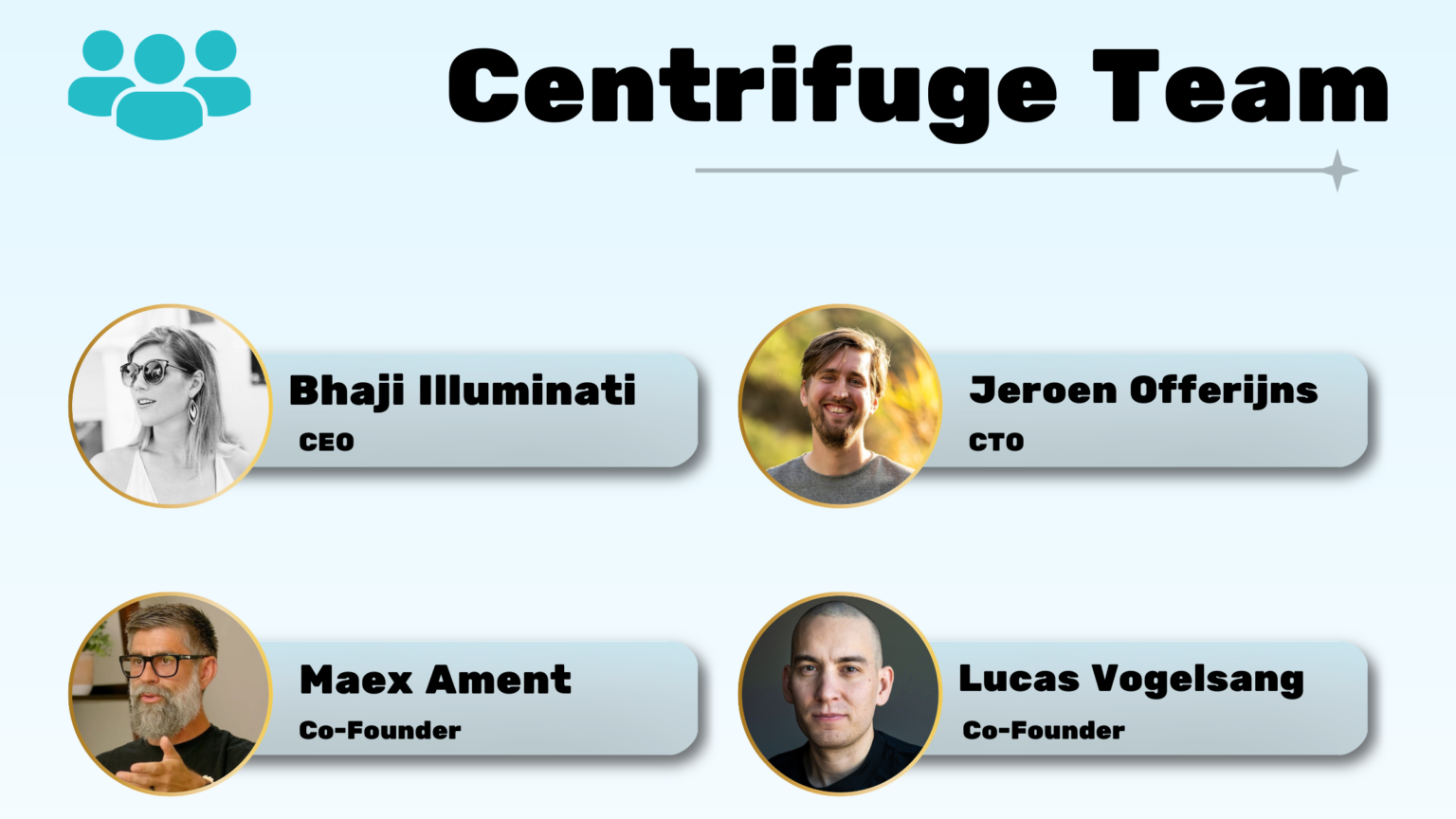
Centrifuge was founded in 2017 by Lucas Vogelsang, Martin Quensel, Philip Stehlik, and an early team with backgrounds in fintech, supply chain finance, and enterprise software. Lucas Vogelsang and Martin Quensel previously worked at Taulia, bringing experience in receivables financing and working capital solutions before moving into blockchain infrastructure.
As the protocol expanded, its leadership also evolved. Recent announcements surrounding Centrifuge’s partnership with Coinbase identify Bhaji Illuminati as CEO, reflecting the project’s continued institutional focus.
The project has attracted backing from several well-known crypto investors. Supporters include Galaxy Digital, ParaFi Capital, IOSG Ventures, Circle Ventures, Coinbase Ventures, and BlockTower Capital. In May 2026, Coinbase Ventures made a strategic seven-figure investment and named Centrifuge a preferred tokenization partner for Base, strengthening the protocol’s position within the growing RWA ecosystem.
Compared with many RWA projects, Centrifuge benefits from both an experienced founding team and strong institutional backing. Those relationships provide funding, industry connections, and access to asset originators. Long-term success, however, will depend on continuing to grow institutional participation and fee-generating assets on the platform.
Centrifuge Tokenomics (CFG)
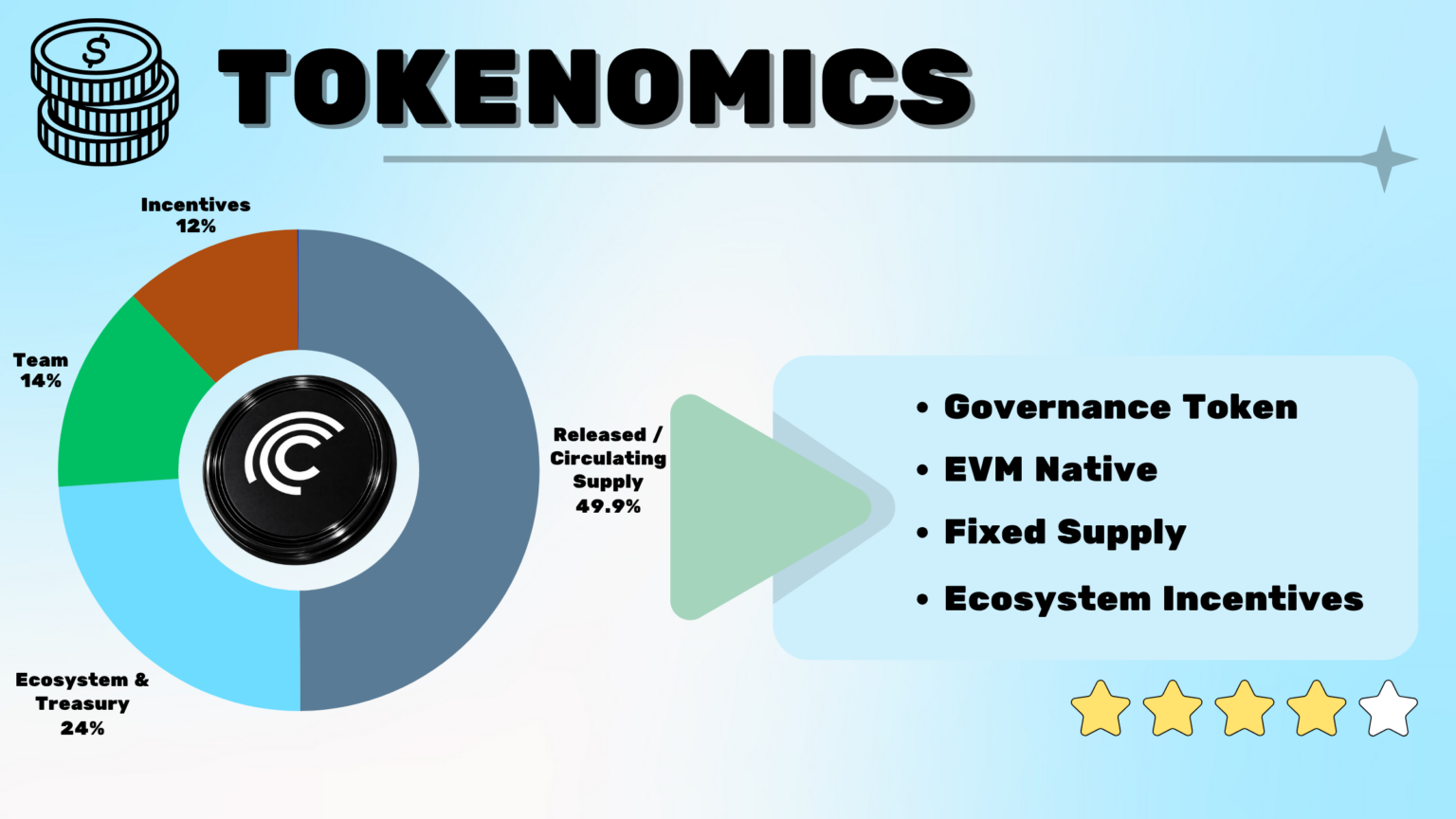
CFG is the governance token of the Centrifuge ecosystem. Circulating supply is estimated between 380 million and 577 million tokens, depending on the data source, while total supply is roughly 680 to 692 million. Unlike fixed-supply assets, CFG does not have a strict maximum supply due to historical inflation and foundation allocations.
The token distribution includes allocations for the community, ecosystem growth, the foundation, contributors, early investors, and strategic initiatives. Community and ecosystem allocations represent the largest share of the supply, while team and insider allocations account for a smaller portion.
Most early vesting schedules have largely completed, although foundation distributions and ecosystem incentives continue to release tokens over time. This creates ongoing supply that must be absorbed by increasing demand from protocol usage and governance participation.
CFG’s primary utility is governance. Holders vote on protocol upgrades, treasury decisions, and network parameters. More importantly, the token’s economic role has strengthened since the protocol activated fee collection in February 2026. Protocol revenue is now generated directly from asset management and financing activity, with annualized revenue estimated at roughly $5.3 million. Governance discussions have also explored treasury strategies such as token buybacks, although these have not become a permanent feature.
Ultimately, CFG’s long-term value depends less on emissions and more on continued growth in tokenized assets, protocol fees, and institutional adoption.
Is Centrifuge Safe?
Centrifuge has established one of the longer operating histories within the RWA sector. The protocol has undergone multiple smart contract audits over its lifetime and has not experienced any publicly reported exploits affecting the core protocol. Governance decisions are also managed through public forums, providing transparency around upgrades and treasury proposals.
That said, RWA protocols introduce risks that go beyond traditional DeFi.
Smart contract security remains important, but investors must also consider legal, regulatory, and credit risks. The value of tokenized assets ultimately depends on the quality of the underlying loans, receivables, or Treasury products, as well as the ability of originators to manage those assets responsibly. Oracle failures, inaccurate reporting, or legal disputes over off-chain ownership could also affect investor outcomes.
The protocol’s expansion across multiple EVM networks introduces the usual cross-chain considerations, although these are common across much of today’s blockchain ecosystem.
Overall, Centrifuge has demonstrated a strong operational record supported by institutional partnerships and transparent governance. However, anyone evaluating the protocol should consider both blockchain risks and the additional legal and credit risks that come with investing in tokenized real-world assets.
Centrifuge vs Competitors
Centrifuge operates in a rapidly growing RWA sector alongside several established protocols. While each focuses on tokenizing traditional assets, their approaches differ.
Centrifuge
Mature protocol with the fee switch activated.
Ondo Finance
Large-scale institutional RWA products in production.
Maple Finance
Live institutional credit pools with active buyback mechanisms.
Centrifuge differentiates itself through its long history in structured credit and its multi-tranche investment pools, which allow investors to choose different levels of risk and return. The protocol has also shifted toward generating sustainable revenue through protocol fees rather than relying primarily on governance.
Ondo Finance currently leads the sector in scale, particularly through tokenized Treasury products, while Maple Finance focuses on institutional lending and private credit markets.
Each protocol serves a different part of the RWA ecosystem. Centrifuge’s long-term success will depend on expanding institutional partnerships, increasing fee generation, and maintaining the quality of assets brought onto the platform.
Strengths and Risks
Centrifuge has several strengths that set it apart within the RWA sector. The protocol manages approximately $1.63 billion in TVL, making it one of the largest platforms for tokenized private credit and Treasury products. The activation of protocol fees in February 2026 also marked an important milestone, creating recurring revenue tied directly to asset activity rather than token incentives. Combined with institutional partnerships, including Coinbase’s preferred tokenization relationship on Base, Centrifuge has built one of the strongest foundations in the sector.
The risks deserve equal attention.
Competition continues to intensify as platforms such as Ondo Finance and Maple Finance expand their own institutional offerings. Unlike purely on-chain protocols, Centrifuge also faces legal, regulatory, and credit risks tied to the underlying real-world assets. Future protocol revenue depends on attracting new asset originators and institutional capital, while governance proposals such as treasury buybacks will only strengthen the token’s value proposition if they are implemented successfully.
Ultimately, Centrifuge’s investment case depends on whether protocol revenue and institutional adoption continue growing alongside the broader RWA market.
Should You Buy CFG?
The answer depends on your investment thesis.
Builders developing tokenized asset platforms or institutional DeFi products may find Centrifuge’s infrastructure particularly attractive. Its pool architecture, compliance features, and multi-chain support are designed specifically for real-world asset issuance and financing.
For investors, the most important metrics are protocol fees, TVL growth, institutional partnerships, and governance decisions that strengthen the connection between protocol activity and the CFG token. These indicators provide a clearer picture of long-term value than price movements alone.
Centrifuge has established itself as one of the leading infrastructure providers in the RWA sector. While the protocol has demonstrated meaningful adoption and recurring revenue, its long-term success will depend on continued growth in tokenized assets, institutional participation, and sustainable fee generation.
As with any crypto investment, investors should conduct their own research and ensure the project’s risk profile aligns with their investment objectives.
Final Verdict: Is Centrifuge Worth Buying in 2026?
Centrifuge has moved beyond being an early RWA experiment. It now operates one of the largest tokenized asset platforms in the market, supported by significant TVL, institutional partnerships, and growing protocol revenue.
The next phase is about execution.
Continued growth in fee generation, institutional adoption, and tokenized assets will be more important than headline TVL alone. At the same time, investors should continue monitoring regulatory developments, credit performance, and governance decisions that influence how protocol value flows to CFG holders.
Overall, Centrifuge stands out as one of the more established infrastructure projects in the RWA sector. Its long-term opportunity is closely tied to the continued expansion of tokenized real-world assets and its ability to convert that growth into sustainable value for the protocol.
Frequently Asked Questions
What is Centrifuge?
How does Centrifuge work?
What is the status of Centrifuge’s protocol fees and buyback governance?
What is CFG used for?
Is Centrifuge safe?
How is Centrifuge different from other RWA protocols?
Is CFG a good investment?
In this article
Why RWA Tokenization Protocols Are Difficult to ScaleWhat Is Centrifuge?How Centrifuge WorksTechnology and ArchitectureTeam and BackersCentrifuge Tokenomics (CFG)Is Centrifuge Safe?Centrifuge vs CompetitorsStrengths and RisksShould You Buy CFG?Final Verdict: Is Centrifuge Worth Buying in 2026?