Was Hal Finney really Satoshi Nakamoto? Inside the new “Finding Satoshi” documentary and the theory reigniting crypto’s biggest mystery.

Author: Arushi Garg
Hal Finney was not conclusively proven to be Satoshi Nakamoto, though he remains one of the most compelling candidates in Bitcoin history. His cryptographic expertise, early involvement in Bitcoin, and direct communication with Satoshi continue to fuel speculation more than 15 years after Bitcoin launched.
The theory has resurfaced in 2026 following the release of the Finding Satoshi documentary, which revisits Finney’s role in Bitcoin’s origins and introduces a broader theory involving fellow cypherpunk Len Sassaman. But how much evidence actually exists?
And how much of the theory is driven by coincidence, mythology, and the enduring mystery surrounding Bitcoin’s creator?
Before Bitcoin existed, Hal Finney was already one of the most respected figures in the cypherpunk movement. Born in 1956, Finney was a computer scientist and cryptographer who spent decades working on digital privacy technologies. He became widely known within cypherpunk circles during the 1990s, contributing to discussions about encryption, anonymous communication, and digital money long before cryptocurrencies became mainstream.
Finney worked for PGP Corporation, the company behind Pretty Good Privacy (PGP), one of the most influential encryption tools ever created. PGP allowed users to send encrypted communications at a time when online privacy tools were still primitive. His technical reputation inside the cryptography community was extremely strong. One reason the “Hal Finney Satoshi Nakamoto” theory persists is because Finney had already explored ideas closely related to Bitcoin years before Bitcoin appeared.
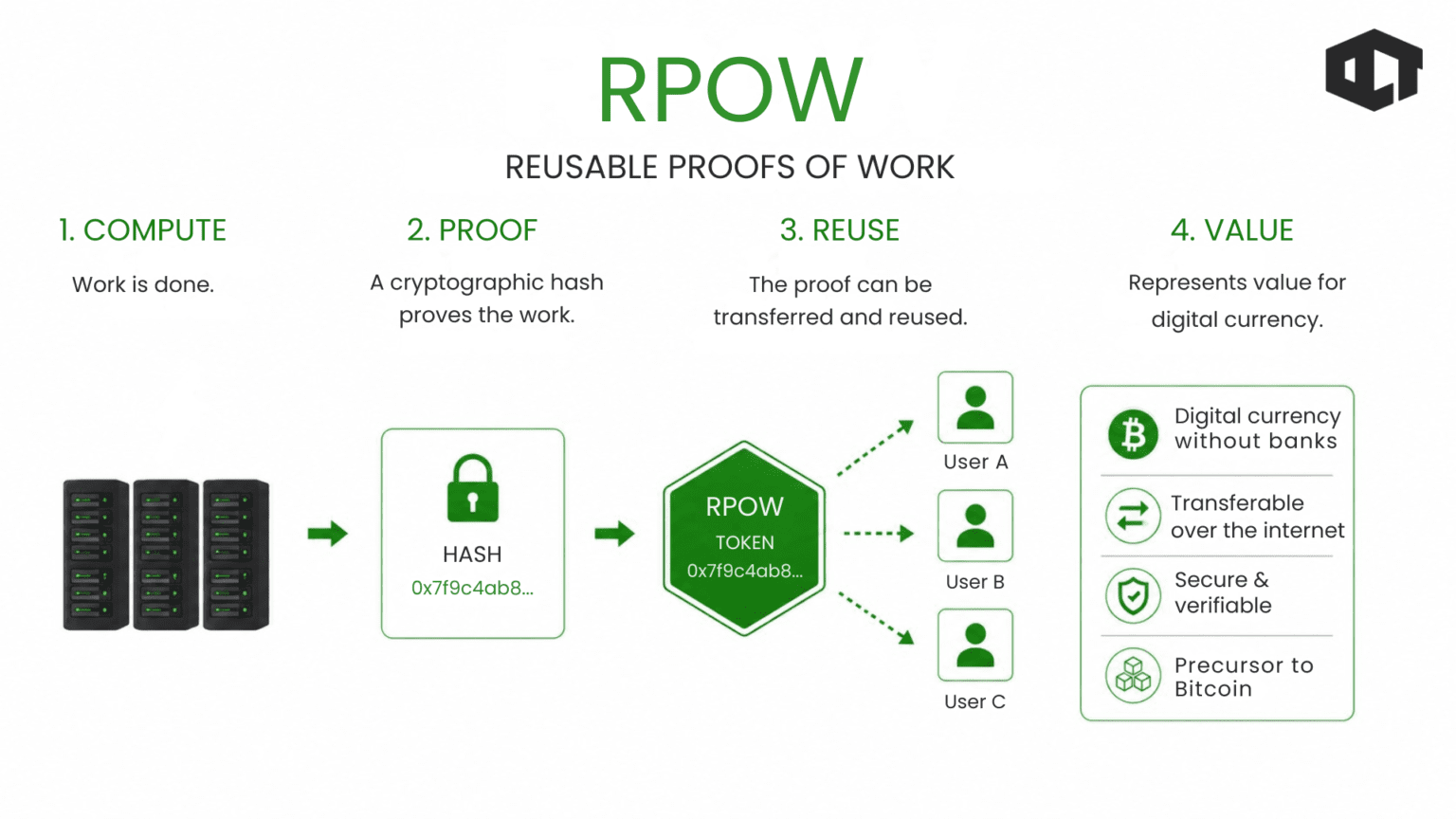
In 2004, he created RPOW, or Reusable Proofs of Work. RPOW expanded on Adam Back’s Hashcash system by allowing proof-of-work tokens to be reused and transferred between users. While it was not decentralized in the same way Bitcoin would later become, many researchers view RPOW as an important conceptual predecessor to Bitcoin. For non-technical readers, RPOW essentially attempted to turn computational work into transferable digital tokens. That idea sits at the heart of Bitcoin itself.
Finney was also deeply active on the cypherpunk mailing lists where early digital currency concepts were debated. When Satoshi Nakamoto published the Bitcoin whitepaper in 2008, Finney immediately understood its significance. He was one of the first people to respond publicly.
In January 2009, he famously posted:
“Running bitcoin.”
That short message later became one of the most iconic moments in crypto history. Finney’s personal story also became deeply emotional for many Bitcoin supporters after he was diagnosed with ALS in 2009. Despite the disease progressively limiting his mobility, he continued contributing to Bitcoin discussions and software development for years.
He died in 2014. Because of his reputation, technical ability, humility, and proximity to Bitcoin’s birth, many people still view him as the most believable Satoshi candidate.
On January 12, 2009, Hal Finney received 10 BTC directly from Satoshi Nakamoto. This transaction is widely considered the first Bitcoin transaction between two individuals in history. At the time, Bitcoin had almost no financial value. The transaction was primarily a test of the system’s functionality during Bitcoin’s earliest experimental phase.
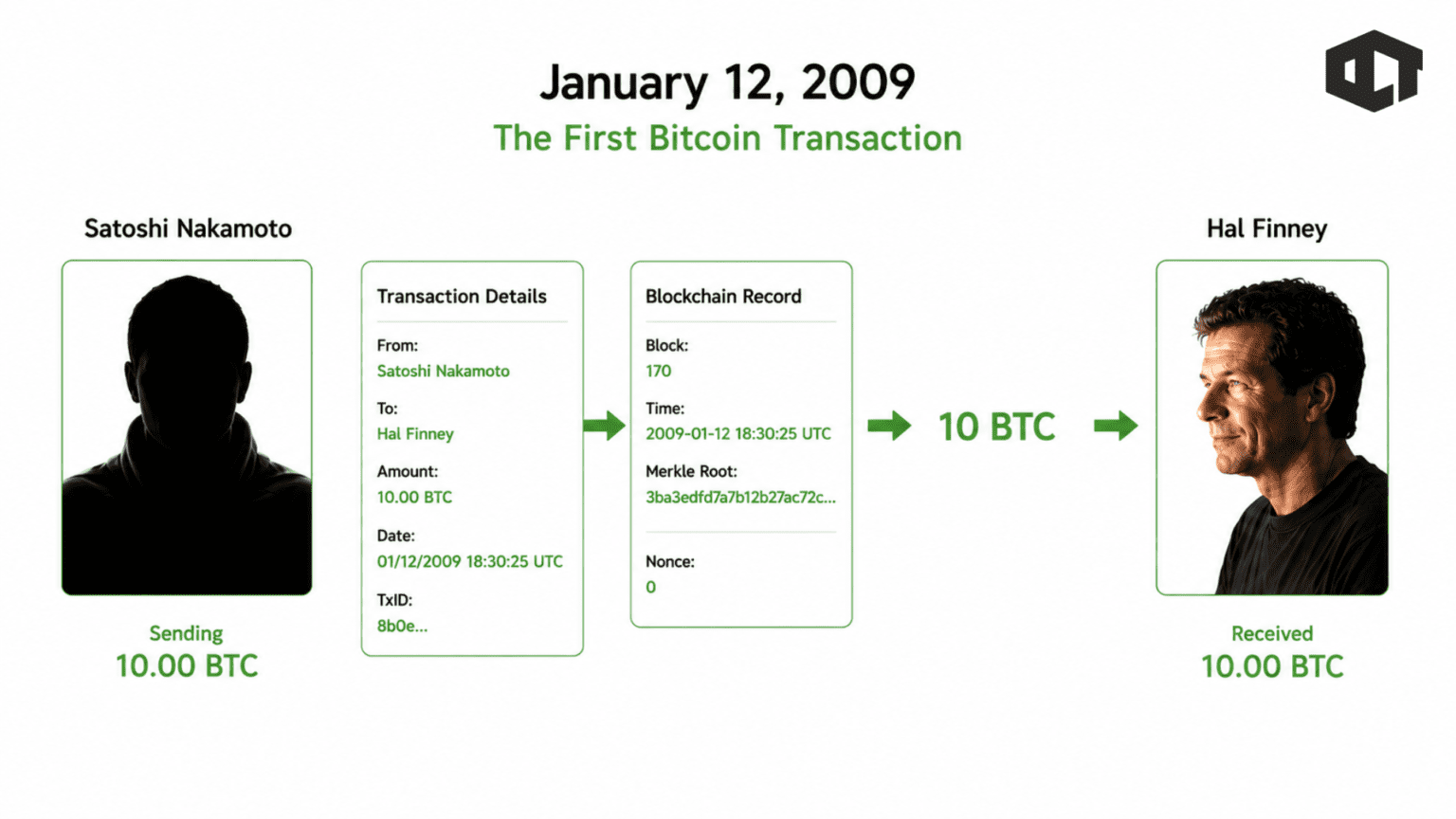
Finney later described working directly with Satoshi to identify bugs and improve the software. That close collaboration is one of the strongest reasons speculation around Finney persists today. Another detail often mentioned in documentaries and online theories is geography.
Finney lived in Temple City, California, only a few blocks away from a man named Dorian Nakamoto, who later became the subject of a separate Satoshi theory after a controversial 2014 Newsweek article. Most researchers believe the proximity was coincidental, but conspiracy theories frequently point to it as suspicious.
Still, the documented historical facts are significant enough on their own, Finney was among Bitcoin’s earliest users, communicated directly with Satoshi Nakamoto, and received the first Bitcoin transaction ever sent between two individuals. Very few people in Bitcoin history can claim all three connections simultaneously.
Few people can check all four boxes simultaneously.
The 2026 documentary Finding Satoshi reignited debate around Bitcoin’s origins by presenting a more complex theory than the traditional “Hal Finney was Satoshi” narrative.
Instead of arguing Finney acted alone, the documentary proposes that Bitcoin may have emerged from collaboration between Hal Finney and Len Sassaman.
The film suggests the two cypherpunks possessed complementary strengths.
According to the documentary’s thesis:
The filmmakers point to several factors:
The documentary also emphasizes stylistic similarities between Satoshi-era writings and cypherpunk communication norms associated with both men.
Importantly, however, the documentary does not provide cryptographic proof.
Instead, it builds a circumstantial case based on technical history, timelines, social networks, and behavioral analysis.
That distinction matters.
The theory is intriguing partly because it attempts to solve a long-standing problem: many researchers believe Bitcoin required expertise across multiple domains, including:
The documentary argues it may have been easier for two highly specialized cypherpunks to create Bitcoin together than for one person to possess elite expertise in every field.
Still, critics argue the evidence remains speculative.
The reason the Hal Finney theory never fully disappears is simple: the evidence is compelling enough to remain believable.
First, there is the technical capability question.
Finney absolutely possessed the cryptographic and engineering skills necessary to build Bitcoin. Unlike many Satoshi candidates, there is no need to stretch his credentials or invent expertise he did not have.
Second, there is timing.
Finney was involved with Bitcoin immediately after launch. He understood the whitepaper instantly and became one of the project’s earliest testers.
Third, there is RPOW.
Many historians consider RPOW one of the clearest conceptual predecessors to Bitcoin. While Bitcoin solved decentralization differently, the philosophical overlap is undeniable.
Fourth, Finney’s writing style and public persona resembled Satoshi in some respects:
Supporters of the theory also note that Finney rarely appeared interested in fame or recognition, which aligns with Satoshi’s eventual disappearance.
Then there is the human element.
Among all proposed Satoshi candidates, Hal Finney fits the mythology most naturally:
For many Bitcoin enthusiasts, the theory feels emotionally believable even beyond the technical evidence.
That emotional resonance is one reason the theory resurfaces every few years.
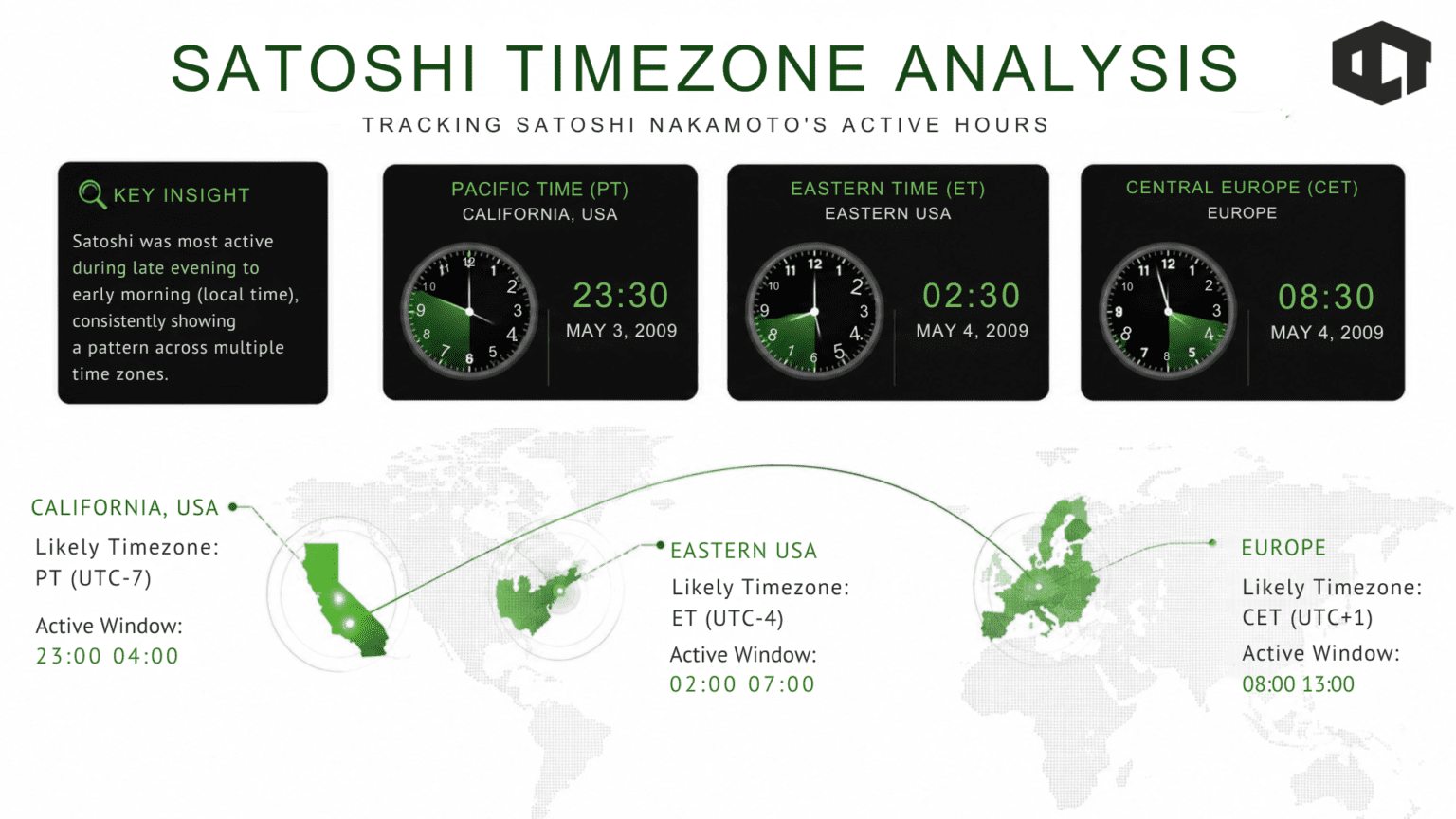
Despite the compelling circumstantial evidence, there are also serious arguments against Hal Finney being Satoshi Nakamoto. The strongest comes from timestamp analysis conducted by early Bitcoin developer Mike Hearn. Hearn analyzed timestamps associated with Satoshi’s code commits, emails, and forum activity. He observed a fairly consistent pattern suggesting Satoshi maintained sleeping hours incompatible with someone living in California.
The analysis indicated Satoshi appeared inactive during hours that aligned more closely with nighttime in the eastern United States or possibly Europe. This creates a problem for the Finney theory because Hal Finney was living in California during Bitcoin’s early development. Critics argue that maintaining such a consistent timezone pattern for years would have required deliberate manipulation, which seems unlikely.
There is also direct testimony from Finney himself. Before his death, Finney publicly denied being Satoshi and shared archived emails exchanged with Nakamoto as evidence. Those emails appeared authentic and showed technical discussions between two separate individuals. Many researchers view this as highly persuasive counter-evidence.
Additionally, blockchain analysts and cryptographers have repeatedly noted that no definitive connection between Finney and Satoshi’s wallets has ever been proven. That absence matters. Bitcoin’s creator mined massive amounts of BTC during the network’s earliest phase, and none of those holdings have ever been conclusively linked to Finney.
In short, while the circumstantial case remains strong, there is still no direct proof.
The biggest reason the “Hal Finney Satoshi Nakamoto” theory remains unresolved is simple: there is still no cryptographic proof.
In Bitcoin, definitive proof of identity would require signing a message using private keys connected to Satoshi Nakamoto’s earliest wallets. The strongest possible evidence would be a signed message from the Genesis Block address or from wallets known to belong to Satoshi during Bitcoin’s first year. Because Bitcoin uses public-key cryptography, such a signature would be instantly verifiable by anyone on the network. No leaked emails, writing analysis, documentary, or circumstantial evidence would carry the same weight.
So far, nobody has successfully done this.
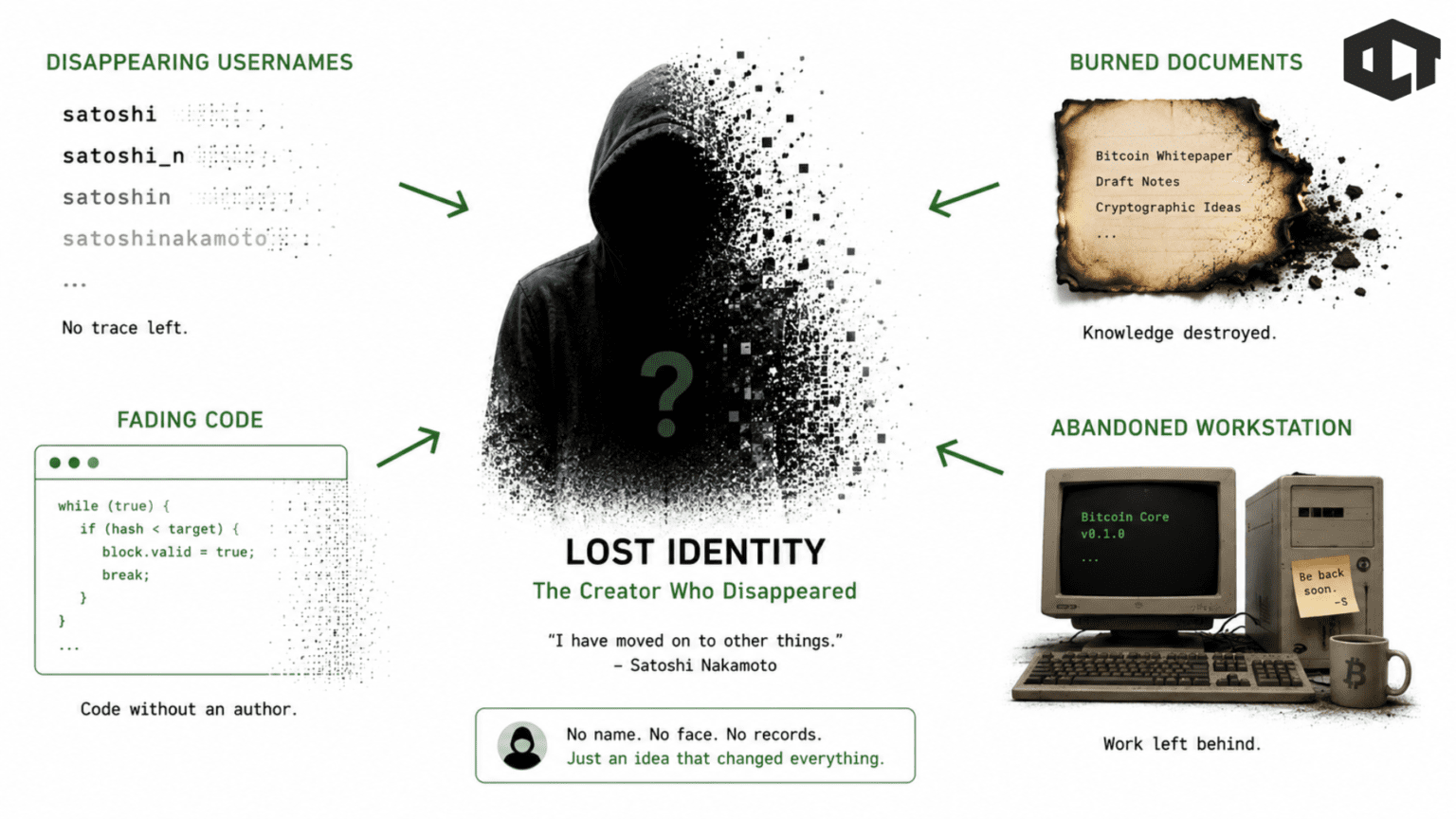
That absence is important because several people have publicly claimed to be Satoshi Nakamoto over the years. The most famous example was Australian computer scientist Craig Wright, who repeatedly claimed to be Bitcoin’s creator but failed to provide cryptographic proof accepted by the wider Bitcoin community. Hal Finney never attempted to sign messages from Satoshi’s wallets either. Before his death, he publicly denied being Satoshi Nakamoto and released archived emails showing conversations with Bitcoin’s creator.
For many researchers, that remains one of the strongest arguments against the theory.
Len Sassaman has increasingly become part of the Satoshi debate, particularly after the Finding Satoshi documentary. Sassaman was a highly respected cryptographer and privacy advocate deeply involved in cypherpunk culture. He worked on Mixmaster, an anonymous remailer system designed to protect user privacy by obscuring message origins and routing communications through multiple encrypted layers.
For non-technical readers, Mixmaster helped pioneer ideas that later influenced modern privacy systems. Sassaman also worked academically at KU Leuven in Belgium, focusing on cryptography and secure communication systems.
Supporters of the Sassaman theory point to several details:
Some theorists believe Sassaman may have contributed anonymity and communication architecture expertise while Finney handled more of Bitcoin’s monetary engineering.
However, evidence directly connecting Sassaman to Bitcoin remains limited. Like the Finney theory itself, most claims rely on circumstantial patterns rather than hard proof. Sassaman died in 2011, and his death has contributed to the mystique surrounding the theory. Still, most mainstream Bitcoin researchers remain cautious about drawing firm conclusions.
The “Hal Finney Satoshi Nakamoto” theory is not the only major theory surrounding Bitcoin’s creator. Another widely discussed candidate is Adam Back, the creator of Hashcash, a proof-of-work system that directly influenced Bitcoin mining. Back was cited in the Bitcoin whitepaper itself, making him one of the few people publicly acknowledged by Satoshi Nakamoto.
Unlike Hal Finney, however, Adam Back was not publicly involved in Bitcoin’s earliest testing phase. Finney interacted directly with Satoshi, received the first Bitcoin transaction, and helped debug the software during launch week.
Supporters of the Adam Back theory instead focus on:
Theories surrounding Back gained renewed attention after media investigations revisited early Bitcoin history and Satoshi-era communications.
Readers interested in that theory can also read OCT’s coverage of “NYT’s Adam Back investigation”:
NYT Investigation: Adam Back and the Satoshi Theory. Ultimately, both theories suffer from the same problem: neither includes definitive cryptographic proof.
More than 15 years after Bitcoin launched, the mystery surrounding Satoshi Nakamoto remains unresolved. The “Hal Finney Satoshi Nakamoto” theory continues resurfacing because Finney possessed nearly every quality people associate with Bitcoin’s creator: elite cryptographic expertise, cypherpunk credibility, early Bitcoin involvement, and a personality aligned with Satoshi’s public behavior.
Yet the evidence remains circumstantial. No wallet signatures, private keys, or definitive records have ever connected Finney to Satoshi Nakamoto directly. Until cryptographic proof emerges, the theory will likely remain one of Bitcoin’s most fascinating unanswered questions rather than a confirmed historical fact.


Tokenization of RWA yields onchain might be the biggest opportunity that no one has noticed
Cold Wallet Safety 2026: Are Hardware Wallets Still Safe?
One Token, Multiple Products. Can Zylo Deliver?
The Rise of NEAR Protocol 2026: Inside the 530% Rally and the ETF
Tokenization of RWA yields onchain might be the biggest opportunity that no one has noticed
Cold Wallet Safety 2026: Are Hardware Wallets Still Safe?
One Token, Multiple Products. Can Zylo Deliver?
The Rise of NEAR Protocol 2026: Inside the 530% Rally and the ETF