
Author: Chirag Sharma
Every year, as May begins, one phrase dominates trading conversations across both traditional finance and crypto markets: “sell in May and go away.” The phrase sounds outdated, almost like a relic from old Wall Street trading floors, yet it continues to influence decision-making in a market that operates 24/7 and spans global participants.
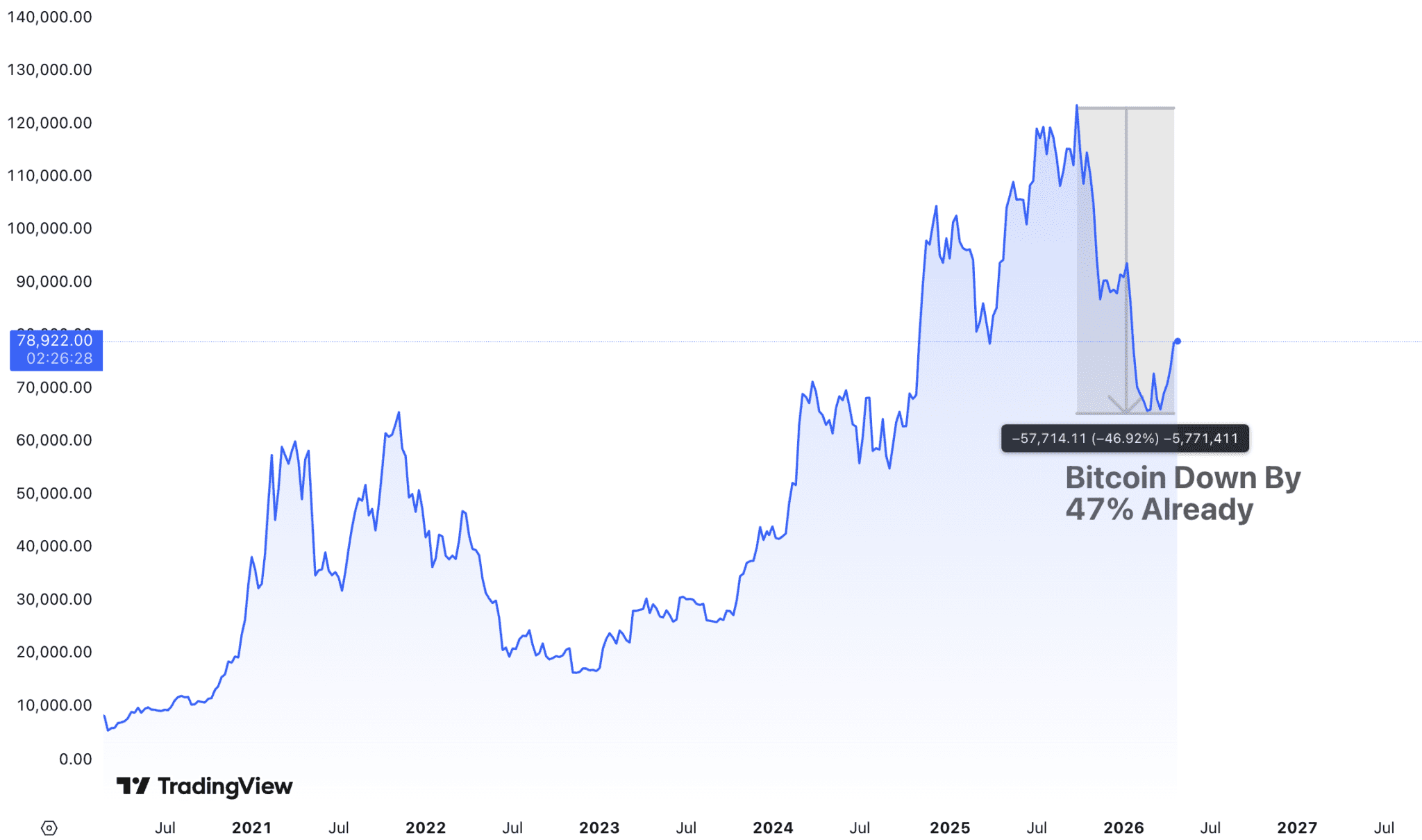
In May 2026, the narrative feels louder than usual. Bitcoin trades near $78,000, significantly below its late-2025 peak, and traders remain divided on what comes next. Some view the rule as a reliable risk management tool, while others dismiss it as a superstition that fails in modern markets. The truth lies somewhere in between.
To understand whether the sell in May strategy still holds relevance, it is important to explore its origins, examine how it transitioned into crypto, analyze the actual data behind it, and evaluate how traders should approach it in today’s market conditions.
The phrase “sell in May and go away” dates back to 19th-century London, where wealthy investors would exit positions before leaving for summer vacations. During this period, trading activity dropped significantly because key participants were physically absent from markets. Lower participation meant thinner liquidity, slower price discovery, and weaker overall returns.
This pattern eventually became statistically observable. Post-war data from traditional equity markets shows a clear seasonal trend. From November through April, markets historically perform strongly, driven by earnings cycles, fiscal planning, and higher participation. From May through October, returns tend to weaken, with August and September often delivering the worst performance.
The logic behind the rule is straightforward. Investors lock in gains during strong months and reduce exposure during periods of lower liquidity and weaker momentum. While the strategy never guaranteed success, it offered a simple framework for managing risk during historically softer periods.
Even today, human behavior continues to influence markets. Vacation cycles, institutional activity, and seasonal capital flows still impact liquidity, even in digital environments. This behavioral foundation explains why the sell in May concept has survived for more than a century.
Crypto markets operate continuously, without trading floors or closing hours, yet they have still developed similar seasonal patterns. Over time, traders began noticing that summer months often coincide with reduced activity, increased volatility, and weaker price performance.
Several factors contribute to this phenomenon.
First, institutional participation has grown significantly since 2024, especially after the introduction of Bitcoin ETFs. As a result, crypto markets now mirror traditional financial behavior more closely. When institutional traders reduce activity during summer, liquidity in crypto also declines.
Second, many crypto cycles follow a recognizable pattern. Strong momentum often builds during late-year rallies and early-year inflows, driven by new capital and renewed market optimism. By the time May arrives, markets frequently enter a consolidation phase, where gains stabilize or correct before the next major move.
Third, thinner liquidity amplifies volatility. When fewer participants actively trade, smaller orders can move prices more aggressively. This creates an environment where downside moves feel sharper and more unpredictable.
Finally, macro events play a larger role during low-liquidity periods. Interest rate decisions, geopolitical developments, and regulatory news can trigger outsized reactions when trading volumes are reduced.
These factors explain why the sell in May narrative migrated from traditional markets into crypto. It is not about identical mechanics, but about similar behavioral patterns influencing different systems.
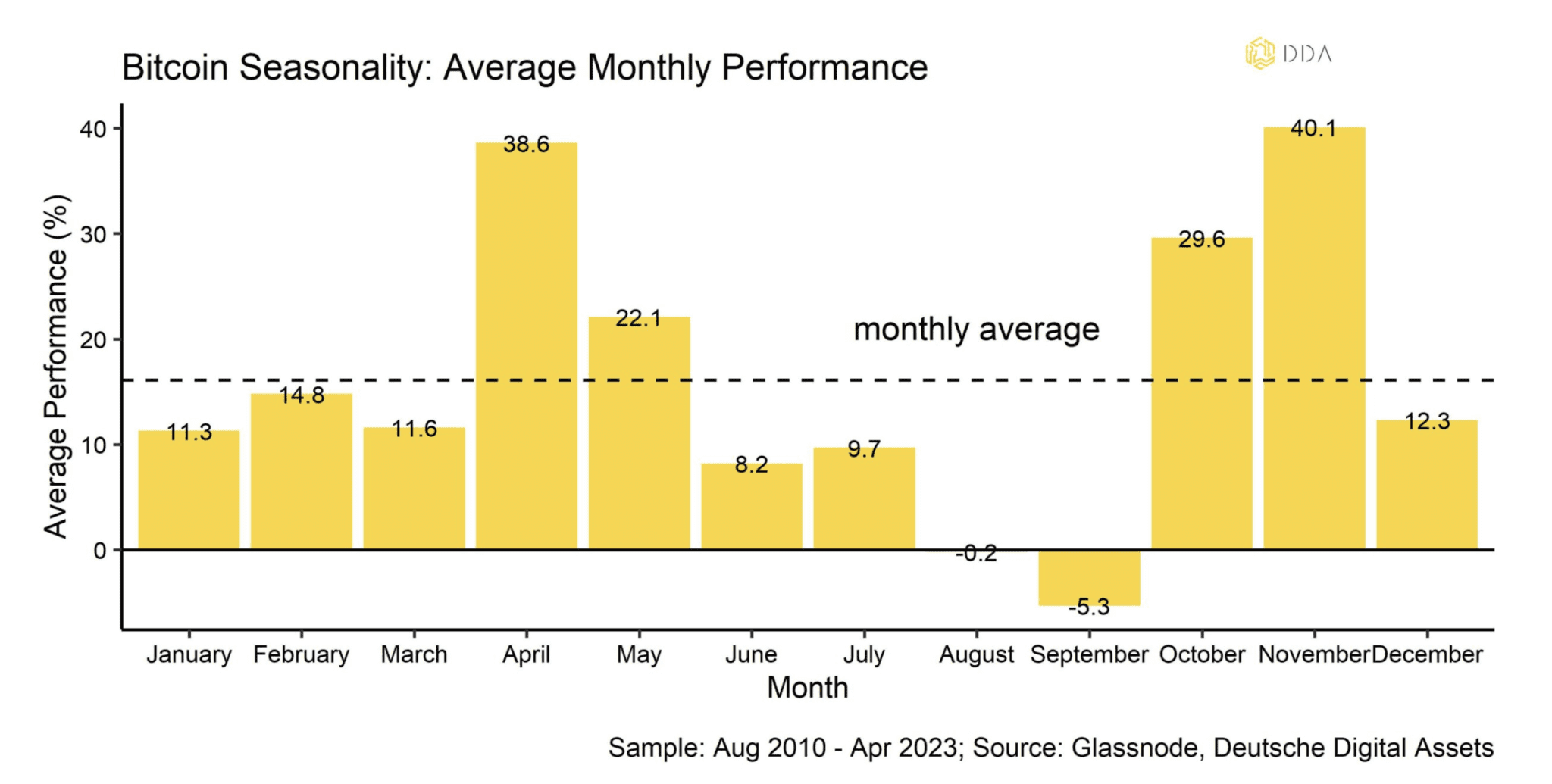
While the narrative is widely accepted, the data presents a more nuanced picture. Contrary to popular belief, May itself is not consistently a weak month for Bitcoin. In fact, historical performance suggests that May often delivers moderate gains, ranking around the middle compared to other months.
The real weakness tends to appear later in the summer.
June and July show mixed results, with occasional strength but generally lower returns compared to peak months. August typically remains flat or slightly negative, while September consistently ranks as one of the weakest months in crypto history.
Source : deutschedigitalassets
This distinction is important because it challenges the literal interpretation of the rule. Selling in May may not always be optimal, but reducing exposure before late summer has historically shown better results.
To simplify this, consider the seasonal breakdown:
At the same time, October and November often mark the beginning of strong upward movements, with significant gains across multiple cycles.
This creates a broader pattern where mid-year weakness transitions into late-year strength. The sell in May rule captures this idea but oversimplifies the timing.
The relevance of the sell in May strategy depends heavily on current market conditions, and 2026 presents a unique setup.
Bitcoin reached a major peak in October 2025 and has since undergone a significant correction. By May 2026, the market sits in a transitional phase, where it is neither in a full bull run nor in a deep bear market. This creates uncertainty about how seasonal patterns will play out.
Several factors influence the current outlook.
First, the correction has already occurred. Unlike previous cycles where summer declines triggered major drawdowns, the market has already absorbed a large portion of downside pressure earlier in the year. This reduces the probability of another severe drop purely based on seasonality.
Second, institutional involvement has increased significantly. Large players now accumulate Bitcoin during periods of weakness, which can provide a structural floor for prices. This behavior did not exist at the same scale in earlier cycles.
Third, macroeconomic conditions remain uncertain. Interest rates, inflation expectations, and central bank policies continue to influence risk assets. Any shifts in these factors could override seasonal patterns.
Finally, market awareness of the rule itself reduces its effectiveness. When too many participants anticipate a specific outcome, the edge often diminishes. Traders front-run expectations, creating different price dynamics than historical patterns suggest.
These factors suggest that while the sell in May narrative still matters, its impact may be less pronounced in 2026 compared to earlier cycles.
Professional traders rarely follow the sell in May rule blindly. Instead, they treat it as a contextual signal that complements other indicators.
One common approach involves partial de-risking rather than full exits. Traders reduce exposure by a percentage, typically moving a portion of their portfolio into stable assets while maintaining core positions. This allows them to protect against downside while staying positioned for unexpected upside.
Another strategy focuses on accumulation during weakness. Instead of exiting completely, traders use historically weaker months to build positions at lower prices. This approach aligns with long-term investing principles rather than short-term timing.
Key strategies traders use include:
For example, if Bitcoin holds strong above key technical levels despite seasonal expectations, traders may ignore the rule entirely. Conversely, if the market shows weakness combined with negative macro signals, they may increase defensive positioning.
The key takeaway is that the sell in May strategy works best as a filter, not a trigger. It provides context, but it should not replace analysis.
The phrase “sell in May and go away” has survived for over a century because it captures a real, observable pattern in financial markets. Seasonal behavior, liquidity cycles, and human psychology continue to influence price movements, even in modern crypto markets.
However, the rule is not absolute.
In crypto, May itself is not necessarily weak, and the real seasonal risk often appears later in the summer. Additionally, the increasing presence of institutional capital, evolving market structure, and macroeconomic complexity have reduced the effectiveness of simple calendar-based strategies.
In 2026, the market presents a unique scenario where much of the expected downside has already occurred, and structural demand may support prices during traditionally weaker periods.
For traders and investors, the best approach is balanced.
Use the sell in May concept as a guide for managing risk and expectations, but do not rely on it as a standalone strategy. Combine it with technical analysis, macro signals, and on-chain data to make informed decisions.
Ultimately, success in crypto comes from adaptability. Markets evolve, and strategies must evolve with them. The rule still matters, but how you use it matters far more.