Loading Search...


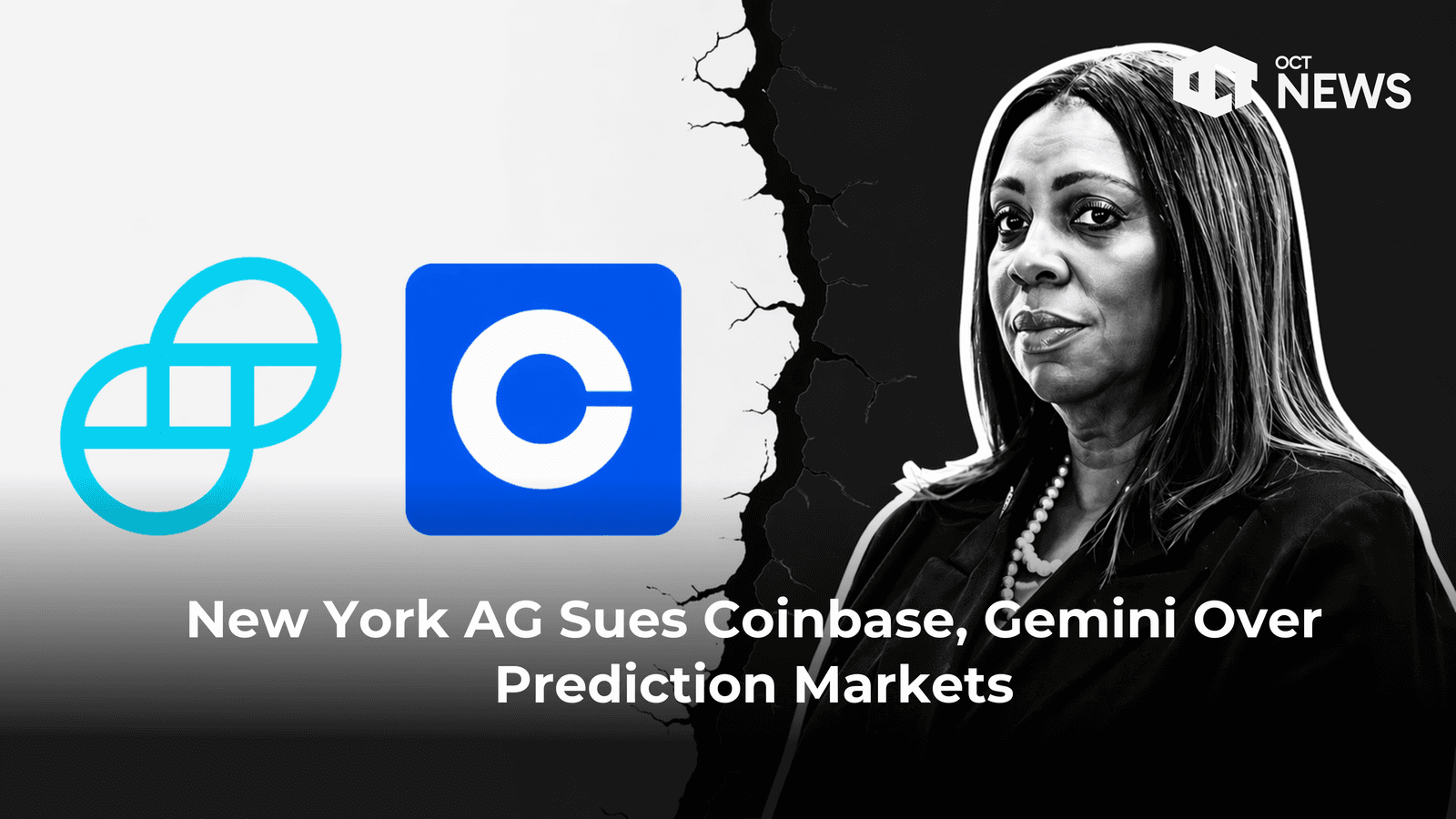
New York AG Letitia James sues Coinbase and Gemini, calling their prediction markets illegal gambling despite federal CFTC oversight claims.

Author: Akshat Thakur
22nd April 2026 – New York Attorney General Letitia James filed lawsuits against Coinbase Financial Markets and Gemini Titan on Monday. She called their prediction markets “illegal gambling operations” that violate state law.
High Signal Summary For A Quick Glance

DOC🤌DELUCCI
@crypto_rigatoni

@iampaulgrewal Hi ,, tell Brian he’ll never be ripple. ,, thank you
About the NY lawsuit news - prediction markets are federally regulated national exchanges, registered with the CFTC. This issue is proceeding in New York federal court as we speak. Coinbase will continue to fight for the federal oversight of these markets that Congress intended.
06:35 PM·Apr 21, 2026

Action 💬
@ActionCEO
@coinbureau NY AG suing Coinbase & Gemini over prediction markets, calling them "gambling" Truth is... crypto in general can feel like gambling if you don't know what you're doing. 😂
🚨JUST IN: NEW YORK SUES COINBASE AND GEMINI New York has filed lawsuits against Coinbase and Gemini for alleged violations of state law, according to court records cited by Reuters. https://t.co/WMKef1lMTn
06:24 PM·Apr 21, 2026

Jody
@100xJody
@iampaulgrewal Hey Paul what is the difference between me placing a Moneyline bet on the Hurricanes vs me placing a prediction markets trade for "yes" on the "Hurricanes winning" prediction market?
About the NY lawsuit news - prediction markets are federally regulated national exchanges, registered with the CFTC. This issue is proceeding in New York federal court as we speak. Coinbase will continue to fight for the federal oversight of these markets that Congress intended.
05:52 PM·Apr 21, 2026
Steady attention without excessive speculation.
The parallel complaints were filed in Manhattan state court. According to the AG’s office, both platforms let users trade on outcomes of sports matches and elections without required Gaming Commission licenses.
As a result, James is seeking fines, profit forfeiture, and restitution for affected New York customers.
Prediction markets let participants buy and sell contracts tied to future events. For example, a trader might purchase “yes” shares on a team winning a game. The contract pays out based on the verified outcome.
Coinbase and Gemini offered these event-based contracts as part of broader derivatives suites. Both companies registered the products with the federal Commodity Futures Trading Commission (CFTC). They positioned the markets as financial tools, not sports betting.
New York disagrees with that framing. The state maintains that any product allowing bets on sports or elections falls under its gaming laws. In contrast, the exchanges argue that federal registration overrides state requirements.
Paul Grewal, Coinbase’s Chief Legal Officer, responded on X shortly after the suits became public.
He wrote: “About the NY lawsuit news – prediction markets are federally regulated national exchanges, registered with the CFTC. This issue is proceeding in New York federal court as we speak.”
Grewal added that Coinbase will “continue to fight for the federal oversight of these markets that Congress intended.” His statement signals an aggressive litigation strategy rather than settlement.
Notably, his reference to a separate federal case suggests Coinbase already challenges New York’s authority in another venue. If a federal judge rules in the exchange’s favor, it could neutralize the AG’s case.
This is not the first time James has targeted major crypto firms. Her office sued Bitfinex and Tether in 2021 over reserve disclosures. She also brought a fraud case against former Celsius CEO Alex Mashinsky.
In February 2026, James issued a consumer alert warning that unlicensed prediction markets mimic sports wagering. That alert foreshadowed the current lawsuits.
New York’s BitLicense framework, introduced in 2015, was among the first state-level crypto licensing regimes. Because of this history, the state has consistently taken an aggressive regulatory stance.
Key milestones in New York AG Lawsuit Against Coinbase and Gemini Prediction Markets
Coinbase and Gemini introduce event-based contracts tied to real-world outcomes, structuring them as CFTC-registered derivatives rather than state-licensed wagers.
New York Attorney General warns that prediction markets resemble gambling products and may expose users to significant financial risk.
AG Letitia James sues Coinbase Financial Markets and Gemini Titan, alleging unlicensed gambling operations and seeking fines, forfeiture, and restitution.
Coinbase states its markets are federally regulated under the CFTC and signals intent to defend federal preemption over state gambling laws.
The central legal issue is straightforward. Does CFTC registration shield platforms from state gambling laws?
Platforms like Polymarket and Kalshi treat event contracts as CFTC-regulated commodities. Kalshi won a key federal court ruling in 2024 on election contracts. That victory emboldened other exchanges to enter the space.
The Commodity Exchange Act contains broad preemption language. Exchanges say this means nationally regulated derivatives cannot be reclassified as state gambling products. However, New York counters that its police powers over gambling remain intact.
The stakes extend well beyond Coinbase and Gemini. Prediction markets have processed billions in trading volume. Polymarket alone reportedly handled over $3.5 billion during the 2024 election cycle.
A win for New York could chill similar offerings nationwide. Other exchanges and DeFi protocols with event contracts could face copycat suits. That would force them into a patchwork of state licensing frameworks.
Conversely, a loss for New York would strengthen the case for a national CFTC shield. It would likely accelerate prediction market growth across the U.S.
The litigation will unfold on two parallel tracks. State-court complaints will move through New York’s system, where James seeks injunctions and penalties. Meanwhile, the exchanges are likely arguing federal preemption in a separate federal venue.
Motions to dismiss and possible appeals could stretch into 2027. In the short term, both platforms will likely continue serving non-New York users. They may restrict or pause event contracts for New York residents.
Settlement talks may emerge if the AG sees a restitution opportunity. Still, Grewal’s statement signals Coinbase intends to fight on federal grounds. The outcome could define whether prediction markets operate under one national framework or face state-by-state licensing battles.
This is not financial advice. Readers should conduct their own research before making investment decisions.
Our Crypto Talk is committed to unbiased, transparent, and true reporting to the best of our knowledge. This news article aims to provide accurate information in a timely manner. However, we advise the readers to verify facts independently and consult a professional before making any decisions based on the content since our sources could be wrong too. Check our Terms and conditions for more info.