Explore how Nami aims to fix ve(3,3) DEXs with adaptive emissions, multichain liquidity, and a revenue-driven token model.

Author: Akshat Thakur
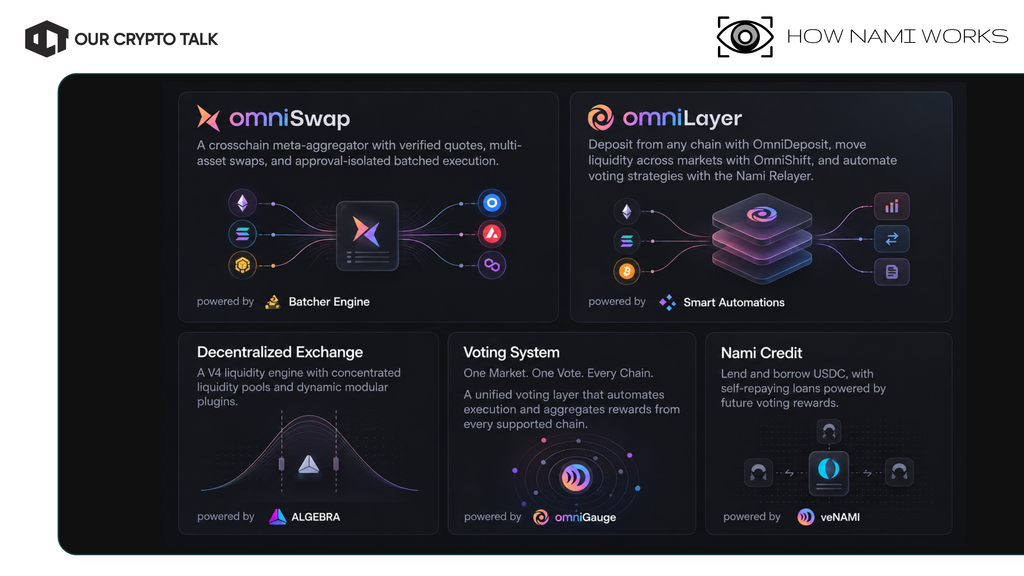
Nami is a multichain decentralized exchange (DEX) built around a veDEX model. Its stack combines a V4 concentrated-liquidity AMM, dynamic d(3,3) emissions, Omni Layer products, and a veNAMI credit module. The goal is to coordinate liquidity and incentives across multiple chains instead of depending on a single host network.
Nami targets two problems that have hurt first-generation ve(3,3) DEXs: runaway token emissions and dependence on one chain’s growth. When incentives outpace fee generation, token holders face dilution. When the host chain loses momentum, liquidity and trading activity can decline with it.
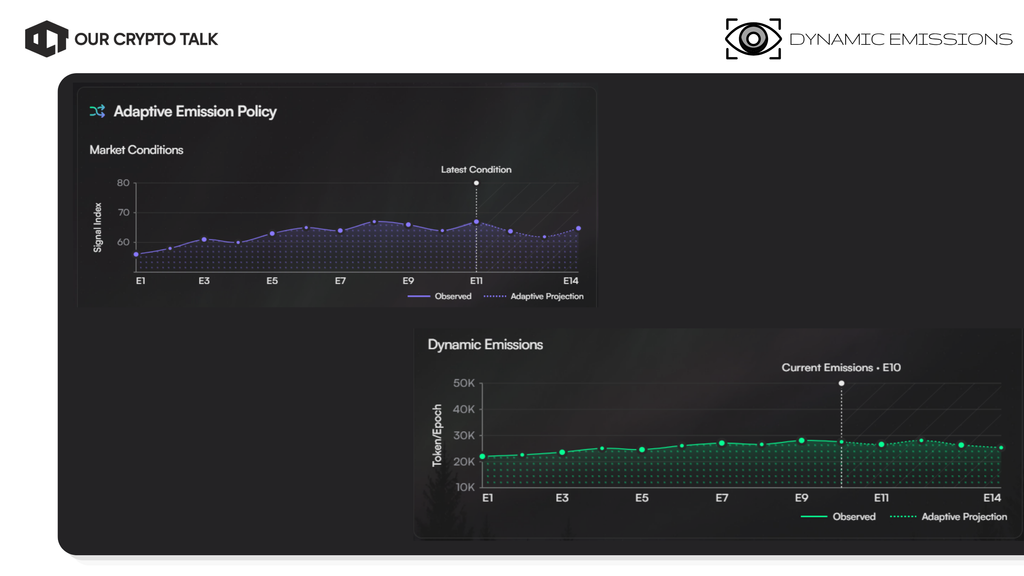
Nami’s proposed solution is d(3,3), which adjusts weekly emissions using fees, capital efficiency, and price signals. Team backtests claim the model would have emitted fewer tokens in eight of nine historical DEX cases, with reductions of up to approximately 68%. The team also estimates that the model could have saved more than $380 million in token emissions at historical prices. These remain backtested claims until live data validates the results.
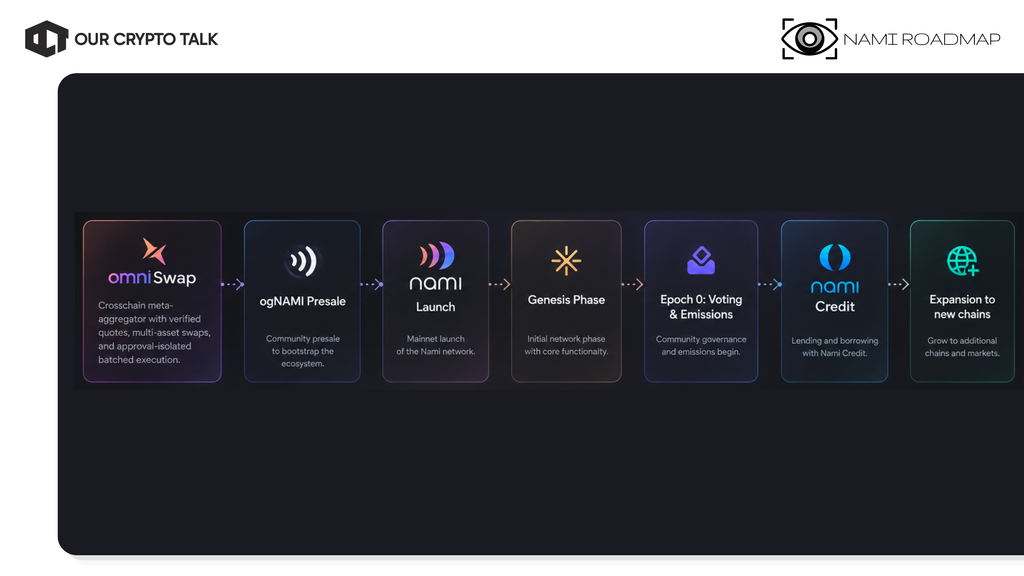
The multichain architecture uses Ethereum as the hub for supply and epoch settlement, with Base and Robinhood Chain as the first spokes through Chainlink CCIP. Nami aims to coordinate one NAMI economy across chains, while Omni products support swaps, deposits, liquidity shifts, gauges, and relayer functions.
The revenue model directs 100% of net protocol revenue into a Recursive Buyback Engine. It buys NAMI and locks it as Infinite veNAMI, with a portion allocated toward ogNAMI burns.
Timing is central to the launch. The ogNAMI presale opened on October 5, 2026, at $10 per token and a stated $2.5 million FDV. Nami Genesis is scheduled for November 5 across Base, Robinhood Chain, and Ethereum, with more than $500,000 in advertised Genesis rewards.
However, pre-launch TVL stood at only around $1,900 in late October. Nami’s investment thesis therefore depends on launch execution and future adoption, not existing liquidity.
Nami faces competition from established ve(3,3) exchanges, concentrated-liquidity AMMs, and cross-chain aggregators. Each category already has products and users that Nami must persuade to switch.
Aerodrome, Velodrome, Thena, and Equalizer represent the ve(3,3) model. Several have experienced the same boom-and-bust cycles that Nami wants to address through adaptive emissions and multichain liquidity coordination.
Uniswap v3 and v4, PancakeSwap, Sushi, and Algebra-based DEXs compete on liquidity, execution, and established user bases. Nami’s emission model does not automatically give it an advantage over these platforms. Meanwhile, 1inch, Kyber, Jumper, and Bungee aggregate liquidity or routes across protocols, putting OmniSwap in competition for the same user activity without necessarily owning the underlying pools.
Nami’s main differentiator is the combination of d(3,3) emissions and a coordinated multichain economy. The protocol aims to redirect incentives as liquidity moves between networks, while keeping supply, voting, and rewards connected across chains. Its revenue-buyback model and ogNAMI’s USDC fee-sharing design add another layer to the proposition.
The problem Nami identifies is real, but the solution remains unproven. Established DEXs can adopt similar emission formulas, and users have little reason to switch unless Nami offers better execution, deeper liquidity, or more attractive rewards.
Its backtests are useful starting evidence, not proof that the system will work under live conditions. Actual results will depend on whether emissions track fees effectively, whether gauge voting attracts productive liquidity, and whether cross-chain coordination creates better outcomes than separate chain-native markets.
The November 5 Genesis launch is the first major test. Sustained trading volume, sticky TVL, and meaningful fee generation would support the thesis. Until then, Nami’s USP remains a design proposition rather than a demonstrated competitive moat.
Nami’s public identity centers on the @namidefi account, Nami Labs Inc. on GitHub under namifi, and the project’s documentation at docs.nami.fi. Community contributors also appear in public discussions, but the available information does not establish a fully disclosed founding team with independently verified professional histories.
A separate team website, namifi.app, lists Swiss and German names. However, the supplied research does not establish that this team belongs to the same protocol. Those identities should not be attributed to Nami without confirmation from its official documentation or primary channels.
The limited public team information makes transparency particularly important. Nami asks users to trust a system that coordinates liquidity across chains, directs token emissions, and supports veNAMI locking and credit-related functionality. Users need confidence in the contracts, governance process, and mechanisms that control capital and incentives.
The project points to a completed BailSec audit, announced in October 2026, along with public contracts, detailed launch documentation, and a DefiLlama listing. These provide useful avenues for independent verification, although an audit cannot eliminate smart-contract or operational risk.
The most meaningful evidence will come from execution. Nami needs to deliver its OmniSwap routes, deploy its multichain contracts, and launch Genesis on Base, Robinhood Chain, and Ethereum as scheduled.
Until live usage establishes a track record, the team remains a weaker signal than a fully identified group with independently documented experience. Nami’s documentation and security disclosures help, but actual contract performance, transparent governance, and reliable operations must carry the remaining trust burden.
Nami is pursuing a public-presale-led launch rather than relying on a disclosed venture-capital syndicate. The project explicitly promotes a no-VC-allocation model, making public token sales and planned liquidity allocations central to its funding strategy.
The ogNAMI presale opened on October 5, 2026, at $10 per token, with a fixed supply of 250,000 tokens and a stated $2.5 million fully diluted valuation. The public sale allocates 200,000 tokens, targets $2 million in USDC, and sets a maximum contribution of $100,000 per wallet.
Third-party snapshots from mid-October showed approximately $816,900 raised, or around 40.8% of the target. That indicates some demand, but it does not establish a completed raise.
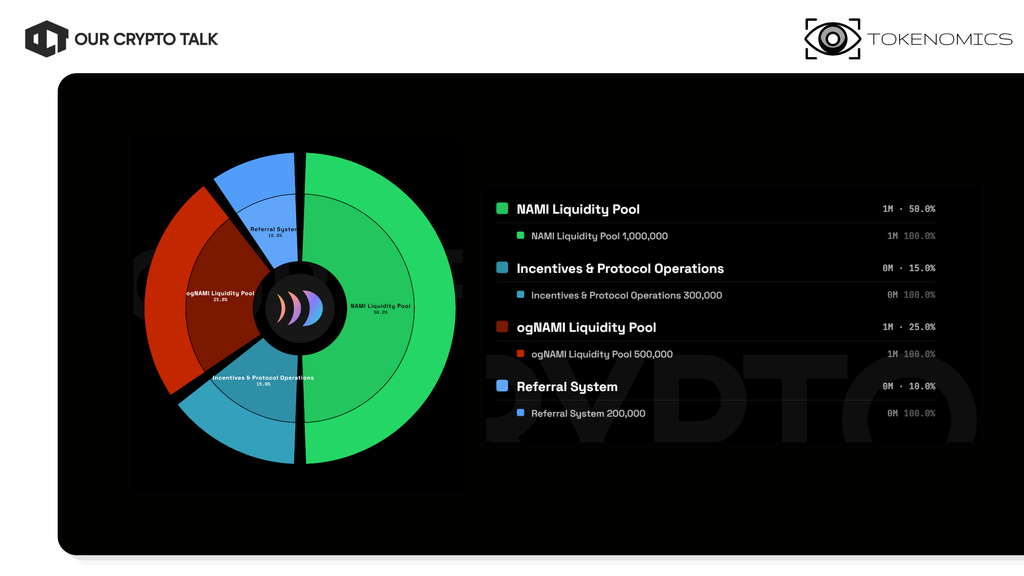
The project plans to allocate proceeds toward multichain NAMI seed liquidity, ogNAMI liquidity, incentives and operations, and a referral pool. If the raise reaches its target, the proposed split is $1 million for NAMI multichain seed liquidity, $500,000 for ogNAMI liquidity, $300,000 for incentives and operations, and $200,000 for referrals.
Nami’s TGE materials also describe an initial allocation of 1.2 million NAMI-equivalent tokens, using a $5 reference price to imply a valuation of roughly $6 million for that allocation. The project expects initial circulating supply of up to approximately 150,000 NAMI in seed liquidity, with a large share held as Infinite veNAMI rather than liquid tokens.
The model aims to limit immediate selling pressure while directing revenue toward token holders. But low initial float can also make price discovery volatile, and the stated valuations do not guarantee that the market will support them.
Nami’s funding may be sufficient to launch, but it does not provide the resources to match Aerodrome-scale incentive spending indefinitely. Long-term survival depends on organic swap fees, the ogNAMI USDC fee-share model, and the buyback engine.
Genesis on November 5 will be the first real credibility test. Until the raise, liquidity, and fee generation mature, Nami remains a presale-funded challenger in a crowded DEX market.
Nami has a working front end, public documentation, and presale functionality, but its full multichain DEX economy has not launched yet. The Genesis launch is scheduled for November 5, 2026, across Base, Ethereum, and Robinhood Chain.
As of late October, users can access OmniSwap, which aggregates swap quotes across multiple providers. Project materials cite live Kyber routes. The presale interface at nami.fi supports ogNAMI purchases and staking, while Odyssey offers quests, XP, and referrals tied to Genesis rewards.
Nami also publishes technical documentation and contracts through docs.nami.fi and its namifi GitHub organization. The team announced that BailSec had completed an audit in October 2026.
However, the core economic system remains pre-launch. Native V4 concentrated liquidity, gauges, d(3,3) emissions, the OmniGauge and Relayer reward systems, Nami Credit, and recursive buybacks still need to demonstrate their value under live conditions.
The available metrics reinforce that distinction. DefiLlama listed approximately $1,900 in TVL and around $0.55 in 30-day fees, while tracked cumulative trading volume stood near $900. These figures reflect a pre-launch footprint, not an established DEX competing with Aerodrome or other major exchanges.
Nami has therefore shipped more than a presentation deck, but it has not yet proved its full protocol economy. The next test is whether Genesis delivers all three chain deployments, establishes meaningful seed liquidity, and attracts trading volume that persists after incentives begin.
Nami has attracted some presale capital, but its onchain activity remains negligible. Investors need to separate commitments to the upcoming launch from evidence that traders will use the exchange.
The ogNAMI presale opened at $10 per token, targeting $2 million in USDC with a maximum contribution of $100,000 per wallet. Late-October snapshots showed approximately $816,900 raised, or around 40.8% of the target. That represents real capital committed, but the sale had not reached its stated goal in those snapshots.
The presale structure also restricts immediate liquidity. Buyers automatically stake their positions through a 21-day Genesis lock, followed by a 12-epoch linear principal unlock. The structure can reduce immediate selling pressure, but it does not guarantee demand for either token after launch.
Nami plans to allocate up to $1 million toward multichain NAMI seed liquidity and $500,000 toward ogNAMI liquidity if the raise reaches its target. The project also advertises more than $500,000 in Genesis rewards across a three-week phase. These plans could help bootstrap activity, but the actual funding available depends on the completed raise and the team’s execution.
Other signals carry less weight. Odyssey XP, leaderboard rankings, and social followers do not demonstrate meaningful deposits or trading. The team’s claim that d(3,3) could have saved more than $380 million in emissions comes from historical backtests, not live protocol performance.
Aggregator integrations also need context. Routes through Kyber and other providers can improve swap access, but they do not prove that Nami owns a durable user base or captures significant trading flow.
The presale offers evidence of some early interest at a stated $2.5 million ogNAMI FDV. It does not prove that Nami can win liquidity on Base, Ethereum, or Robinhood Chain. An incomplete raise could also leave the protocol with less seed liquidity and operating runway than planned.
Nami’s presale revolves around two tokens with different roles: ogNAMI, which gives stakers a share of eligible swap fees, and NAMI, which presale participants receive through an additional airdrop. The supplied presale information details ogNAMI’s economics and the NAMI airdrop, but does not establish NAMI’s full supply, emissions or governance model.
ogNAMI has a maximum supply of 250,000 tokens, with no emissions. The presale price is 10 USDC, implying a fully diluted valuation of $2.5 million.
The supply allocation is straightforward:
Staked ogNAMI converts to sogNAMI, a transferable staked position that retains the associated rights. Stakers receive 10% of swap fees from Nami’s permissioned pools, distributed in USDC each epoch. Actual returns depend on the fees generated by those pools.
The Recursive Buyback Engine also allocates 5% of net protocol revenue to buying back and burning ogNAMI, permanently reducing its supply. This mechanism could support scarcity over time, but its impact depends on the protocol generating meaningful revenue.
Presale participants face a 21-day Genesis phase during which their principal remains locked and unstaking is prohibited. After Genesis, the principal unlocks linearly over 12 epochs, with each epoch lasting seven days.
Participants can earn an additional bonus of up to 10% in ogNAMI by keeping their allocation fully staked. However, withdrawing during the principal vesting period forfeits the bonus. Bonus accrual begins at Epoch 11 and continues over six epochs. Early exit during this period stops further accrual and permanently burns any unearned bonus.
Swap-fee rewards accrue from day one and can be claimed at any time without affecting bonus accrual.
The structure rewards participants who remain staked, but it also limits their flexibility. The headline presale price and potential bonus should therefore be assessed alongside the lockup, vesting schedule and actual fee income.
Presale participants are also eligible for a dedicated airdrop of 60,000 NAMI, assuming the stated allocation framework. The reference describes 45,000 NAMI for the base distribution and 15,000 NAMI for random airdrop prizes.
The average allocation is estimated at 0.30 NAMI per ogNAMI, including the base distribution and random prizes. Individual allocations may vary.
The airdrop has two distribution paths:
Participants who prefer immediate access can convert the NAMI portion to veNAMI and claim it without the cliff or vesting period.
Airdrop claims open at the start of Epoch 1, following the Genesis phase.
These terms provide additional exposure to NAMI for presale participants, but the airdrop’s economic value depends on the token’s market price, liquidity and utility. The supplied information does not establish NAMI’s total supply, initial circulating supply, TGE valuation or future emissions schedule.
Nami’s presale has a fundraising target of 2 million USDC, with a maximum contribution of 100,000 USDC per wallet.
If the presale sells out, the planned allocation is:
These figures are conditional on raising the full 2 million USDC. The allocation shows how the project intends to fund liquidity, operations and referrals, but it does not guarantee that the target will be reached or that the resulting liquidity will attract sustained trading activity.
Nami Genesis is scheduled for November 5, 2026, so the early-access window is short. The main routes are the ogNAMI presale, Odyssey quests, and liquidity provision once Genesis begins.
The ogNAMI presale is the primary capital-based entry. Buyers pay USDC for ogNAMI, which carries a claim to eligible swap fees, alongside a planned NAMI airdrop. Project documentation identifies a 60,000 NAMI pool for buyers, distributed through a mix of veNAMI and vesting NAMI. Check the official sale interface for current availability and remaining capacity rather than assuming the presale remains open.
Odyssey offers quests, Waves, XP, and referrals tied to Genesis-related rewards. This route requires less capital, but points alone do not establish the value of any future allocation.
From November 5, users can look at Genesis liquidity provision. Nami plans a three-week rewards phase with more than $500,000 in advertised rewards. Participants can earn Genesis Points that may lead to NAMI or veNAMI rewards, with pool-specific options involving fees and points multipliers. Liquidity providers must still account for impermanent loss, token volatility, and emissions risk.
Using OmniSwap is another way to test the product, although ordinary swap activity does not guarantee an airdrop. After Genesis, users may also lock NAMI as veNAMI, use optional Relayer automation, vote on gauges, and explore the credit module if it goes live.
The financial distinction matters. ogNAMI makes sense only if you believe future swap fees can support its USDC distributions. Genesis LP participation requires accepting liquidity and emissions risk in exchange for potential fees and incentives.
Nami is a pre-Genesis cold-start bet. Investors are underwriting the November 5, 2026 launch, incomplete ogNAMI presale demand, and the possibility that d(3,3) emissions and OmniSwap can attract liquidity from established DEXs. The protocol has a detailed design, but its fee-generating business has yet to prove itself.
Odyssey quests and referrals offer a low-capital entry, but grinding XP is unlikely to provide reliable returns for the time involved. Similar pre-launch campaigns can deliver modest rewards or nothing after Sybil filtering. Odyssey makes more sense as an optional bonus than as a primary income strategy.
Genesis liquidity provision is a different proposition. Participants need real capital and must account for impermanent loss, opportunity cost, and token emissions. The advertised $500,000-plus reward pool could make early liquidity provision attractive to experienced LPs, but the outcome depends on reward allocation, trading activity, and exit timing.
The presale offers another route. ogNAMI costs $10 per token at a stated $2.5 million FDV, with a fixed 250,000-token supply and a proposed 10% share of swap fees from eligible pools paid in USDC. That is a relatively low headline valuation compared with many DEX launches, but the fee stream remains unproven. DefiLlama’s pre-launch data showed around $0.55 in 30-day fees, leaving little evidence of current revenue.
NAMI’s TGE materials use a $5 reference price for 1.2 million tokens, implying an allocation valuation of roughly $6 million. The planned initial liquid float of up to 150,000 tokens implies a circulating market capitalization of around $750,000 at that reference price. A small float can amplify price movements, and dynamic emissions could still pressure holders if trading activity disappoints.
Nami’s biggest threats are competition for liquidity, emissions pressure, and weak demand after launch incentives fade.
Aerodrome, Uniswap, and other established DEXs already have deeper liquidity, stronger distribution, and user habits that Nami must overcome. Aggregators such as Kyber and 1inch can route trades through existing markets without making Nami the primary venue. A new gauge system does not automatically win trading volume on Base or Ethereum.
The multichain narrative also creates a dependency on launch attention. If traders and liquidity providers move on after Genesis, Nami could struggle to retain capital.
Sybil activity presents another risk. Odyssey quests, referrals, and Genesis points can attract users who want rewards rather than long-term participation. The $500,000-plus rewards campaign may generate early activity, but volume could fall sharply once incentives decline. Nami will need to distinguish real trading demand from activity driven by rewards.
Regulation adds several layers of uncertainty. ogNAMI’s proposed 10% share of swap fees in USDC could attract securities scrutiny depending on its structure and the jurisdictions involved. A fixed-price public presale creates additional legal considerations. Cross-chain messaging through Chainlink CCIP and multichain token operations also introduce operational and compliance complexity. The planned credit module adds lending-related risks to an already complex DEX stack.
There is a deeper issue with ogNAMI’s revenue model. Buyers are purchasing exposure to future swap fees, not a guaranteed coupon. If Genesis volume remains low or consists mainly of incentive-driven activity, USDC distributions could remain negligible. NAMI emissions could also dilute holders if the d(3,3) model continues distributing tokens despite weak fees or inefficient gauge allocation.
Execution risk is unusually concentrated around the November 5 launch. Deploying across Base, Ethereum, and Robinhood Chain on the same day creates integration and cross-chain failure risks. A softer-than-planned presale could leave less liquidity available than the full launch model assumes.
Nami Genesis, scheduled for November 5, 2026, is the defining near-term catalyst. The team plans to launch on Base, Robinhood Chain, and Ethereum on the same day, supported by more than $500,000 in advertised Genesis rewards.
The first question is whether the three-chain deployment works as planned. Successful deployment, adequate seed liquidity, and functioning OmniSwap routes would establish the operational foundation. But a launch announcement alone will not validate the business.
The first epochs will provide more meaningful evidence. Investors should watch whether Nami’s gauges attract productive liquidity, whether d(3,3) emissions respond appropriately to fees, and whether OmniSwap routes meaningful trading volume through Nami’s own pools rather than simply passing orders to other aggregators.
ogNAMI’s USDC distributions will be another important signal. Sustained payments funded by real swap fees would support its revenue-share thesis. If distributions remain negligible after Genesis incentives fade, the token’s low headline FDV will offer little comfort.
The presale’s final outcome also matters. A completed raise could fund the planned seed liquidity and operations, while a shortfall may force the team to launch with fewer resources than intended.
Act now or wait three months?
Acting before or at Genesis means accepting cold-start risk in exchange for early exposure through the remaining presale or initial liquidity provision. Waiting three months allows investors to assess actual trading volume, TVL retention, and fee generation. That approach sacrifices early entry but provides stronger evidence of whether Nami can compete.
The key catalysts are the three-chain launch, first gauge epochs, genuine pool-level trading activity, and ogNAMI’s initial fee distributions. These will determine whether Nami’s design translates into a functioning DEX economy.
WATCH. Nami has a detailed protocol design, a public launch plan, an adaptive emissions model, and a proposed fee-sharing token. But pre-launch TVL and fees remain negligible, while presale funding has fallen short of its target in the available mid-October snapshots.
Nami’s strongest feature is its attempt to address two recurring ve(3,3) problems: runaway emissions and single-chain dependence. Its multichain architecture, d(3,3) model, and buyback mechanism offer a coherent framework. The weakness is that none of these mechanisms has yet demonstrated durable results under meaningful live trading conditions.
This is not a compelling opportunity to grind Odyssey quests for income. ogNAMI and Genesis liquidity provision may suit participants who understand the risks and can afford to lose the value of their incentives, but neither should be treated as a reliable yield strategy. NAMI also remains difficult to value until actual post-launch fees and emissions become visible.
The milestone that would change the rating is sustained post-Genesis swap fees and sticky TVL, at a scale that makes ogNAMI’s USDC distributions and the buyback engine meaningful relative to token supply. A successful three-chain launch followed by persistent activity would strengthen the case. Anemic volume after rewards fade would undermine it.
Until the market demonstrates demand for Nami’s products, the protocol belongs on a watchlist.
All the opinions in this article are that of the author and in no way are financial advice. Our Crypto Talk and the author always suggest you do your own research in crypto and to never take anything as financial advice that you read on the internet. Check our Terms and conditions for more info.