Learn how Kinetiq liquid staking, KNTQ tokenomics and Elysium expansion shape growth potential and investment risks.

Author: Akshat Thakur
Kinetiq is the leading liquid-staking protocol in the Hyperliquid ecosystem. Users stake HYPE and receive kHYPE, a non-rebasing liquid staking token that lets them retain DeFi liquidity while earning staking rewards.
Its StakeHub system routes stake across top validators, while yield accrues through kHYPE’s exchange rate.
The core idea is capital efficiency. Native HYPE staking helps secure Hyperliquid, but it limits how users deploy their tokens across perps, lending, and liquidity pools. kHYPE gives holders a way to earn staking yield without giving up access to DeFi.
Kinetiq has also expanded beyond liquid staking. Its broader product suite includes Markets.xyz for HIP-3 perpetual markets, Launch as an exchange-as-a-service platform, iHYPE for institutional liquid staking, and Elysium, a Hyperliquid-aligned Layer 2.
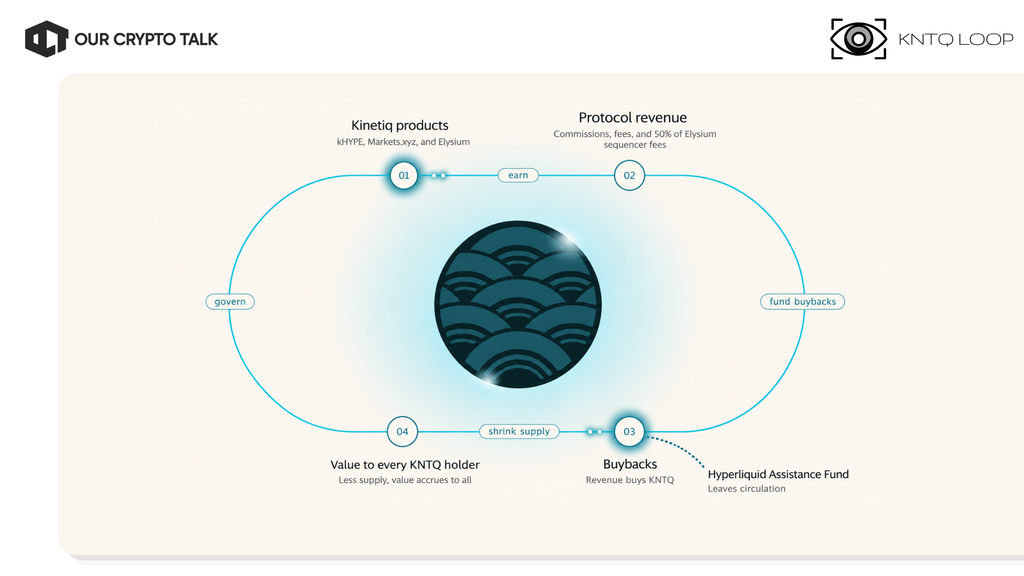
The protocol takes around 10% of staking rewards, with a significant share described as supporting KNTQ buybacks.
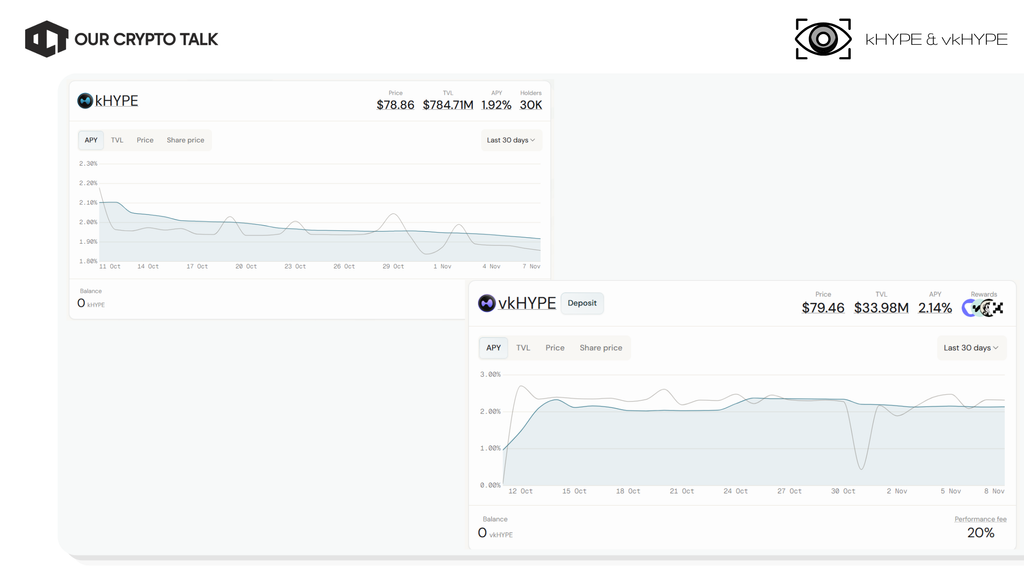
The scale behind its original product is already substantial. kHYPE TVL stood around $800 million in early November 2026, with previous peaks above $2 billion.
It remains the largest HYPE liquid-staking product by share. KNTQ has also traded since its November 27, 2025 TGE, with a maximum supply of 1 billion tokens and approximately 30% to 33% in circulation.
The next growth phase centers on Elysium, scheduled to launch on November 9, 2026. Built using Arbitrum Orbit and Conduit, it targets roughly 100 ms block times and a 300 Mgas/s design.
HYPE will serve as gas, while sequencer revenue follows a proposed split: 50% for KNTQ buybacks, 25% for builders, and 25% for the treasury.
This changes the Kinetiq thesis. The protocol already has a dominant liquid-staking business. Now it wants to connect staking, trading infrastructure, and an L2 fee engine into one ecosystem. Elysium’s actual usage will determine whether that expansion creates meaningful additional value for KNTQ.
Kinetiq competes with smaller HYPE liquid-staking protocols, native HYPE staking, and broader liquid-staking products on other networks. Its newer products also face competition from established perp venues, market infrastructure providers, and other appchains.
Native staking remains the simplest alternative for HYPE holders who want staking rewards without liquid-staking fees. Smaller Hyperliquid LSTs compete for the same stake pool, while generic liquid-staking protocols offer similar tokenized exposure on other chains.
Markets.xyz faces competition from perpetual trading venues on Hyperliquid and elsewhere, particularly in equities, commodities, and FX.
Elysium also needs to prove its value against other Layer 2 networks and appchains. Being built with Arbitrum Orbit does not automatically make it competitive.
Kinetiq’s strongest advantage is its existing scale. With roughly $800 million in kHYPE TVL, it has built a substantial liquidity base. More stake attracts DeFi integrations, which make kHYPE more useful and can attract additional deposits.
This creates switching costs even though other protocols can copy the basic liquid-staking model.
StakeHub adds another differentiator through autonomous validator delegation. Institutional iHYPE, Markets.xyz, and Launch extend the product range, while Elysium aims to create another source of demand for HYPE and KNTQ.
The proposed 50% sequencer-fee allocation toward KNTQ buybacks is particularly important. It could connect Elysium’s activity directly to token demand rather than relying entirely on staking-related revenue.
However, the buyback thesis depends on actual usage. An L2 with little transaction activity will generate little sequencer revenue, regardless of its fee-sharing design. Markets.xyz also needs sustained trading volume rather than short-lived spikes.
Kinetiq has already demonstrated dominance in its original liquid-staking category. The next challenge is proving that its expansion can generate durable fees without weakening the business that established its position.
Track kHYPE market share, protocol revenue, Markets activity, and Elysium usage after launch.
Kinetiq has a pseudonymous founder and partially identified technical leadership. Its public-facing founder is Omnia.hl, also known as 0xOmnia, who is widely credited with starting Kinetiq and Kinetiq Research.
Justin Greenberg appears in secondary profiles as co-founder and chief technology officer. The project operates through the Kinetiq Research and Kinetiq Foundation entities, with connections to the wider Hyperliquid builder ecosystem.
The protocol also works with infrastructure providers such as Pier Two, which has been referenced for institutional-grade validator operations. Chorus One is another staking-related name associated with the project’s backing and ecosystem.
This is not a fully disclosed traditional finance team, but pseudonymous leadership is common across crypto-native infrastructure. For a liquid-staking protocol and L2, the more important signals include contract security, validator operations, liquidity resilience, and incident history.
Kinetiq has an operating record beyond a launch announcement. kHYPE launched around July 2025 and grew to more than $2 billion in TVL at previous peaks.
KNTQ followed with its November 2025 TGE, while Markets.xyz expanded the product range into HIP-3 markets. Elysium has since progressed from testnet toward its scheduled November 2026 mainnet launch.
The protocol also points to a broad security review process involving Spearbit, Pashov, Zenith, Code4rena, and other audit providers, alongside a large bug bounty program.
These milestones provide stronger evidence of execution than a pre-product roadmap. Still, the pseudonymous founder structure creates key-person and accountability risks.
Any incident involving liquid staking, validator delegation, or the Elysium sequencer would make transparent communication and operational response especially important.
Kinetiq raised a reported $1.75 million seed round, announced on October 22, 2025. Maven 11 led the round, with participation from investors and infrastructure providers connected to the Hyperliquid ecosystem.
The disclosed names include Pier Two and Chorus One on the validator and staking side, alongside trading firms such as IMC, Flowdesk, Susquehanna Crypto, and Infinite Field. The wider angel group includes DeFi Dad and other Hyperliquid community participants.
This investor mix fits Kinetiq’s business. Staking operators bring validator infrastructure experience, while trading firms understand liquidity and market structure. Maven 11 adds institutional crypto investment backing.
The project has also described a three-year lockup for core contributors and investors, including a one-year cliff followed by monthly linear vesting. This structure aims to align early stakeholders with the protocol’s longer-term development.
A $1.75 million seed round would be modest for a project attempting to build an L2 and multiple trading products. However, Kinetiq has already moved beyond the stage where its survival depends on seed capital alone.
Its liquid-staking business generates protocol revenue through staking fees, while Markets.xyz adds another potential source through builder fees.
KNTQ also has an established market, although its market capitalization and fully diluted valuation vary with price and circulating-supply snapshots.
The backing is notable because Maven 11, IMC, Flowdesk, Susquehanna Crypto, and the staking operators form a credible Hyperliquid-native network.
Kinetiq already has multiple live products. Its core liquid-staking business is operational, with Elysium adding a new expansion path.
kHYPE went live around July 2025. Users can stake HYPE and receive kHYPE, a non-rebasing liquid staking token that they can use across HyperEVM DeFi. StakeHub handles validator scoring and delegation behind the product.
Kinetiq has also expanded beyond basic liquid staking. Kinetiq Earn offers vault strategies built around kHYPE, with Veda and Seven Seas cited as curators.
kmHYPE connects to the Markets.xyz ecosystem, which supports HIP-3 markets and builder-deployed perpetuals covering assets such as equities, FX and commodities. iHYPE provides institutional staking rails with KYC/KYB and custody integrations.
KNTQ and sKNTQ are also live. The token launched on November 27, 2025, giving users access to trading, staking and governance.
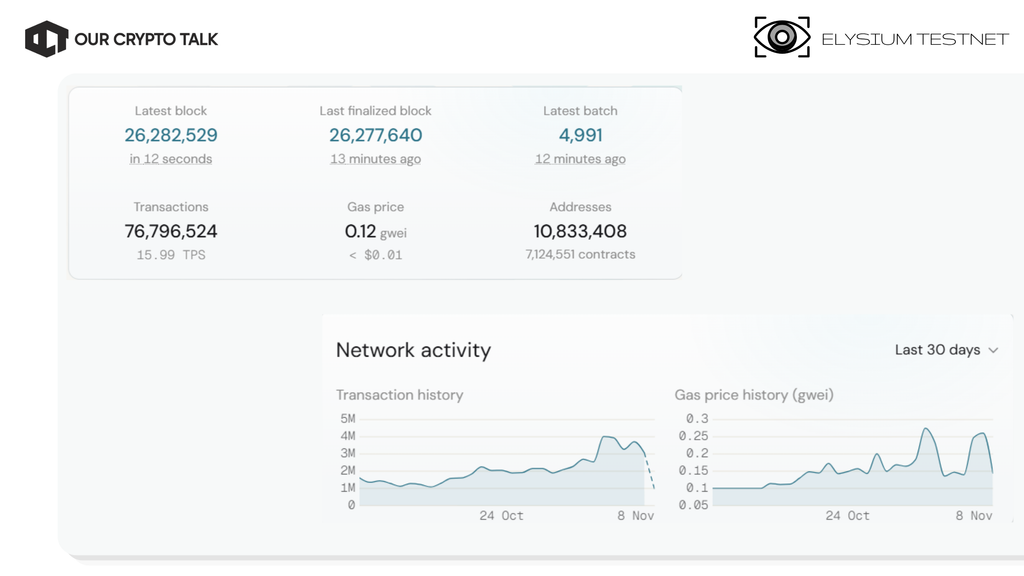
Elysium is the next major milestone. Its testnet is live, while mainnet is scheduled for November 9, 2026. The planned Hyperliquid-aligned L2 will use HYPE for gas, with design targets of around 100ms block times and 300 Mgas/s throughput.
Security is another part of the product’s foundation. Kinetiq references more than eight audit reports from firms and security platforms including Spearbit, Pashov, Zenith and Code4rena. It also cites a $1M-class Cantina bug bounty and publishes its HyperEVM contract addresses.
The scale is already meaningful. Early November 2026 snapshots put kHYPE TVL around $800M, down from an all-time high above $2B.
Combined Kinetiq-related TVL, including kmHYPE and Earn products, has been cited around $850–950M. Recent secondary estimates put 30-day protocol fees around $1.5M.
Kinetiq has proven it can ship and attract capital through liquid staking. Elysium is the next test, not its first proof of product-market demand.
Kinetiq’s strongest traction signal is the capital deposited into its liquid-staking products. kHYPE holds roughly $800M or more in TVL, representing real HYPE committed to the protocol rather than social engagement or incentive-driven registrations.
Fee generation provides another useful measure. Secondary estimates place Kinetiq’s 30-day fees around $1.5–1.7M. Its liquid-staking model takes approximately 10% of staking rewards, with a portion directed toward KNTQ buybacks and the treasury.
The project also secured a $1.75M seed round backed by Maven 11, Pier Two, Chorus One, IMC, Flowdesk, Susquehanna Crypto and other investors. KNTQ has traded since November 2025, with roughly 30–33% of its 1B supply circulating in late-2026 snapshots. Market-cap estimates have ranged around $150–180M, depending on price.
Other products add smaller but relevant signals. kmHYPE has recorded tens of millions in TVL in some breakdowns, while Kinetiq Earn has attracted additional deposits in the tens of millions.
Elysium’s live testnet gives developers and users an opportunity to test the ecosystem before its scheduled November 9 mainnet launch.
There is another important signal in the TVL history. kHYPE previously exceeded $2B but now sits around $800M. That decline shows how closely demand depends on HYPE’s price and activity across Hyperliquid.
The liquid-staking business has meaningful traction. The open question is whether Elysium can turn that existing ecosystem into another durable source of fee revenue. Strong kHYPE demand does not automatically translate into material KNTQ buybacks from the new L2.
KNTQ is already live, so investors are dealing with an open-market token rather than an upcoming TGE. The main consideration is how its current circulating supply compares with future unlocks and the revenue mechanisms designed to support demand.
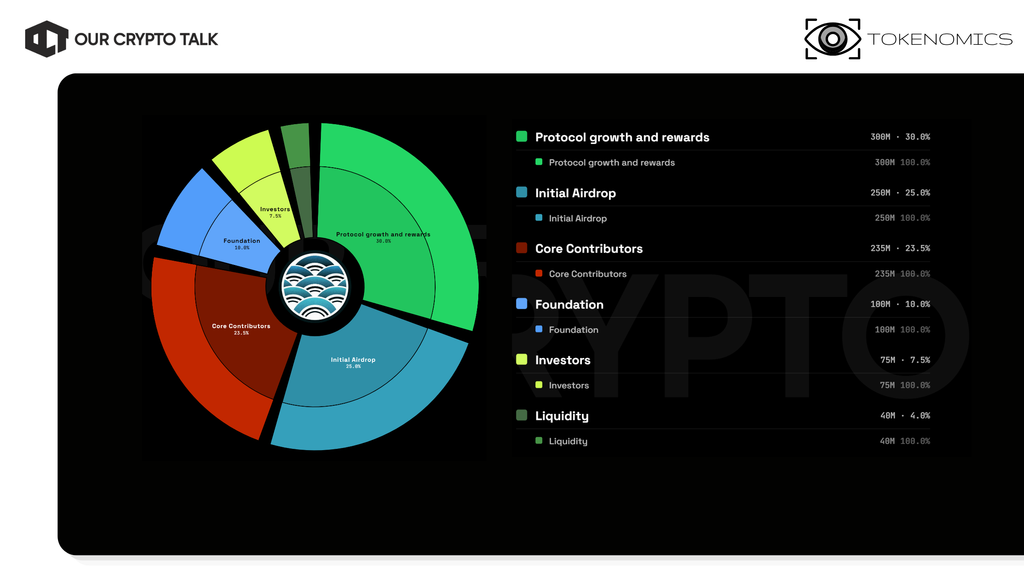
The token has a maximum supply of 1 billion KNTQ. Late-2026 snapshots put circulating supply around 316.9M, or approximately 32% of the maximum.
The token launched on November 27, 2025. Users can also stake KNTQ into sKNTQ for governance and tiered benefits.
The announced allocation is:
Core contributors and investors have a three-year vesting schedule, with a one-year cliff followed by monthly linear unlocks. This creates a future supply overhang that investors need to account for.
At around 32% circulating, KNTQ is not an extremely low-float token. However, approximately 68% of its maximum supply remains outside circulation. The key question is whether ecosystem growth and token buybacks can absorb that supply over time.
KNTQ has two main value-accrual paths. First, a portion of the 10% fee taken from kHYPE staking rewards goes toward KNTQ buybacks, alongside the treasury allocation.
Second, Elysium is designed to direct 50% of sequencer fees toward KNTQ buybacks and burns, with 25% going to builders and 25% to the treasury.
The second mechanism depends entirely on Elysium generating meaningful activity. Until that happens, KNTQ’s value proposition relies more heavily on governance and the existing liquid-staking business than on L2 fee revenue.
The original kPoints opportunity is largely behind us. Kinetiq ran multiple points seasons over several months, and the major distributions and claim activity took place through 2025 and 2026. Farming the original TGE allocation is no longer the main way to participate.
There are still several ways to gain exposure to the ecosystem.
The first is through its live products. Users can stake HYPE for kHYPE, explore Kinetiq Earn vaults or trade through Markets.xyz. These routes provide staking yield or ecosystem exposure, but they should not be treated as guaranteed token allocations.
The second option is buying or staking KNTQ on the open market. KNTQ is already trading and serves as the ecosystem’s liquid governance and value-accrual token. Any position needs to account for its remaining supply unlocks and dependence on Hyperliquid activity.
Elysium’s scheduled mainnet launch on November 9, 2026, creates another opportunity. Users can explore the network, bridge assets and interact with launch applications, including Nest and other projects cited in pre-mainnet lineups.
However, Kinetiq has not announced an official Elysium points program in its primary messaging. Early participation should therefore be viewed as ecosystem usage, not a promise of a future airdrop.
iHYPE is another route, but it is designed for institutions with KYC and custody requirements. Builders have a separate incentive: Elysium’s proposed fee structure allocates 25% of sequencer fees to builders.
The early opportunity has changed. Points farming is largely over, and the remaining paths require capital, whether through HYPE staking, KNTQ exposure or liquidity provision on Elysium.
The potential upside now depends on two things: whether Hyperliquid continues to attract meaningful HYPE staking demand and whether Elysium can bring in users who generate real fees. Without both, the case for KNTQ becomes much harder to justify.
The kPoints farming opportunity is over. The program ran for around 46 weeks, and its final window allowed users to buy 50M KNTQ at $0.26 without a lock. That window has closed.
Wave 1 introduced a fixed community distribution for pre-mainnet Elysium testnet, kHYPE and sKNTQ users. Wave 2 will reward post-mainnet activity. Neither offers the same farming opportunity as early EigenLayer, Hyperliquid or Lido campaigns.
kHYPE held approximately $800M in TVL, while Kinetiq generated around $1.5M in 30-day protocol fees. Estimated protocol revenue was around $150K. The next major insider unlock is scheduled for November 27, with approximately 12.9M KNTQ entering circulation.
At roughly 0.55–0.6x TVL, KNTQ carries a richer valuation than some liquid-staking peers. Its premium depends on existing staking-fee buybacks and Elysium’s planned 50% sequencer-fee allocation to KNTQ buybacks.
The opportunity is positive only if Hyperliquid staking demand remains strong and Elysium generates meaningful fees. Otherwise, KNTQ remains a governance claim on a successful LST business with significant future dilution.
Kinetiq’s biggest risk is its dependence on Hyperliquid. A sustained decline in HYPE price, trading volume or staking demand could reduce kHYPE TVL. Its deposits have already fallen from above $2B to roughly $800M.
Token dilution is another concern. Around 68% of KNTQ supply remains outside circulation, with the first major contributor and investor unlock scheduled for November 27, 2026. If buybacks cannot absorb the incoming supply, token performance could lag despite strong protocol usage.
Elysium also needs to prove adoption. Its Orbit-based architecture and Hyperliquid positioning do not guarantee users or fee generation. If launch applications fail to attract activity, the planned 50% sequencer-fee buyback mechanism will have little impact.
Competition adds pressure. stHYPE already has meaningful TVL, while other liquid-staking products could compete through better yields or redemption options. Other Hyperliquid-aligned chains could also target Elysium’s developers and liquidity.
There are further risks around regulation, smart contracts and governance. Liquid staking and fee-funded buybacks may attract regulatory scrutiny.
Audits cannot eliminate exploit risks across staking contracts, vaults and future bridges. Governance decisions could also change buyback destinations or other token-value mechanisms.
Kinetiq’s moat currently comes from distribution and ecosystem integrations, not unique technology. If competitors replicate its model or its Hyperliquid advantage weakens, that position could become harder to defend.
Elysium mainnet is Kinetiq’s next major catalyst, with launch scheduled for November 9, 2026.
The launch is important because it introduces a new potential revenue source for KNTQ. Under the planned fee structure, 50% of Elysium sequencer fees will fund KNTQ buybacks, while 25% goes to builders and 25% to the treasury.
Wave 1 and Wave 2 community distributions could also bring users into the ecosystem. Wave 1 covers pre-mainnet participation, while Wave 2 focuses on post-mainnet usage. These are distribution incentives, not another open-ended points campaign.
The next major supply event arrives on November 27, when approximately 12.9M KNTQ allocated to contributors and investors is expected to unlock. That is around 4% of the current circulating supply.
The key signal will be Elysium’s first 30 days of activity. Sequencer fees, TVL, active users and application usage will show whether the network can attract sustainable demand.
A successful launch headline may create short-term attention, but actual fee generation will determine whether Elysium adds meaningful value to KNTQ.
WATCH
Kinetiq has a real product and a leading position in Hyperliquid liquid staking. kHYPE holds roughly $800M in TVL, while KNTQ has a market cap near $138M and approximately 32% of its supply circulating.
The next phase depends on Elysium. Its planned 50% sequencer-fee allocation to KNTQ buybacks could strengthen token value accrual, but that mechanism remains unproven until the network generates meaningful fees.
The November 27 insider unlock adds another concern shortly after mainnet. KNTQ also remains exposed to HYPE price movements, Hyperliquid activity and future supply dilution.
The rating could improve after 30 days of post-mainnet data. Meaningful sequencer fees, sustained TVL, active applications and visible KNTQ buybacks would strengthen the investment case.
If fees remain weak while circulating supply increases, the WATCH rating stays in place.
All the opinions in this article are that of the author and in no way are financial advice. Our Crypto Talk and the author always suggest you do your own research in crypto and to never take anything as financial advice that you read on the internet. Check our Terms and conditions for more info.