
Author: Tanishq Bodh
In 2021, Meta made one of the boldest bets in modern tech history. It didn’t just launch a new product. It rebranded its entire identity around a future that did not yet exist. The metaverse, according to CEO Mark Zuckerberg, would replace the internet. People would work, socialize, and build entire digital lives inside immersive 3D environments. Horizon Worlds was supposed to be the proof. This Meta metaverse failure explained article breaks down what went wrong, why it failed, and what this means for the future of tech.
The vision is quietly collapsing. Horizon Worlds is effectively being phased out on VR. Reality Labs has burned nearly $80 billion. And Meta is now pivoting aggressively toward AI, as if the metaverse was a detour rather than a destination.
When Meta announced its rebrand in October 2021, it was not subtle. The company was declaring a platform shift.
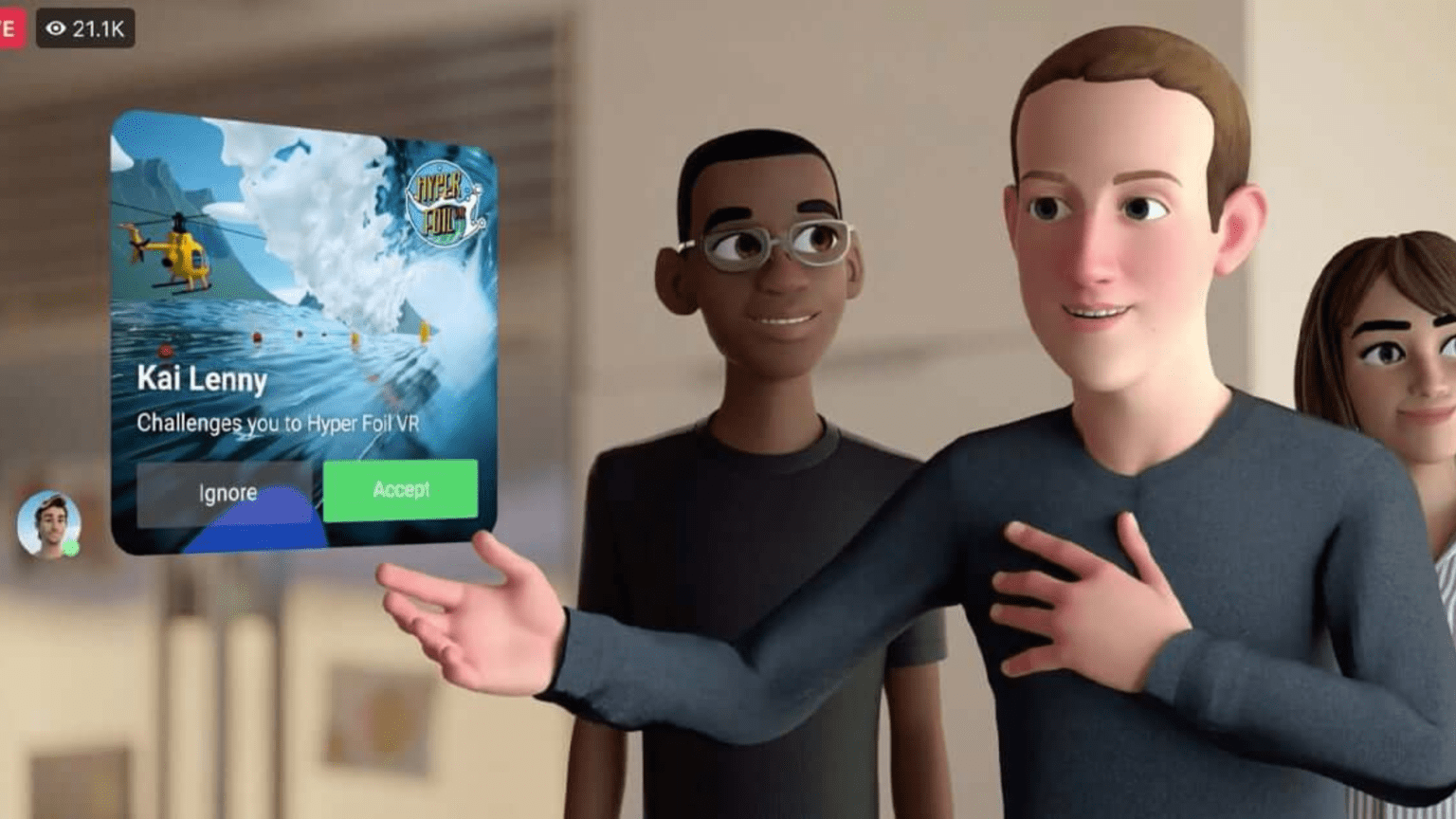
Zuckerberg believed the internet would move from 2D screens to immersive environments. Instead of scrolling feeds, users would step inside digital worlds. Horizon Worlds, built for Meta’s Quest headsets, was meant to act as the first large-scale example of this shift.
At the time, the logic felt compelling.
Meta already controlled distribution through Facebook, Instagram, and WhatsApp. It had the capital to invest billions. And it had the ambition to define the next computing layer.
However, the entire thesis relied on one assumption.
People actually wanted to live inside virtual worlds.
The Meta metaverse failure explained story becomes clearer when you look at the numbers.
Reality Labs, the division responsible for the metaverse, has reported losses every single year since the pivot began. Those losses didn’t stabilize. They accelerated.
By 2025 alone, Reality Labs lost over $19 billion in a single year. Cumulatively, the division has burned close to $80 billion.
That scale matters.
This wasn’t a failed product experiment. It was one of the largest capital misallocations in Big Tech history.
Even more telling is what Meta received in return. Quest headsets sold in the tens of millions, which sounds impressive until you compare it to Meta’s billions of existing users. The gap between potential reach and actual adoption never closed.
If the metaverse was the idea, Horizon Worlds was the execution.
And this is where things started to fall apart.
Despite heavy investment and aggressive promotion, Horizon Worlds never reached meaningful scale. Reports consistently showed user numbers stuck in the hundreds of thousands. For a company operating at global scale, that is effectively negligible.
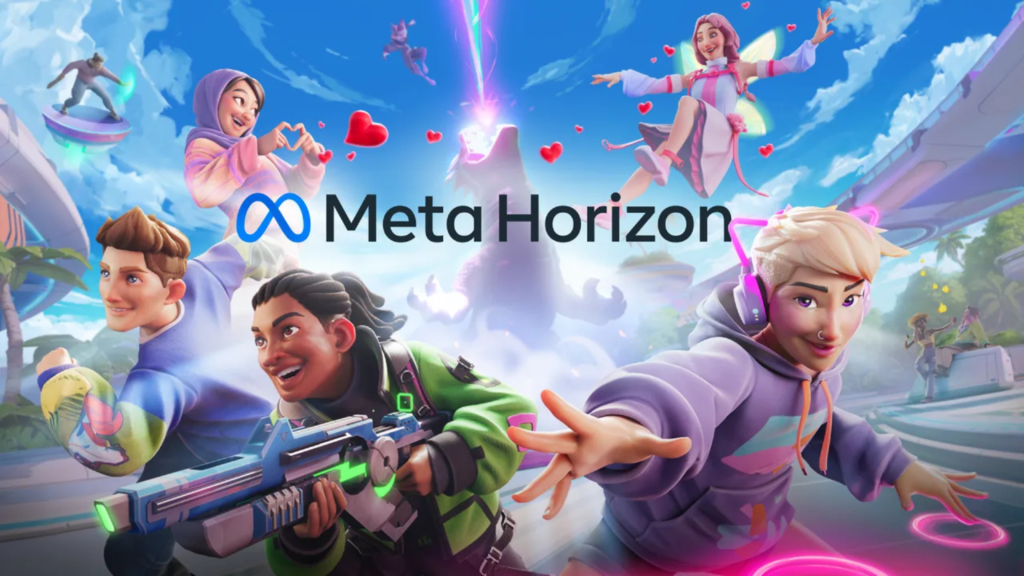
The experience itself did not help.
The platform launched with clunky movement, basic visuals, and avatars that quickly became internet memes. While Meta tried to improve the product over time, the initial impression stuck.
Even the pivot to mobile, which brought millions of downloads, failed to translate into real engagement or revenue. The monetization numbers remained shockingly low relative to the investment.
At that point, the problem was no longer technical.
It was structural.
The easiest explanation is that the technology was not ready.
But that is only part of the story.
The deeper issue is that the metaverse solved a problem most users never had.
By 2021, digital interaction was already frictionless. Social apps worked. Communication was instant. Content was abundant.
The metaverse introduced friction back into that system.

Users had to:
And in return, they got something that, for most people, felt worse than what they already had.
This is the core of the Meta metaverse failure explained narrative.
The product demanded behavioral change without offering enough value.
At the same time, internal execution issues compounded the problem. Teams reportedly ignored user feedback. Product direction shifted frequently. Resources were allocated toward features that users did not care about.
By late 2025, Meta began cutting aggressively. Layoffs hit Reality Labs. Studios were shut down. Entire parts of the ecosystem were abandoned.
This wasn’t a gradual decline. It was a recognition that the original thesis was no longer defensible.
The turning point came in March 2026.
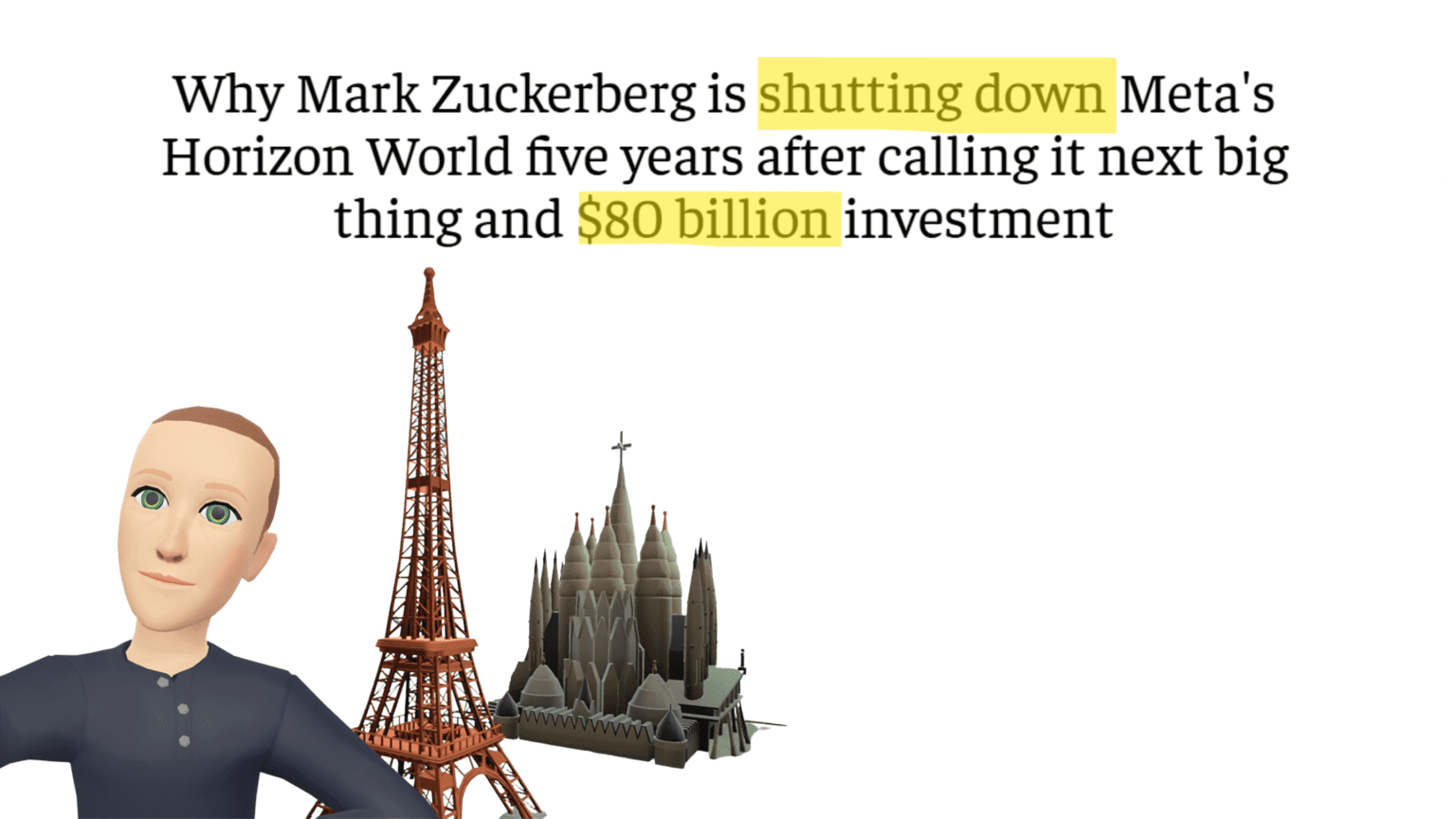
Meta announced that Horizon Worlds would be removed from VR headsets. Within 24 hours, it reversed the decision. That reversal said more than the announcement itself. It showed uncertainty. Today, Horizon Worlds technically still exists. However, no meaningful VR expansion is planned. Development focus has shifted elsewhere, mainly toward mobile and AI integrations.
The metaverse is not being scaled. It is being phased out quietly.
While the metaverse faded, Meta did not slow down. It redirected.
The company is now committing over $100 billion toward AI infrastructure. New divisions, including Superintelligence Labs, signal a clear strategic shift. Unlike the metaverse, AI fits naturally into existing user behavior.
You don’t need new hardware, you don’t need to change habits and you don’t need to learn a new interface. That difference explains everything. AI adoption feels effortless. The metaverse never did.
The Meta metaverse failure explained case is not just about one company. It reflects a broader lesson in technology cycles.
Not every future arrives on schedule.
Even with:
You cannot force adoption.
Users decide what wins. Markets decide what scales.
This applies equally to:
Narratives create hype.
Products create adoption.
The metaverse was supposed to be the next internet. Instead, it became a lesson in how even the biggest companies can misread the future.
Meta had everything required to win. What it lacked was alignment with user behavior. The company is now rewriting its narrative around AI. This time, the strategy feels more grounded.
But the metaverse chapter will not be forgotten. Because it proved something important.
You cannot build the future people don’t want, no matter how much you spend trying.


GEODNET Price Prediction: The $1B Thesis for GEOD
RWA Needs Better Access. Can NUVA Deliver?
Tokenization of RWA yields onchain might be the biggest opportunity that no one has noticed
Cold Wallet Safety 2026: Are Hardware Wallets Still Safe?
GEODNET Price Prediction: The $1B Thesis for GEOD
RWA Needs Better Access. Can NUVA Deliver?
Tokenization of RWA yields onchain might be the biggest opportunity that no one has noticed
Cold Wallet Safety 2026: Are Hardware Wallets Still Safe?