Explore how Dabba Network uses DePIN, community-owned hotspots, and the $DBT token to expand affordable internet access across India.

Author: Akshat Thakur
Dabba Network is a decentralized physical infrastructure network (DePIN) that expands broadband access across India through community-owned WiFi hotspots. Instead of relying on telecom companies to fund and deploy expensive infrastructure, Dabba separates ownership, operations, and service delivery into different roles that work together through blockchain incentives.
The model is simple. Users purchase Dabba hotspot hardware, while Local Cable Operators (LCOs) install, maintain, and operate the equipment. End users connect to the network for internet access, and hotspot owners earn rewards through the $DBT token and real network usage. The entire system runs on Solana, allowing rewards and network activity to settle on-chain.
The opportunity is enormous. India has one of the world’s largest internet populations, yet millions still lack reliable fixed broadband. Expanding fiber networks into smaller cities and rural regions remains expensive, leaving many communities underserved. Dabba uses existing local operators instead of building a nationwide telecom network from scratch, reducing deployment costs and accelerating expansion.
The timing also favors the project. DePIN has matured beyond early experiments, with networks like Helium proving that token incentives can support real-world infrastructure.
At the same time, India’s internet demand continues to grow as smartphone adoption, digital payments, streaming, and AI services become mainstream. Dabba combines proven DePIN mechanics with an existing local telecom ecosystem, creating a model designed for one of the world’s fastest-growing broadband markets.
Wireless DePIN already has an established leader. Helium built one of the largest decentralized wireless networks by rewarding users for deploying hotspots. Several newer projects have followed with 5G, CBRS, satellite, or IoT networks, but most remain concentrated in North America or Europe. Traditional Indian internet service providers remain the biggest competitors, yet they rely on centralized infrastructure, high capital costs, and slower expansion.
Dabba approaches the problem differently. Rather than asking hotspot owners to install and maintain equipment themselves, it works with thousands of existing Local Cable Operators across India. These operators already understand local permitting, customer acquisition, maintenance, and last-mile broadband deployment. Hardware owners supply capital, LCOs manage operations, and customers receive internet access through an established distribution network.
This managed deployment model addresses one of the biggest weaknesses of early DePIN projects. Networks built entirely on community deployments often struggle with inconsistent installation quality, maintenance, and long-term uptime. Dabba removes much of that operational burden by relying on professional operators while still allowing the community to own network infrastructure.
OCT’s verdict: The competitive advantage is practical rather than technical. Helium proved decentralized wireless can scale. Dabba adapts that model to India’s broadband market by combining token incentives with an existing telecom workforce.
Replicating those local relationships, operational experience, and distribution channels would take competitors years, making the business model difficult to copy despite relatively simple technology.
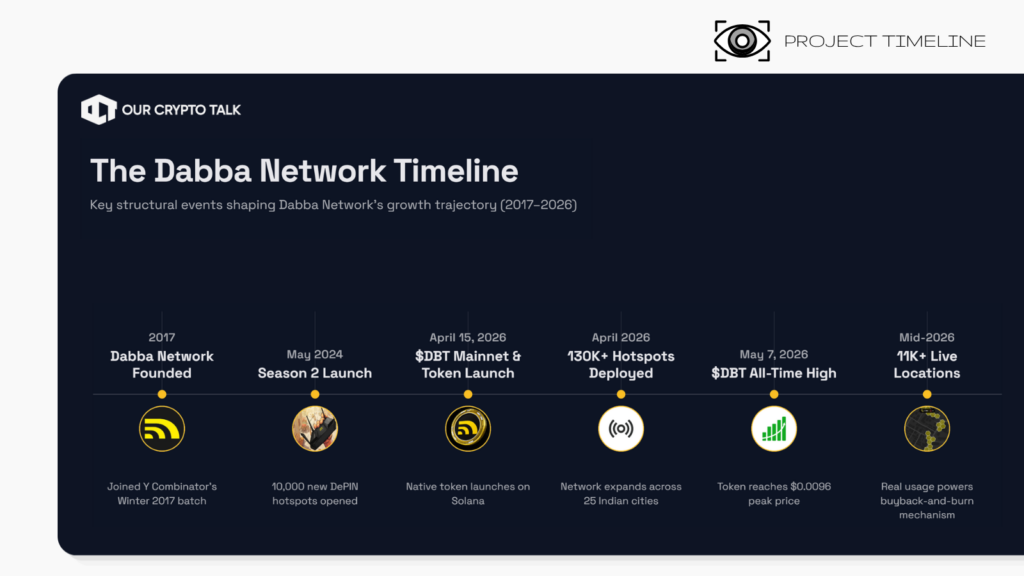
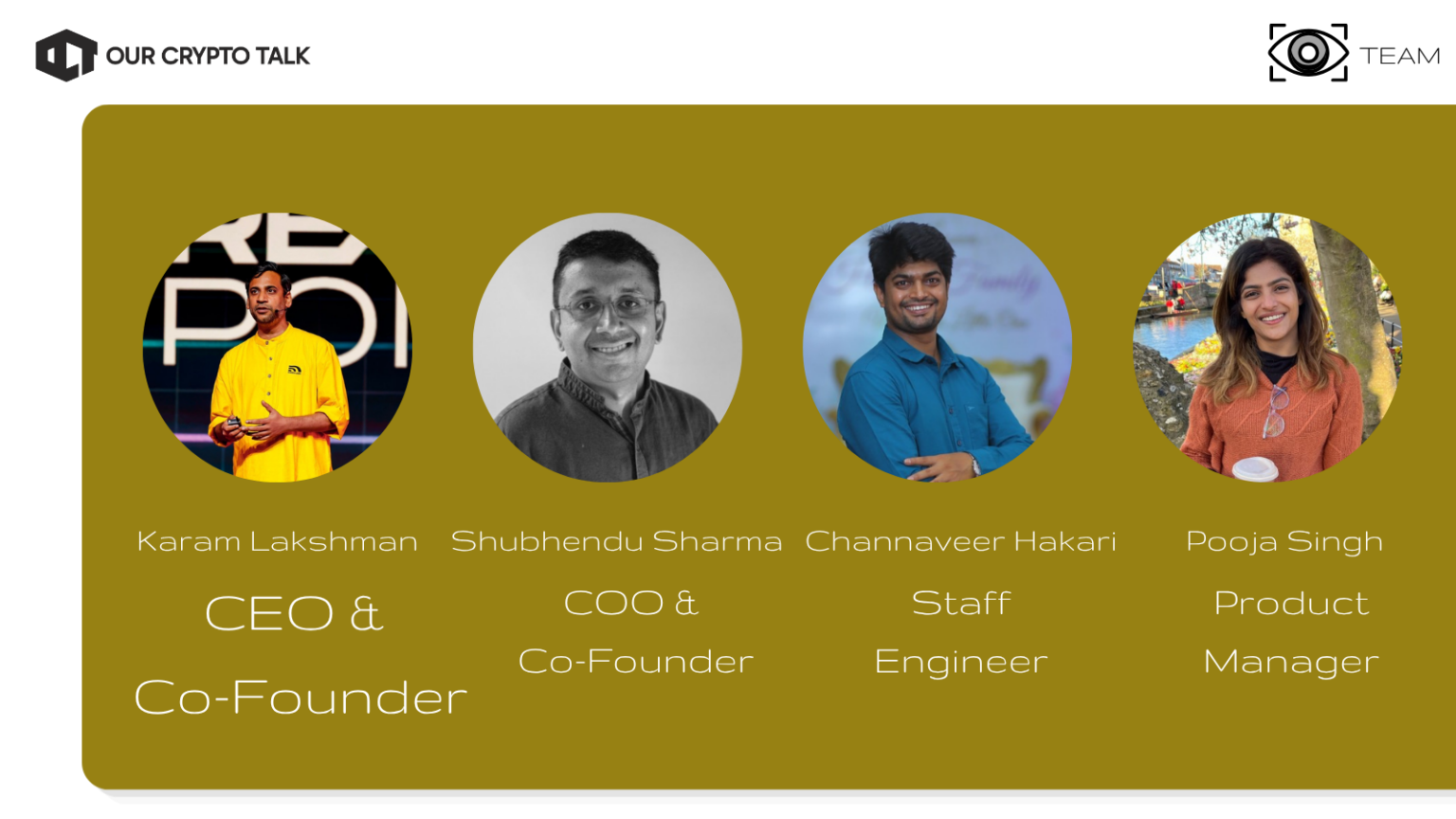
Dabba Network was founded by Karam Lakshman and Shubhendu Sharma, the same entrepreneurs behind Wifi Dabba, a company that has delivered affordable public WiFi across India since 2016. Unlike many DePIN founders who entered telecom through crypto, both founders spent years solving real-world connectivity problems before bringing blockchain into the business.
Their operating experience matters. Building broadband infrastructure requires much more than hardware. Teams must work with regulators, manage installations, coordinate local operators, maintain network uptime, and scale customer support across diverse regions. Wifi Dabba gave the founders direct experience with each of these challenges while building internet infrastructure across India.
The founders also built relationships with Local Cable Operators, which later became the backbone of Dabba Network’s deployment strategy. Instead of replacing existing telecom infrastructure, they designed a model that allows local operators to participate in a decentralized ownership system.
The team is fully public and has spent nearly a decade building broadband products rather than chasing short-term crypto trends. That operating history provides stronger execution credibility than many DePIN projects that started with token incentives before proving real-world demand.
For a business that depends on physical infrastructure, local partnerships, and large-scale deployments, practical telecom experience is one of Dabba’s strongest assets.
Dabba Network combines backing from both Silicon Valley and crypto-native investors. The original Wifi Dabba business entered Y Combinator’s Winter 2017 batch, giving the founders early startup validation and access to one of the world’s strongest accelerator networks. As the company expanded into DePIN, it attracted investors with deep experience in blockchain infrastructure.
Notable backers include Multicoin Capital and Borderless Capital, two firms that have actively invested in DePIN, Solana infrastructure, and decentralized wireless networks. Their involvement signals confidence in both the business model and the long-term growth of physical infrastructure networks.
The project has raised more than $5 million in crypto-related funding, in addition to earlier capital raised for the original Wifi Dabba business. While the funding amount is smaller than some headline-grabbing infrastructure projects, it aligns with Dabba’s measured rollout strategy, which focuses on expanding deployments through Local Cable Operators instead of pursuing rapid, capital-intensive nationwide expansion.
The investor mix also reflects Dabba’s unique position. Y Combinator validates the team’s ability to build a real business, while Multicoin and Borderless understand token incentives, Solana infrastructure, and DePIN economics.
Together, they provide capital, strategic guidance, and ecosystem connections that reduce execution risk as Dabba expands its decentralized broadband network across India.
Dabba Network is no longer a concept. It operates a live DePIN network with deployed hardware, active users, and real revenue generated through internet usage across India.
The network runs on Solana and already supports community-owned WiFi hotspots managed by Local Cable Operators (LCOs). Instead of relying on individuals to install and maintain equipment, Dabba partners with local broadband operators that already serve neighborhoods across the country. This approach allows the network to scale faster while maintaining service quality.
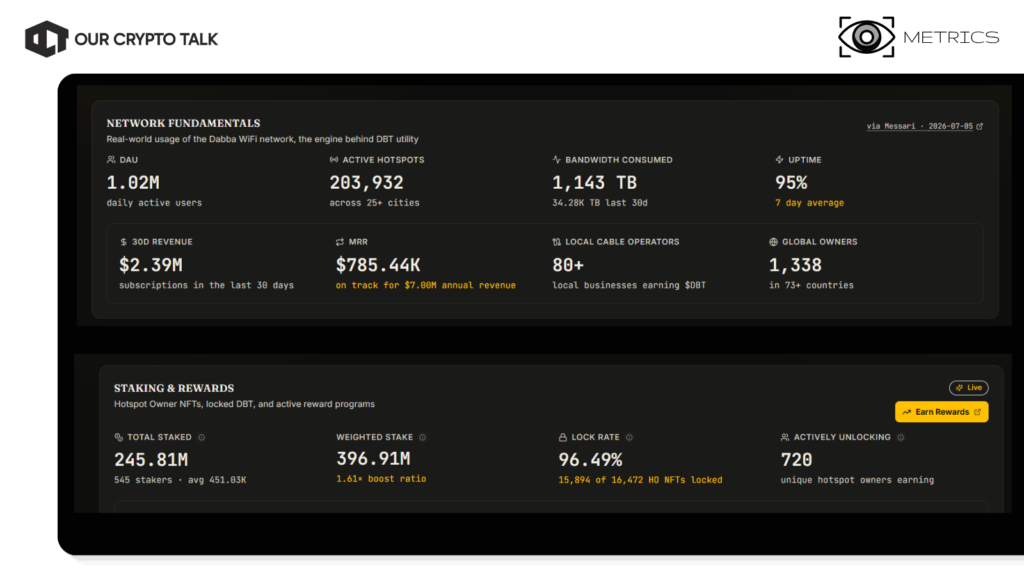
The numbers show real adoption. More than 26,000 hotspots have been sold, and users have already consumed over 1,143 TB Bandwidth through the network. Around +80 active LCOs currently deploy and maintain hotspots. Every gigabyte consumed contributes to on-chain activity through Dabba’s token economy.
The project also maintains a live explorer where users can monitor hotspot deployments, network activity, LCO participation, and token metrics. Hardware owners can purchase hotspots, stake $DBT, and begin participating in the ecosystem today.
Unlike many DePIN projects that remain in testnet phases, Dabba has already deployed physical infrastructure into the real world.
Its business depends on paying customers consuming internet access, not simulated blockchain activity. That makes it one of the few DePIN projects generating measurable demand before scaling globally.
The strongest signal for Dabba Network is not social media growth. It is the amount of infrastructure already deployed and the internet traffic flowing through it.
More than 26,165 hotspots have been purchased, representing real capital invested into network expansion. Each hotspot requires both hardware purchases and token activation, creating meaningful financial commitment from participants instead of free registrations.
Network usage also continues to grow. Users have already consumed over 1,143 TB Bandwidth, proving that customers actively rely on the service rather than simply installing equipment for token rewards. The network currently works with 80 Local Cable Operators, each responsible for deploying and maintaining infrastructure across different regions.
Token activity reinforces the usage story. More than 36 million DBT have already been burned through network usage and LCO operations. Unlike inflation-only reward systems, Dabba links token demand directly to internet consumption.
The project also continues moving toward a meaningful recurring revenue base through broadband subscriptions instead of speculative token activity alone.
OCT’s filter separates signal from noise. Hardware sales, bandwidth consumption, token burns, and recurring revenue all require real users spending real money.
Discord members, follower counts, and wallet signups do not. Dabba’s traction comes from infrastructure people actually use, making it one of the stronger adoption stories in the DePIN sector.
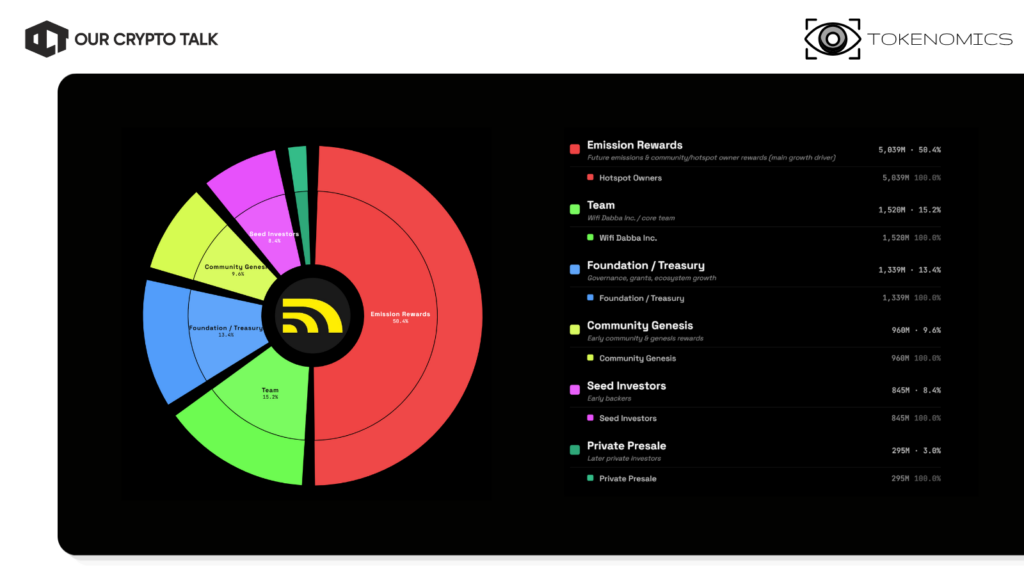
DBT is the utility token that powers the Dabba Network ecosystem. The token has a maximum supply of 10 billion, with roughly 175 million tokens circulating, or less than 2% of the total supply.
Unlike many infrastructure tokens, DBT uses a usage-driven economic model. New tokens enter circulation through rewards for hotspot owners, operators, and participants, while tokens leave circulation through network activity. As customers consume internet bandwidth, part of the token supply is permanently burned, creating a direct relationship between network growth and token demand.
The protocol also encourages long-term participation through staking. Users receive reward multipliers when locking tokens for six or twelve months, increasing incentives for long-term holders instead of short-term speculation.
One strength of the current launch structure is the relatively low circulating supply combined with a genuine usage sink. Internet usage drives token burns instead of relying only on governance or liquidity mining incentives.
However, investors should still monitor future unlocks carefully. While Dabba publicly shares community rewards, treasury balances, and burn statistics, the project has not fully disclosed detailed allocation percentages and vesting schedules for every stakeholder group.
Those figures will become increasingly important as more tokens enter circulation over time. Overall, Dabba’s tokenomics align more closely with network usage than many DePIN projects, but long-term dilution remains an important metric to watch.
There are several ways to participate in Dabba Network today, but every meaningful path requires either capital or operational involvement.
Step 1: Buy a Dabba hotspot
Purchase a hotspot device and activate it with DBT tokens. Hardware owners earn rewards as Local Cable Operators deploy the device and customers consume internet services through it.
Step 2: Stake DBT
Stake DBT on Solana to earn network rewards. Longer lock periods increase reward multipliers, making staking one of the easiest ways to participate without managing physical infrastructure.
Step 3: Earn Community Rewards
Early participants can still benefit from Community Genesis distributions and other ecosystem reward programs as the network continues expanding.
Step 4: Become a Local Cable Operator
Broadband providers can join Dabba as deployment partners. LCOs install, maintain, and operate hotspots while earning ongoing rewards for supporting network growth.
Dabba is not designed as a social-media points farm. Meaningful participation requires buying hardware, staking tokens, or contributing operational resources. That requirement filters out low-quality participants and aligns incentives with real network expansion.
For most users, staking DBT or purchasing a hotspot provides the clearest entry point. As network usage grows and more bandwidth is consumed, early participants benefit from both reward emissions and the token burn mechanism tied directly to internet demand.
Dabba Network offers one of the more practical DePIN opportunities because the network already supports real users instead of relying on future promises. More than 26,000 hotspots have been deployed, users have consumed over 1,143 TB TB of bandwidth, and millions of DBT tokens have already been burned through actual internet usage. That gives the project stronger fundamentals than many DePIN networks still chasing adoption.
Participation, however, requires real capital. The primary way to earn rewards is by purchasing a hotspot or staking DBT. Unlike social farming campaigns, there is no free path to meaningful participation. Hardware owners invest upfront and rely on Local Cable Operators to deploy and maintain the equipment while customers generate network revenue.
The economics also look healthier than many infrastructure launches. DBT already has a live burn mechanism tied directly to bandwidth consumption, creating genuine demand as network activity grows. At the same time, the token launched with a relatively low circulating supply, reducing immediate dilution pressure compared to many recent infrastructure projects.
The biggest risk remains execution. Building physical broadband infrastructure across India requires logistics, reliable operators, customer acquisition, and long-term maintenance. Success depends far more on expanding network usage than on crypto market sentiment.
Overall, Dabba looks attractive for investors with conviction in DePIN and India’s broadband market. It is less suitable for traders seeking quick token appreciation. This is a long-term infrastructure investment where network growth, not speculation, determines returns.
Dabba’s largest challenges have little to do with blockchain. They come from operating physical infrastructure at scale.
The first risk is competition. Traditional telecom companies already operate nationwide broadband networks with significant financial resources, established customer bases, and regulatory experience. Dabba must prove that its decentralized deployment model can compete on both price and service quality.
Execution is an even greater challenge. Expanding thousands of hotspots across India requires dependable Local Cable Operators, reliable hardware maintenance, and consistent customer support. Network outages, installation delays, or poor service quality could slow adoption regardless of token performance.
Regulation also remains an important variable. India’s telecom and digital asset regulations continue evolving. Any major changes affecting broadband licensing, crypto assets, or wireless infrastructure could impact deployment or token economics.
Token inflation deserves close attention as well. Although bandwidth consumption burns DBT, reward emissions continue entering circulation. If network usage fails to grow faster than emissions, selling pressure could outweigh the benefits of the burn mechanism.
Dabba also faces a familiar DePIN challenge. The idea of rewarding community-owned hardware is no longer unique after Helium.
Its advantage comes from execution inside India’s broadband ecosystem rather than inventing an entirely new model. If deployment slows or operator quality declines, competitors could eventually replicate the approach.
Dabba’s biggest catalysts come from operational growth rather than marketing announcements.
The first metric to watch is hotspot deployment. Every new hotspot expands network coverage and creates opportunities for additional internet usage. Just as important is bandwidth consumption. Higher data usage increases token burns, strengthens the network economy, and demonstrates growing customer demand.
Expansion of the Local Cable Operator network will also determine long-term scalability. More deployment partners allow Dabba to enter new cities while maintaining service quality without building a centralized workforce.
Revenue growth remains another key milestone. Continued progress toward the company’s targeted annual recurring revenue would validate that the business generates sustainable cash flow beyond token incentives.
Investors should also monitor future ecosystem updates, including governance expansion, new hardware releases, strategic partnerships, and improvements to token utility. Each of these could strengthen long-term demand for DBT.
For investors deciding whether to act now or wait, the answer depends on risk tolerance. Those with long-term conviction may prefer entering while the network remains in its early expansion phase.
More conservative investors may choose to wait for stronger evidence that bandwidth growth, revenue, and token burns continue accelerating over several quarters.
Verdict: FARM (with disciplined position sizing)
Dabba stands out because it has already solved the hardest problem facing most DePIN projects. It built a working product that serves real customers instead of relying solely on token incentives.
The project combines experienced founders, a functioning broadband business, meaningful network usage, and a token economy connected to real internet consumption. The managed deployment model also gives it an operational advantage over community-only hotspot networks by using Local Cable Operators to maintain infrastructure.
At the same time, investors should recognize that broadband deployment is an execution business, not a software business. Scaling across India will require years of operational excellence, reliable partners, and continued customer adoption.
The milestone that would strengthen this rating is consistent growth in bandwidth consumption alongside increasing DBT burns and expanding revenue. Those metrics would confirm that network demand continues outpacing emissions.
If hotspot growth slows, customer usage stagnates, or operator quality declines, the rating would move to WATCH until the business demonstrates renewed momentum.
For investors who believe in DePIN and India’s broadband opportunity, Dabba deserves attention. Just treat it as a long-term infrastructure investment rather than a short-term token trade.
Disclaimer: This is not financial advice. The information provided is for educational and informational purposes only. All investments involve risk, including the potential loss of principal. Always do your own research.
All the opinions in this article are that of the author and in no way are financial advice. Our Crypto Talk and the author always suggest you do your own research in crypto and to never take anything as financial advice that you read on the internet. Check our Terms and conditions for more info.


Tokenization of RWA yields onchain might be the biggest opportunity that no one has noticed
Cold Wallet Safety 2026: Are Hardware Wallets Still Safe?
One Token, Multiple Products. Can Zylo Deliver?
The Rise of NEAR Protocol 2026: Inside the 530% Rally and the ETF
Tokenization of RWA yields onchain might be the biggest opportunity that no one has noticed
Cold Wallet Safety 2026: Are Hardware Wallets Still Safe?
One Token, Multiple Products. Can Zylo Deliver?
The Rise of NEAR Protocol 2026: Inside the 530% Rally and the ETF