Crypto tools for beginners don't need to cost a thing. These 7 free tools help you research tokens, verify contracts, protect your wallet, and track gains.

Author: Kritika Gupta
Most beginners rely on exchanges to buy and sell crypto, but but the right crypto tools give beginners the deeper market data, on-chain verification, wallet security, and portfolio insights needed to make informed decisions.
Therefore, a proper crypto workflow requires more than a buy button. You need tools that help you research assets, verify transactions, understand price action, protect your wallet, and control emotional decisions. You do not need twenty different platforms. These seven free crypto tools cover the main areas every beginner should understand in 2026.
Crypto exchanges focus on convenience. They show a price, a basic chart, and a simple way to place an order. However, they often provide limited information about circulating supply, total supply, token unlocks, protocol revenue, contract verification, and wallet approvals.
These gaps can create real risks.
For example, a token may look cheap because it trades at $0.10. Yet its large supply may give it a multibillion-dollar valuation. Likewise, a DeFi platform may promote a high yield even though token emissions, rather than genuine revenue, fund most of it.
A toolkit helps you look beyond the headline numbers. The process remains simple. First, research the asset. Next, verify it on-chain. Then, study capital flows and price context. Finally, protect your wallet, track your holdings, and check whether market sentiment affects your judgment.
This workflow helps you become an informed market participant instead of a passive buyer.
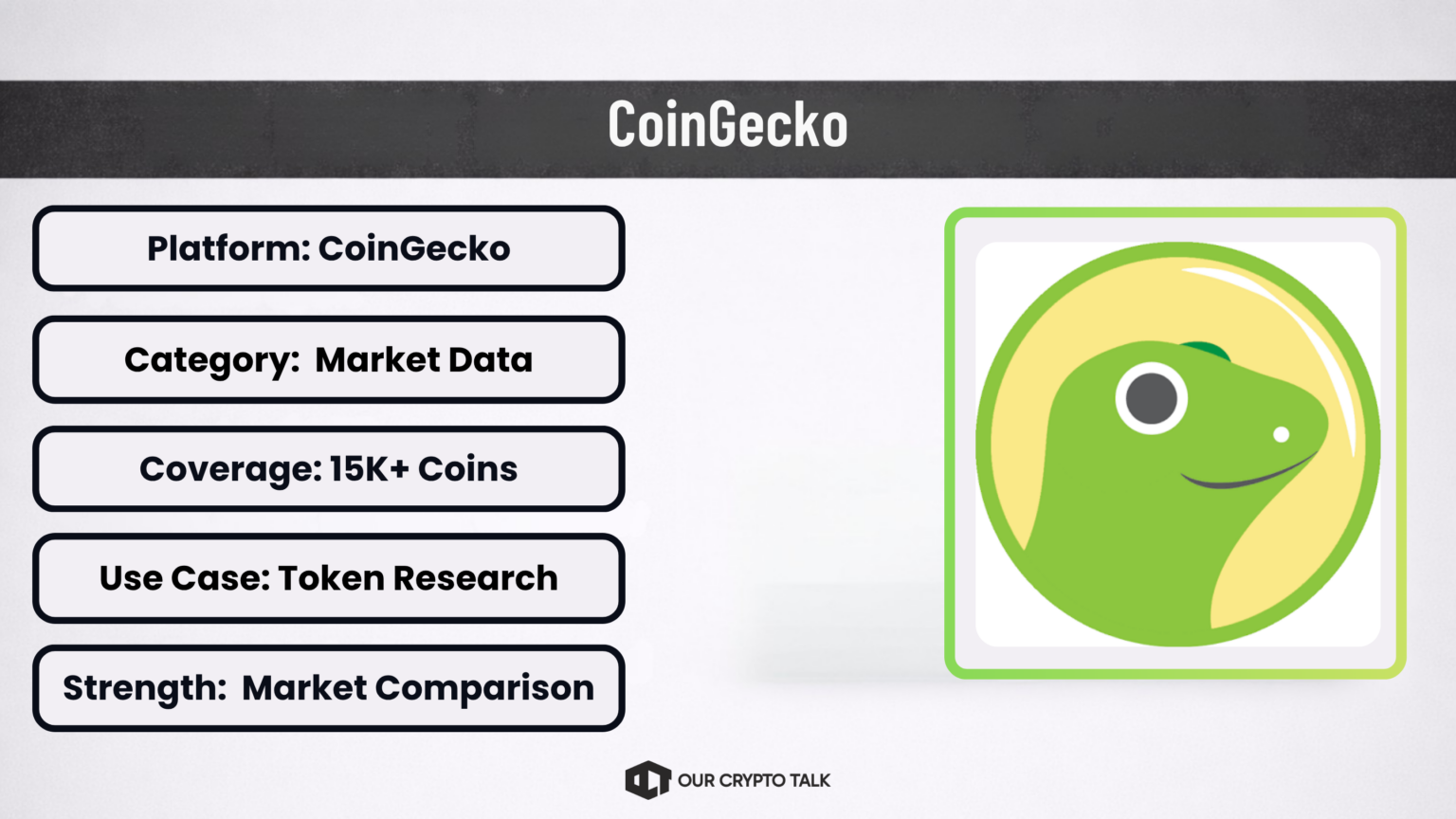
CoinGecko provides market data for more than 15,000 cryptocurrencies across over 1,000 exchanges. It displays prices, market capitalization, trading volume, circulating supply, total supply, exchange listings, developer activity, and community data.
The platform also organizes projects into categories such as DeFi, AI, DePIN, real-world assets, gaming, and meme coins. This structure helps beginners compare similar projects rather than studying tokens in isolation.
Before buying a token, check its market capitalization and supply structure. A low unit price does not automatically mean an asset is undervalued.
You should also compare circulating supply with total supply. If only a small percentage of tokens currently circulate, future unlocks may create additional selling pressure. Next, review the Markets tab. It shows where the token trades and which pairs hold the most liquidity. A token that depends on one small exchange may carry greater liquidity and execution risk.
Try this first:
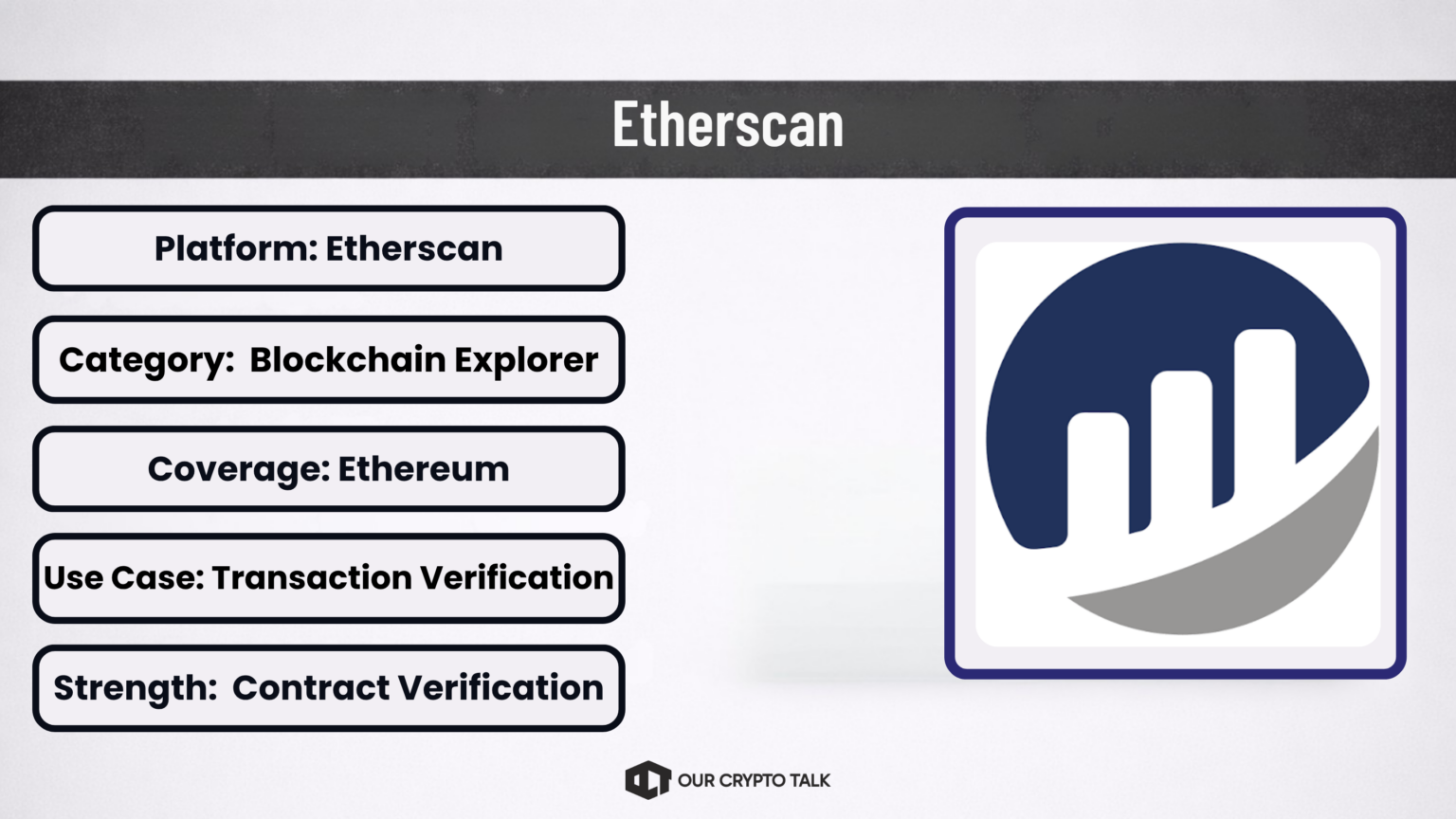
Etherscan acts as a blockchain explorer for Ethereum. It lets users inspect transactions, wallets, token contracts, gas fees, token holders, and smart-contract activity directly on the blockchain.
This transparency matters because crypto users should verify information rather than depend entirely on a wallet notification or exchange interface. After sending a transaction, you can paste its transaction hash into Etherscan. The platform will show whether the transaction succeeded, failed, or remains pending.
You can also inspect the sender, recipient, transferred amount, gas fee, and confirmation status.
More importantly, Etherscan helps users verify token contracts. Scammers often copy the name, ticker, and branding of legitimate projects. However, they cannot copy the official contract address. Always confirm a token’s contract through the project’s official website or documentation before buying or interacting with it.
Etherscan also shows whether developers verified a smart contract’s source code. Verification does not guarantee safety, but it improves transparency and allows others to review the code.
Try this first:
Once you learn how to use one explorer, the others become much easier to understand.
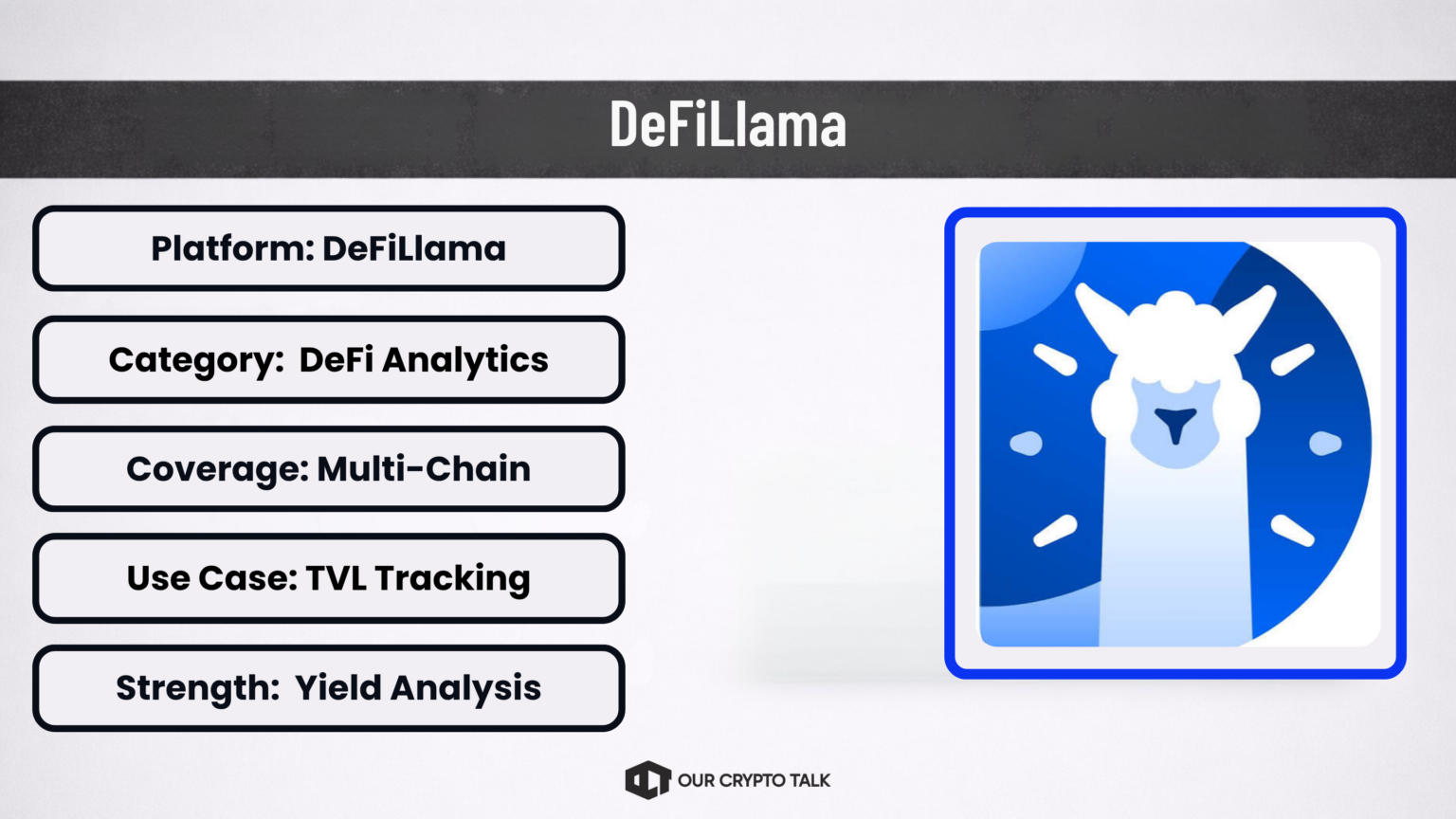
DeFiLlama tracks decentralized finance activity across a wide range of blockchains and protocols. It covers total value locked, stablecoin supply, bridge flows, protocol fees, revenue, and yields.
Total value locked, commonly called TVL, measures the value deposited into a protocol’s smart contracts. TVL does not prove that a platform is safe. However, it helps you compare adoption, liquidity, and relative scale.
A protocol with substantial and stable TVL usually has a stronger market presence than a new platform with limited deposits. Still, users must also consider smart-contract, oracle, governance, and liquidity risks. DeFiLlama also helps users investigate where yields come from.
Some protocols generate returns from borrower interest, trading fees, or other genuine activity. Others rely heavily on token incentives. This distinction matters because emission-based yields can decline quickly. Users may also sell their reward tokens, which creates continuous selling pressure.
Before chasing a high annual percentage yield, ask where the return comes from and whether the protocol can sustain it.
Try this first:
Instead, it helps you answer a fundamental question: does real capital and activity support the protocol?
TradingView provides charting tools for crypto and traditional financial markets. It offers real-time charts, technical indicators, drawing tools, alerts, and public market analysis.
Beginners do not need to become active traders to use it effectively. Charts can help you identify trend direction, volatility, support, resistance, and trading volume. They also show whether the market currently rewards or rejects an asset.
However, price performance does not prove project quality. A strong project can remain in a downtrend. Meanwhile, a weak or illiquid token can rise rapidly because of speculation, short covering, or social-media attention.
Therefore, combine chart analysis with fundamental and on-chain research. Support and resistance also represent zones rather than guaranteed reversal points. Buyers may have entered near support in the past, while sellers may have appeared near resistance.
Still, either level can fail when market conditions change.
Try this first:
It shows what the market currently prices. Other tools help you understand why.
Revoke.cash helps users inspect and remove token approvals granted to smart contracts. When you use a decentralized exchange or DeFi protocol, your wallet may give a contract permission to access a particular token.
That permission can remain active after you stop using the application. Many users forget about these approvals because wallets do not always display them clearly. However, an old approval can become dangerous if attackers later compromise the contract.
Unlimited approvals create additional risk because they may allow the contract to access the full balance of a specific token.
Revoke.cash shows these permissions and lets users cancel the ones they no longer need.
Try this first:
Reviewing approvals once a month can significantly improve wallet hygiene.
DeBank tracks on-chain portfolios across Ethereum and many EVM-compatible networks. Users can paste a public wallet address to view token balances, lending positions, staking deposits, liquidity pools, NFTs, transaction history, and estimated net worth.
This visibility has become increasingly important as crypto activity spreads across different chains. A user may hold ETH on Ethereum, stablecoins on Base, a lending position on Arbitrum, and liquidity-provider tokens on Polygon.
Checking each network separately creates confusion. It can also cause users to forget positions, borrowed assets, or idle balances.
DeBank brings these holdings into one dashboard.
Try this first:
Its main value comes from showing where your on-chain assets sit and how they interact with different protocols.
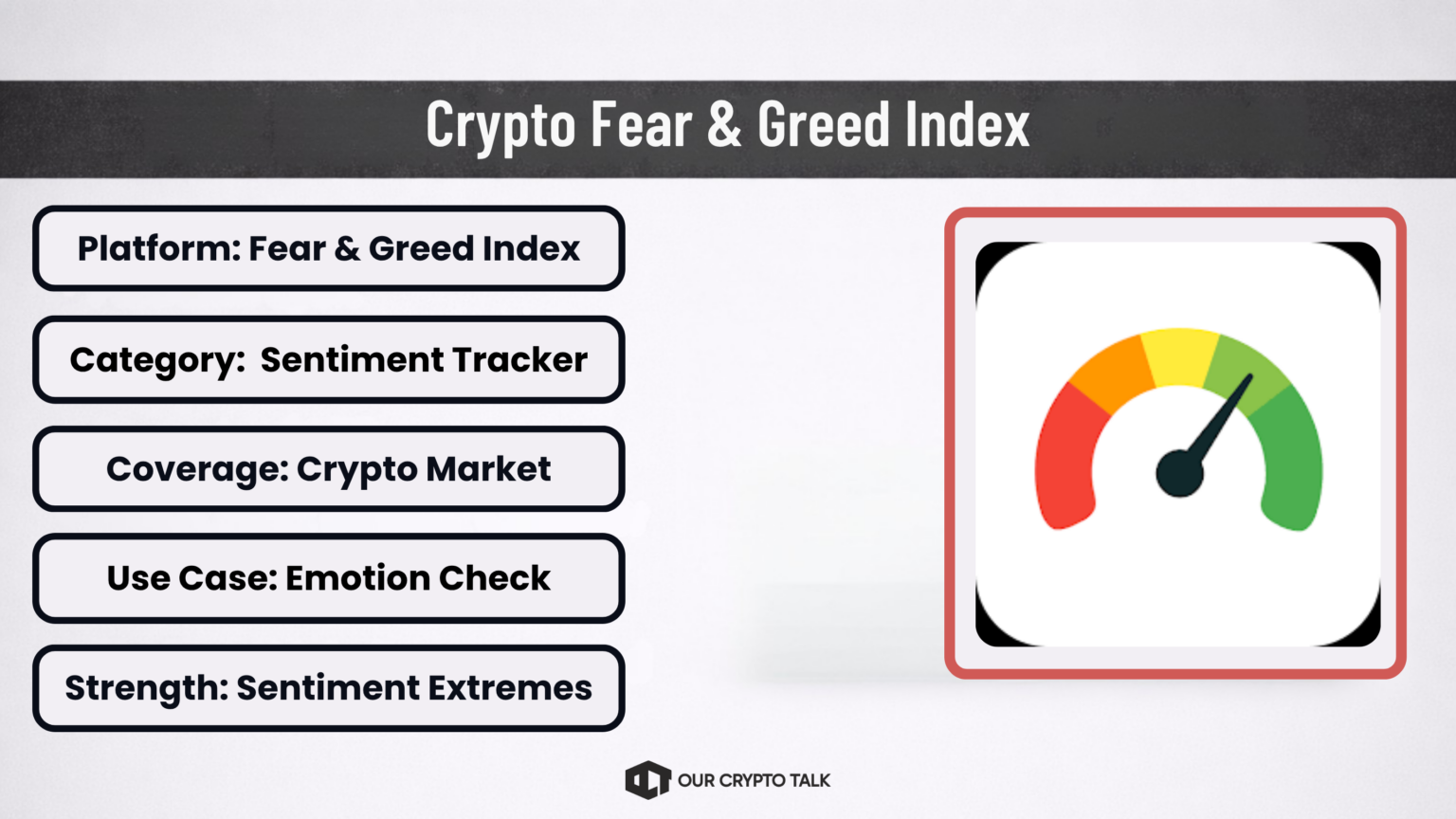
The Crypto Fear & Greed Index measures broad crypto-market sentiment on a scale from 0 to 100. Low scores indicate fear, while high scores indicate greed. The index considers factors such as volatility, trading volume, social-media activity, Bitcoin dominance, and market trends.
It helps users understand the market’s emotional environment. During sharp declines, investors often panic and assume prices will continue falling. During rapid rallies, traders may chase speculative assets and ignore risk.
The index can help you recognize those emotional extremes. Historically, extreme fear has sometimes appeared near attractive long-term entry periods. Extreme greed has also appeared before some market corrections.
However, the index cannot identify an exact market top or bottom. Fear may continue for weeks during a bear market. Likewise, greed may remain elevated throughout a strong bull market.
Try this first:
Follow this research flow to understand when and why to use each crypto tool.
| Step | Question | Tool | Action |
|---|---|---|---|
| 1 | What is this token? Is it legitimate? | CoinGecko | Check market cap, supply, exchanges, team, and category. |
| 2 | Is the contract real? | Etherscan | Verify the contract address. Check holders and token activity. |
| 3 | Where should I put my money? | DeFiLlama | Compare protocol TVL, yields, fees, and revenue. |
| 4 | When should I buy or sell? | TradingView | Check trends, support, resistance, volume, and price alerts. |
| 5 | Is my wallet safe? | Revoke.cash | Review and revoke unused or suspicious token approvals. |
| 6 | Where is all my crypto? | DeBank | View tokens and DeFi positions across supported chains. |
| 7 | Is the market overheated? | Fear & Greed Index | Check sentiment before making emotional decisions. |
These seven tools create a practical crypto research workflow.
Start with CoinGecko to understand the asset’s valuation, supply, liquidity, and exchange listings.
Next, use Etherscan or another blockchain explorer to verify the contract and inspect on-chain activity.
Then, use DeFiLlama to study protocol adoption, capital flows, fees, revenue, and yields.
TradingView adds price and trend context. Revoke.cash helps you remove unnecessary wallet permissions. DeBank shows your complete on-chain portfolio. Finally, the Fear & Greed Index helps you identify emotional market conditions.
Each platform solves a different problem. Together, they help you replace assumptions with verifiable information.
Popular alternatives and why they were not included in this beginner-focused toolkit.
| Tool | Why Not Included | What to Say |
|---|---|---|
| CoinMarketCap | Binance owns CoinMarketCap, while CoinGecko operates independently. | Both platforms work. We chose CoinGecko for its independence and GeckoTerminal DEX integration. |
| Nansen / Glassnode | These paid analytics platforms primarily serve experienced and professional users. | Graduate to these platforms after mastering the free beginner tools. |
| CoinStats / Koinly | These platforms focus on portfolio management and crypto tax reporting. | DeBank covers basic portfolio tracking. Crypto tax tools require a separate guide. |
| Dune Analytics | Dune often requires SQL knowledge and a stronger understanding of on-chain data. | Dune is powerful but advanced. Beginners should start with DeFiLlama. |
| MetaMask | MetaMask is a crypto wallet rather than a dedicated research or analytics tool. | MetaMask is essential for many users, but it belongs in the wallet category. |
These tools cannot eliminate crypto risk. They cannot guarantee profits or protect users from every scam.
However, they can help beginners make more informed decisions, understand what they own, and reduce avoidable mistakes.
Bookmark the seven platforms and complete each “try this first” exercise.
Most new participants never move beyond their exchange app. In 2026, users who verify information independently hold a meaningful advantage over those who rely only on prices, influencers, and promotional claims.


Tokenization of RWA yields onchain might be the biggest opportunity that no one has noticed
Cold Wallet Safety 2026: Are Hardware Wallets Still Safe?
One Token, Multiple Products. Can Zylo Deliver?
The Rise of NEAR Protocol 2026: Inside the 530% Rally and the ETF
Tokenization of RWA yields onchain might be the biggest opportunity that no one has noticed
Cold Wallet Safety 2026: Are Hardware Wallets Still Safe?
One Token, Multiple Products. Can Zylo Deliver?
The Rise of NEAR Protocol 2026: Inside the 530% Rally and the ETF