Compare the best Crypto Bridges & DEX Aggregators in 2026 for cross-chain transfers, token swaps, MEV protection, and better trade execution.
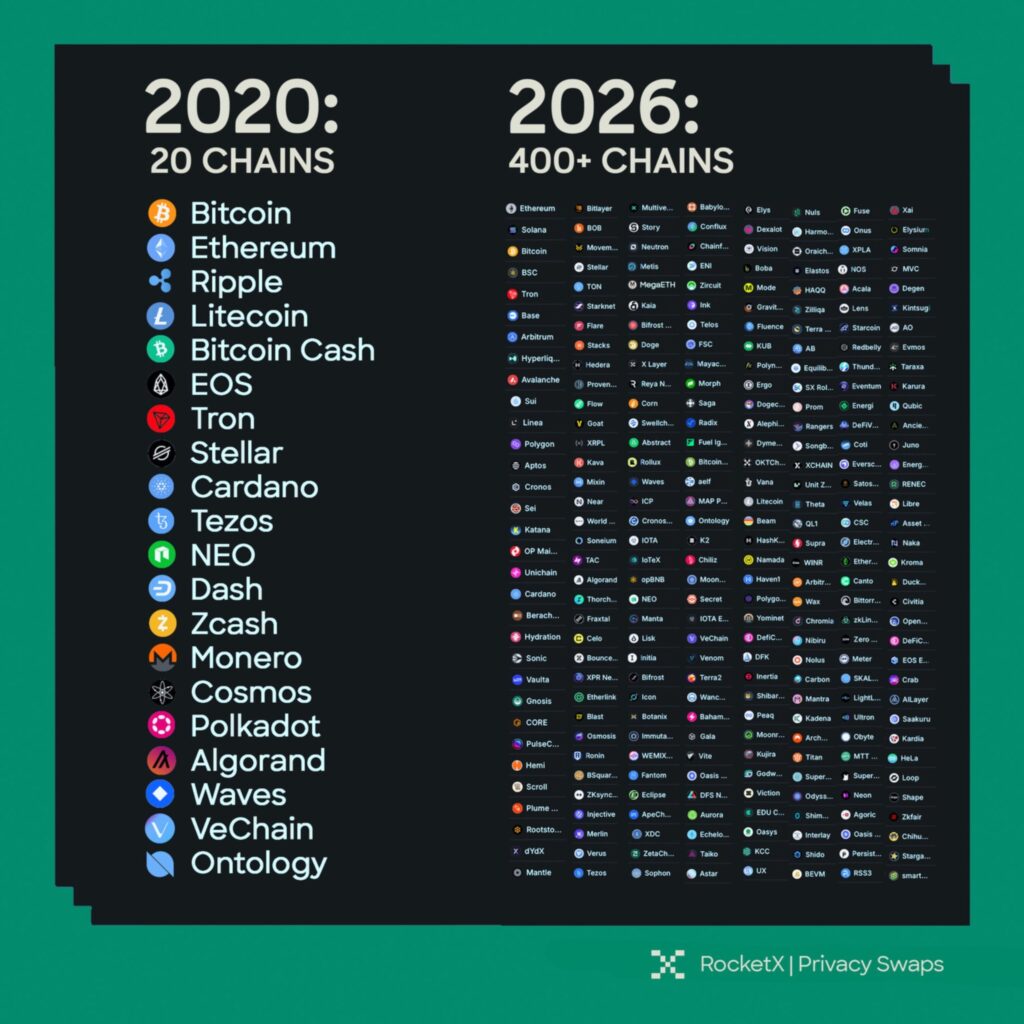
Crypto Bridges & DEX Aggregators in 2026 are no longer optional tools for DeFi users. By mid-2026, swapping rarely means one transaction on one venue. Liquidity is scattered across 400+ chains, hundreds of AMMs, dozens of bridges, and centralized order books that non-custodial routers now tap into directly.
This guide maps the four categories that make up the current crosschain routing stack, names the platforms that actually matter in each, and gives straight best-for verdicts – including where marketing outruns the evidence.
A note on rates: Real-time quotes move by the second and depend on size, slippage, and gas. No published comparison stays accurate for long. What follows are structural facts (chain coverage, fee models, security track record) plus a transparent look at the rate claims currently circulating.
When using Crypto Bridges & DEX Aggregators in 2026, always compare live quotes from at least two platforms before executing a trade. DefiLlama Swap and CoW Swap’s quote widget let you compare multiple aggregators on one screen, helping you verify pricing, routes, and fees instead of relying on a single provider’s quoted execution.
These categories increasingly overlap – 1inch and LIFI are both pushing into intent-based crosschain execution – but the distinction still determines what a given trade will and won’t be able to do.
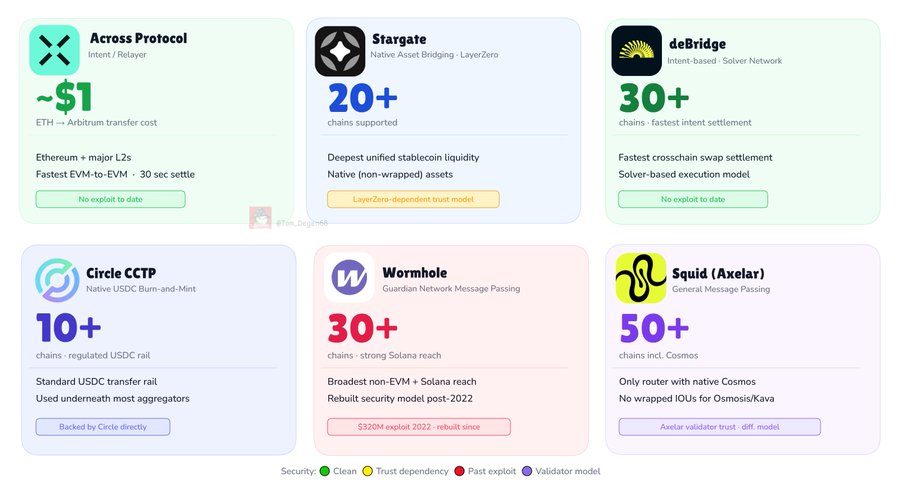
Actually in 2026 almost nobody hits these directly by choice, you reach them through an aggregator that picks the best one for your specific route. Just go direct only if you already know exactly which rail you want.
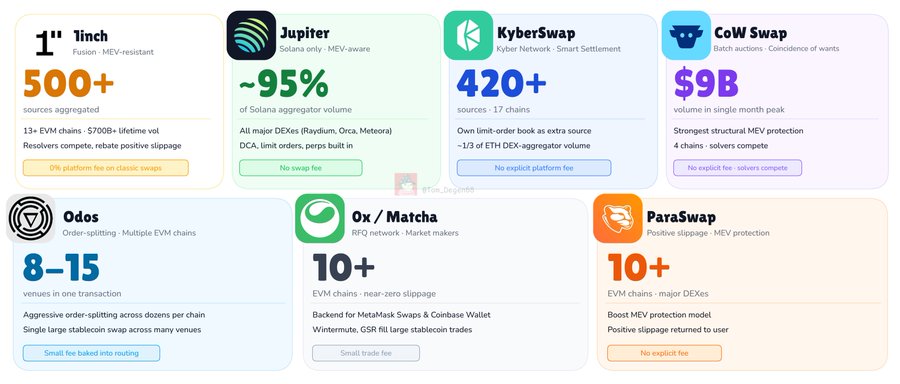
For more details about DEX Aggregators:
KyberNetwork / KyberSwap in focus
Kyber has been shipping onchain trading infra ince 2017, and in 2026 it’s positioning KyberSwap less as a swap page and more as a full Smart Finance Hub.
Limit Order 2.0 (intent-based), Smart DCA, a unified portfolio tracker, and KyberCross OneClick – a crosschain swap that keeps Kyber’s own aggregator embedded on both legs of a swap-bridge-swap route rather than handing off to an external router.
It also runs a public Token Catalog API delivering liquidity-category and volatility scoring, explicitly built for AI agents and other aggregators to plug into.
The honest caveat: KyberSwap Elastic, Kyber’s own concentrated-liquidity pool product (a separate component from the Aggregator), suffered a ~$47–54M exploit in November 2023 – a rounding/tick-manipulation flaw that let an attacker double-count liquidity across pools on six chains, wiping out roughly 90% of Elastic’s TVL in hours.
Kyber shut Elastic down, and its treasury grant program subsequently covered 100% of user losses for those who applied. Worth knowing if you’re weighing Kyber’s DeFi products beyond the aggregator/swap function – the swap-routing side wasn’t itself the vector, but it’s part of the same team’s track record.
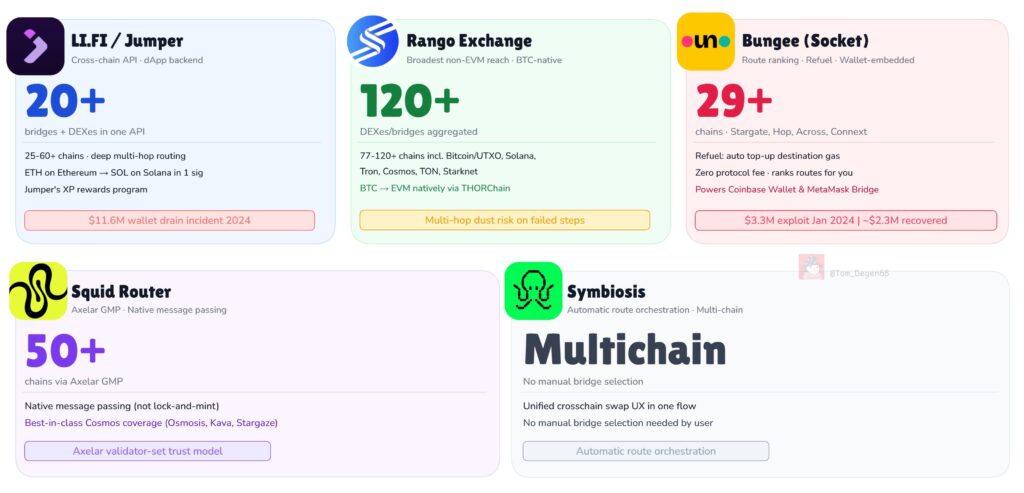
These are genuinely useful defaults for “I have ETH on Arbitrum and need SOL” style trades.
Jumper wins on developer integration and multi-hop depth, Rango wins on chain breadth (especially non-EVM and native BTC), Bungee wins if you just want route transparency and gas top-ups with zero markup.
(Jumper will never TGE btw)
All of them route strictly through onchain liquidity – that’s both their strength (fully non-custodial, no account) and their limit (thinner books on long-tail pairs than a venue that can also tap CEX order flow).
This is the newest and smallest category, and RocketX is currently the most visible example of it at scale, alongside CEX-style aggregator / exchange hybrids like BloFin.
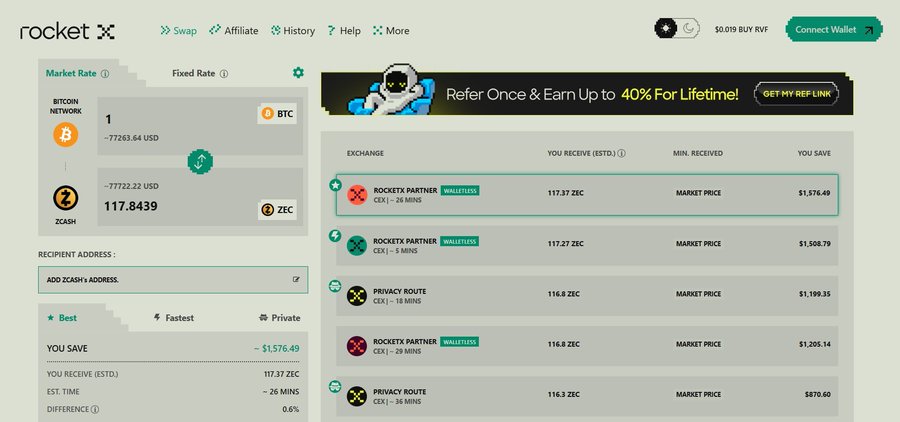
@RocketXexchange positions itself as a non-custodial “mega-aggregator”: one interface that searches 500+ liquidity sources across 200+ blockchains, combining both DEX liquidity and order books from partner centralized exchanges, without requiring an account or KYC for wallet-to-wallet crypto-to-crypto swaps.
Best for:
Traders who specifically want CEX-depth pricing or privacy-mode routing without opening a CEX account or doing KYC, large/less-liquid pairs where DEX pools alone are thin, and non-EVM coverage (RocketX supports chains like XRP, TON, TAO, ZEC, and Monero swaps that many aggregators simply can’t route).
Fee and rate structure do differ predictably by mechanism, and this part is verifiable independently of any single vendor:
Below roughly $1000, there is usually no difference between reputable aggregators. Above roughly $50K-$100K, RFQ and CEX-access-based routers start to pull ahead of pure onchain splitters, and it’s worth pulling quotes from at least two or three platforms before executing.
For more details, reach to:

https://t.co/UmWEFcgO2z


Tokenization of RWA yields onchain might be the biggest opportunity that no one has noticed
Cold Wallet Safety 2026: Are Hardware Wallets Still Safe?
One Token, Multiple Products. Can Zylo Deliver?
The Rise of NEAR Protocol 2026: Inside the 530% Rally and the ETF
Tokenization of RWA yields onchain might be the biggest opportunity that no one has noticed
Cold Wallet Safety 2026: Are Hardware Wallets Still Safe?
One Token, Multiple Products. Can Zylo Deliver?
The Rise of NEAR Protocol 2026: Inside the 530% Rally and the ETF