Bittensor (TAO) Review 2026: Is Decentralized AI Crypto Worth It?
Bittensor (TAO) powers 128+ subnets with $350M backing. We cover tokenomics, the Dec 2025 halving, decentralization, risks, & buy potential.


Author: Akshat Thakur
What Is Bittensor?
Bittensor (TAO) is a decentralized blockchain protocol that creates an open marketplace for artificial intelligence. It rewards participants for producing useful AI outputs instead of solving hash puzzles. Miners run models that generate text, predictions, or signals, while validators rank their quality. The best performers earn TAO. This shifts blockchain incentives from raw compute to measurable intelligence. In this Bittensor review, we take a closer look at how this model works and whether it delivers real value.
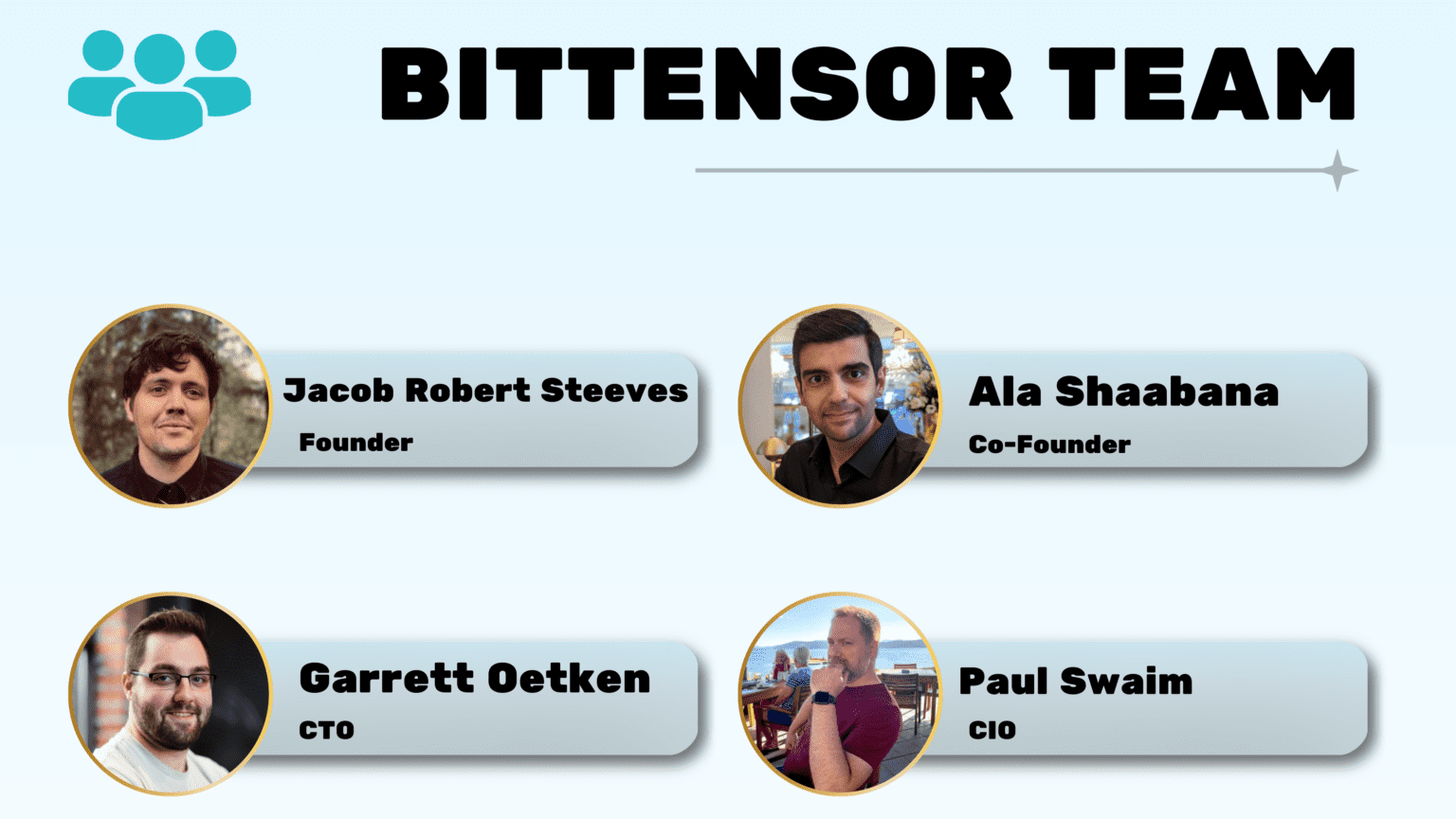
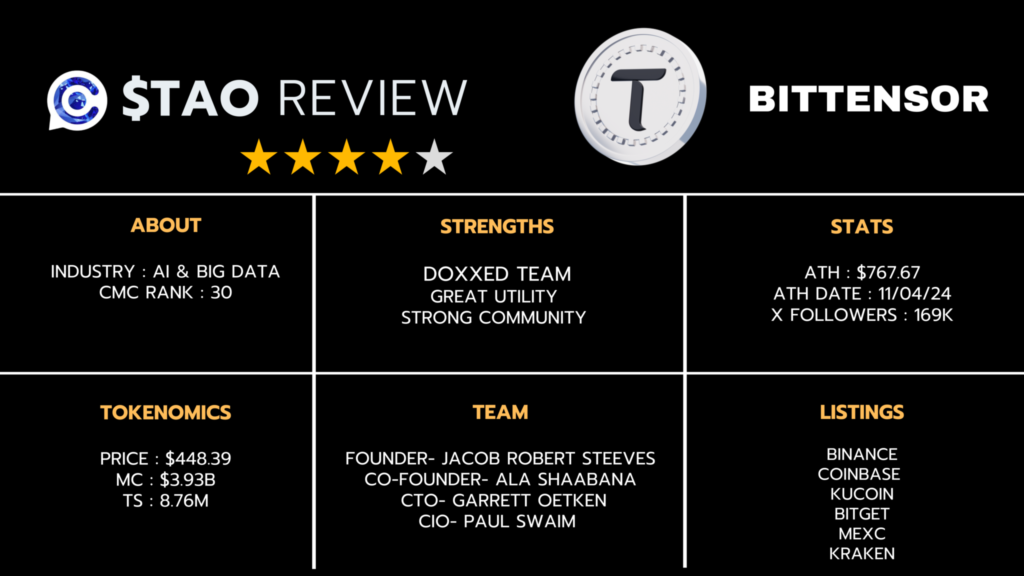
Bittensor was founded in 2019 by Jacob Steeves and Ala Shaabana through the OpenTensor Foundation. The project avoided traditional VC funding. Instead, capital flowed directly into TAO accumulation, reportedly exceeding $350 million. Early versions faced consensus issues and required redesigns before stabilizing with the Finney mainnet in 2023. That evolution highlights a system built through iteration, not theory.
Technically, Bittensor Ecosystem runs on a Substrate-based Layer 1 called Subtensor and uses Proof-of-Intelligence. The idea is simple. The network pays for useful AI work. This happens through subnets, which function like specialized AI marketplaces. Each subnet focuses on a task, such as language models or prediction systems, with its own miners and validators. This modular structure allows scaling while keeping incentives aligned through TAO. At a basic level, Bittensor TAO explained comes down to one idea: the network pays for useful AI, not raw computation.
TAO has a fixed 21 million supply, similar to Bitcoin, with its first halving in December 2025 reducing emissions. This strengthened its position in the AI narrative as decentralized AI gained traction in 2026. But the model is still being tested. Most subnet activity remains emission-driven, not demand-driven. Bittensor leads the decentralized AI race, but its valuation depends on whether these subnets can generate real economic usage, not just rewards.
KEY DATA SNAPSHOT
Token
Market Cap Rank
Max Supply
Circulating Supply
Daily Emissions
Active Subnets
Consensus
Chain
Halving
VC Funding
Founders
Governance
Key Listings
How Does Bittensor Work? (Subnets & Proof-of-Intelligence)
Bittensor runs through Bittensor subnets, which are independent networks built around specific AI tasks. Each subnet acts as its own marketplace. A subnet owner defines the problem and sets the rules. Miners bring models that generate outputs such as text, predictions, or signals. Validators test these outputs, score their quality, and rank performance. Rewards are distributed based on these rankings. This structure breaks the network into focused environments where different types of intelligence compete and improve.
The system works like a hiring marketplace. Subnet owners act like companies posting jobs. Miners are workers submitting solutions. Validators are reviewers deciding who performed best. Proof-of-Intelligence is the core mechanism behind this. Instead of proving work through computation alone, miners must prove usefulness. Validators compare outputs and reach consensus using stake-weighted scoring. The network then rewards the most valuable contributions, turning subjective AI quality into an economic signal.
This design is Bittensor’s core differentiator. It ties rewards directly to output quality instead of raw compute. But it also exposes a key limitation. Many subnets are still driven by emissions rather than real demand. That means the system works, but it is not fully validated as a sustainable market yet. Within the broader Bittensor ecosystem, this raises a clear question about whether real usage can replace incentives over time.
Bittensor Tokenomics ($TAO)
TAO is capped at a strict 21 million supply with no pre-mine, making it one of the few AI tokens that follows a fair-launch model. Every token in circulation was earned through mining or validation. As of 2026, roughly half the supply is circulating, with the rest released gradually through emissions. This matters. Most AI crypto projects front-load allocations to insiders. Bittensor did not. It forced early participants to earn their position, which strengthened credibility but also slowed initial growth.
The first major shift came with the December 2025 halving. Daily emissions dropped from 7,200 TAO to 3,600 after total supply crossed 10.5 million. Block rewards were cut in half, mirroring Bitcoin’s monetary design but applied to an AI network. If you break it down, this is not just a supply event. It directly reduces how much capital flows into subnets each day. It also changed mining economics. Lower emissions increased competition, making it harder for miners to earn meaningful rewards unless they rank at the top of high-demand subnets. A detailed breakdown of the Bittensor halving shows how this event tightened inflation while exposing which parts of the network rely purely on rewards.
Distribution changed further with the dTAO upgrade. Emissions are no longer controlled centrally. TAO now flows based on capital allocation into subnets. Each subnet has its own token and liquidity pool. Investors decide where emissions go by staking. Subnet owners take a fixed share, while miners and validators earn based on performance. Capital replaced governance.
This makes the system more efficient and more fragile. Inflation dropped after the halving, but emissions still drive most activity. Many subnets lack real demand. Stake concentration remains high. Mining is no longer broadly attractive. It now favors highly competitive participants with strong models and access to capital. Bittensor has achieved scarcity. It has not yet proven sustainable revenue.
Team, Backers & Governance
Bittensor was founded in 2019 by Jacob Steeves and Ala Shaabana through the OpenTensor Foundation. Both came from strong academic and technical backgrounds, with experience spanning machine learning and distributed systems. The project avoided traditional venture capital. Instead, major players accumulated exposure by buying TAO directly from the market. Firms like Polychain and Digital Currency Group contributed to an estimated $350 million in capital inflow. This approach kept token distribution clean. No insider allocations. No discounted rounds. But it also meant influence shifted toward large token holders rather than long-term builders.
The defining shift came in February 2026. The OpenTensor Foundation stepped back completely. Jacob Steeves moved into a standard participant role with no special control. The CEO position was removed. Governance became fully on-chain. Today, decisions are executed through validator consensus, subnet owner participation, and stake-weighted mechanisms. No central entity has override power. This is not partial decentralization. It is a full removal of the founding layer.
This transition proves Bittensor can operate without a central authority. It removes the single point of failure that existed during earlier network instability and forks. But it also introduces risk. Stake concentration still gives a small group of validators outsized influence over decisions. Without a core team, crisis coordination becomes harder. Bittensor now matches its decentralization narrative in structure. Whether that makes it stronger or more fragile will depend on how the network handles its next major stress event.
Is Bittensor Safe?
Bittensor’s security profile has improved, but it was shaped by real failures, not theory. The protocol today runs under fully on-chain governance after the February 2026 decentralization shift. No foundation or core team holds override power. Client-side protections have also improved. Features like proxy wallets allow users to separate coldkeys from hotkeys, reducing direct exposure. The network has gone through audits and multiple upgrades since its early instability. Most importantly, it has already faced live attacks and recovered without protocol-level collapse.
The critical event was the July 2024 exploit. Attackers compromised the official Python package and pushed a malicious version that extracted private keys when users decrypted wallets. The result was roughly $8 million in TAO drained. A related phishing wave weeks earlier had already taken over $11 million. The response was fast. The chain was paused, the malicious package was removed, and a full post-mortem was published. Funds were not recovered, but the attack vector was closed. This was not a smart contract failure. It was a supply chain attack targeting users. That distinction is important. The protocol held. The tooling did not.
Decentralization in 2026 changed the security model again. It removed the single point of failure but also removed fast centralized response. Validators now coordinate decisions, which improves censorship resistance but slows crisis handling. Stake concentration remains a concern. A small group of validators still holds significant influence over decisions. Bittensor today is stronger at the protocol level than it was during its early phases. But it still depends heavily on user security practices and validator integrity.
Bittensor is not fragile anymore, but it is not foolproof. It has proven it can survive attacks. It has not proven it can prevent them entirely.
Bittensor vs Render: Which AI Crypto Has More Upside?
Bittensor and Render are often grouped under the same AI narrative, but they operate at different layers. TAO focuses on producing machine intelligence. Render provides GPU power to run workloads. One builds the output. The other supplies the infrastructure. They overlap only when AI models need compute, but their incentives and long-term value capture are not the same.
Focus
Consensus
Supply
Use case
Institutional presence
Bittensor’s upside comes from scarcity and positioning. Its 21 million cap and December 2025 halving reduced emissions to 3,600 TAO daily. That tightened supply while the AI narrative accelerated. At the same time, subnets created a new market structure where intelligence is priced directly. This is a higher-value layer than compute. But it is still early. Most subnets rely on emissions, not real customers. That creates risk if incentives decline faster than demand grows.
Render is more proven in usage. It has processed real jobs across rendering and creative pipelines. Its burn-mint model ties emissions to demand, which is structurally cleaner. But it operates in a competitive space. Centralized GPU providers and other DePIN networks compete on price and reliability. Its larger supply also limits scarcity-driven upside compared to TAO.
Bittensor has more upside. It targets the higher-value layer where intelligence is created, not just processed. But that upside comes with execution risk. Render is more proven. Bittensor is more ambitious. In this cycle, the market is rewarding ambition, but only if it converts into real demand.
Strengths & Risks (Bull Case vs Bear Case)
Bittensor owns the decentralized AI narrative. It is one of the few networks actually producing machine intelligence at scale. The subnet model works like a live marketplace where models compete and improve. This is not theoretical. Over 100 subnets are active in 2026, coordinating real outputs across different AI tasks. The December 2025 halving cut emissions from 7,200 to 3,600 TAO, reinforcing scarcity on a fixed 21 million supply.
The dTAO upgrade shifted power from governance to capital, letting markets decide which subnets win. Institutional signals strengthened the story. Around $350 million flowed into TAO, and products like Grayscale exposure pushed it further into mainstream attention. The Bittensor (TAO) Surges After Coinbase Listing event further confirmed market demand, showing how quickly capital reacts when accessibility expands. The February 2026 move to full on-chain governance removed central control, aligning structure with its decentralization claim.
The system is still heavily subsidy-driven. Many subnets behave like emission farms rather than real businesses. They earn rewards without generating meaningful external revenue. Technical complexity limits participation. Running a subnet or validator is not simple, which keeps the network concentrated among insiders. Stake concentration adds another layer of risk.
A small group can influence rewards and decisions. Past incidents also matter. The July 2024 exploit exposed user-level vulnerabilities and showed how fragile tooling can be. Earlier network instability and forks highlighted coordination challenges. Competition is increasing. Networks like Render dominate compute, while new AI protocols target similar narratives with simpler models.
Bittensor has executed better than most AI crypto projects. That gives the bull case weight. But the risks are structural, not temporary. If demand does not replace emissions, the model weakens quickly.
Should You Buy TAO? (OCT Verdict)
Buy TAO only if you treat it as a multi-year bet on the first working decentralized intelligence layer. It suits long-term holders who understand how the system actually works. That means subnets as marketplaces, validators as reviewers, and emissions as incentives that are now tightening. They saw the December 2025 halving cut daily emissions to 3,600 TAO. Understand how dTAO shifted power from governance to capital allocation.
They recognize that February 2026 removed the foundation and pushed everything on-chain. The $350 million in direct TAO accumulation, institutional exposure, and over 100 active subnets are not narratives anymore. They are live systems. These investors are not buying usage today. They are betting that usage will catch up before emissions lose their impact.
TAO is not for short-term traders or low-risk portfolios. The system is still unstable at the edges. The July 2024 exploit showed that user-level security can fail even if the protocol holds. Many subnets still rely on emissions instead of customers. Stake concentration means a small group can influence outcomes. Technical complexity keeps participation limited. If you cannot explain how validators score outputs or why halving changes subnet incentives, you are relying on narrative, not understanding.
OCT verdict: TAO is a high-conviction bet, not a safe one. It has executed better than most AI crypto projects. But its core assumption remains unproven. Real demand must replace incentives. The next phase will not reward participation. It will test whether the market actually needs what Bittensor is building.
Frequently Asked Questions
Is Bittensor worth buying in 2026?
What happened at the Bittensor halving?
Is Bittensor safe after the 2024 hack?
How do Bittensor subnets work?
Bittensor vs Render: which is better?
Read our full crypto review library to compare TAO against other top AI tokens.
In this article
What Is Bittensor?KEY DATA SNAPSHOTHow Does Bittensor Work? (Subnets & Proof-of-Intelligence)Bittensor Tokenomics ($TAO)Team, Backers & GovernanceIs Bittensor Safe?Bittensor vs Render: Which AI Crypto Has More Upside?Strengths & Risks (Bull Case vs Bear Case)Should You Buy TAO? (OCT Verdict)