
Discover how Bitcoin mining is evolving in 2026, why supply is shrinking, and what it means for scarcity and miners.

Author: Arushi Garg
Bitcoin’s supply defines the network, yet many people still misunderstand it. In 2026, investors commonly ask: how many Bitcoin remain to be mined, and how does Bitcoin mining affect the supply? Fewer than 1 million remain, but that number alone doesn’t tell the whole story. What matters is the slow pace at which miners release the remaining supply and how that drives scarcity over time.
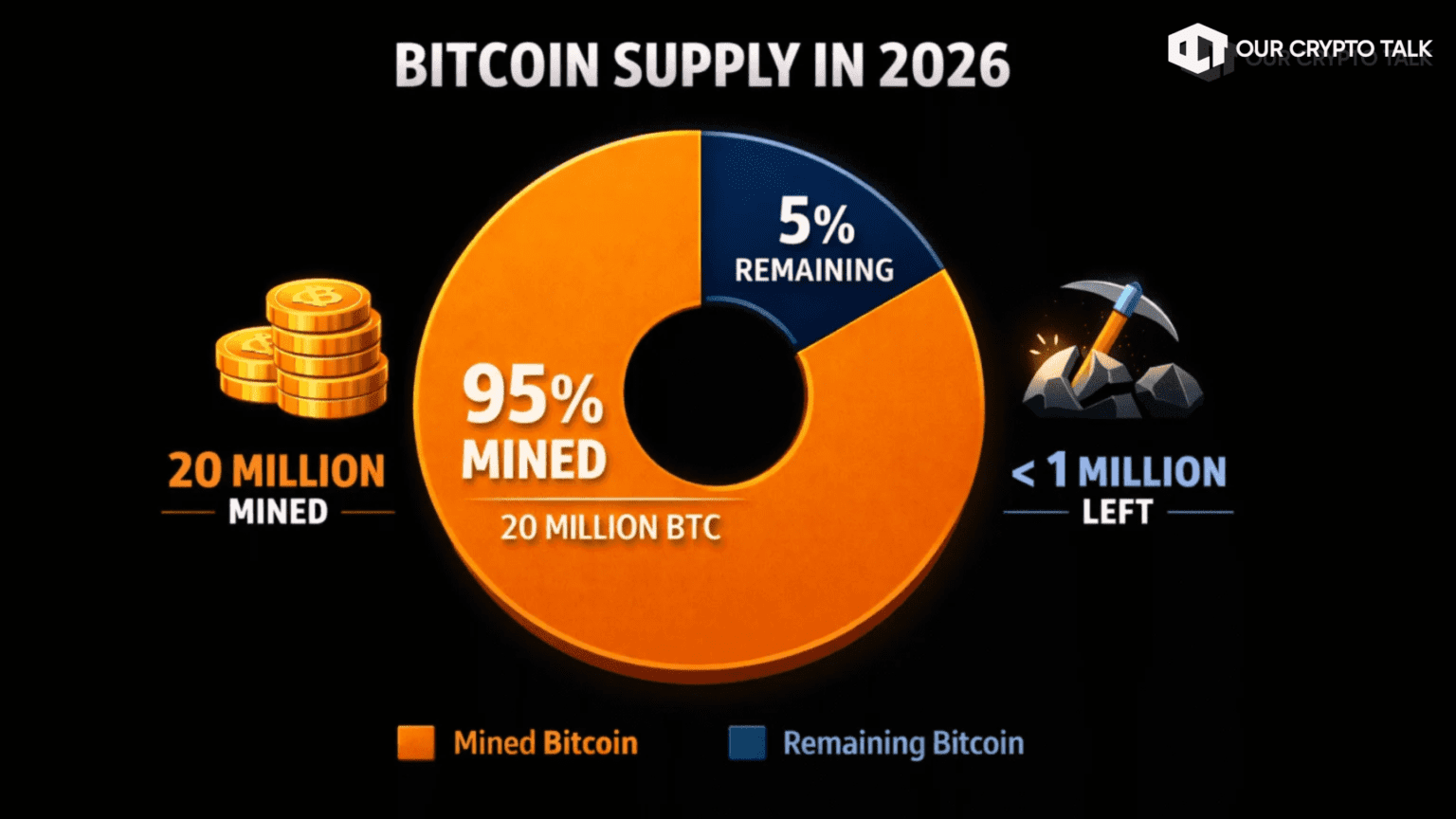
Bitcoin hit a major milestone on March 10, 2026, when miners surpassed 20 million BTC. Fewer than 1 million coins remain to be created. As of March 2026, the remaining supply breaks down like this: Just under 1 million BTC left to mine (~980,000 and dropping with every block). This number updates roughly every 10 minutes as miners add new blocks.
The broader takeaway is clear: miners have already created more than 95% of Bitcoin’s total supply. That fact alone is striking. Even more telling is how unevenly this supply has distributed over time.
It took over 15 years to mine the first 20 million BTC. It will take over a century, until around 2140, to mine the final Bitcoin. Bitcoin’s issuance is not linear. It slows dramatically with each halving cycle. At the current rate, the network produces approximately 450 BTC per day. That translates to roughly 164,000 BTC per year, and this number continues to decline after each halving.
So while “~1 million left” may sound like a large number, it doesn’t reflect how slowly those coins will enter circulation. Bitcoin’s protocol releases the remaining supply at an increasingly slower pace by design.
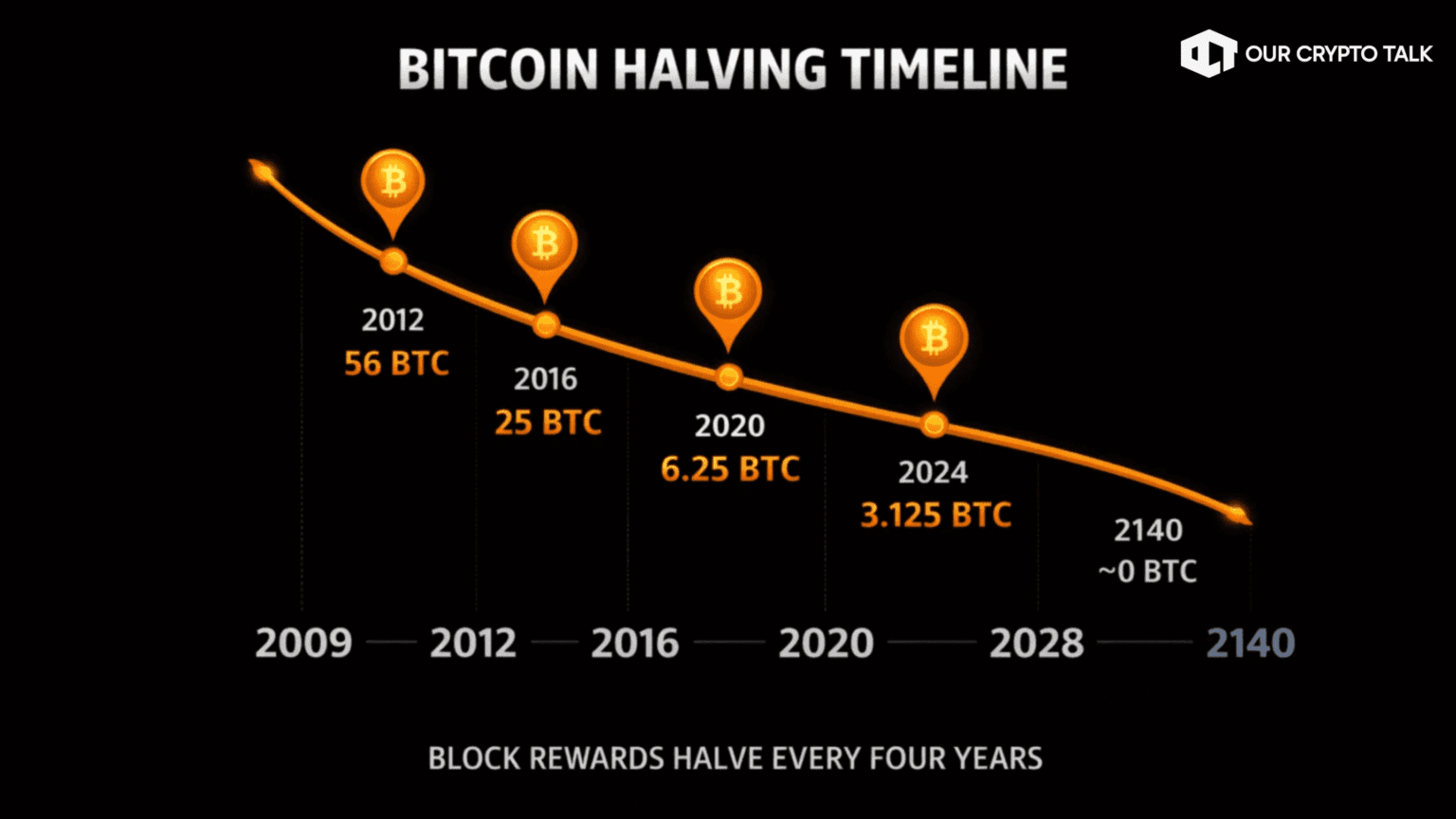
Bitcoin follows a simple rule: every ~4 years, the protocol halves the block reward—an event known as the halving.
Here’s how that has played out over time:
The most important insight:
Bitcoin’s issuance curve is exponential. Each halving reduces new supply, making every remaining coin harder to obtain. This is not accidental. It is the core of Bitcoin’s monetary design.
Most articles stop at “~1 million BTC left,” but that number alone misses the bigger picture. What truly matters is how slowly that remaining supply enters the market and how its impact keeps shrinking over time.
Bitcoin’s scarcity isn’t static. It accelerates. Every halving cuts the block reward in half, reducing Bitcoin mining supply over time. In the 2024–2028 cycle, miners earn 3.125 BTC per block. Around 2028, that drops to 1.5625 BTC, and in later cycles it falls to fractions of a coin. This creates a supply curve that continuously flattens. Miners continue to produce new Bitcoin, but the rate is shrinking to near zero. As of March 2026, miners have fewer than 1 million Bitcoin left to extract. Here’s the exact number, why scarcity matters, and what’s next.
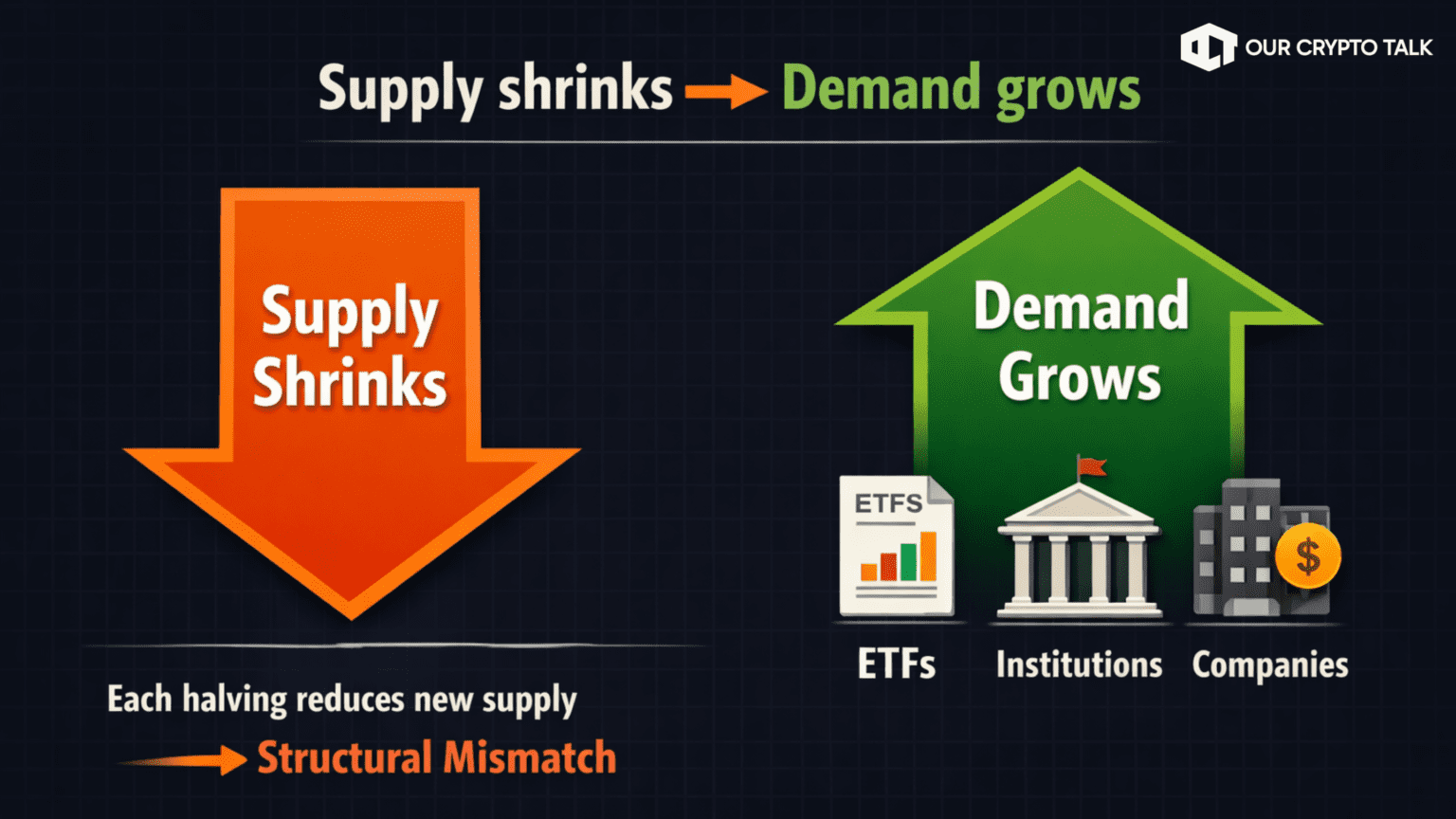
The key dynamic is simple: supply is approaching zero. Not abruptly, but gradually, until new issuance from Bitcoin mining becomes almost irrelevant to the market. This is fundamentally different from traditional assets. Bitcoin’s supply cannot respond to demand. No matter how high demand rises, the protocol limits BTC production. It enforces a fixed issuance schedule. Each halving strengthens this effect. With fewer new coins entering circulation, miners have less to sell, which structurally reduces sell pressure. Daily issuance has already dropped significantly and will continue declining with every cycle.
That’s why the “~1 million remaining” figure is misleading on its own. The real story is time and pace. Those coins will take over a century to be mined, with each year adding less supply than the last. As issuance fades, Bitcoin becomes harder to acquire, not just because of demand, but because the flow of new supply keeps shrinking.
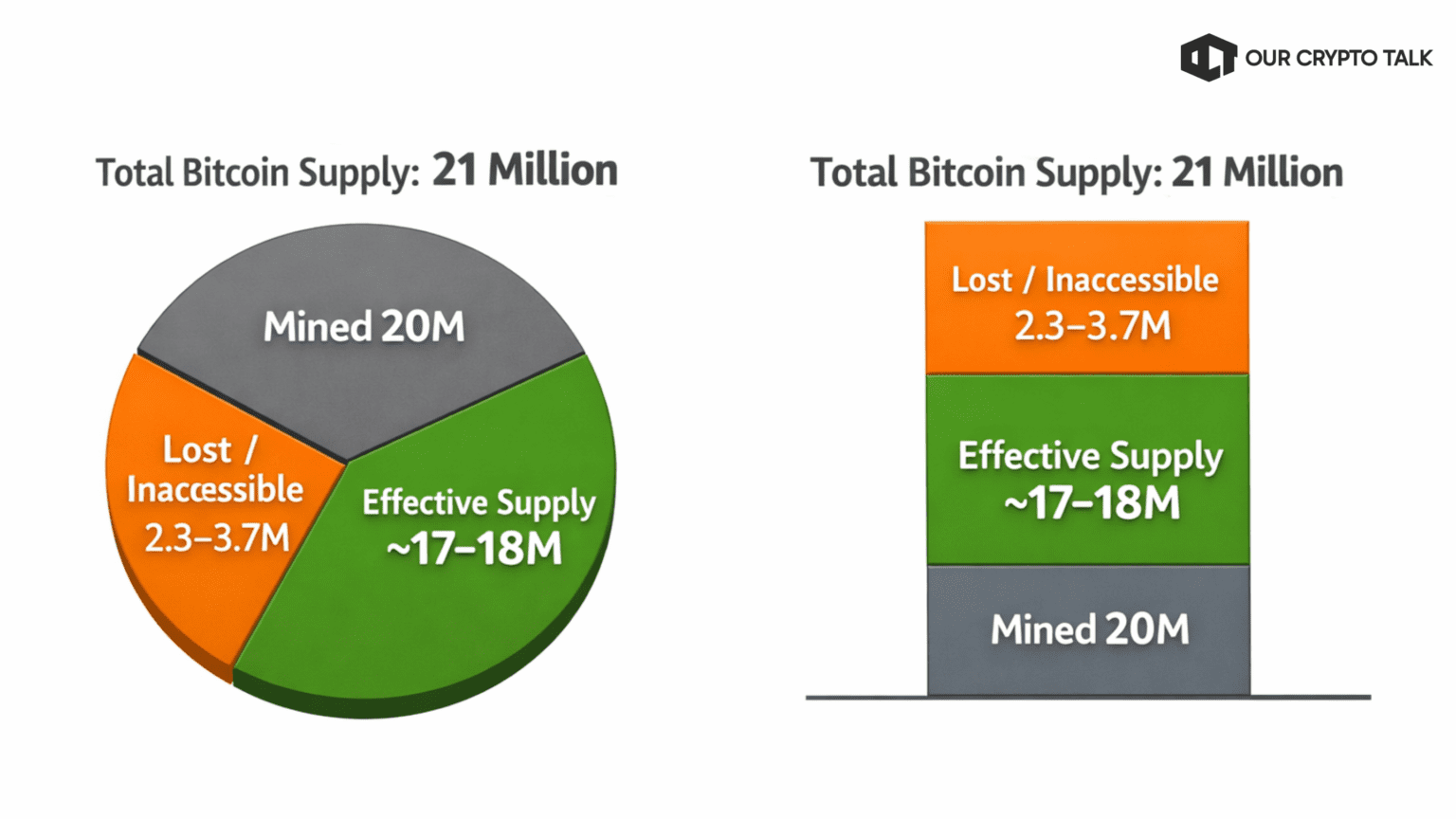
People often quote the “~20 million mined” figure, but it doesn’t reveal how much Bitcoin the market can actually access or how Bitcoin mining supply converts into usable coins. A significant portion of the supply has been permanently lost. On-chain analytics firms like Chainalysis and Glassnode estimate that between 2.3 and 3.7 million BTC are no longer accessible. Users lost these coins through forgotten passwords, lost hardware wallets, coins sent to unspendable addresses, and early wallets that never moved.
This estimate also includes roughly 1.1 million BTC attributed to Satoshi Nakamoto, whose coins have never moved since mining. While no one can prove these coins are permanently lost, the market treats them as effectively out of circulation. When you account for this, the picture changes significantly. Even though miners have produced more than 20 million Bitcoin, the effective circulating supply likely sits closer to 17 to 18 million BTC.
This shifts the “~1 million left” narrative. The protocol fixes total supply at 21 million, but the market can access far less. At the same time, new issuance keeps shrinking every year. As a result, the gap between available supply and potential demand continues to widen. This dynamic drives the idea of a supply squeeze. Bitcoin is not just limited. The system has already removed a portion of that limited supply, while new issuance continues to decline.
While Bitcoin’s supply growth continues to slow, Bitcoin mining supply keeps shrinking and demand has been increasing in more structural and persistent ways. Over the past few years, new sources of demand have emerged that did not exist in earlier market cycles. Spot Bitcoin ETFs are steadily absorbing supply from the market, while publicly listed companies have begun allocating Bitcoin to their balance sheets as a treasury asset.
Institutional participation has also expanded, with asset managers, hedge funds, and financial platforms offering Bitcoin exposure to a broader base of investors. At the same time, there are ongoing discussions in policy and financial circles around sovereign-level Bitcoin reserves, which signals growing interest at the nation-state level.
The key point here is not speculation or hype. It comes down to simple arithmetic. Each halving reduces new supply, permanently lost coins shrink the available supply further, and demand continues to grow through multiple independent channels. Together, these forces create a structural mismatch between supply and demand that Bitcoin’s design enforces, not short-term market cycles.
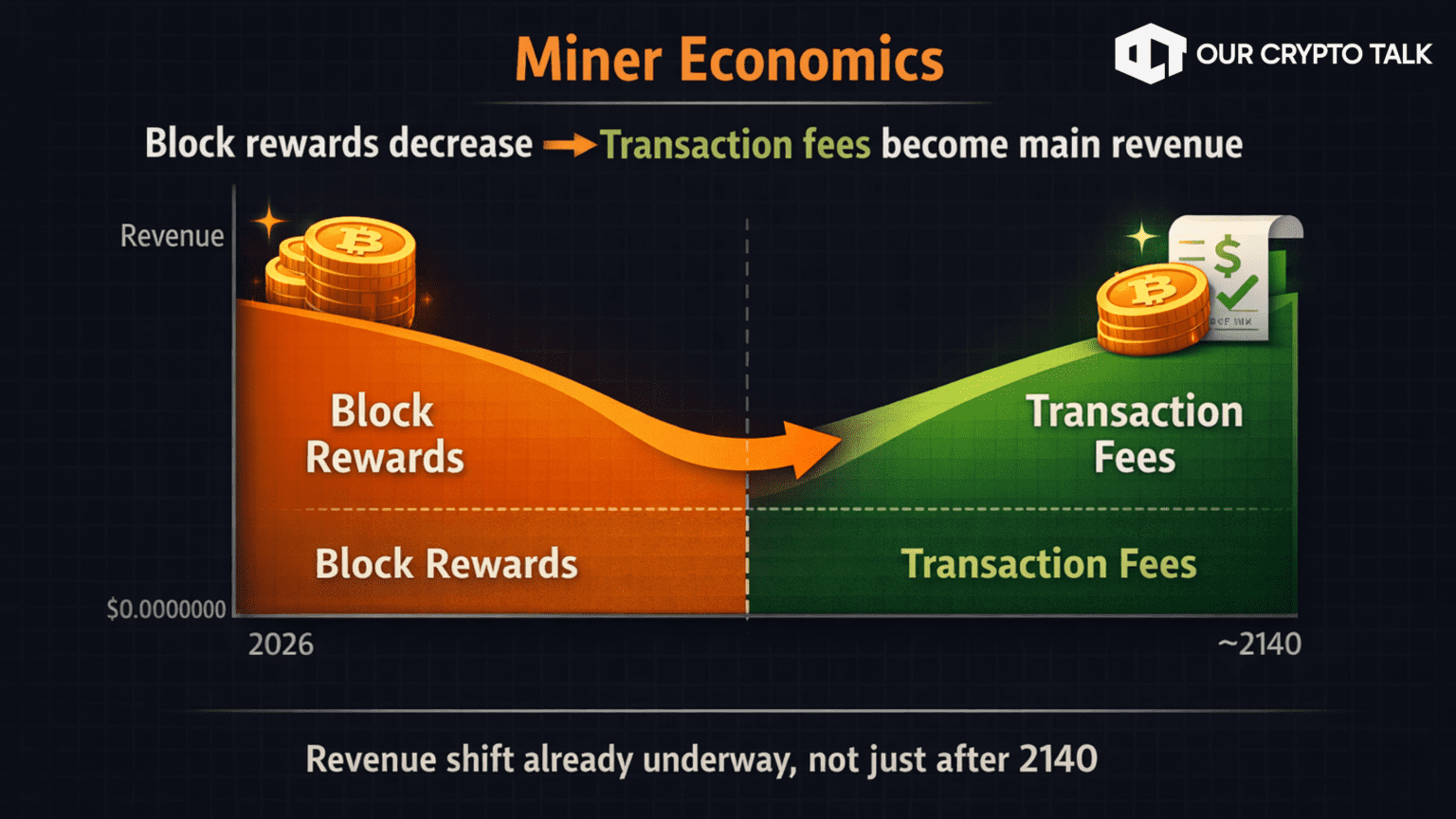
Bitcoin miners currently earn revenue from two primary sources: newly issued Bitcoin through block rewards and transaction fees paid by users. Today, block rewards still make up the majority of miner income, but this balance is gradually changing.
As each halving reduces the block reward, miners receive fewer new coins for securing the network. Over time, this forces a transition toward a system where transaction fees play a much larger role in sustaining mining operations. This shift is not something that begins in 2140 when the last Bitcoin is mined. It is already happening gradually with each halving cycle.
For a deeper explanation of how this transition evolves over time, read “What Happens When All 21 Million Bitcoins Are Mined,” which details how the long-term miner incentive model works.
“Less than 1 million Bitcoin left” isn’t just a number, it shows how the system works over time. More than 95% of all Bitcoin has already been mined, and new coins are released slowly through halvings every four years. This diminishing supply will continue for over a century, making Bitcoin increasingly scarce.
On top of that, millions of coins are permanently lost, further reducing the available supply. Combined with the fixed issuance schedule, this ensures that new supply plays a smaller role over time, leaving the market to revolve around the existing Bitcoin in circulation. Bitcoin’s protocol makes its scarcity predictable, transparent, and fundamentally different from traditional assets.
Bitcoin’s supply mechanics are verifiable on-chain facts. However, supply dynamics alone do not determine price. This is educational content about Bitcoin’s protocol design, not financial advice. Always do your own research before making investment decisions.


Web3 Gaming Comeback 2026: GTA 6 Hype vs 99% Crashes
Layer 2 Projects Shutting Down: Who’s Next After Blast?
Embodied Data Pyramid and Decentralized Data Layer for Robotics
DeFi Needs Better Liquidity. Can Ramses Deliver?
Web3 Gaming Comeback 2026: GTA 6 Hype vs 99% Crashes
Layer 2 Projects Shutting Down: Who’s Next After Blast?
Embodied Data Pyramid and Decentralized Data Layer for Robotics
DeFi Needs Better Liquidity. Can Ramses Deliver?