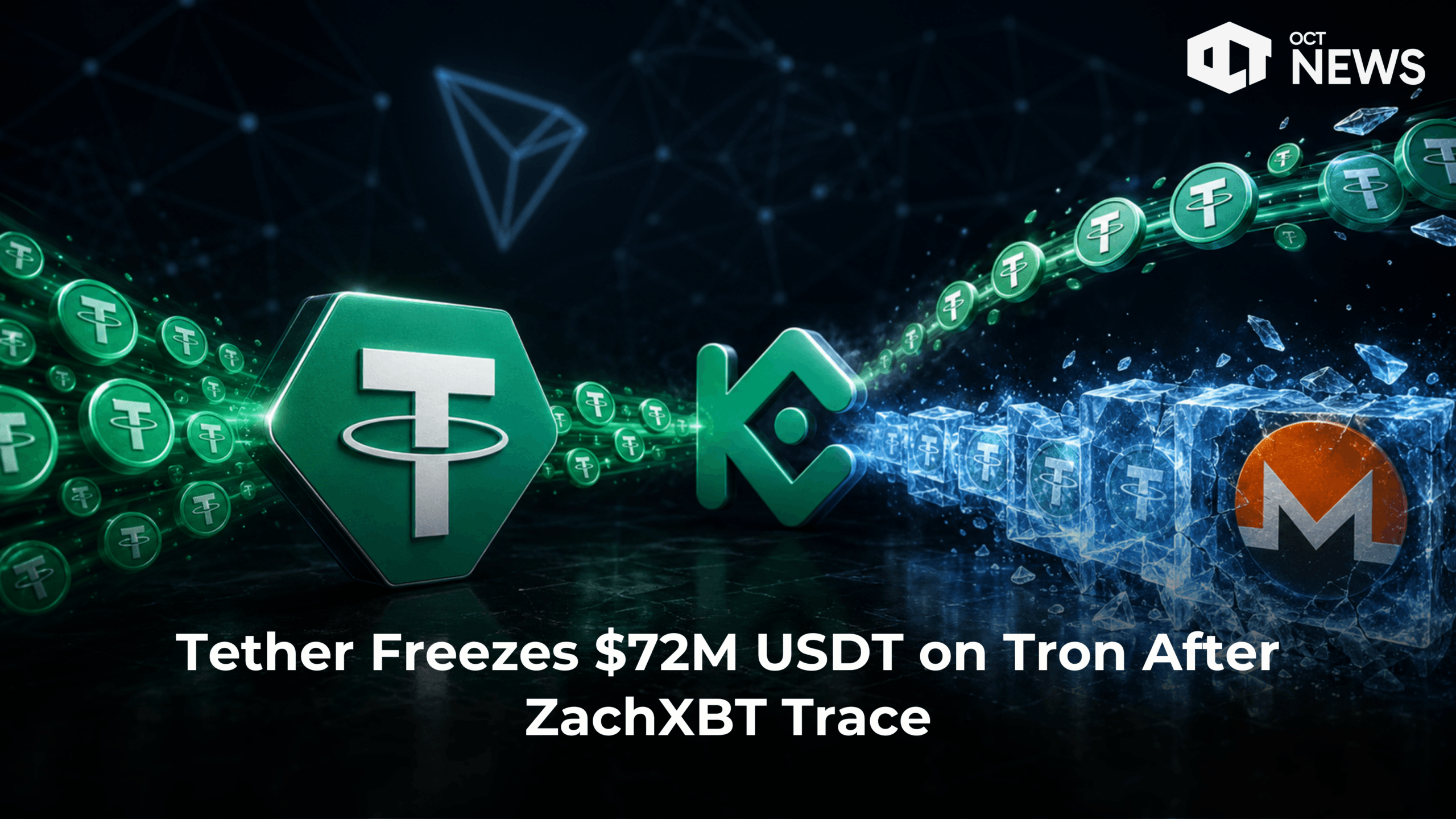
Tether froze $72M USDT on Tron after ZachXBT traced a suspected laundering network moving $120M through exchanges, bridges, and Monero.

Author: Akshat Thakur
High attention and emotional sentiment detected.
12th June 2026- Tether freezes $72M USDT on Tron after on-chain investigator ZachXBT traced the funds to a fast-moving laundering operation. The issuer blacklisted the address TBzrPEssStbZAUx2SBhD4o8Uw3FX9Ak9W on June 12, 2026, immobilizing 72,030,295.55 USDT.
High Signal Summary For A Quick Glance

Wu Blockchain
@WuBlockchain

ZachXBT: $120M USDT Wallet Linked to XMR Surge, Tether Freezes $72M According to ZachXBT, a Tron address received 120.2 million USDT on June 11 and subsequently transferred over $12 million to KuCoin deposit addresses, $8 million to instant exchanges, and another $8 million https://t.co/GKkyiMoMQZ

08:16 AM·Jun 12, 2026

Solid Intel 📡
@solidintel_x
INTEL: Tether blacklisted a wallet linked to a $120M USDT Tron transfer, freezing $72M after funds moved through KuCoin, instant exchanges and Monero orders that pushed XMR higher, according to ZachXBT https://t.co/otpkAEJdae

08:16 AM·Jun 12, 2026

Cointelegraph
@Cointelegraph
🚨 JUST IN: Tether blacklisted a wallet tied to the 120.2M USDT Tron transfer, freezing 72M USDT, per ZachXBT. https://t.co/NBpZ46pJ5z

08:10 AM·Jun 12, 2026
Tether executed the blacklist at roughly 07:36 UTC. So the freeze landed only a day after the funds first appeared on Tron. Solid Intel then amplified the findings publicly at around 08:16 UTC.
According to ZachXBT, the source wallet TA6yHQgbX2h5HfmnC7WoLqaWmqg7Wv4zCoQ received 120.2M USDT on Tron on June 11. Right after that, the entity began moving the money fast.
First, more than $12M went to KuCoin deposit addresses. Next, about $8M flowed to various instant exchangers. Then the entity bridged $8M+ from Tron to Bitcoin and Ethereum through Near Intents.
The blacklisted wallet is directly linked to that source address, per the investigation. As a result, Tether targeted the remaining 72M USDT before it could scatter further.
Beyond the main paths, follow-up reports point to more outflows. According to an amplifying post, additional funds reached Binance, HTX, and FixedFloat. So the entity spread the money across several venues at once, which makes tracing harder.
The investigator treats the funds as tied to illicit activity. Rapid dispersal like this usually signals a hack, theft, or scam. Still, the exact origin of the 120.2M USDT remains unconfirmed.
Tether controls admin functions on the USDT smart contract. So the company can call a blacklist function on any address. Once added, the contract blocks every transfer to or from that wallet.
Because of that design, the tokens stay in the wallet but cannot move. The holder still owns the private keys, yet the USDT is effectively frozen on-chain. In short, control of the contract beats control of the keys.
Tether can also act after the funds have already moved. The company monitors flows in real time, often alongside partners like TRM Labs. Therefore it can blacklist related and remaining addresses within minutes.
Timeline of the $120.2M USDT Laundering Operation and Tether Freeze
The original source of the funds has not been publicly identified. No transaction hash or confirmed origin wallet has been released in available investigative materials.
Tron address TA6yHQgbX2h5HfmnC7WoLqaWmqg7Wv4zCoQ receives approximately 120.2 million USDT. This marks the beginning of the laundering sequence later highlighted by ZachXBT.
More than $12 million is transferred from the receiving wallet to KuCoin deposit addresses. The transfers occur shortly after the initial inflow as part of the dispersal process.
Approximately $8 million is routed to various instant-exchange services, further fragmenting the movement of funds and complicating tracing efforts.
Significant buying activity in Monero follows the dispersal of funds. During this period, XMR rises from roughly $330 to $420, with investigators linking the spike to large conversion activity.
Monitoring systems detect activity tied to address TBzrPEssStbZAUx2SBhD4o8Uw3FX9Ak9W, which investigators connect to the laundering operation.
Tether blacklists the identified Tron address through the USDT TRC-20 contract, preventing further movement of funds held in the wallet.
A total of 72,030,295.55 USDT is frozen on the blacklisted address. The action immediately immobilizes a substantial portion of the funds linked to the laundering operation.
Approximately $72 million remains frozen while investigators continue tracing the remaining funds that were routed through exchanges, instant-swap services, and Monero conversions. Additional transaction details and attribution have not yet been publicly released.
The entity also routed value into Monero. According to ZachXBT, those buy orders pushed XMR from about $330 to $420. That marks a move of roughly 27% on a relatively illiquid privacy coin.
Converting to Monero breaks the public trail for a reason. XMR uses ring signatures, stealth addresses, and confidential transactions. Together, these hide the sender, the receiver, and the amount.
So once USDT becomes XMR, no public on-chain record links the original sender to the final destination. For launderers, that privacy is the appeal. For investigators, it is where the trail can go dark.
KuCoin surfaces again in this flow because more than $12M landed in its deposit addresses. ZachXBT has flagged the exchange repeatedly across 2026 for hosting laundered funds. Those cases reportedly include proceeds tied to cybercriminals.
Instant exchangers play a similar role here. Services such as FixedFloat and ChangeNOW swap assets within minutes, often with little or no KYC. As a result, they break the direct link between a source wallet and a known exchange deposit.
KuCoin has not commented on this specific case so far. Tether has also stayed quiet beyond the on-chain blacklist itself. Because the event is only hours old, official statements may still follow.
Tether freezes USDT tied to crime on a regular basis. So far the company has frozen more than $4.4 billion across over 2,300 cases. It works with 340+ law enforcement agencies in 65 countries.
This year alone, Tron has seen several large freezes. In January 2026, Tether froze $182M across five Tron wallets. Then in April 2026, it froze $344M across two addresses while coordinating with OFAC.
Against that backdrop, a Tether freeze of $72M USDT fits a clear pattern. Each case shows the same lever at work. The issuer can reach stolen stablecoins even after they move.
The case quickly reignited an old argument on X. On one side, users noted that USDT can be frozen at any moment. On the other, many pointed to Monero as the asset that cannot.
That framing drives much of the reaction so far. Supporters of privacy coins see the freeze as proof of centralized control over stablecoins. Critics counter that the same control helps recover funds from theft and fraud.
Either way, the community largely agrees on the facts. Most of the debate focuses on what the freeze means, not whether it happened. So far, no one has disputed ZachXBT‘s on-chain figures.
Several questions stay open for now. The source of the 120.2M USDT is still unclear, and so is the identity behind the wallet. The precise amount converted to Monero also remains uncertain.
For now, the confirmed facts are the addresses, the frozen 72,030,295.55 USDT, and the dispersal paths. Mainstream outlets like CoinDesk and The Block have not covered it yet. So expect more detail as the trace develops and any official statements arrive. This article is informational and not financial advice.
Our Crypto Talk is committed to unbiased, transparent, and true reporting to the best of our knowledge. This news article aims to provide accurate information in a timely manner. However, we advise the readers to verify facts independently and consult a professional before making any decisions based on the content since our sources could be wrong too. Check our Terms and conditions for more info.


Ledger Probes User Fund Losses Tied to Reseller CryptoBilis
Why Provenance Blockchain (HASH) Is Up 39.6% Today?
Halborn Clears XMAQUINA RCM Audit With Zero Critical Bugs
Fidelity Scoops $354M Bitcoin, ETH & SOL in 20 Days
Ledger Probes User Fund Losses Tied to Reseller CryptoBilis
Why Provenance Blockchain (HASH) Is Up 39.6% Today?
Halborn Clears XMAQUINA RCM Audit With Zero Critical Bugs
Fidelity Scoops $354M Bitcoin, ETH & SOL in 20 Days