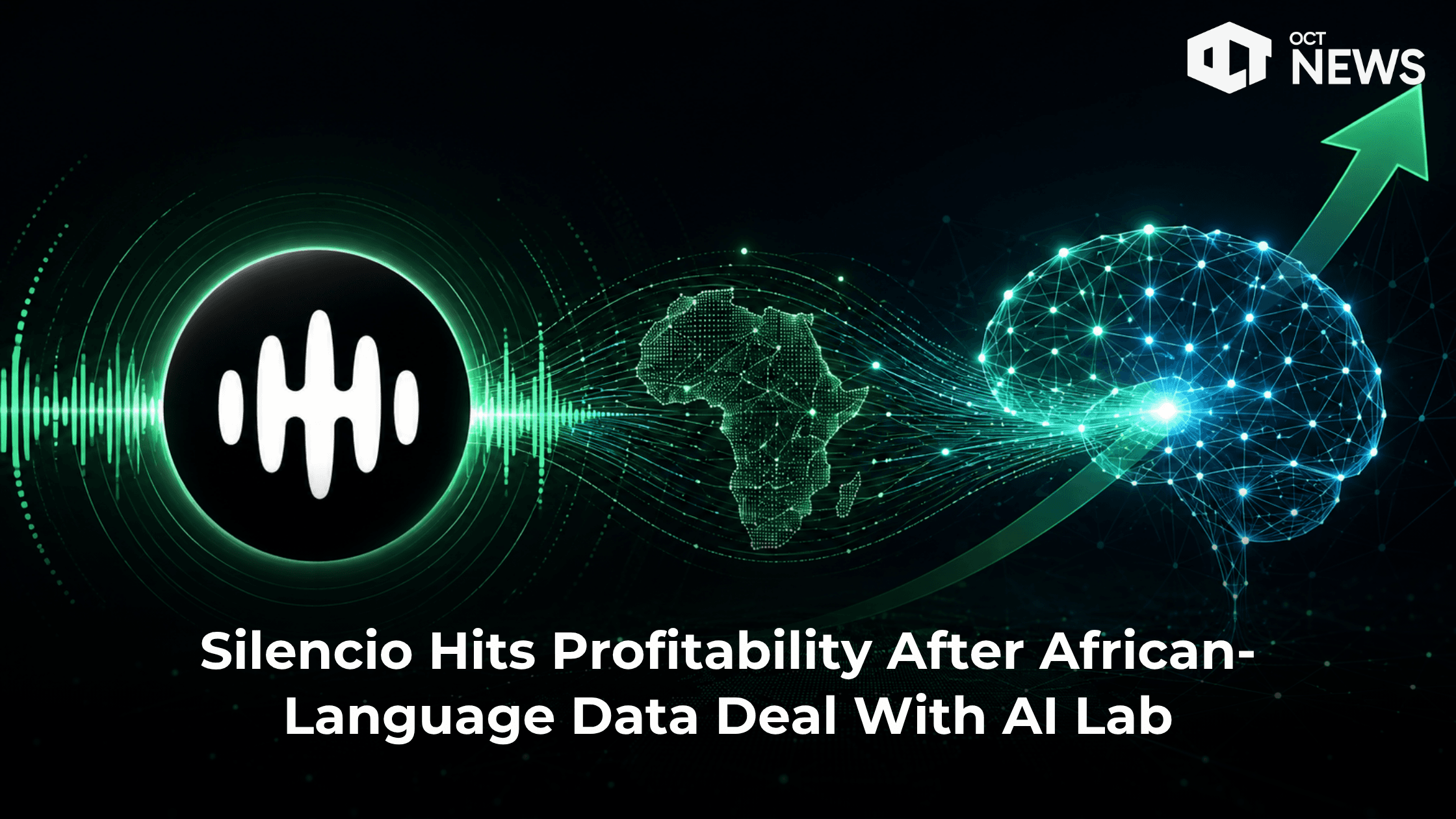
Silencio African Data Deal marks the network’s largest contract yet, with a frontier AI lab buying voice data across five African languages.

Author: Kritika Gupta
31st August 2026- Silencio Network said on August 31 it closed the largest contract in its history. The buyer is an unnamed frontier AI lab, and the product is African voice data deal. The company posted the news at 13:30 UTC, and payouts to contributors started the same day.
High Signal Summary For A Quick Glance

Rexxy
@RenoxRex

@silencioNetwork Good news! However, I hope I will receive payment for most of the Yoruba campaigns I participated in earlier, as I didn’t receive any payment for them.
BIGGEST DEAL IN SILENCIO HISTORY. AND IT BELONGS TO AFRICA 🌍 We just signed the largest contract we have ever closed, by far. A frontier AI lab is buying African voice data at scale, and that means one thing: PAYOUTS START NOW 💸 Every week, USDC flows to contributors with
03:27 PM·Aug 31, 2026

Weaver Labs
@Weaver_Labs
@silencioNetwork A strong milestone for the network and its contributors. Real demand for underrepresented language data is a meaningful use case for decentralized data collection.
BIGGEST DEAL IN SILENCIO HISTORY. AND IT BELONGS TO AFRICA 🌍 We just signed the largest contract we have ever closed, by far. A frontier AI lab is buying African voice data at scale, and that means one thing: PAYOUTS START NOW 💸 Every week, USDC flows to contributors with
03:14 PM·Aug 31, 2026

Jolpy
@Jolpyyy
@messerer_theo Considering all the alpha and forecasts you have, do you consider a several billion valuation for a company like Silencio extremely ambitious/unreacheable ?
Silencio turned profitable! 🔥 🔥🔥 We just closed an incredible deal for several African languages with a frontier AI Lab 🌍 WHAT a HUGE milestone! Congrats to the whole team, community, investors and earliest supporters! I'm incredibly proud of what we have build here. We https://t.co/NLQHKrw7LA
02:17 PM·Aug 31, 2026
Steady attention without excessive speculation.
The deal covers human speech in five African languages, plus native-speaker transcription. Contributors are paid weekly in USDC. So the Silencio Network voice data pivot now has its biggest single customer to date.
The buyer wants voice training data in Swahili, Amharic, Hausa, Wolof, and Yoruba. These languages cover Kenya, Ethiopia, Nigeria, and Senegal. Public speech data for them is thin, which is exactly why a lab would pay.
According to the official announcement, the lab “wants thousands of hours MORE.” Recordings already submitted now enter weekly payout waves. Transcription tasks in the same five languages are also starting.
The buyer stays unnamed. Silencio describes it only as “a frontier AI lab.” The name does not appear in the posts, the whitepaper, or the project’s Blockworks transparency filing. That filing says lab names sit under NDA.
The Silencio African data deal did not emerge from a voice-first company. Back in 2022, Silencio launched as a noise-mapping DePIN, with contributors using a phone app to measure ambient sound in decibels. The data served cities, real estate, and travel.
Then the product changed. Voice-data gathering began in November 2025, and commercial sales started in January 2026. The network stayed the same, but the thing it sells did not.
So the same phones that once mapped street noise now record scripted speech and voice commands. African languages were a gap the company marketed to buyers on 12 June 2026. That was roughly two months before this contract landed.
Key milestones related to this development
The project begins as a crowdsourced noise-pollution mapping network.
Silencio secures its first major funding round to expand its DePIN network.
Silencio raises additional funding and completes its migration to the peaq network.
The Silencio token goes live, adding the token layer to its DePIN ecosystem.
Silencio shifts its commercial focus toward consented voice data for AI training.
Silencio announces a Tagalog and Cebuano contract, its largest disclosed deal at the time.
Theo Messerer says AI labs need millions of hours of voice data and cites $30–$75 per hour pricing.
Silencio announces its largest contract yet with a frontier AI lab for voice data in five African languages.
Further disclosure is expected on the contract value, financial results and whether the revenue becomes recurring.
COO and co-founder Theo Messerer added his own framing minutes later. In a quote-post, he wrote “Silencio turned profitable!” and called the deal “a massive PMF for our Voice Data.”
The Silencio data deal deserves a close look. The official account never claims profitability. Instead, it says 2026 revenue will “cross $1M very soon” because of the deal.
Here the wording gets tricky. That same $1M is the stated trigger for $SLC token buybacks. The company says buybacks are “getting closer,” not live. So the firm still needs that first $1M to fund operations. Calling it profitable today is, at best, a loose use of the term.
Theo said the detailed numbers will come in the next quarterly update. No figure, buyer name, or audited statement came with the tweet.
Silencio has disclosed a hard number before in case of data deal. On 20 July 2026, it called a $250,000 Tagalog and Cebuano deal its previous largest contract. That one took about six months to close. So a bigger deal barely six weeks later signals real demand for low-resource speech.
The unit economics are public too. Theo has said labs eventually need roughly 10 million hours per language. Silencio sells that data at $30 to $75 per hour. The Blockworks filing lists wholesale prices up to $100 per hour, against a contributor cost near $10.
The token itself is small. $SLC trades near $0.0001 today. Its market cap sits around $1.7M to $2.7M depending on the tracker, per CoinGecko and CoinMarketCap. The price is up sharply over 30 days, yet it has climbed steadily since a July low. So this announcement is not a clean, isolated deal pop.
Not every reply was a cheer. One contributor asked Theo directly when older, unpaid work would finally be settled. That question matches the fine print.
The participation terms say payment depends on both quality and an actual client purchase. As a result, contributors can wait months for data that no lab has bought yet. The company is not obligated to pay for clips a client never takes.
There is also a coverage gap worth naming. No major outlet, from CoinDesk to Reuters, has reported this specific deal yet. For now the entire story rests on Silencio’s own posts, so independent confirmation does not exist.
The cleanest read is simple. A former noise-mapping DePIN now invoices AI labs for scarce African speech. This contract is bigger than the last one. Whether it proves a repeatable business is still open.
The next quarterly report is the moment to watch. That is when Silencio Network voice data revenue, buyback timing, and any audited profit claim should finally get real figures. Until then, the buyer, the deal value, and the profit math stay unverified.
None of this is financial advice. Small-cap tokens like $SLC move fast on thin volume. So treat single-deal hype with care, and check the on-chain dashboards yourself.
Our Crypto Talk is committed to unbiased, transparent, and true reporting to the best of our knowledge. This news article aims to provide accurate information in a timely manner. However, we advise the readers to verify facts independently and consult a professional before making any decisions based on the content since our sources could be wrong too. Check our Terms and conditions for more info.



Silencio