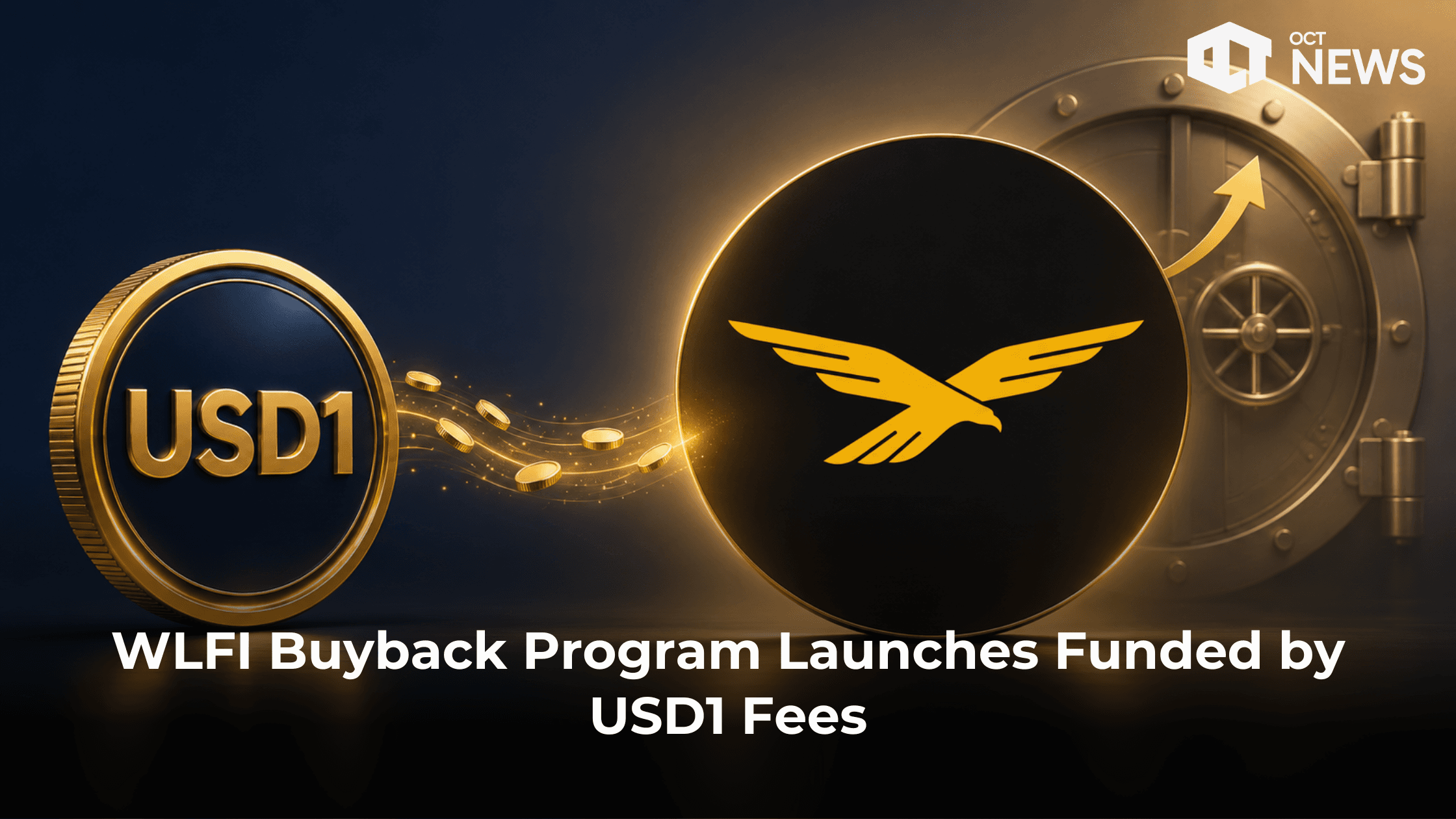
World Liberty Financial announces a WLFI token buyback program that may use USD1 reserve fees, with allocation and timing still undisclosed.

Author: Kritika Gupta
6th November 2026- World Liberty Financial launched a new WLFI USD1 buyback program on Friday. The Trump-linked venture said the plan may tap fees earned from its USD1 stablecoin reserves.
High Signal Summary For A Quick Glance

LaserApe
@TheLaserApe

@worldlibertyfi That is not complete. Make it part of USD1 operation protocol, small percentage of your profit should be buying back WLFI and burn it for good. This is giving back to community, small percentage but continues is better than big buy back but it end there.
The success of $USD1 and the growing WLFI ecosystem is helping us launch a new $WLFI token buyback program to strengthen the WLFI ecosystem and governance. We plan to fund buybacks with an initial allocation that may include fees earned from USD1 reserves and other sources.
02:55 AM·Nov 6, 2026

Wingman
@Wingman__x
@worldlibertyfi @DonaldJTrumpJr Love seeing this kind of long-term commitment and focus on rewarding true holders. Funding buybacks through ecosystem growth and USD1 reserves is a solid strategy to strengthen governance! 🦅💎
The success of $USD1 and the growing WLFI ecosystem is helping us launch a new $WLFI token buyback program to strengthen the WLFI ecosystem and governance. We plan to fund buybacks with an initial allocation that may include fees earned from USD1 reserves and other sources.
01:48 AM·Nov 6, 2026

Marcus Chavo
@ChavoMarcus
@worldlibertyfi You are deceitful liars. With these same lies, you deceived your early backers and investors, then locked up 80% of the tokens for several years, and then reduced the value of each token by more than 90%.
The success of $USD1 and the growing WLFI ecosystem is helping us launch a new $WLFI token buyback program to strengthen the WLFI ecosystem and governance. We plan to fund buybacks with an initial allocation that may include fees earned from USD1 reserves and other sources.
01:37 AM·Nov 6, 2026
High attention and emotional sentiment detected.
The company shared the news on its official X account at 01:30 UTC. Still, it did not disclose a dollar amount, a token target, or a start date.
World Liberty Financial runs the WLFI governance token and the USD1 stablecoin. The venture counts Donald Trump as co-founder emeritus, alongside his sons Donald Jr., Eric, and Barron.
In its post, the company said the buyback should strengthen the WLFI ecosystem and governance. It plans to start with an initial allocation, then evaluate the results over time.
According to the announcement, funding may include USD1 reserve fees plus other sources. The company also framed the effort as ongoing, not a one-time event.
Stablecoin issuers hold reserves that back each token one-for-one. Those reserves sit in cash and short-term government funds, so they earn yield.
That yield, often called the float, belongs to the issuer. USD1 holders can redeem one-for-one for dollars, but they hold no claim on the interest.
The WLFI buyback program would route some of that interest into open-market purchases of WLFI. Buying tokens can support the price if demand holds steady.
It can also shift power. When tokens move to long-term holders or a treasury, those holders gain more weight in governance votes.
USD1 has grown into a large stablecoin. Its market cap sits near $3.6 billion, according to DefiLlama.
BitGo Bank & Trust holds and manages the reserves. The issuer also publishes monthly attestations and a live proof-of-reserves dashboard.
An August 2026 attestation showed about 4.2 billion USD1 against roughly $4.2 billion in assets. Those assets sat mostly in government money-market funds and bank deposits.
Larger reserves mean more fee income, so the buyback scales with USD1’s growth. The company said the pace will follow ecosystem growth and governance participation.
How each approach affects supply, governance and potential holder value.
WLFI says its initial allocation may include fees earned from USD1 reserves and other sources. As with other reserve-income-funded buybacks, buying capacity depends on reserve size, yields, costs and the share of income allocated. Trading-fee-funded programs depend instead on market activity.
WLFI’s earlier 2025 program explicitly proposed using treasury liquidity fees for buybacks and burns. The new announcement does not specify the same token treatment.
Key distinction: Funding determines how much WLFI can buy. Burning or holding determines what happens to purchased tokens. Neither guarantees price gains or gives WLFI holders a direct claim on USD1 reserves.
This is not the venture’s first buyback push. In late 2025, trackers logged roughly $7.79 million spent on about 46.56 million WLFI.
Those purchases ran through CoW Protocol swaps, and analytics desks flagged them on-chain. So the team has a short track record to point to.
The September 2025 vote set that machinery in motion. It directed all protocol-owned liquidity fees toward buyback-and-burn.
The new plan widens the funding base. It now reaches beyond liquidity fees toward USD1 reserve income and other sources.
The announcement arrived at a rough moment for WLFI. The token trades near $0.047, down from a September 2025 peak of roughly $0.33, per DefiLlama.
Reuters reported that WLFI fell about 10% after the U.S. midterm elections. Weaker-than-expected Republican results pressured the token this week.
So the buyback news landed as holders looked for support. Still, the immediate price reaction stayed modest in the first hours.
The company shared a goal but few specifics. It did not say how much it will spend, or when buying starts.
It also did not say whether it will burn the tokens or hold them. That choice matters a great deal.
A burn removes tokens from supply forever. A treasury hold keeps them in reserve, where they may still vote or return to the market later.
The 2025 program was different. That plan burned tokens and passed through a near-unanimous governance vote. This time, the company referenced no new vote.
Not everyone welcomed the plan. Critics point to the missing numbers and the absent start date.
Analysts also flag a pro-cyclical risk. If USD1 redemptions rise, reserve fees shrink, so buyback power would fade right when support matters most.
The governance language drew its own pushback. The company said it wants to consolidate voting power among committed holders, which some readers read as a step away from broad decentralization.
Reuters noted that the Trump family owns 38% of World Liberty and earns from the sale and use of WLFI and USD1. As a result, the conflict-of-interest question stays in view.
For now, the market waits for details. On-chain watchers will track WLFI treasury wallets for the first purchases.
The real test comes later. A self-funded buyback can prop up price while buying runs, yet lasting demand is what proves a token’s strength.
Investors should treat the plan as a stated intention, not a confirmed spend. None of this is financial advice, and crypto prices stay volatile.
Clear figures, a start date, and visible on-chain activity would turn this WLFI buyback program from a promise into a track record.
Our Crypto Talk is committed to unbiased, transparent, and true reporting to the best of our knowledge. This news article aims to provide accurate information in a timely manner. However, we advise the readers to verify facts independently and consult a professional before making any decisions based on the content since our sources could be wrong too. Check our Terms and conditions for more info.