Explore RealFi, Cardano's RWA protocol building USDr and RFG. Learn about its team, tokenomics, testnet, and growth potential.

Author: Akshat Thakur
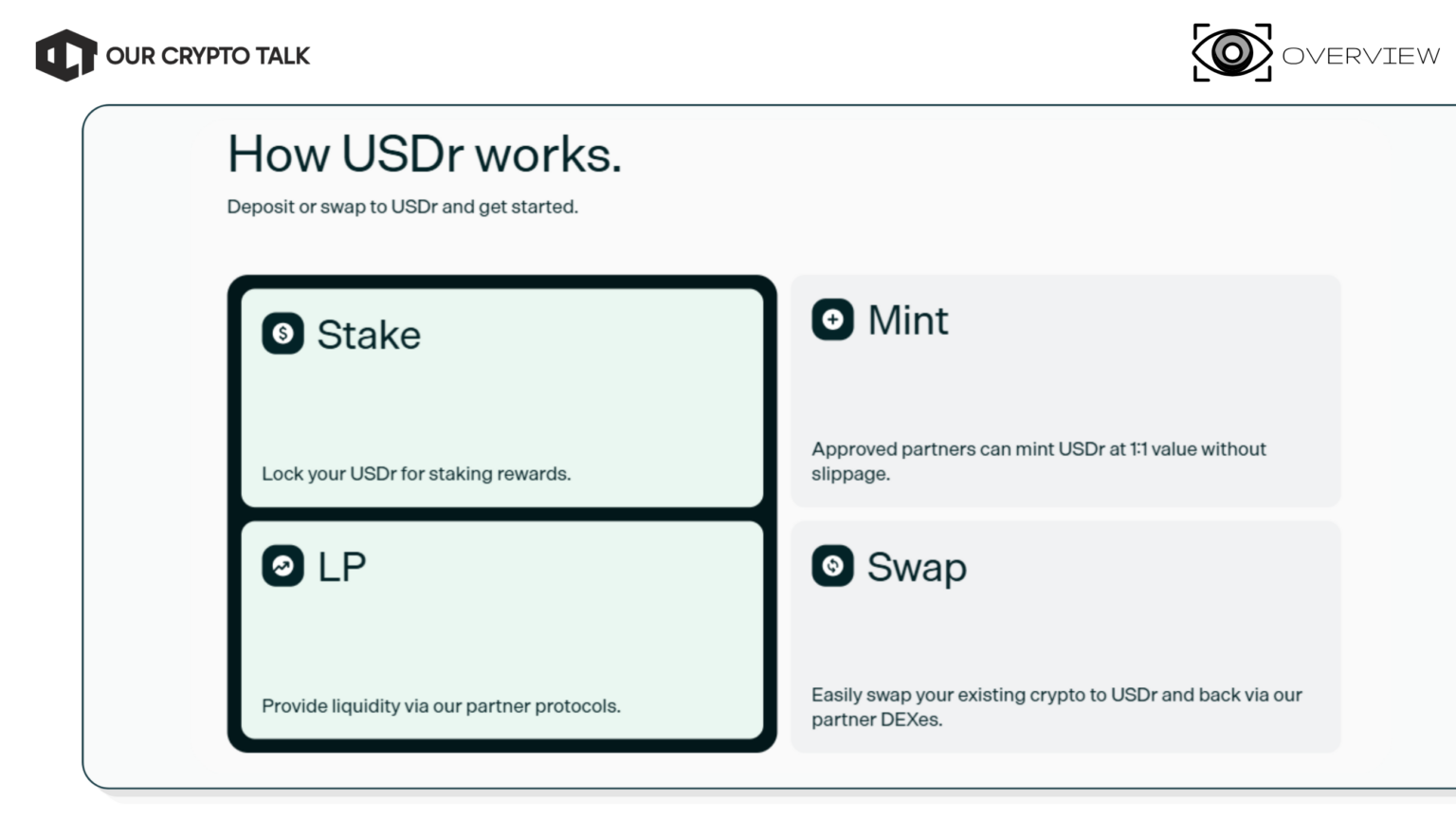
RealFi is building a Cardano-native ecosystem that connects stablecoins with real-world credit. At the center of the protocol is USDr, a USD-pegged stablecoin backed 1:1 by a diversified portfolio of real-world assets. These include U.S. Treasuries, money market funds, investment-grade CLO ETFs, floating-rate corporate notes, and senior secured private credit. Users can also stake USDr to receive sUSDr, which earns yield generated from these underlying assets.
The idea is simple. Stablecoins have become one of crypto’s largest asset classes, but most reserves either sit idle or generate yield through crypto-native strategies. At the same time, businesses around the world continue to face limited access to affordable financing. RealFi aims to bridge that gap by directing stablecoin reserves into productive real-world lending while keeping reserves transparent and fully backed.
The timing works in its favor. Tokenized real-world assets have become one of the fastest-growing sectors in crypto during 2025 and 2026. Investors increasingly want stablecoins backed by real economic activity instead of funding rates, token emissions, or leveraged trading strategies. Cardano’s focus on low-cost transactions and real-world adoption also provides a natural environment for this model.
Unlike many projects still building infrastructure, RealFi has already introduced its first products through USDr and its public testnet. As demand continues growing for productive stablecoins and sustainable on-chain yield, RealFi is positioning itself at the intersection of stablecoins, RWAs, and decentralized credit.
The market for yield-generating stablecoins has become increasingly competitive. Ondo focuses on tokenized Treasury products backed by short-duration government debt. Ethena generates yield through basis trading and perpetual funding rates. Other projects, including Mountain Protocol and tokenized credit platforms, have also entered the market with different approaches to real-world assets.
Most protocols fall into one of two categories. They either prioritize low-risk government securities that produce modest yields, or they rely on crypto-native strategies that can generate higher returns but introduce additional market risk.
RealFi takes a different approach. USDr combines liquid reserve assets such as Treasuries and money market funds with higher-yielding private credit and direct lending opportunities. Users who stake into sUSDr earn returns generated from these real-world assets rather than token emissions or trading activity.
From an OCT perspective, the competitive advantage comes from credit origination and portfolio management. Building relationships with borrowers, underwriting private loans, and managing diversified credit portfolios requires infrastructure that cannot be replicated as easily as another Treasury wrapper or synthetic stablecoin.
The combination of productive real-world yield, Cardano-native infrastructure, and transparent reserve management gives RealFi a distinct position within the growing RWA sector. If execution matches the vision, it could occupy a different niche from both institutional Treasury products and crypto-native yield protocols.
RealFi is led by John O’Connor, one of the longest-serving executives within the Cardano ecosystem.
Before founding RealFi, O’Connor was among the earliest employees at the Cardano Foundation before moving to Input Output Global (IOG). During his time at IOG, he held senior leadership roles across strategy, ecosystem development, and African operations. He also helped lead blockchain initiatives focused on digital identity and financial infrastructure, including Cardano’s well-known education partnership in Ethiopia.
His background extends beyond blockchain. Before entering crypto, he worked across fintech and technology, gaining experience in payments, financial infrastructure, and emerging markets. Those experiences closely align with RealFi’s focus on productive credit and real-world finance.
The broader team is fully public and brings experience across blockchain development, financial services, and institutional partnerships. For a protocol managing real-world assets and stablecoin reserves, that level of transparency is an important advantage.
From OCT’s perspective, the team’s experience fits the product they are building. Rather than entering RWAs from a purely DeFi background, they have spent years working on blockchain adoption, institutional partnerships, and financial infrastructure.

RealFi has chosen a strategic funding approach instead of assembling a large venture capital syndicate.
The project’s strongest supporter is Input Output Global (IOG), the company responsible for developing Cardano. That relationship provides more than financial backing. It also gives RealFi direct access to technical expertise, ecosystem support, and one of the largest developer communities within blockchain.
Charles Hoskinson has also publicly highlighted RealFi as part of Cardano’s broader vision for bringing real-world financial services on-chain. That endorsement strengthens the project’s credibility inside the ecosystem while increasing visibility among Cardano users and builders.
Unlike many infrastructure projects, RealFi has not announced a large multi-investor fundraising round. Instead, it has focused on strategic ecosystem alignment rather than maximizing venture capital participation. This approach reduces concerns about large VC unlocks while keeping the project closely connected to Cardano’s long-term roadmap.
Overall, the backing reflects quality rather than quantity. Input Output Global understands both the technical requirements and long-term vision behind RealFi, making the partnership significantly more valuable than a traditional fundraising announcement.
Yes. RealFi already has a live product that users can access through its Phase 1 testnet.
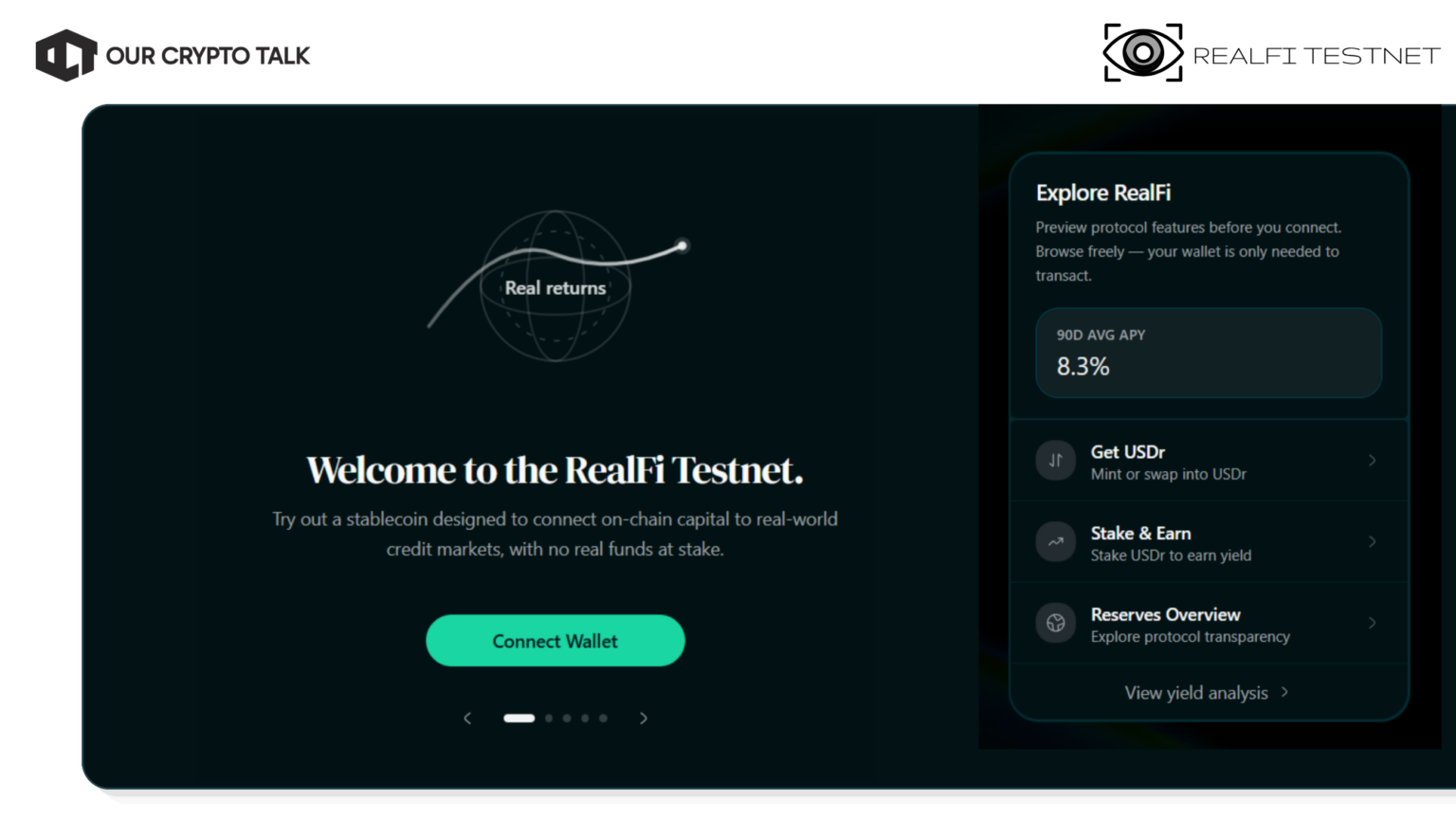
The project launched its Pioneer Season on July 6, 2026, allowing users to interact with the protocol before mainnet. Participants can connect supported Cardano wallets, test the USDr stablecoin flow, stake assets through the future sUSDr mechanism, provide liquidity, and earn R-Points for contributing to the ecosystem.
The testnet also includes the protocol’s core infrastructure. Users can experience stablecoin minting and redemption, monitor reserve transparency dashboards, and test staking mechanics that will power the mainnet version. Institutional minting and redemption flows have also been introduced with built-in controls, showing that the protocol is preparing for larger capital allocators alongside retail users.
The product is more than a demo. It gives users direct access to the stablecoin system while allowing the team to collect feedback before launch.
Development also remains active. The RealFi team maintains public repositories covering the Cardano smart contracts behind USDr and the staking system. As with many early-stage RWA projects, the focus is on audited production code rather than maintaining a large open-source community.
Anyone can join the Pioneer Season today through the RealFi website. While the protocol has not launched on mainnet yet, users can already experience the core mechanics behind USDr and sUSDr. That puts RealFi well ahead of projects that still exist only as whitepapers or investor presentations.
RealFi is still early, so the most important traction metric is participation rather than total value locked.
The Pioneer Season gives users a way to earn R-Points by staking assets, providing liquidity, referring new users, and supporting the ecosystem. Participants earn points based on capital committed, with additional multipliers available through seasonal campaigns and longer lock periods.
This approach is stronger than a typical social campaign because users commit capital instead of completing simple online tasks. That creates real opportunity cost and provides a better signal of interest in the protocol.
The project has also outlined institutional minting and redemption flows with built-in controls, suggesting that it is preparing for larger capital providers instead of focusing only on retail adoption.
Social media metrics are far less meaningful. Follower counts and community size can grow quickly through marketing campaigns, but they do not measure long-term demand.
The real test will come after mainnet launches. If users continue holding USDr, staking into sUSDr, and providing liquidity once incentives begin normalizing, RealFi will have much stronger evidence of product-market fit. Until then, the Pioneer Season shows encouraging early participation but should be viewed as the beginning rather than proof of long-term adoption.
RFG will serve as the governance token for the RealFi ecosystem. The token has not launched yet, making the project one of the few major RWA protocols still in its pre-TGE phase.
The planned maximum supply is 10 billion RFG. Instead of distributing tokens through a large public airdrop, RealFi rewards users with R-Points for staking, providing liquidity, making referrals, and participating in the ecosystem. Those points will convert into RFG during scheduled distribution windows.
The project has confirmed that converted tokens will follow vesting schedules, although the complete allocation table and unlock timeline have not been released yet. Details such as team allocations, Input Output Global’s share, and the initial circulating supply are still expected before TGE.
The design aims to reward long-term participation instead of short-term speculation. Users earn governance exposure by supporting the stablecoin ecosystem over time rather than simply claiming a one-time airdrop.
RFG will primarily provide governance rights across the protocol. Additional utility is expected as the ecosystem expands, although features such as fee benefits and treasury participation have not yet been fully detailed.
The biggest question remains launch structure. The points model appears healthier than many low-float token launches, but investors should wait for the complete token allocation and vesting schedule before evaluating dilution risk.
The best way to get involved today is through the Pioneer Season, which is currently running on RealFi’s Phase 1 testnet.
Users can connect a supported Cardano wallet and begin testing the protocol. Activities include staking assets, providing liquidity through partner protocols, and participating in ecosystem campaigns. These activities earn R-Points, which are expected to convert into RFG governance tokens during future distribution windows.
The number of points earned depends on participation. Users receive daily rewards for eligible assets, while seasonal campaigns and longer lock periods can increase earning rates.
Unlike many crypto campaigns, RealFi does not rely heavily on social tasks. The focus is on users who actively support the protocol by providing liquidity and testing the stablecoin ecosystem.
The strategy is straightforward. Build points before mainnet launches and before future distribution windows begin. Users who already believe in the long-term potential of productive stablecoins can gain early governance exposure while helping test the protocol.
For users looking only for quick farming opportunities, the rewards may be less attractive. The Pioneer Season favors long-term participation and sustained ecosystem activity over short-term quest completion.
RealFi offers one of the more interesting early opportunities in the RWA sector, but it requires patience. The protocol is still in its testnet phase, so participants are backing the long-term vision rather than using a fully launched product.
The current Pioneer Season rewards users with R-Points for staking, providing liquidity, and participating in the ecosystem. Those points are expected to convert into RFG governance tokens during future distribution windows. Unlike social campaigns, participation requires committing capital and holding positions over time.
There is no public token sale. The only way to gain early exposure today is by using the testnet and earning R-Points. That creates a fairer distribution model than many recent launches, but it also means investors must wait for future token conversion and vesting.
The long-term opportunity depends on execution. If RealFi successfully launches USDr and sUSDr with sustainable yield generated from private credit and fixed-income assets, early participants could benefit from both governance exposure and real yield.
The biggest risks are clear. Mainnet has not launched, the complete RFG tokenomics are still pending, and scaling a real-world credit portfolio is far more difficult than managing Treasury-backed products.
Overall, RealFi offers positive expected value for investors who already believe in productive real-world assets and are comfortable participating before launch. It is less attractive for users looking for immediate liquidity or quick airdrop profits.
Execution is the biggest challenge.
Building a stablecoin backed by real-world credit is much harder than creating one backed only by Treasury bills. RealFi must originate loans, manage credit risk, maintain liquidity, and keep reserves transparent while supporting redemptions.
Competition is another obstacle.
Ondo, Mountain Protocol, and several tokenized credit platforms already operate in the RWA sector. RealFi must prove that its private credit strategy delivers better long-term returns without taking excessive risk.
Regulation also deserves close attention.
Yield-bearing stablecoins backed by private credit sit in an evolving regulatory environment. Changes to stablecoin rules, lending regulations, or reserve requirements could affect how the protocol operates across different jurisdictions.
The points program also carries some risk. Early campaigns often attract users who participate only for token rewards. If those users leave after token distribution, ecosystem growth could slow.
RealFi is not simply another Treasury wrapper. Its success depends on building a diversified credit portfolio while maintaining transparency and protecting user confidence. That is an ambitious goal, and execution will determine whether the protocol succeeds.
The biggest milestone is the mainnet launch.
Mainnet will introduce live USDr minting, sUSDr staking, and yield generated from real-world assets instead of testnet mechanics. It will also show whether the protocol can deliver the productive yield it has promised.
Another important catalyst is the first RFG distribution window. Users will finally see how R-Points convert into governance tokens, along with the final vesting structure and distribution mechanics.
Investors should also watch the first yield distributions. Sustainable returns from private credit and fixed-income assets would validate the protocol’s core investment thesis far more than marketing campaigns.
Additional integrations with Cardano DeFi protocols, institutional partners, and liquidity providers could further strengthen adoption after launch.
Users who already believe in the RealFi model can begin earning R-Points through the Pioneer Season today. More cautious investors may prefer to wait for mainnet, the first token distribution, and early yield data before committing larger amounts of capital.
WATCH
RealFi has a compelling vision backed by meaningful progress. The Phase 1 testnet is already live, users can participate through the Pioneer Season, and the protocol introduces a stablecoin model built around productive real-world assets instead of synthetic yield.
The team brings strong Cardano experience, and support from Input Output Global gives the project credibility within the ecosystem. The focus on private credit and fixed-income assets also gives RealFi a differentiated position in the growing RWA market.
The project is still early.
Mainnet has not launched, the complete RFG token allocation remains unpublished, and the protocol has not yet demonstrated sustained yield from real-world lending. Those are important milestones that will determine whether the model works at scale.
The milestone that changes our rating is straightforward.
Launch the mainnet successfully, distribute RFG as planned, and demonstrate consistent yield from real-world assets while maintaining transparency and stable reserves.
If RealFi delivers on those goals, it could become one of Cardano’s most important RWA protocols. Until then, it remains a promising project that deserves close attention but still carries meaningful execution risk.
All the opinions in this article are that of the author and in no way are financial advice. Our Crypto Talk and the author always suggest you do your own research in crypto and to never take anything as financial advice that you read on the internet. Check our Terms and conditions for more info.