Coinbase moves x402 protocol to Linux Foundation with support from Google, Visa, and Stripe to build open web payments standard.

Author: Akshat Thakur
Steady attention without excessive speculation.
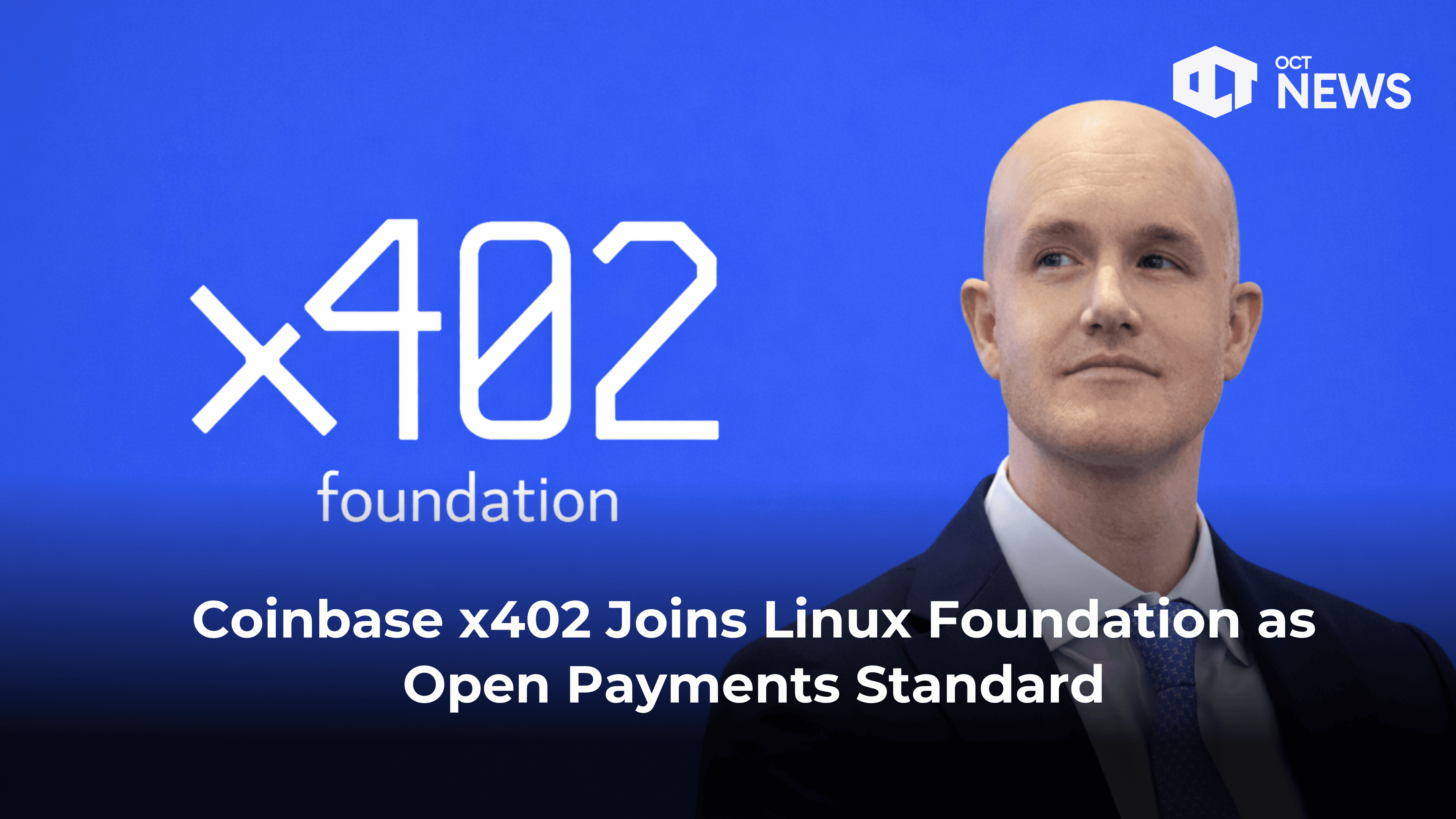
March 2, 2026- Coinbase announced that its x402 payments protocol has moved under the Linux Foundation, forming a new neutral governing body. The transition marks a shift from a company-led initiative to an industry-backed standard for embedding payments directly into the web.
High Signal Summary For A Quick Glance

Wizkers
@Mr_Wizkers

@coinbase This changes everything. The protocol layer has been missing for money since the beginning of the web. Now AI agents won't need to ask permission every time they want to buy an API call or pay for data. True autonomy.
https://t.co/mVRe3TMSyr
03:20 PM·Apr 2, 2026

Iamveektoria.base.eth 🙂↔️🌳 ✠
@iamveektoria_
@coinbase What stands out here isn’t just interoperability, it’s automation. And if agents can transact without friction, it’ll effectively turn payments into a background process rather than a user action. This is a meaningful shift in how digital systems operate.
https://t.co/mVRe3TMSyr
01:59 PM·Apr 2, 2026

Catie Romero-Finger
@catieromero
@coinbase This is the kind of coordination the internet has been missing on the value layer. Data became universal because standards aligned early, but payments never did. If x402 can abstract that complexity across rails, it'll change how software interacts economically.
https://t.co/mVRe3TMSyr
01:53 PM·Apr 2, 2026
The update was shared through Coinbase’s official X account, confirming that the protocol will now operate under the newly formed x402 Foundation. The move was timed with “4/02 Day,” referencing the long-unused HTTP 402 status code that the protocol is built around.
The foundation was initiated by Coinbase, Cloudflare, and Stripe, alongside a broad group of contributors including Google, Visa, Mastercard, Microsoft, and Amazon Web Services.
The goal is to ensure that no single company controls the protocol, with governance decisions now handled through an open membership structure rather than a centralized entity.
The x402 protocol was first introduced in 2025 as a way to embed payments directly into HTTP requests. Instead of redirecting users to separate checkout systems, it allows APIs and applications to request payment as part of a normal interaction.
Early use cases focused on agentic commerce, where AI agents need to pay for services such as APIs, compute, or data without human involvement. Within months, the protocol processed over 100 million transactions across different applications.
Despite its early traction, x402 remained an open specification without formal governance. This raised questions about long-term ownership, especially as adoption began to expand across both crypto-native and traditional systems.
By moving under the Linux Foundation, the protocol now follows a model similar to widely adopted open-source standards like Kubernetes and Node.js, where development is community-driven rather than company-controlled.
The core functionality of x402 remains the same, but the governance model is what fundamentally shifts.
Under the new structure, the x402 Foundation will oversee the protocol’s specification, reference implementations, and future upgrades. This includes managing security reviews, ensuring interoperability, and coordinating contributions from different participants.
The protocol itself works by using the HTTP 402 response code to request payment. A server can return a payment request inline, and the client responds with proof of payment using supported rails such as stablecoins, card networks, or bank transfers.
This creates a seamless flow where payments happen within standard web interactions, without requiring additional authentication steps or external checkout systems.
The multi-rail approach is key. By supporting both crypto and traditional payment systems, x402 positions itself as a bridge rather than a replacement for existing infrastructure.
This move reflects a larger shift in how payments are being integrated into digital infrastructure.
Historically, the internet standardized communication protocols but left payments fragmented across closed systems. x402 attempts to solve that by making value transfer as programmable as data exchange.
The involvement of major players across cloud, payments, and blockchain ecosystems signals that this is not a niche experiment. It suggests alignment around a shared need for open, interoperable payment rails, especially as AI-driven applications become more autonomous.
If successful, this could reshape how APIs are monetized and how digital services interact financially, particularly in environments where transactions need to happen instantly and without human input.
The next phase will focus on execution rather than announcement.
Key developments will include the formation of governance committees, publication of compliance standards, and early production deployments from founding members. Adoption in AI agent platforms and API marketplaces will be an important signal of real-world utility.
Membership growth will also matter. A broader base of contributors increases the chances of the protocol becoming a true standard rather than remaining an industry experiment.
If the foundation successfully coordinates development and adoption, x402 could become a foundational layer for internet-native payments. If not, it risks joining the long list of protocols that gained early attention but failed to achieve widespread use.
Our Crypto Talk is committed to unbiased, transparent, and true reporting to the best of our knowledge. This news article aims to provide accurate information in a timely manner. However, we advise the readers to verify facts independently and consult a professional before making any decisions based on the content since our sources could be wrong too. Check our Terms and conditions for more info.