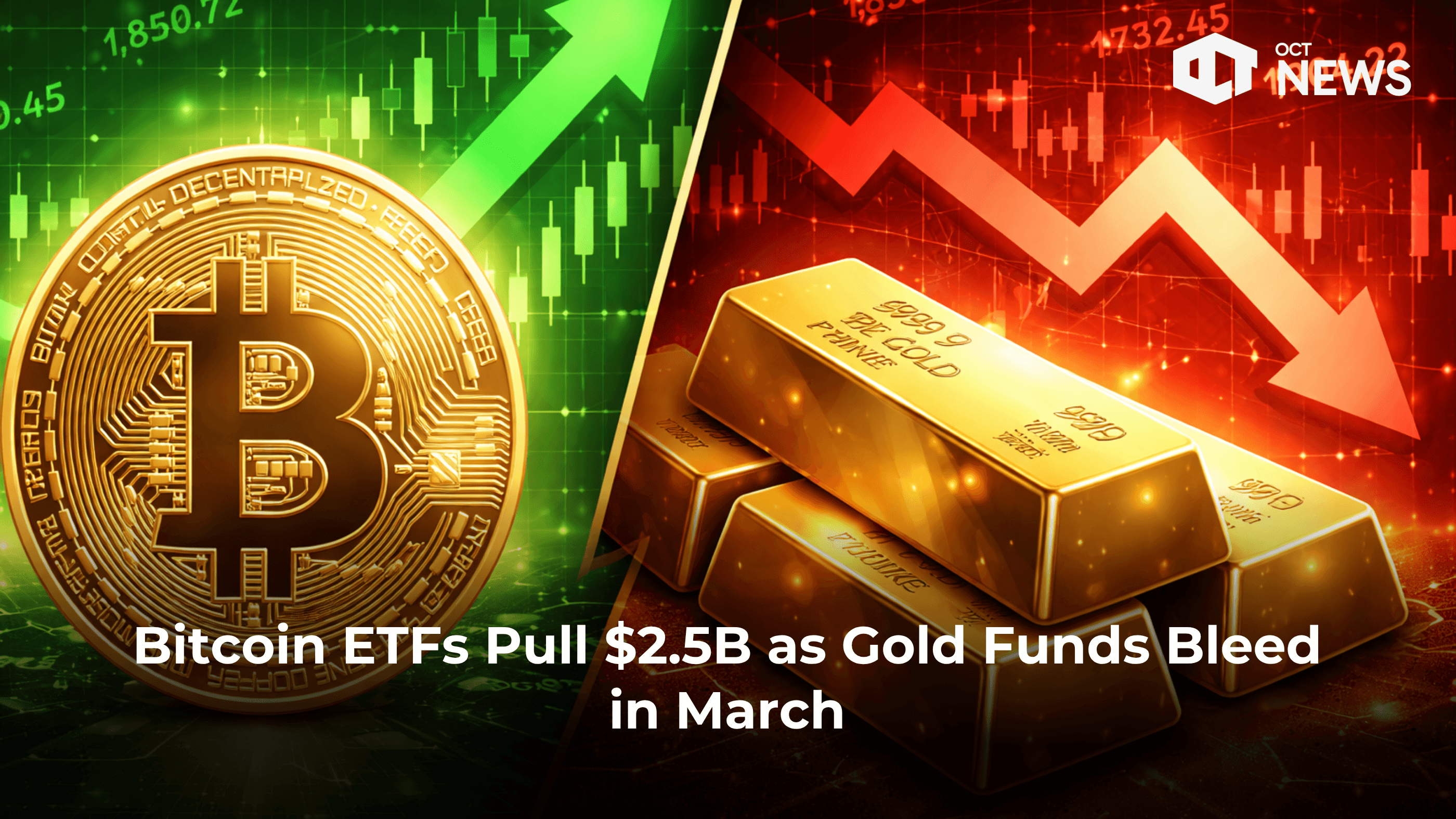
Bitcoin ETFs have attracted roughly $2.5 billion in net inflows this month, while gold ETFs have suffered billions in redemptions.

Author: Sahil Thakur
Steady attention without excessive speculation.
25th March 2026 – Bitcoin ETFs have attracted roughly $2.5 billion in net inflows this month, while gold ETFs have suffered billions in redemptions. Bloomberg Senior ETF Analyst Eric Balchunas says “the roles have been reversed.”
High Signal Summary For A Quick Glance

Deadline☠️🐧 | ETHGas ⛽
@cryptodeadline

@BitcoinMagazine Now it making more sense as he explains Gold outflows and Bitcoin inflows
JUST IN: Bloomberg Senior ETF Analyst says "the roles have been reversed" as gold ETFs see outflows and Bitcoin ETFs see inflows 🚀 https://t.co/TtmurdxwXV
04:48 PM·Mar 24, 2026

Better Sailor
@bettersailore
@BitcoinMagazine Bitcoin is absorbing liquidity from traditional assets.
JUST IN: Bloomberg Senior ETF Analyst says "the roles have been reversed" as gold ETFs see outflows and Bitcoin ETFs see inflows 🚀 https://t.co/TtmurdxwXV
04:35 PM·Mar 24, 2026

Michael Kim
@chimike847
@BitcoinMagazine Peter Schiff right now https://t.co/Peb40pbNKa

JUST IN: Bloomberg Senior ETF Analyst says "the roles have been reversed" as gold ETFs see outflows and Bitcoin ETFs see inflows 🚀 https://t.co/TtmurdxwXV
04:18 PM·Mar 24, 2026
Balchunas made the statement on the Bloomberg ETF IQ show on March 23. He pointed to a sharp divergence between Bitcoin ETFs and gold ETFs over the past four to six weeks. Just two to three months earlier, critics attacked Bitcoin for failing to act as a store of value while gold soared.
Now the script has flipped. Gold funds are seeing heavy profit-taking after a long rally. Meanwhile, Bitcoin ETFs are absorbing fresh capital and showing resilience despite a roughly 16% year-to-date decline in BTC price.
The numbers tell a clear story. As of March 24, spot Bitcoin ETFs have collectively pulled in about $2.5 billion in net inflows. That figure includes products from BlackRock (IBIT), Fidelity (FBTC), and ARK (ARKB), according to Bloomberg data.
Early March saw particularly strong days. On March 2, spot Bitcoin ETFs attracted $521 million. Over the three-day stretch from March 2 to 4, inflows totaled $1.1 billion. That run marked the first five-day positive streak for Bitcoin ETFs in 2026.
On March 23, Bitcoin ETFs recorded $167 million in inflows, ending a short outflow streak. In native terms, these funds accumulated over 4,021 BTC during the month, according to AInvest.
IBIT alone now ranks in the top 2% of all ETFs by year-to-date flows. That is remarkable for a product category less than two years old.

Src: The Block
The other side of this trade has been equally dramatic. Gold ETFs have experienced their worst month in over a decade.
On March 4, GLD recorded approximately $2.91 billion in single-day outflows, according to BeInCrypto. That was the largest daily redemption for the fund since 2016. During the week of March 16 to 20, GLD alone shed $2.20 billion. Monthly outflows hit a 13-year high.
Globally, gold ETFs saw between $5.19 billion and $5.52 billion in outflows during a single week in mid-March. One source cited roughly $9 billion in total gold ETF redemptions over approximately three weeks, according to AInvest. In physical terms, gold funds lost more than 700,000 ounces in March.
This came after nine consecutive months of inflows into gold products. The selling appears driven by profit-taking after gold rose approximately 59% over the prior year.
Balchunas offered a key insight during his Bloomberg appearance. He noted that Bitcoin ETF investors have been unusually loyal during the current drawdown.
BTC fell roughly 40% from its highs over six months. Despite that decline, most ETF holders stayed. Balchunas called this behavior “abnormal,” contrasting it with gold’s last major correction about 10 years ago.
During that earlier episode, gold dropped around 40% and about one-third of GLD investors exited. Balchunas described that as “normal” investor behavior. The fact that Bitcoin ETF holders have largely stayed put suggests a different kind of conviction.
He followed up on X on March 24. He noted that March inflows were enough to start climbing out of 2026’s “flow hole.” Early 2026 had been rough for Bitcoin ETFs, with $1.8 to $1.9 billion in outflows during January and February.
The macro backdrop has added another layer to this story. Escalating tensions between the U.S., Israel, and Iran spiked around late February and into March 2026, according to Bloomberg.
BTC initially reacted as a risk asset. Prices dropped sharply from around $72,000 toward $63,000 alongside stocks. Oil spiked, and liquidations hit the crypto market. Gold initially rallied as the traditional safe haven.
Then something shifted. Bitcoin ETF inflows accelerated during and after the escalation. Analysts at firms including JPMorgan noted that institutions treated the dip as a buying opportunity. BTC rebounded roughly 10% to 12% off its lows.
Gold’s rally faded into heavy ETF outflows and profit-taking. The result was a correlation collapse. The BTC-gold correlation dropped to around -0.88, a three-year low, according to CoinMarketCap data. Capital was actively rotating from one asset to the other.
For broader context, U.S. spot Bitcoin ETFs have accumulated roughly $55 to $56 billion in total net inflows since January 2024. Gold ETFs took approximately 15 years to reach a similar milestone after GLD launched in 2004.
IBIT’s inflows since launch are roughly double what GLD recorded over the same timeframe. These numbers reflect a pace of institutional adoption that has few historical parallels in the ETF space.
Still, gold maintains a far larger cumulative asset base built over two decades. The March flow reversal is significant, but it represents one month in a much longer competition for safe-haven capital.
The March 2026 data represents a textbook rotation month. Bitcoin ETFs absorbed a geopolitical shock better than many expected. Gold ETFs gave back gains accumulated over months of inflows.
Flows can shift quickly. The geopolitical situation remains fluid, and a new escalation or de-escalation could change the picture overnight. BTC is still down 16% year-to-date, so the flow story has not yet translated into price recovery.
For now, the reversal Balchunas highlighted is playing out in real time. Whether this marks a temporary rotation or a lasting structural shift may depend on the next macro shock.
This article is for informational purposes only and does not constitute financial advice. Always do your own research before making investment decisions.
Our Crypto Talk is committed to unbiased, transparent, and true reporting to the best of our knowledge. This news article aims to provide accurate information in a timely manner. However, we advise the readers to verify facts independently and consult a professional before making any decisions based on the content since our sources could be wrong too. Check our Terms and conditions for more info.


Chainlink CustodySync Launches With Anchorage Digital
Orderly Predict Launches 5-Minute BTC Prediction Market
Aviva Tokenized Sterling Fund Debuts on the XRP Ledger
Foundation Phishing Emails Tied to Cloudflare API Key Hack
Chainlink CustodySync Launches With Anchorage Digital
Orderly Predict Launches 5-Minute BTC Prediction Market
Aviva Tokenized Sterling Fund Debuts on the XRP Ledger
Foundation Phishing Emails Tied to Cloudflare API Key Hack