Ahn Byung Ik
Who is Ahn Byung Ik? A profile of the South Korean entrepreneur who founded Fantom — background, career, and hisrole in shaping the project.


Author: Akshat Thakur
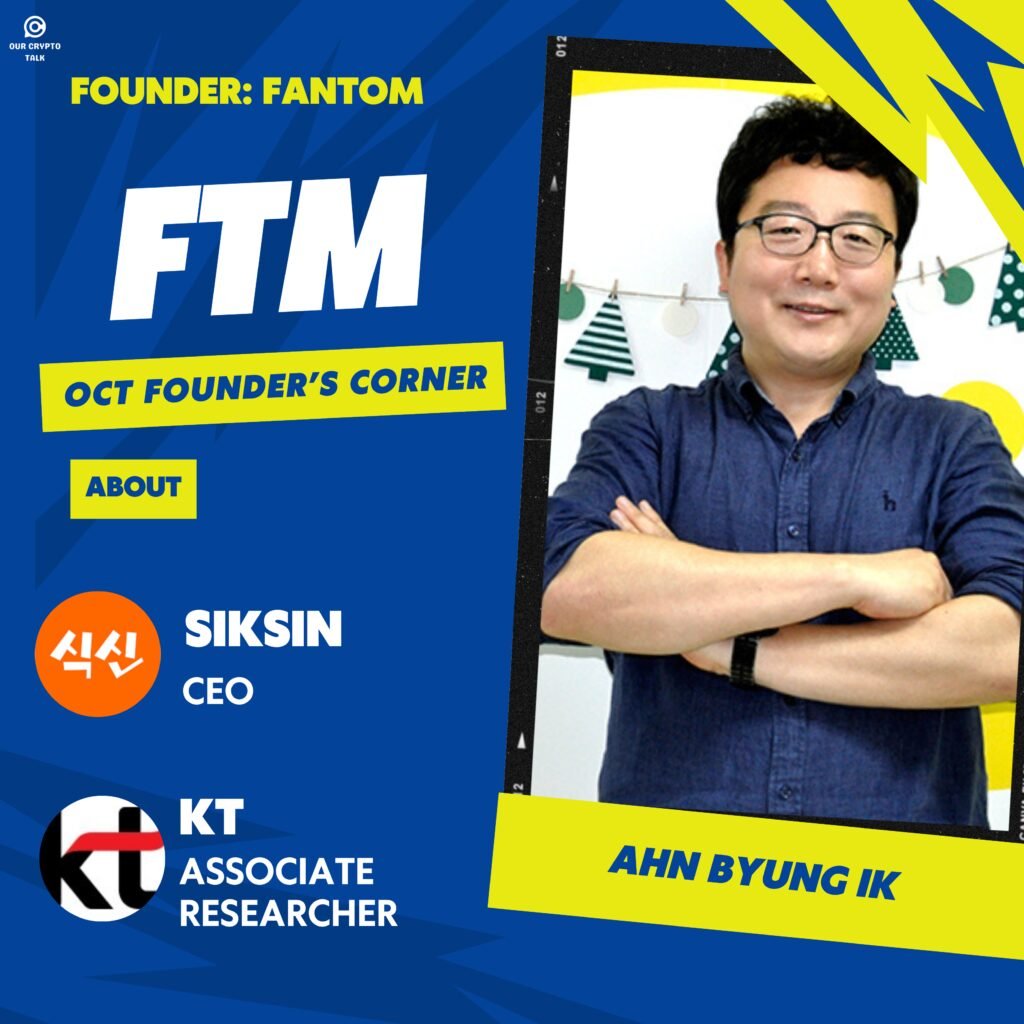
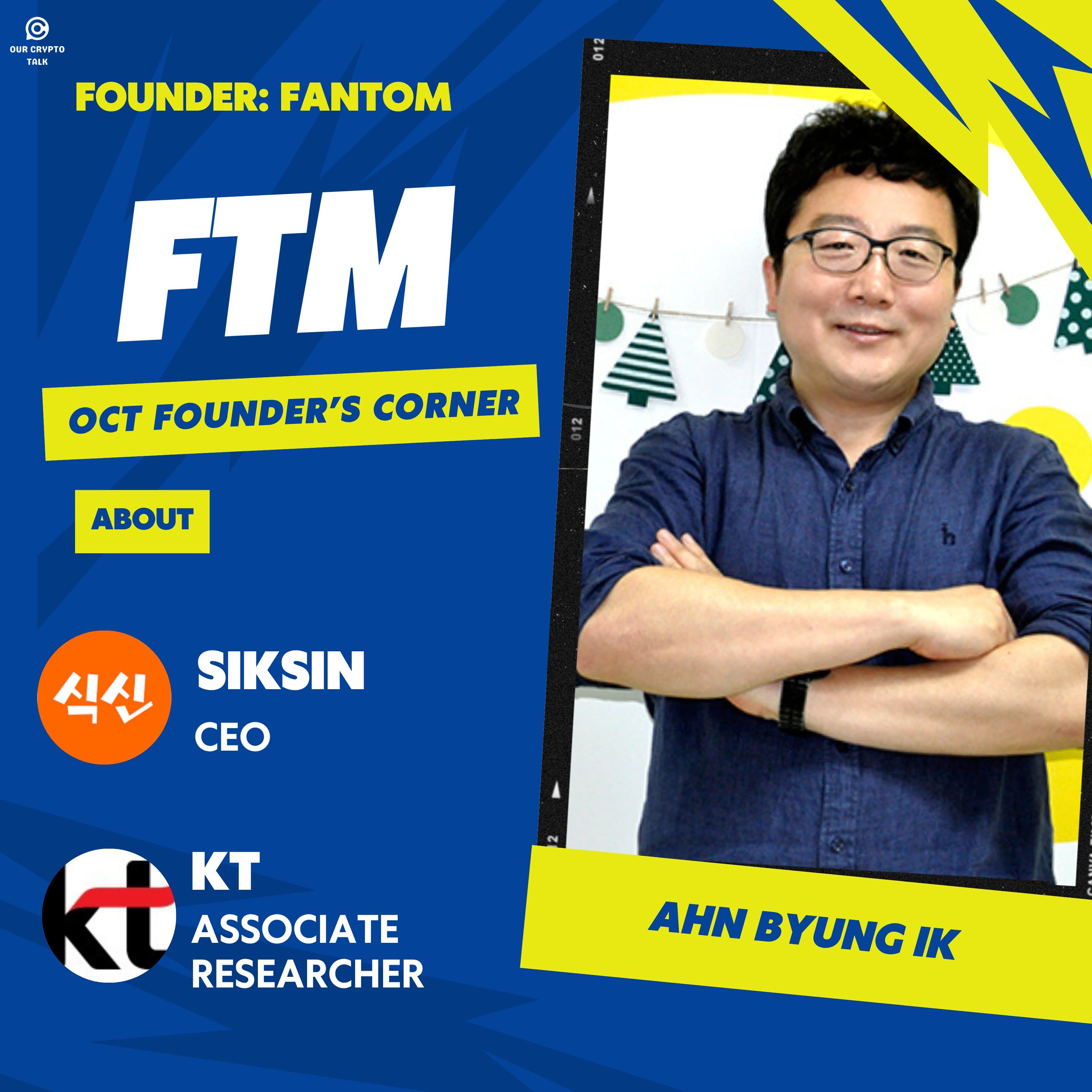
Ahn Byung Ik is a South Korean computer scientist and entrepreneur, best known for two things: founding the restaurant-discovery platform Siksin in 2010, and founding the Fantom blockchain in 2018. He’s also the person who sued Fantom Foundation in 2019 over compensation for early technical work, and who lost that case on appeal at the Seoul High Court before the South Korean Supreme Court dismissed his final appeal in 2024.
That arc, from a Yonsei PhD to a Korean food-tech CEO to a layer-1 founder to a five-year legal dispute, is unusual enough on its own. What makes it more unusual is that Ahn left Fantom inside a year of the ICO, before mainnet, and never publicly returned to crypto. The rest of this piece walks through that timeline neutrally, with the legal section reported only as the courts found it.
Early Career And Siksin
Ahn holds a PhD in Computer Science from Yonsei University, one of South Korea’s three SKY universities (Seoul National, Korea, and Yonsei). The SKY designation in Korea functions a little like the Ivy League shorthand in the US: it’s a signal of academic standing rather than a formal grouping, but it carries real weight in hiring, business credibility, and media access. The technical credential matters because it’s the platform on which his entire later career sits. Before crypto, the dominant English-language storyline about Korean tech founders tends to skip past their academic background. In Ahn’s case it’s the part most worth front-loading.
In 2010, he founded Siksin, a Korean food-tech and restaurant discovery platform broadly comparable to Yelp. Siksin grew into a real consumer product with reported scale: more than 22 million monthly page views and over 3.5 million app downloads, per the company’s own materials. It’s a meaningful operating business, not a sideline.
Ahn also serves as president of the Korea Foodtech Association, which represents roughly 90 member companies across the South Korean food-tech industry. The role gave him a public-facing position in a sector that goes well beyond Siksin itself, covering everything from delivery infrastructure to restaurant tech and food-data businesses. He’s also listed as a contributing writer for Fortune Magazine, which puts him in the small group of Korean operators who write for international business press in English. None of this is crypto. All of it matters for understanding why he was credible enough in 2018 to raise an ICO with his name on it.
The simple version: Ahn was already a successful tech entrepreneur before Fantom existed. Siksin wasn’t a crypto-native pivot or a vehicle to ride a token cycle. It was a real platform with real consumer traction, and it’s still operating in 2026.
Founding Fantom In 2018
Ahn founded Fantom in early 2018 with a thesis that’s worth reading carefully even now: blockchain infrastructure shouldn’t stop at cryptocurrency and finance. It should extend into broader societal use cases such as supply chain, public services, healthcare records, and smart cities. That framing wasn’t unique in 2018, but it shaped Fantom’s original technical design more than the marketing did.
The original vision was a directed acyclic graph (DAG) based smart contract platform aimed at IoT and smart city applications, with an ambitious target of 300,000 transactions per second according to the original whitepaper. The DAG framing matters because it sets Fantom apart from the standard linear-blockchain L1s that dominated the 2017-2018 ICO cycle. Instead of one chain of blocks, transactions could in principle confirm in parallel through a graph structure. Treat the 300,000 TPS figure as a stated target, not an achieved benchmark. Most early-stage L1 throughput claims in 2018 were targets that proved hard to meet under real conditions.
The core consensus mechanism described in Fantom’s whitepaper was the Lachesis Protocol, a leaderless asynchronous byzantine fault tolerant consensus design. The idea was to combine the throughput of a DAG with the safety guarantees of classical BFT consensus, so that finality could happen quickly without a single leader to bottleneck the network. Ahn and the early team were responsible for the initial design work, at least as Fantom’s public materials presented it at the time. The Lachesis name is worth remembering because it shows up later in the legal history.
Corporate structure followed a familiar 2018 pattern: Fantom Foundation was incorporated in the Cayman Islands, while operations and most of the early engineering team were based in South Korea. The Caymans offered a token-friendly jurisdiction for the Foundation; Korea was where the people actually were.
The FTM token launched in mid-June 2018 through a traditional initial coin offering. Ahn was the public face of the fundraise, the whitepaper, and the early development effort. By summer 2018 he was the most visible Fantom founder anywhere in the project’s communications.
Departure From Fantom In 2019
Less than a year later, in early 2019, Ahn stepped down as CEO. He was succeeded by Michael Kong, a software developer with Ethereum smart contract experience and a prior role as CTO at Block8, an Australian blockchain incubator. The succession was clean on paper. The dispute over what Ahn had and hadn’t contributed surfaced shortly after.
The timing matters for one specific reason: Ahn left during the pre-mainnet development phase. Fantom’s mainnet didn’t go live until December 2019, almost a full year after his departure. Whatever the project shipped on its launch day was shipped under different leadership than the team that ran the ICO.
After Ahn’s departure, Fantom brought in Andre Cronje as a technical advisor. Cronje would later become widely known as the founder of Yearn Finance, which he started in 2020. At this point in the timeline he was best known as a crypto researcher with a sharp opinion on protocol design, not yet a household DeFi name. Cronje and Quan Nguyen, who came on as CTO, effectively rebuilt the technical foundation that shipped at mainnet. The team that ran the project from late 2019 onward was substantially different from the team that ran the ICO.
Cronje stayed involved with Fantom until March 2022, when his departure from the project caused notable FTM market volatility and became its own news cycle. That timeline is relevant context for the lawsuit, because the Seoul High Court later ruled on whether Fantom was justified in establishing its own development team under Cronje and Nguyen rather than continuing with Ahn’s design.
The Fantom Lawsuit And What The Courts Ruled
This section is reported only as the courts found and as Fantom Foundation’s official blog post described the rulings. It isn’t a verdict on who was right.
In July 2019, Ahn and Siksin filed a lawsuit against Fantom Foundation in the Seoul Central District Court, seeking compensation of more than 198 million FTM tokens. The claims related to technical contributions and alleged unpaid work tied to the early Fantom development effort. At the original ICO valuation, that token amount was a significant nine-figure claim. At later FTM market prices during the 2021 cycle, the same token amount would have implied a substantially larger dollar value, which gave the litigation real economic weight even after the initial ICO had ended.
The first-instance court initially ruled in favor of Ahn and Siksin, granting the full relief sought. That ruling, on its own, would have transferred the disputed tokens. It didn’t stand.
The Seoul High Court reversed the lower court’s decision entirely on appeal. According to Fantom Foundation’s official blog post on the ruling, the appellate court found that Ahn and Siksin failed to design viable blockchain technology for the project, and found evidence of plagiarism in the technical papers Ahn and the early team had produced. Both findings are stated here as the court’s findings, not as independent factual claims by this article. The distinction matters: a Korean appellate court’s reasoning isn’t the same as a separately verified technical audit, but it is a binding legal conclusion in the jurisdiction where the dispute was litigated.
The Seoul High Court also found that Ahn had applied for a patent on the Lachesis Protocol in June 2018, the same month FTM launched its public sale. The court treated this as a contradiction of Fantom’s whitepaper, which described the platform as permissionless and open-source. Per Fantom Foundation’s blog post, the court cited this contradiction as one reason the Foundation lost trust in him, and as part of its reasoning for the reversal.
The appellate court also ruled that Fantom was justified in establishing its own development team under Andre Cronje and Quan Nguyen, rather than continuing to rely on the technical work Ahn’s team had produced. That finding was central to the reversal: it confirmed that the Foundation’s decision to rebuild was legally defensible.
Ahn appealed to the South Korean Supreme Court. In 2024, the Supreme Court dismissed the final appeal, which made the Seoul High Court ruling final. The legal arc started in July 2019 and closed in 2024, just under five years from the original filing.
For readers tracking the chronology, here’s the dated spine of the dispute alongside the broader career timeline.
Where Ahn Byung Ik Is Today
Per Crunchbase listings, Ahn remains CEO of Siksin as of 2026. Treat that as a current-status indicator that should be re-checked on any specific publish date, since titles and corporate roles change. Siksin itself is still operating as a Korean food-tech platform with its original consumer-facing product.
He has no known current involvement in crypto projects. After the 2019 departure from Fantom and through the years of litigation, he didn’t surface as a founder, advisor, or executive at another blockchain project of public note. The five-year legal arc was the last visible chapter of his crypto career.
Fantom went a different direction without him. Under Michael Kong as CEO and Andre Cronje as the dominant technical voice, the project grew into one of the larger DeFi ecosystems of the 2021-2022 cycle, with FTM-denominated total value locked reaching the multi-billion-dollar range during that peak. Yearn Finance, fUSD, SpookySwap, and a wave of native DeFi primitives launched on Fantom during that window, and the chain became a meaningful alternative L1 for users priced out of Ethereum mainnet during the 2021 fee spikes. The protocol later announced an evolution and rebrand into Sonic in 2024, repositioning the chain as a high-performance EVM-compatible network with new tokenomics. None of that work happened under Ahn.
The longer view of Ahn Byung Ik’s career is unusual in a specific way. He built a credible operating business in Siksin before crypto existed as a category. He founded a major layer-1 in 2018 and stepped away inside a year. He spent the next five years in Korean court rooms over the technical work, lost on appeal, exhausted his appeals at the Supreme Court, and went back to running the food-tech platform he started in 2010. The 2024 Supreme Court dismissal closes the loop on the most-litigated chapter. The rest of the story is whatever Siksin does next.
Frequently Asked Questions
Who is Ahn Byung Ik?
Who founded Fantom?
Why did Ahn Byung Ik leave Fantom?
What is Siksin?
What happened in the Fantom lawsuit?
In this article
Early Career And SiksinFounding Fantom In 2018Departure From Fantom In 2019The Fantom Lawsuit And What The Courts RuledWhere Ahn Byung Ik Is Today