Canton Review ( $CC )
Canton Review: Privacy-enabled institutional blockchain infrastructure enabling interoperable financial applications.


Author: Akshat Thakur
Introduction
Modern financial systems remain fragmented across institutions, jurisdictions, and proprietary infrastructure. Data silos, reconciliation processes, and manual settlement continue to introduce inefficiencies that increase costs and delay transactions. While blockchain technology promised to solve these issues, most public smart contract networks have struggled to meet institutional requirements. They expose transaction data publicly, impose shared global infrastructure, and limit scalability through network-wide bottlenecks. This Canton Review explores how a new privacy-enabled smart contract architecture aims to resolve these long-standing inefficiencies in financial markets.
Canton introduces a different approach. It is a privacy-enabled, interoperable smart contract infrastructure designed specifically for institutional use cases. Instead of forcing all applications onto a single global chain, Canton enables multiple independent financial applications to interoperate through a synchronized network.
By combining privacy-preserving smart contracts, scalable architecture, and composable workflows, Canton positions itself as a foundational layer for next-generation financial markets. This Canton Review evaluates Canton’s approach to institutional blockchain infrastructure and its potential to transform global financial systems.
Problem Statement
- Lack of Privacy in Existing Smart Contract Networks: Public blockchain networks expose transaction data to all participants, making them unsuitable for financial institutions that require confidentiality for sensitive financial data.
- Shared Global Infrastructure Creates Scaling Bottlenecks: Most blockchains force all applications to share the same infrastructure and transaction throughput, leading to congestion, rising fees, and limited scalability.
- Fragmented Financial Systems Require Costly Reconciliation: Financial institutions operate separate ledgers, requiring manual reconciliation processes that increase operational costs and settlement delays.
- Cross-Organization Workflows Are Difficult to Coordinate: Building multi-party financial workflows across institutions requires complex integrations and custom infrastructure, limiting composability and efficiency.
- Regulatory and Governance Constraints Limit Adoption: Financial institutions require strict control over permissions, governance, and data access, which traditional public blockchains do not provide.
Solutions Provided by Canton
- Privacy-Preserving Smart Contract Model: Canton uses the Daml smart contract language, which embeds authorization and privacy directly into transaction logic so that only relevant parties can access transaction data.
- Network-of-Networks Architecture: Instead of a single global chain, Canton enables independent applications to operate on separate subnets that can interoperate when required.
- Synchronization Domains for Secure Coordination: Canton introduces synchronization domains that order and validate transactions while preserving privacy, enabling multiple institutions to transact securely.
- Composable Multi-Party Workflows: Canton enables atomic transactions across organizations, allowing complex financial workflows such as asset swaps, settlement, and issuance to execute reliably.
- Decentralized Synchronizer Infrastructure: Through the Global Synchronizer and Canton Coin, Canton introduces decentralized coordination infrastructure that allows participants to contribute infrastructure and earn incentives.
Problem–Solution Overview
Technology & Architecture
Technology & Architecture
Virtual Global Ledger Model
Daml Smart Contract Layer
Synchronization Domains
Institutional Scalability
Tokenomics: Canton Review
Canton introduces the CC token as the utility and economic coordination asset of the Canton ecosystem. The protocol operates on a privacy-enabled blockchain environment, enabling seamless interoperability for institutional assets while aligning incentives with long-term network growth, sustainability, and real-world asset (RWA) market expansion.
Token Overview
- Symbol: CC
- Total Supply: ~100,000,000,000 CC (projected minable over first 10 years, with ongoing emissions; no fixed maximum)
- Standard: Native token (Canton Network)
- Decimals: 18
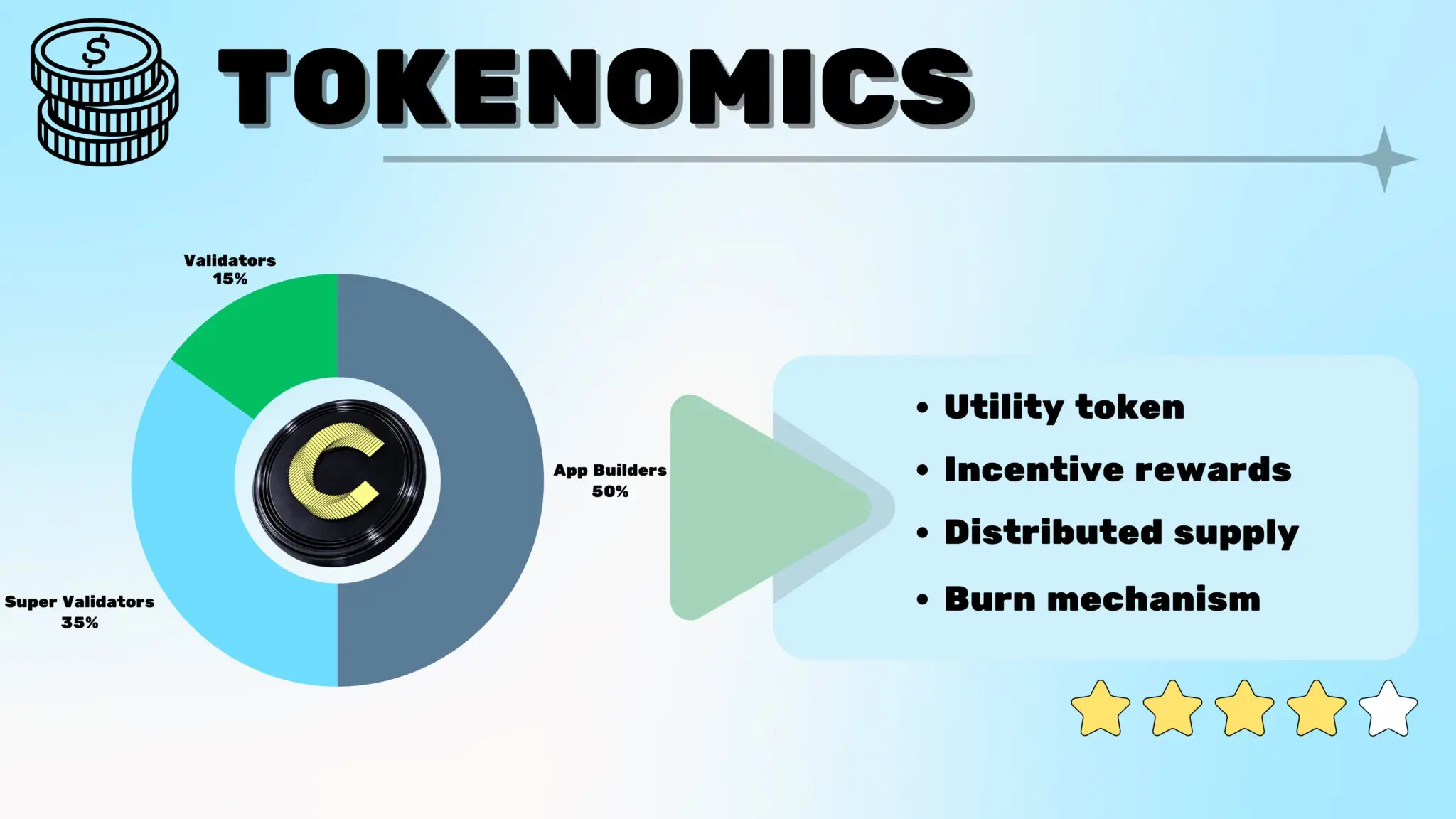
The CC token functions as the utility, fee payment, and reward asset of the Canton protocol. It enables network participation, fee payments for transactions and synchronization, and rewards for contributions to network utility, including infrastructure provision, application development, and user engagement.
Token Allocation
- Infrastructure Providers (Super Validators): 35% (Allocated to those running the Global Synchronizer and providing network infrastructure).
- Application Builders: 50% (Allocated to those deploying smart contracts, tokenizing assets, and creating applications).
- Users (Validators): 15% (Allocated to users transacting, engaging with apps, and running full nodes).
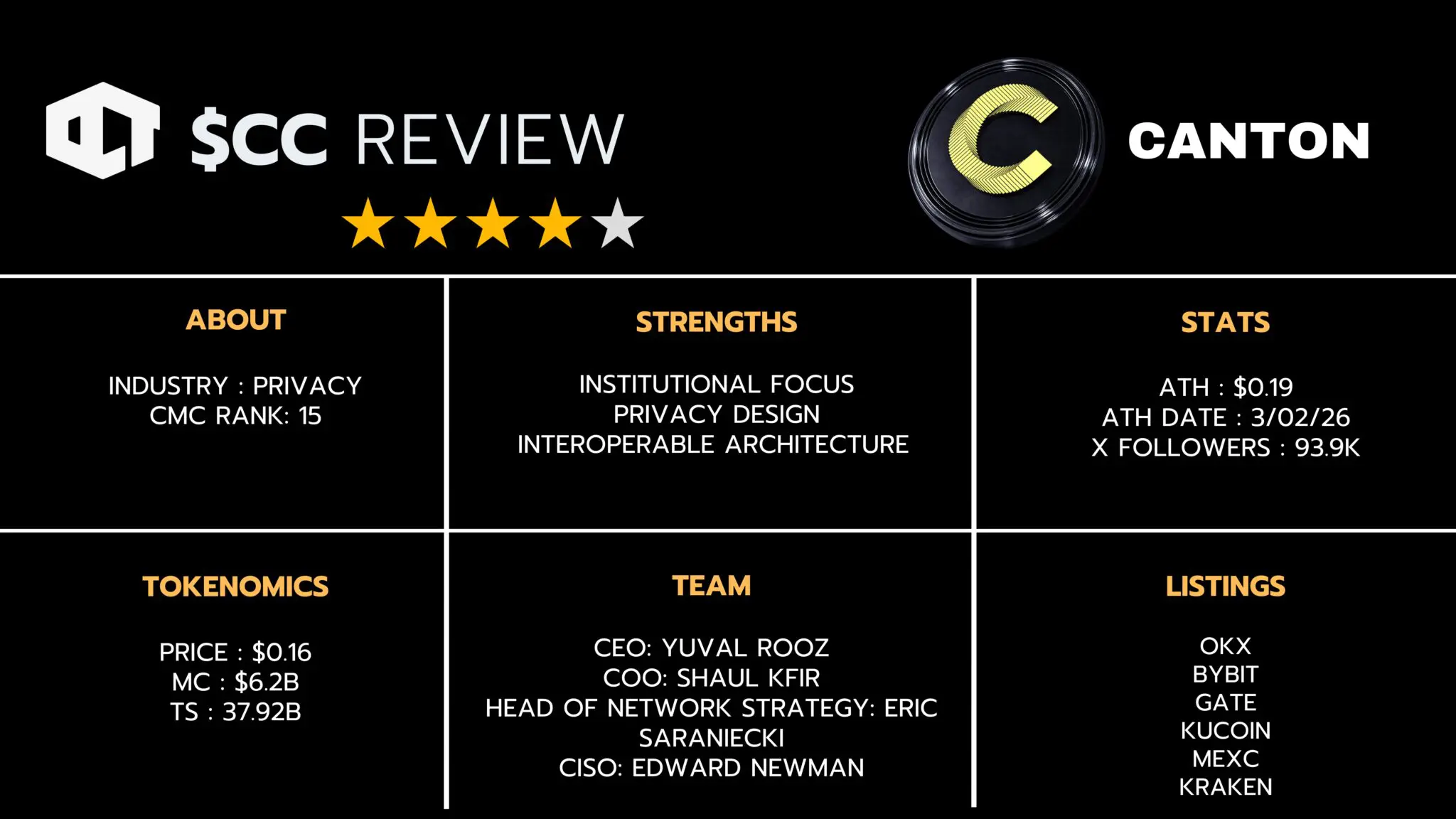
- Released / Circulating Supply: 37.92B (Freely circulating supply as of March 2026, all earned through network contributions with no pre-mined allocations).
Market Performance
📊 Market Performance
Team
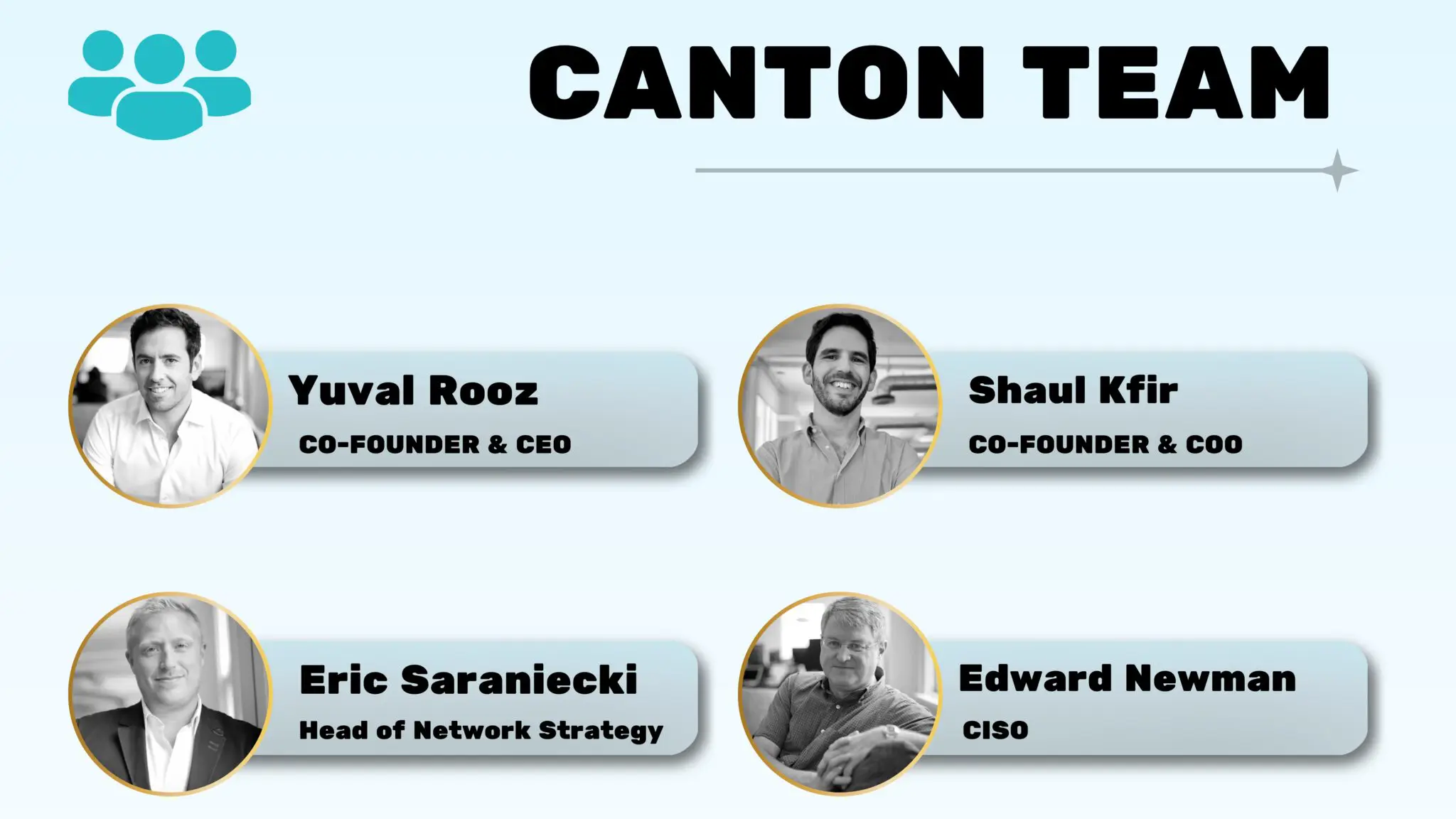
Canton is developed by Digital Asset, a company focused on enterprise blockchain infrastructure and financial technology solutions.
The team brings experience in financial markets, distributed systems, and enterprise software, with proven deployments in institutional environments.
Project Analysis
Comparative Overview
- Canton vs Ethereum: Ethereum offers public smart contracts but lacks privacy and institutional governance, while Canton focuses on permissioned interoperability and data confidentiality.
- Canton vs Hyperledger Fabric: Fabric provides enterprise blockchain infrastructure but lacks seamless interoperability across independent networks, which Canton enables through its architecture.
- Canton vs Polymesh: Polymesh focuses on regulated asset issuance, while Canton provides broader infrastructure for cross-institution financial workflows.
Strengths
- Strong focus on institutional real‑world financial workflow integration
- Established infrastructure for privacy-preserving financial smart contracts
- Clear alignment with institutional adoption and compliance requirements
- Composable architecture enabling multi-party financial workflows across networks
Challenges
- Institutional adoption cycles can be slow and dependent on regulatory clarity
- Requires coordination across multiple organizations and jurisdictions
- Competition from enterprise blockchain and tokenization infrastructure providers
- Dependence on sustained institutional application deployment and usage growth
Canton vs RWA & Institutional Asset Networks
| Project | Core Focus | Execution Architecture | Programmability | Token Utility | Notes |
|---|---|---|---|---|---|
|
| Privacy-enabled Layer-1 for RWAs and traditional finance institutions | Modular Layer-1 with subnetworks and Global Synchronizer for privacy and synchronization | Full (Daml language) | Fees burned; utility rewards minted | Public chain with configurable privacy; no pre-mine; rewards tied to real usage; partnerships with DTCC and Hydra X; launched May 2023 |
|
| Onchain asset management and RWA tokenization | Multichain EVM-native across Ethereum, Base, and Avalanche | Full (EVM, Solidity) | Governance, utility, staking | 1,768 assets tokenized; V3 multichain rollout in 2025; partnerships with Aave and MakerDAO; CFG supply 675M with ~3% annual inflation |
|
| Institutional RWA tokenization focused on U.S. Treasuries | Smart contracts on Ethereum and multichain deployments | Full (EVM) | Governance (ONDO) | OUSG Treasury product; institutional positioning; multichain yield integrations |
|
| Layer-1 blockchain purpose-built for RWA tokenization | Cosmos SDK with Tendermint Proof-of-Stake consensus | Full (CosmWasm) | Staking, governance (OM) | Compliance-focused infrastructure; RWA vaults; CLOB trading; strong traction in Asian markets |
|
| Decentralized stablecoin (DAI) backed by diversified RWA and crypto collateral | Smart contracts deployed on Ethereum | Full (EVM) | Governance (MKR) | Diversified RWA exposure; ecosystem rebranded to Sky; deeply integrated across DeFi protocols |
|
| Institutional lending infrastructure for RWAs | Smart contracts on Ethereum and Solana | Full (EVM and non-EVM) | Governance, rewards (MPL) | Permissionless lending pools; focus on institutional credit; relaunched after FTX collapse |
Canton Review Conclusion
Canton presents a blockchain architecture designed specifically for institutional financial systems where privacy, control, and interoperability are essential. Rather than forcing financial institutions into fully transparent public networks, Canton enables them to adopt blockchain infrastructure while maintaining regulatory and operational requirements.
By combining privacy-preserving smart contracts with a network-of-networks architecture, Canton allows independent financial applications to interoperate through a shared, synchronized ledger environment. This structure mirrors real-world financial markets, where multiple institutions operate independently but must coordinate for settlement and asset transfer.
Canton’s focus on composable workflows, scalable infrastructure, and institutional-grade governance positions it as a strong candidate for powering tokenized assets and real-time financial markets. However, its long-term success will depend on continued institutional adoption, regulatory alignment, and the growth of real-world applications built on its infrastructure.
If these factors align, Canton has the potential to become a foundational layer for global digital financial systems. This Canton Review concludes that Canton is purpose-built for institutional financial markets where privacy, control, and interoperability are essential.
TL;DR
- Privacy-enabled smart contract network designed for institutional finance.
- Network-of-networks architecture enabling interoperable financial applications.
- Daml smart contract language with built-in authorization and privacy controls.
- Synchronization domains enable scalable and secure cross-organization workflows.
- Canton Coin powers decentralized synchronizer infrastructure and network fees.
- Compliant, real-world financial infrastructure is the core focus.
In this article
IntroductionProblem StatementSolutions Provided by CantonProblem–Solution OverviewTechnology & ArchitectureTokenomics: Canton ReviewMarket PerformanceTeamProject AnalysisCanton Review Conclusion