ZachXBT Circle USDC allegations highlight $420M in missed freezes, raising concerns over compliance speed and stablecoin trust.

Author: Chirag Sharma
High attention and emotional sentiment detected.
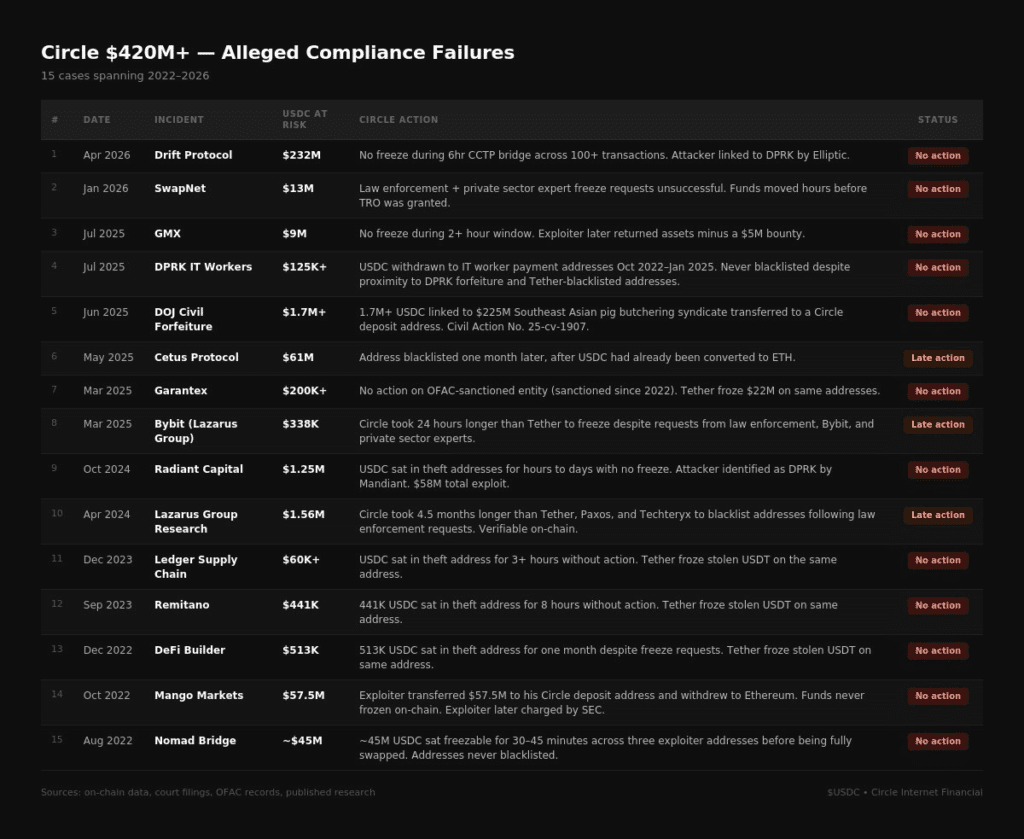
April 3, 2026 The ZachXBT Circle USDC narrative has gained significant traction following fresh allegations around compliance failures. A detailed investigation claims that over $420 million in suspicious USDC transactions were not frozen despite clear visibility. The report outlines multiple cases where Circle allegedly delayed or avoided freezing illicit funds. The most recent incident involved over $232 million in USDC moving across chains without intervention during a major exploit.
High Signal Summary For A Quick Glance

ManaMoon
@ManaMoonNFT

@zachxbt crazy how they could literally hire just 1 guy guy just has to sit there with alerts on for a few accounts who post when an exploit is happening and just freeze funds instantly it's literally so easy what am i missing
1/ Welcome to the Circle $USDC files. $420M+ in alleged compliance failures since 2022, including fifteen cases of the US-regulated stablecoin issuer taking minimal action against illicit funds. https://t.co/OiWZz5MrVM
02:09 PM·Apr 3, 2026

Luke Cannon
@lukecannon727
@zachxbt @0xAnteater The inaction is extra mind-boggling because it's literally free money if they freeze Get to sit on the reserves for a few more months as the legal process plays out, vs the hacker dumps the USDC & it gets redeemed by market makers
1/ Welcome to the Circle $USDC files. $420M+ in alleged compliance failures since 2022, including fifteen cases of the US-regulated stablecoin issuer taking minimal action against illicit funds. https://t.co/OiWZz5MrVM
01:38 PM·Apr 3, 2026

Nathan
@0xxNathan
@zachxbt Circle needs to do better when it comes to partnerships or have a dedicated team for handling emergencies. It is really disappointing to see how their slow response or lack of action has severely impacted so many projects and users. Thank you for always being here to speak up.
1/ Welcome to the Circle $USDC files. $420M+ in alleged compliance failures since 2022, including fifteen cases of the US-regulated stablecoin issuer taking minimal action against illicit funds. https://t.co/OiWZz5MrVM
01:34 PM·Apr 3, 2026
Circle positions USDC as a fully compliant and regulated stablecoin with strong anti-money-laundering safeguards. However, these repeated examples have raised concerns about execution gaps between policy and action. Critics argue that the issue is not capability but willingness to act quickly. This disconnect is now central to the growing scrutiny around Circle’s compliance model.
The core of the ZachXBT Circle USDC debate lies in Circle’s reliance on legal processes over immediate intervention. The company typically waits for formal law enforcement directives or court orders before freezing assets. This approach introduces delays that attackers exploit through rapid transactions and cross-chain bridges. In several cases, stolen funds remained movable for hours or days before any response occurred.
Operational complexity also contributes to slower execution. Internal reviews, verification processes, and legal risks limit real-time decision-making speed. Recent incidents highlight the downside of this model. In one case, Circle froze legitimate wallets linked to a legal action and later reversed the decision after backlash. This creates a difficult balance between avoiding wrongful freezes and enabling fast responses. The trade-off is now being questioned across the crypto industry.
The rise of ZachXBT Circle USDC concerns is beginning to influence both sentiment and behavior across the market. While USDC remains stable in price, its reputation as the safest compliant stablecoin is facing pressure. Institutional users may reassess counterparty risks tied to centralized stablecoin issuers. Some may diversify exposure to reduce reliance on a single provider.
Developers and DeFi protocols could also reconsider using USDC as core infrastructure. Delayed interventions or unexpected freezes introduce operational uncertainty. The situation also fuels a broader debate about centralization in stablecoins. Market participants are weighing compliance strength against real-time responsiveness.
This could accelerate interest in decentralized or hybrid stablecoin alternatives. These models aim to balance transparency, control, and resilience.
Our Crypto Talk is committed to unbiased, transparent, and true reporting to the best of our knowledge. This news article aims to provide accurate information in a timely manner. However, we advise the readers to verify facts independently and consult a professional before making any decisions based on the content since our sources could be wrong too. Check our Terms and conditions for more info.