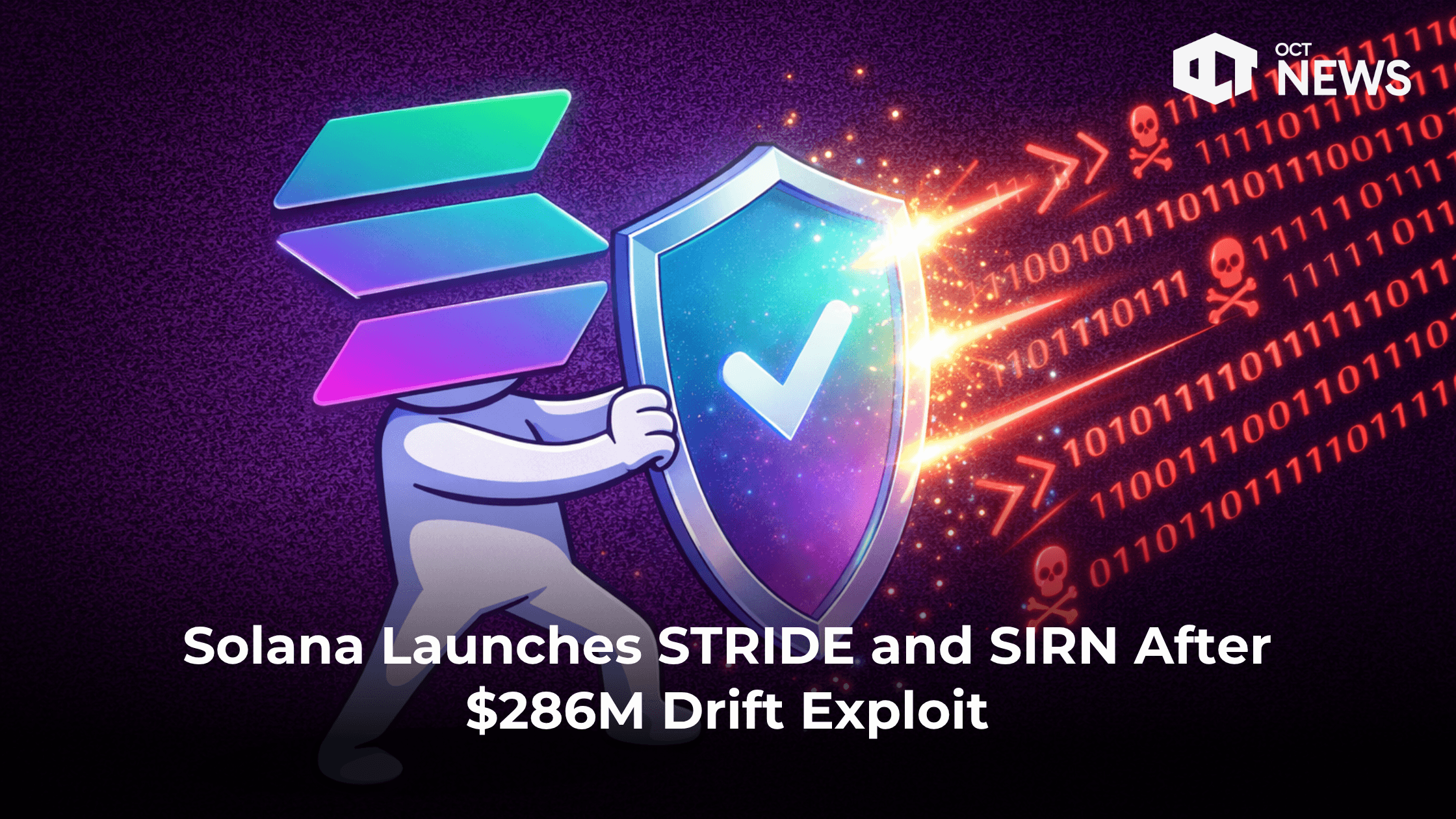
Solana DeFi Security gets a major upgrade as STRIDE and SIRN launch after the $286M Drift exploit, strengthening ecosystem.

Author: Kritika Gupta
Steady attention without excessive speculation.
7th April 2026– In a decisive response to rising threats in decentralized finance, the STRIDE and SIRN launch marks Solana’s most comprehensive DeFi security upgrade to date. These initiatives introduce continuous protocol reviews, 24/7 threat monitoring for qualifying projects, Foundation-funded formal verification for larger protocols, and a coordinated rapid-response coalition of top security firms
The rollout comes just days after the devastating Drift Protocol hack. Solana is now moving DeFi security from reactive audits toward proactive, ecosystem-wide protection. This shift aims to restore builder confidence, reassure investors, and strengthen institutional trust in the network.
High Signal Summary For A Quick Glance

Evey 💜 | Matrica
@EveyNFT

Solana is pushing harder on security as it scales. STRIDE adds more structure and transparency to audits, while 24/7 monitoring and SIRN bring real-time protection into play. Its a strong step toward a more mature and resilient ecosystem for teams building there. https://t.co/uGQ6lq4sSt
Solana was built for security. As the ecosystem scales, so does our investment in the tools, standards, and support. Today that commitment deepens with a new security program, active monitoring, formal verification for top protocols, and a new crisis response network. Learn https://t.co/17M4TgqpsQ
11:29 PM·Apr 6, 2026
The STRIDE and SIRN launch came directly after the $286 million Drift Protocol exploit on April 1, 2026. According to blockchain analytics firms, attackers linked to North Korean state-sponsored groups gained control through compromised administrator private keys rather than a smart contract flaw.
Specifically, the attackers used social engineering tactics and pre-signed durable nonce transactions to drain assets in roughly 12 minutes. Consequently, Drift’s total value locked (TVL) collapsed by more than 50%, sharply damaging market confidence.
This is not the first time Solana has faced such security challenges. Over the past few years, the Foundation has introduced incremental monitoring tools and support resources at no cost to builders. However, it had never launched a fully structured, tiered framework that combines public reviews, continuous threat intelligence, and funded formal verification.
Moreover, previous exploits across Solana DeFi often exposed weaknesses in access controls, governance processes, and operational security rather than purely code-level vulnerabilities. Therefore, the Drift incident reinforced the need for a broader defense model.
Historically, the market reaction to similar incidents has followed a familiar pattern. First, the affected protocol sees an immediate collapse in TVL and a sharp sentiment shock. Then, once teams pause operations, engage security firms, and confirm containment, broader ecosystem confidence gradually recovers. The Drift exploit followed the same path, with TVL halving overnight before sentiment improved after the Foundation announced rapid action.
STRIDE replaces one-time audits with continuous evaluation across eight critical risk categories, including code security, governance, operational controls, and incident readiness.
Under the new framework, protocols with more than $10 million in TVL that successfully pass STRIDE assessments will receive free 24/7 threat monitoring. In addition, protocols with more than $100 million in TVL will qualify for Foundation-funded formal verification, which uses mathematical proofs to eliminate entire classes of vulnerabilities.
Crucially, the Foundation will publish the results of all reviews publicly. This transparency gives users, liquidity providers, and institutional investors clear, up-to-date security scores rather than relying on outdated audit reports. The program scales alongside protocol growth. Smaller teams gain access to affordable protection, while larger, systemically important platforms receive deeper technical scrutiny.
Complementing STRIDE, the new Solana Incident Response Network (SIRN) introduces a formal, always-on coalition for rapid exploit response. The coalition, led by Asymmetric Research, includes leading security firms such as OtterSec, Neodyme, Squads, and ZeroShadow.
Instead of multiple firms working independently after an exploit, SIRN establishes a unified command structure for:
As a result, Solana can now respond faster and more cohesively during crisis events. Foundation officials described SIRN as the missing layer that transforms fragmented security talent into a coordinated defense force. With the Drift exploit still fresh in the market’s memory, this launch sends a clear message: Solana no longer intends to treat each exploit as an isolated incident.
Our Crypto Talk is committed to unbiased, transparent, and true reporting to the best of our knowledge. This news article aims to provide accurate information in a timely manner. However, we advise the readers to verify facts independently and consult a professional before making any decisions based on the content since our sources could be wrong too. Check our Terms and conditions for more info.



Solana